

Consumer Insights
Uncover trends and behaviors shaping consumer choices today
Procurement Insights
Optimize your sourcing strategy with key market data
Industry Stats
Stay ahead with the latest trends and market analysis.

The textile market size attained a value of USD 1023.52 Billion in 2025. The industry is expected to grow at a CAGR of 3.60% during the forecast period of 2026-2035. By 2035, the market is expected to reach USD 1457.79 Billion.
The growing importance of sustainability is one of the major textile market trends, as consumers and regulators are increasingly demanding eco-friendly products. Several brands, are thus, largely using recycled polyester and organic cotton to drive innovations in the market. In November 2024, Textile brand Kvadrat launched its first recycled polyester fabric to create from waste textiles rather than plastic bottles. Initiatives, such as the Better Cotton Initiative and Textile Exchange are also promoting responsible sourcing.
Global partnerships are fostering the textile market development by driving innovation, expanded market access, and accelerated sustainability initiatives. Collaborations between textile manufacturers, fashion brands, technology providers, and research institutions are enabling companies to pool resources and expertise. In May 2025, USA Global Trade rolled out an initiative to connect United States and Latin America through regional textile collaboration. These moves are also enabling faster adoption of advanced materials, circular systems, and smart textile technologies.
Waterless dyeing technologies and biodegradable fibres are increasingly adopted to reduce environmental footprints, further influencing the textile industry. In October 2024, DETERMINANT introduced its second Cotton Waterless Dye Collection for advancing sustainable waterless dyeing in men's shirts with modern style and quality. The rising awareness of microplastic pollution has accelerated the demand for natural and recycled fibres, pushing innovations in circular fashion and zero-waste manufacturing.
Base Year
Historical Period
Forecast Period
Asia is a major producer of silk globally, accounting for 90% of mulberry and almost 100% of non-mulberry silk.
The textile sector constitutes about 2% of the global GDP every year.
Australia produces about a quarter of the world’s wool annually.
Compound Annual Growth Rate
3.6%
Value in USD Billion
2026-2035
*this image is indicative*
Read more about this report - REQUEST FREE SAMPLE COPY IN PDF
| Global Textile Market Report Summary | Description | Value |
| Base Year | USD Billion | 2025 |
| Historical Period | USD Billion | 2019-2025 |
| Forecast Period | USD Billion | 2026-2035 |
| Market Size 2025 | USD Billion | 1023.52 |
| Market Size 2035 | USD Billion | 1457.79 |
| CAGR 2019-2025 | Percentage | XX% |
| CAGR 2026-2035 | Percentage | 3.60% |
| CAGR 2026-2035 - Market by Region | Asia Pacific | 3.7% |
| CAGR 2026-2035 - Market by Country | India | 4.0% |
| CAGR 2026-2035 - Market by Country | Brazil | 3.7% |
| CAGR 2026-2035 - Market by Raw Material | Chemical | 3.7% |
| CAGR 2026-2035 - Market by End Use | Household | 3.7% |
| Market Share by Country 2025 | China | 14.0% |
The adoption of digital technologies, such as Industry 4.0 in manufacturing is revolutionizing the textile market. Smart factories are utilizing IoT, AI, and robotics to enhance productivity and reduce waste. Digital printing technologies are enabling customized patterns and faster prototyping. According to industry reports, digital transformation is helping to increase operational efficiency by up to 30% in textile manufacturing. Virtual sampling is also helping to lower resource consumption and speed up product development.
The rising popularity of smart textiles embedded with sensors and conductive fibers in healthcare, sports, and military sectors is adding to the textile market expansion. These fabrics help to monitor body temperature, heart rate, or provide UV protection. Supporting with an instance, in April 2024, Crystal International Group introduced its Smart-Fit denim jeans to offer a perfect blend of comfort and body-enhancing qualities. Functional textiles further render moisture-wicking, anti-odor and antimicrobial properties in activewear, driven by consumers actively seeking comfort and enhanced performance.
Digital printing is shaping the textile market outlook by enabling shorter runs, rapid prototyping, and personalized designs while catering to the demand for unique and limited-edition apparel. This technology reduces water and chemical use compared to traditional printing, urging brands to utilize digital printing to offer customizable products. Reflecting this trend, in May 2025, ARC Print India introduced an online platform to allow users to design and order custom t-shirts, adding to the digital printing adoption.
Sustainable dyeing technologies, such as waterless dyeing, digital printing, and natural dyes are driving the textile industry. Companies are developing sustainable dyeing solutions, while brands are using laser and ozone treatments to minimize environmental impacts. For instance, in February 2023, French startup Ever Dye developed a novel dyeing process using bio-sourced pigments sourced from vegetal waste and minerals. These methods are meeting regulatory pressures whilst aligning with consumer demand for green products.
Robust population growth is largely impacting the textile market outlook due to the increasing global demand for clothing, home textiles, and technical fabrics. As per industry reports, the global population is expected to touch 8.6 billion by 2030, further driving the need for basic apparel and furnishings. Urbanization and rising living standards are also amplifying this effect, leading to greater demand for diverse, fashionable, and functional textiles.
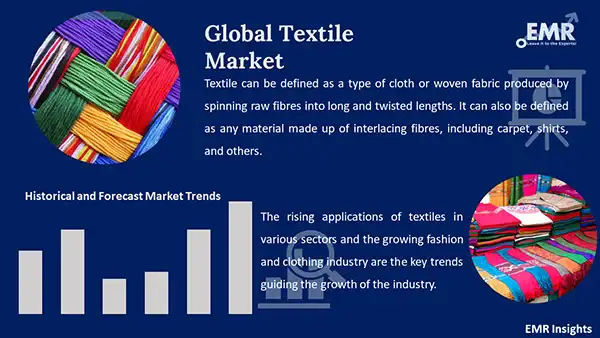
Read more about this report - REQUEST FREE SAMPLE COPY IN PDF
The EMR’s report titled “Textile Market Report and Forecast 2026-2035” offers a detailed analysis of the market based on the following segments:
Market Breakup by Raw Material
Key Insight: Cotton is leading the textile market due to its versatility, comfort, and natural origin along with wide usage in home textiles, apparel, and industrial applications. India, China, and the United States have emerged as major producers. As per industry reports, India's total production of cotton was estimated at 302.25 lakh bales of 170 kgs during 2024-25. Brands are relying on cotton for their mainstream fashion collections. Additionally, initiatives, such as Better Cotton and organic cotton farming are helping to make this segment more sustainable.
Market Breakup by Product
Key Insight: Polyester is the most dominant segment of the textile market, due to its affordability, wrinkle resistance, strength, and ease of care offered in sportswear, fast fashion, and home furnishings. Global brands are extensively using polyester in both performance and casual wear. Rising improvements in recyclability has urged several companies to use recycled polyester from plastic bottles. Innovations in sustainable polyester are also driving the segment growth. Supporting with an instance, in May 2025, Teijin Limited unveiled its cutting-edge recycled polyester to mimics the texture, softness, and breathability of natural fibers.
Market Breakup by Application
Key Insight: The fashion and clothing segment in the textile market is backed by the stronger consumer demand for apparel, ties, and handbags worldwide. This sector also includes casual wear, formal wear, sportswear, and luxury fashion. Global brands are continuously innovating with new fabrics and sustainable materials to meet these demands. For instance, in April 2025, iconic Los Angeles-based lifestyle brand Juicy Couture debuted its handbags in India to cater to style-savvy luxury consumers. Fast fashion is also fueling high-volume sales, while premium brands are focusing on quality and sustainability. The sector is also heavily influencing textile trends while driving the demand for various fibers.
Market Breakup by Region
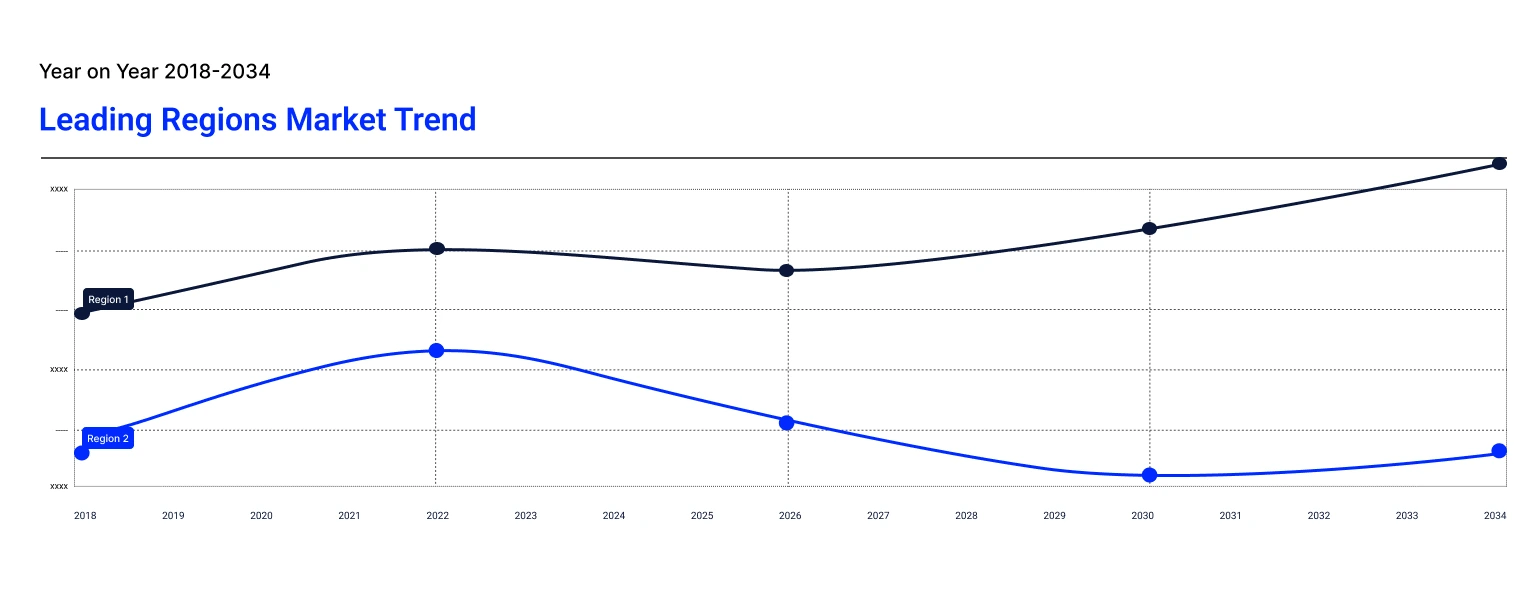
Key Insight: Asia Pacific leads the textile market in terms of export volume, production, and consumption. Major textile-producing countries, such as China, India, Bangladesh, and Vietnam dominate with their large labour forces, integrated manufacturing ecosystems, and competitive costs. As per industry reports, China exported USD 299 billion of textiles in 2024, backed by strong government support and advanced textile infrastructure. The rapid growth of e-commerce, rising middle-class populations, and increasing domestic demand are further fueling the regional dominance in fast fashion and textile innovation.
| CAGR 2026-2035 - Market by | Raw Material |
| Chemical | 3.7% |
| Silk | 3.6% |
| Cotton | XX% |
| Wool | XX% |
| Others | XX% |
| A16 | XX% |
| CAGR 2026-2035 - Market by | Application |
| Household | 3.7% |
| Technical | 3.6% |
| Fashion and Clothing | XX% |
| Others | XX% |
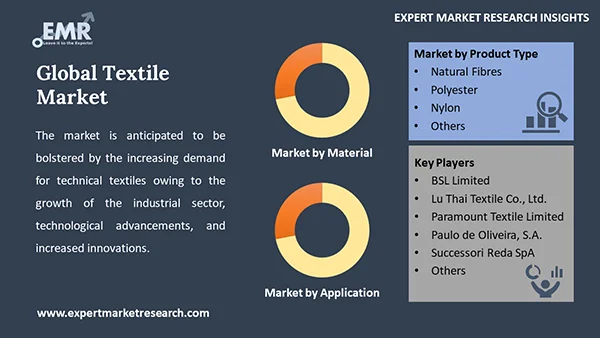
Read more about this report - REQUEST FREE SAMPLE COPY IN PDF
Chemical & Wool Textiles to Garner Huge Preference
The chemical textile market, including polyester, nylon, and acrylic, is gaining immense momentum. Polyester accounts for significant global fiber production due to its low cost, durability, and adaptability. These fibers have large presence in sportswear and fast fashion, as companies are utilizing synthetic blends for performance and affordability. Recent innovations in recycling, such as closed-loop polyester are enhanced sustainability, further boosting market appeal. The demand for chemical fibers is continuing to grow, especially in regions where industrial-scale textile production is prevalent.
Wool is contributing to the textile market as it remains essential in premium apparel, luxury fashion, and winter wear. Australia and New Zealand are leading wool producers, with Merino wool particularly prized for its softness and temperature-regulating qualities. Several brands are specializing in wool-based clothing given its eco-friendliness and biodegradability. For instance, in June 2025, clothing brand Sheep Inc. introduced its new pair of swimming shorts derived from Merino wool. Efforts to trace and certify ethical wool production are also gaining attention as consumers are seeking more sustainable and cruelty-free options.
| Market Share by | Country |
| China | 14% |
| USA | XX% |
| Canada | XX% |
| UK | XX% |
Natural Fibers & Nylon Textiles to Witness Higher Adoption
Natural fibers, including cotton, flax, wool, and hemp, are driving the textile industry. Among these, cotton dominates due to its softness, breathability, and wide application in everyday clothing and home textiles. Brands including Levi’s and Muji are emphasizing natural fibers to appeal to sustainability-conscious consumers. Though natural fibers are biodegradable and preferred for eco-friendliness, their production is resource intensive as they require significant water and land use.
Nylon textile market share is growing with their exceptional strength, elasticity, and resistance to abrasion in hosiery, activewear, swimwear, and industrial applications. The rising demand for premium and comfortable lingerie is boosting the adoption of nylon to render smooth texture and stretchability. In February 2024, Indian womenswear brand Bold & Bae launched its new premium lingerie lined for catering to shoppers in metros and rural areas. The ongoing advancements in bio-nylon and recycling are further benefiting the segment growth.
Surging Presence of Textiles in Household and Technical Applications
The household segment of the textiles market encompasses bedding, kitchen textiles, upholstery, towels, and other home fabrics. Bedding items, such as sheets and pillowcases, focus on comfort and durability. Kitchen textiles include aprons and dishcloths are emphasizing functionality and hygiene. Upholstery fabrics are used for furniture coverings, with companies providing stylish, durable options. Towels, from various brands are prioritizing absorbency and softness. Other household textiles including curtains and rugs are contributing to interior aesthetics. Growing home renovation trends and the increasing consumer focus on sustainable, high-quality fabrics are driving this segment’s steady growth.
The technical textiles industry serves specialized industries, such as construction, transport, medical, and protective with high-performance fabrics. In construction, geotextiles stabilize soil and improve infrastructure. Transport textiles enhance vehicle interiors and safety features. Medical textiles including surgical gowns and wound dressings, have grown crucial in healthcare, leading to innovations. For instance, in November 2023, Cardinal Health introduced its new breathable surgical gown with instrument pockets. Protective textiles, including flame-resistant and bulletproof fabrics are safeguarding workers and military personnel.
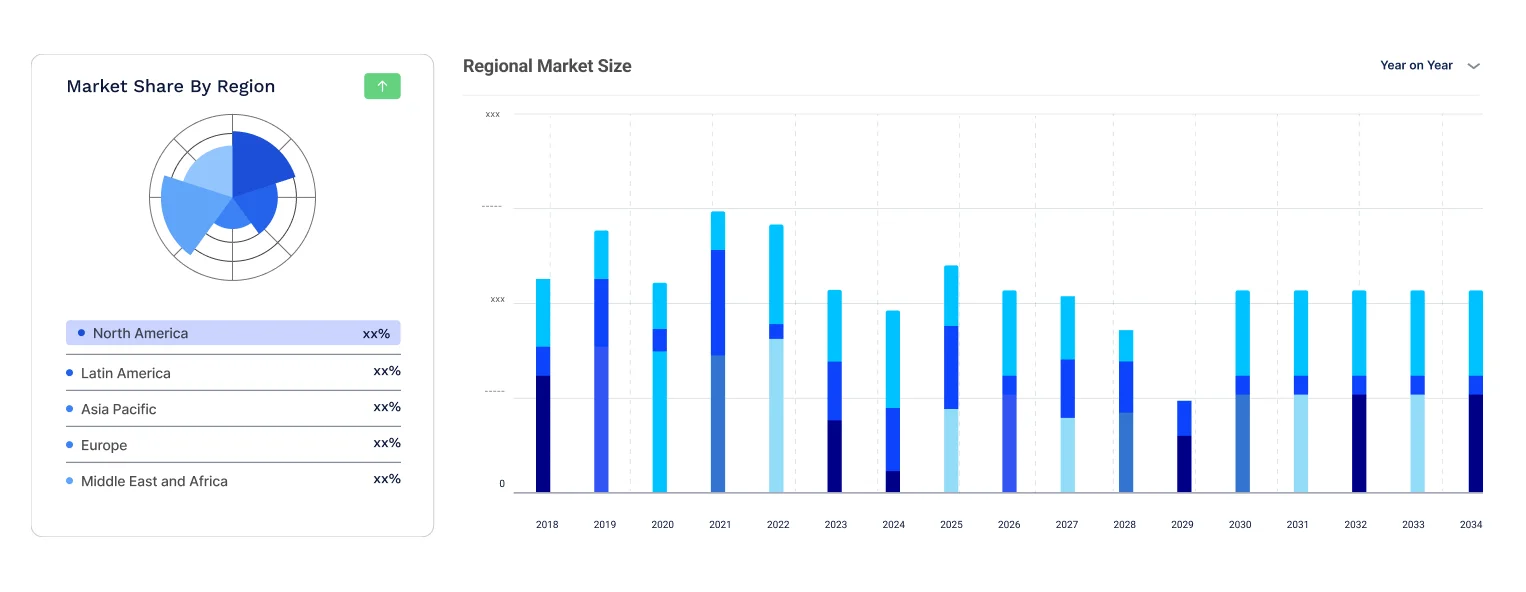
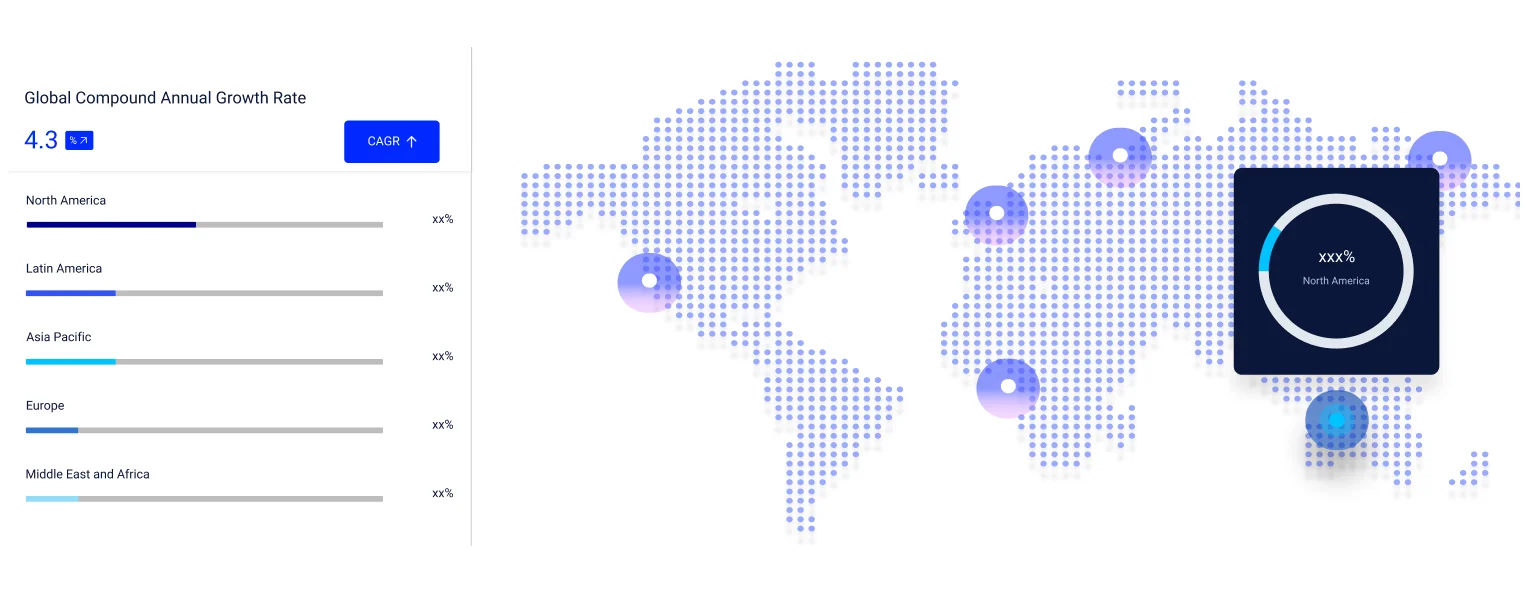
Booming Textile Markets in Europe & North America
Europe is contributing to the textile market driven by its focus on quality, sustainability, and innovation. Italy, Germany, and France are home to some of the world-renowned fashion and textile brands. The region also leads in sustainable textile development, with strong regulations pushing circular economy practices. European companies are investing heavily in bio-based fibers, recycling, and low-impact dyeing. Initiatives, such as the EU Strategy for Sustainable and Circular Textiles are also assisting in making all textile products on the European Union market durable and recyclable by 2030.
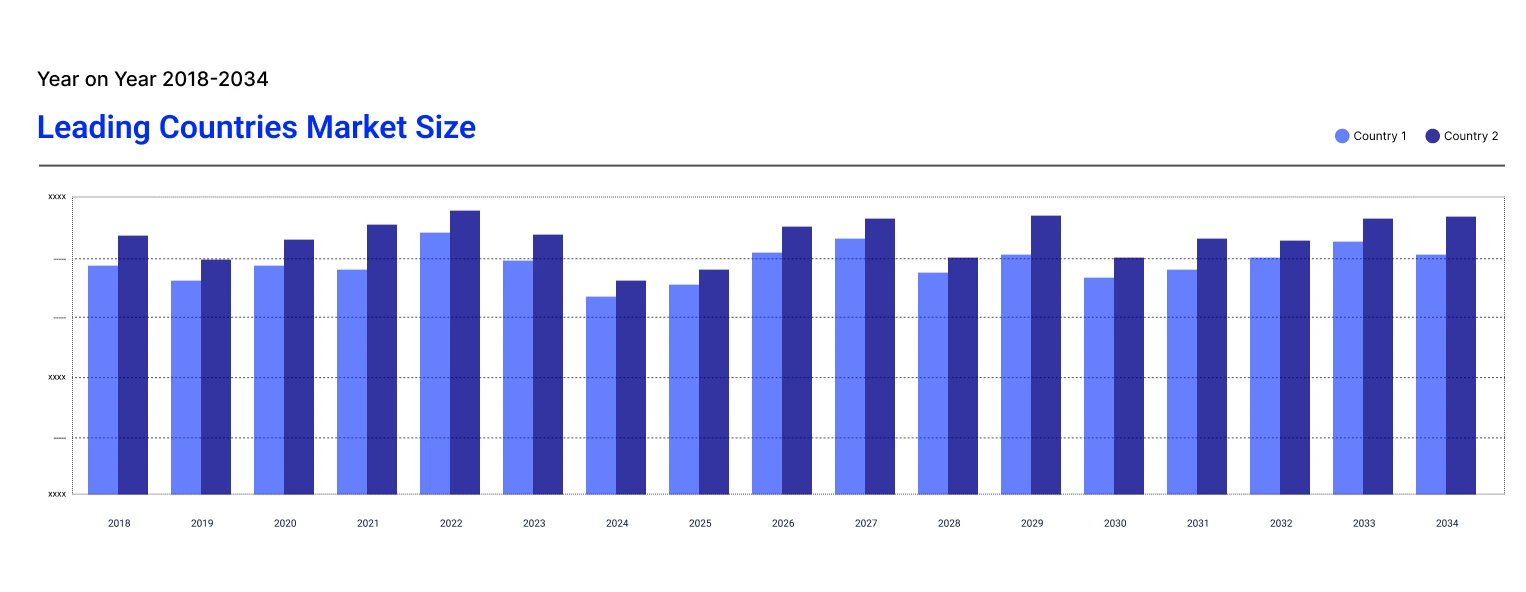
| CAGR 2026-2035 - Market by | Country |
| India | 4.0% |
| Brazil | 3.7% |
| USA | 3.5% |
| Italy | 3.1% |
| France | 2.9% |
| UK | 2.7% |
| Canada | XX% |
| Germany | XX% |
| China | XX% |
| Japan | XX% |
| Australia | XX% |
| Saudi Arabia | XX% |
| Mexico | XX% |
North America textile industry growth is poised for expansion due to its technological advancement, retail power, and premium product demand. The United States has emerged as a leader in technical textiles that cater to automotive, medical, and military applications. The region is also witnessing increased investments in automated manufacturing and sustainable practices. The surging consumer preference for ethically produced and high-performance textiles is further supporting innovations in the regional market. In August 2024, CHT USA expanded its focus on performance textiles in the Americas via innovation and wider market presence, adding to the regional product uptake.
Key players in the textile market are employing several key strategies to gain competitive edges and meet the evolving consumer demands. Innovation and product diversification are helping companies to continuously develop new fabrics, designs, and sustainable materials that appeal to a broader audience and address environmental concerns. Sustainability is helping brands to adopt eco-friendly production processes, using organic fibres, and promoting recycling initiatives to attract environmentally conscious consumers. Textile firms are investing in e-commerce platforms, digital marketing, and social media engagement to enhance customer interaction.
Data analytics is further deployed to understand consumer preferences and forecast trends, enabling more targeted product development and inventory management. Supply chain optimization is helping to reduce costs and improve efficiency. Many players are adopting just-in-time manufacturing and forge strong supplier relationships to ensure timely delivery and maintain quality standards. Localization of production closer to key markets also helps reduce lead times and logistics expenses. Collaboration and partnerships with designers, technology providers, and retailers are strengthening brand presence and innovation capabilities.
Founded in 1971 and headquartered in Rajasthan, India, BSL Limited is a prominent Indian textile manufacturer. The company specializes in producing poly-viscose suiting fabrics, cotton fabrics, yarns, and furnishings. With a robust presence in domestic and international markets, BSL Limited is recognized for its commitment to quality and innovation.
Established in 2004 and headquartered in Wichita, the United States, INVISTA S.R.L. is a global leader in fiber, resin, and intermediates. The company offers a wide range of products, including spandex, polyester, and nylon fibers for catering to various industries such as automotive, apparel, and home textiles.
Founded in 1987 and headquartered in Shandong Province, China, Lu Thai Textile Co., Ltd. is a leading textile manufacturer. The company produces yarn-dyed fabrics, shirts, and garments, utilizing materials, such as cotton, silk, wool, and chemical fibers. Lu Thai Textile exports its products to markets, including South Korea, Japan, Europe, and the United States.
Founded in 1979 and located in Thirali, India, Paramount Textile Limited is a vertically integrated textile mill. The company specializes in manufacturing fine fabrics using specialty yarns such as Supima, Giza, and Suvin cotton. Paramount Textile is known for its high-quality bed linens and has a strong export presence in Europe and the United States.
*Please note that this is only a partial list; the complete list of key players is available in the full report. Additionally, the list of key players can be customized to better suit your needs.*
Other players in the textile market are Paulo de Oliveira, S.A., Successori REDA S.p.A., Shadong Jining Ruyi Woolen Textile Co. Ltd., Shandong Demian Incorporated Company, Shijiazhuang Changshan Textile Co., Ltd, Weiqiao Textile Company Limited, DBL Group, B.D. Textile Mills Pvt. Ltd., IBENA Inc., Heytex Bramsche GmbH, Bahariye AS, Fratelli Balli S.p.A., ipekis Mensucat Turk A.S, Lakhmi Woollen Mills, Wilh. Wülfing GmbH & Co. KG, Lanificio F.lli Cerruti, Özlem Kumas, Ltd., Trabaldo Togna S.p.A., Yünsa Yünlü Sanayi ve Ticaret A.S., Xinhui Woollen Textile Co., Ltd., O'Formula Co., Ltd., Wuxi Xiexin Group Co., Ltd., The Bombay Dyeing & Mfg. Co., Ltd, Huafu Top Dyed Melange Yarn Co., Ltd., Mayur Fabrics, Solvay S.A., Sinopec Yizheng Chemical Fibre Company Limited, Li & Fung Group, JCT Limited, and Toray Industries, Inc., among others.
Discover the latest textile market trends 2026 with our comprehensive industry report. Download your free sample report today to explore growth forecasts, top competitors, and key segment insights. Whether you're an investor, manufacturer, or strategist, stay ahead with actionable data and expert analysis tailored to your needs. Start your market intelligence journey now—get your textile industry report sample instantly!
Medical Textiles Market
Mexico Textile Market
Europe Textile Market
Italy Textile Market


Upto 15% Off
USD
$2499 $2249
$3999 $3599
$4999 $4249
$5999 $5099


*While we strive to always give you current and accurate information, the numbers depicted on the website are indicative and may differ from the actual numbers in the main report. At Expert Market Research, we aim to bring you the latest insights and trends in the market. Using our analyses and forecasts, stakeholders can understand the market dynamics, navigate challenges, and capitalize on opportunities to make data-driven strategic decisions.*
Get in touch with us for a customized solution tailored to your unique requirements and save upto 35%!
In 2025, the market reached an approximate value of USD 1023.52 Billion.
The market is projected to grow at a CAGR of 3.60% between 2026 and 2035.
The market is estimated to witness healthy growth during 2026-2035 to reach around USD 1457.79 Billionby 2035.
Textile is a flexible material composed of a network of natural or artificial fibres, called yarn.
Prato is considered to be one of the largest industrial districts in Italy, the largest textile centre in Europe, and an important centre for the production of woolen yarns and fabrics, globally.
Key strategies include sustainability through eco-friendly materials, technological innovation like smart fabrics, supply chain optimization, fast fashion and customization to meet consumer demand, and expanding into emerging markets. Collaborations with tech firms and startups also drive innovation and competitiveness in this evolving industry.
The key trends propelling the market growth include rising applications of textiles in various sectors and the growing fashion and clothing sector.
The major regions in the market are North America, Latin America, the Middle East and Africa, Europe, and the Asia Pacific.
The different product types included in the market report are natural fibres, polyester, and nylon, among others.
The key players in the market report include BSL Limited, INVISTA S.R.L., Lu Thai Textile Co., Ltd., Paramount Textile Limited, Paulo de Oliveira, S.A., Successori REDA S.p.A., Shadong Jining Ruyi Woolen Textile Co. Ltd., Shandong Demian Incorporated Company, Shijiazhuang Changshan Textile Co., Ltd, Weiqiao Textile Company Limited, DBL Group, B.D. Textile Mills Pvt. Ltd., IBENA Inc., Heytex Bramsche GmbH, Bahariye AS, Fratelli Balli S.p.A., ipekis Mensucat Turk A.S, Lakhmi Woollen Mills, Wilh. Wülfing GmbH & Co. KG, Lanificio F.lli Cerruti, Özlem Kumas, Ltd., Trabaldo Togna S.p.A., Yünsa Yünlü Sanayi ve Ticaret A.S., Xinhui Woollen Textile Co., Ltd., O'Formula Co., Ltd., Wuxi Xiexin Group Co., Ltd., The Bombay Dyeing & Mfg. Co., Ltd, Huafu Top Dyed Melange Yarn Co., Ltd., Mayur Fabrics, Solvay S.A., Sinopec Yizheng Chemical Fibre Company Limited, Li & Fung Group, JCT Limited, and Toray Industries, Inc., among others.
Polyester dominates the market, due to its affordability, wrinkle resistance, strength, and ease of care.
Textile market research is based on raw materials, product types, applications, regional trends, market demand, competitive landscape, and technological advancements.
Recent developments include the adoption of smart textiles, bio-based fibers, recycled polyester, digital printing technologies, and increased investments in sustainable manufacturing processes.
Explore our key highlights of the report and gain a concise overview of key findings, trends, and actionable insights that will empower your strategic decisions.
| REPORT FEATURES | DETAILS |
| Base Year | 2025 |
| Historical Period | 2019-2025 |
| Forecast Period | 2026-2035 |
| Scope of the Report |
Historical and Forecast Trends, Industry Drivers and Constraints, Historical and Forecast Market Analysis by Segment:
|
| Breakup by Raw Material |
|
| Breakup by Product |
|
| Breakup by Application |
|
| Breakup by Region |
|
| Market Dynamics |
|
| Competitive Landscape |
|
| Companies Covered |
|
Datasheet
One User
USD 2,499
USD 2,249
tax inclusive*
Single User License
One User
USD 3,999
USD 3,599
tax inclusive*
Five User License
Five User
USD 4,999
USD 4,249
tax inclusive*
Corporate License
Unlimited Users
USD 5,999
USD 5,099
tax inclusive*
*Please note that the prices mentioned below are starting prices for each bundle type. Kindly contact our team for further details.*
Flash Bundle
Small Business Bundle
Growth Bundle
Enterprise Bundle
*Please note that the prices mentioned below are starting prices for each bundle type. Kindly contact our team for further details.*
Flash Bundle
Number of Reports: 3
20%
tax inclusive*
Small Business Bundle
Number of Reports: 5
25%
tax inclusive*
Growth Bundle
Number of Reports: 8
30%
tax inclusive*
Enterprise Bundle
Number of Reports: 10
35%
tax inclusive*
How To Order

Select License Type
Choose the right license for your needs and access rights.

Click on ‘Buy Now’
Add the report to your cart with one click and proceed to register.

Select Mode of Payment
Choose a payment option for a secure checkout. You will be redirected accordingly.
Gain insights to stay ahead and seize opportunities.

Get insights & trends for a competitive edge.

Track prices with detailed trend reports.

Analyse trade data for supply chain insights.

Leverage cost reports for smart savings

Enhance supply chain with partnerships.

Connect For More Information
Our expert team of analysts will offer full support and resolve any queries regarding the report, before and after the purchase.
Our expert team of analysts will offer full support and resolve any queries regarding the report, before and after the purchase.
We employ meticulous research methods, blending advanced analytics and expert insights to deliver accurate, actionable industry intelligence, staying ahead of competitors.
Our skilled analysts offer unparalleled competitive advantage with detailed insights on current and emerging markets, ensuring your strategic edge.
We offer an in-depth yet simplified presentation of industry insights and analysis to meet your specific requirements effectively.





Share