

Consumer Insights
Uncover trends and behaviors shaping consumer choices today
Procurement Insights
Optimize your sourcing strategy with key market data
Industry Stats
Stay ahead with the latest trends and market analysis.

The telehandler market attained a value of USD 5.68 Billion in 2025. The market is expected to grow at a CAGR of 3.30% during the forecast period of 2026-2035. By 2035, the market is expected to reach USD 7.86 Billion.
According to Reuters, JCB introduced a fully electric telehandler aimed at urban construction projects facing tighter emissions limits across Europe. The launch reflects accelerating demand for battery-powered material handling equipment among contractors and rental fleets. The development is expected to intensify electrification competition among leading telehandler manufacturers and broaden adoption beyond niche zero-emission job sites.
As reported by Bloomberg, Manitou Group highlighted a sustained order backlog for compact and rotating telehandlers, supported by recovering construction activity and rental fleet renewals across Europe. Demand from agriculture and infrastructure customers remains particularly strong, signalling continued momentum for the global telehandler market and reinforcing supplier confidence in capital equipment investment cycles through 2026.
Infrastructure development in Asia-Pacific, Latin America, and Africa is driving the telehandler uptake, driven by urbanization and government initiatives to improve transportation, energy, and public facilities. As per the United Nations, 68% of the global population is estimated to live in urban areas by 2050. These markets experience increased demand for cost-effective, versatile lifting equipment, as telehandlers help optimize resource use in complex projects.
Ongoing innovation in technology enhances performance, safety, and user experience, adding to the telehandler industry value. In April 2025, Bobcat introduced its new V-Drive telehandlers for agriculture, featuring a continuous dual hydraulic motor system. Telematics, IoT integration, and remote monitoring also allow operators to track machine health and optimize maintenance schedules, reducing downtime. These innovations boost efficiency and help manufacturers meet regulatory standards, ensuring telehandlers remain aligned with evolving customer expectations and environmental requirements.
Base Year
Historical Period
Forecast Period
Compound Annual Growth Rate
3.3%
Value in USD Billion
2026-2035
*this image is indicative*
Digital transformation affects the telehandler market outlook with connected machinery and smart features. The integration of GPS, telematics, and data analytics to monitor performance in real-time, predictive maintenance, and fleet management drives productivity and sustainability. Smart applications for telehandlers will increase safety through automated controls and alerting systems. In March 2025, Dieci introduced the Apollo 20.4 Smart telehandler for compactness and maneuverability in tight spaces.
Concerns for the climate, strict emission standards, and the desire to be a more sustainable company are driving the demand for electric and hybrid telehandlers. In February 2025, JLG Industries launched the E313, its first electric telehandler, to offer powerful, environmentally friendly capability for all-terrain, off-road applications. The construction and agriculture sectors, using telehandlers in cities or noise-sensitive areas prefer electric models for compliance with region's laws and being environmentally friendly.
Increasing rental preferences versus ownership, supports the growth of the telehandler market. Renting allows small and medium businesses to lower expenditure for a capital asset while allowing access to equipment owned by someone else without long-term commitment. Rental companies are continually acquiring new fleets and advancements in telehandler models maintain available technology as well as improvements in fuel consumption. A rental trend is evident in construction as well as in agriculture where project-based needs are variable.
Tighter safety rules across the world push telehandler manufacturers to innovate and adhere to higher safety features. Load limiter, stability controls, automatic brake systems, and enhanced operator visibility minimize on-site accidents. Certification and adherence to workplace security standards are mandated by regulation agencies, affecting customers' purchasing actions. Manufacturers, in turn, add sophisticated sensors and monitoring systems to reduce risks, enhance training aids, and create safer working conditions.
Strong alliances among manufacturers, dealers, and rental houses enhance availability and service support, adding momentum to the telehandler market opportunities. Gap Power Rentals increased its fleet in September 2024 by aligning with Magni Telescopic Handlers, providing sophisticated telehandlers for varied rental purposes across Pennsylvania. This practice enhances the quality of customer service, enhances the visibility of brands, and propels sales growth, which makes effective alliances a critical market driver in a competitive global marketplace.
Read more about this report - REQUEST FREE SAMPLE COPY IN PDF
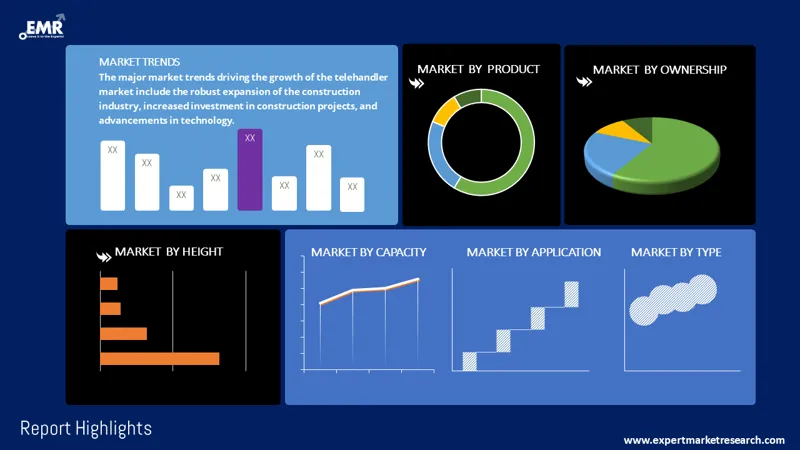
The EMR’s report titled “Telehandler Market Report and Forecast 2026-2035” offers a detailed analysis of the market based on the following segments:
Market Breakup by Product
Key Insight: Compact telehandlers are highly popular due to their versatility and maneuverability in tight spaces, making them ideal for agriculture, landscaping, and small construction projects. In February 2024, Manitou Group unveiled the MTA 519 compact telehandler for enhancing North American rental and construction markets. The growing demand for urban construction and maintenance jobs further boosts this segment, as compact telehandlers provide sufficient lifting capacity without compromising mobility.
Market Breakup by Type
Key Insight: The rotating telehandler industry is gaining traction due to their ability to rotate 360 degrees, combining crane-like versatility with telehandler functionality. This capability allows for precise positioning and greater job site flexibility. Rotating telehandlers are favored in complex construction, industrial, and agricultural operations where space optimization and multitasking are critical. In August 2025, Jarvie Plant introduced Scotland’s first fully electric rotating telehandler, Manitou MRT 2660E, marking a significant step in sustainable plant hire.
Market Breakup by Ownership
Key Insight: The rental segment dominates the market due to cost efficiency and flexibility for construction, agriculture, and industrial projects. In May 2024, Sinoboom introduced its inaugural telehandler range, tailored specifically for the rental industry. The rise in infrastructure projects and urban development fuels rental growth, as companies prefer renting for scalability and access to diverse telehandler types without ownership burdens.
Market Breakup by Height
Key Insight: Telehandlers with lifting heights under 50 feet are the most prevalent, widely used across construction, agriculture, and warehousing. Their versatility suits general material handling and moderate-height tasks. For example, Bobcat’s compact models cater to these needs with manageable sizes and sufficient reach, balancing power and maneuverability. This segment enjoys broad adoption due to affordability and applicability in diverse projects without extreme height requirements.
Market Breakup by Capacity
Key Insight: The 3–10 tons segment drives the telehandler market due to its versatility and wide usage across construction, agriculture, and logistics. In August 2023, Manitou introduced the MLT 850-145 V+, a 5-ton agricultural telehandler within its NewAg XL series. Their ability to operate in both indoor and outdoor environments, combined with relatively lower operational costs, makes this capacity bracket a preferred choice for contractors and rental fleets worldwide.
Market Breakup by Application
Key Insight: Construction is the leading application segment for telehandlers, representing the largest share of the global telehandler market. In April 2025, SANY launched its new 7m telehandler to enhance construction efficiency with advanced features, offering strong lifting power, maneuverability, and improved site safety. Telehandlers' ability to function as cranes, forklifts, and access platforms makes them essential equipment across residential, commercial, and infrastructure projects, especially in urban development zones and modular construction.
Market Breakup by Region
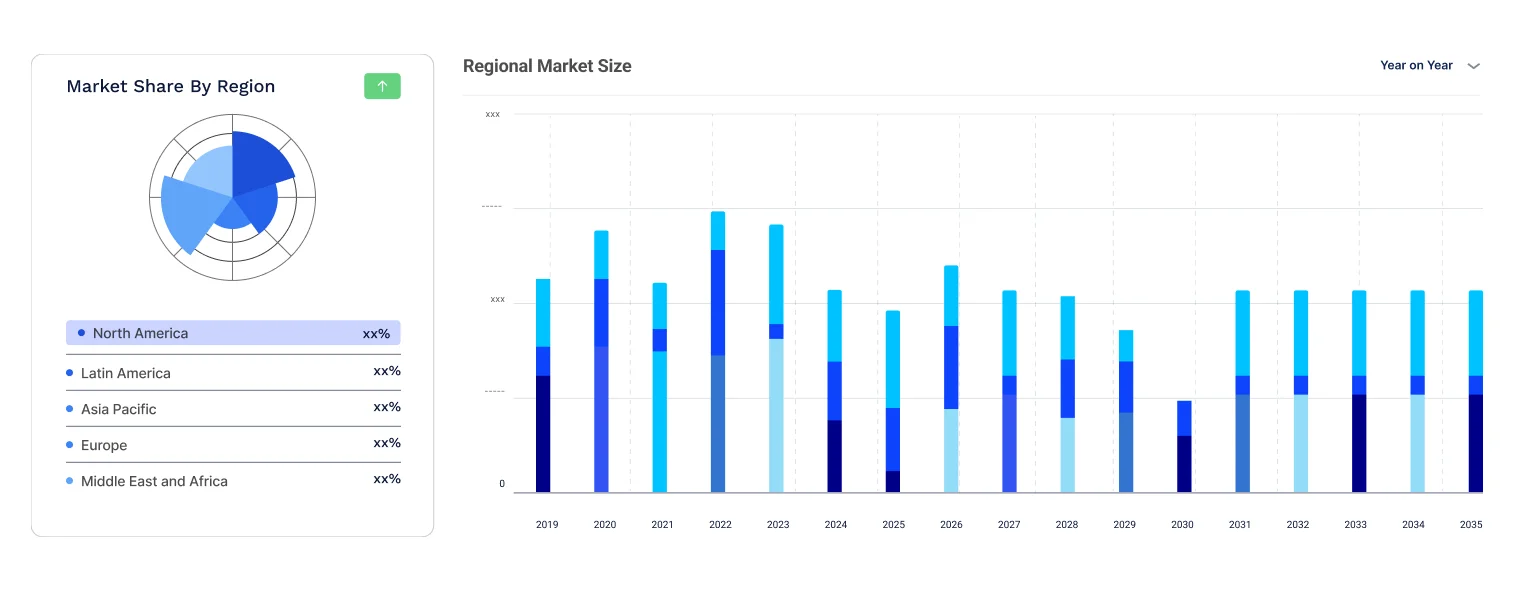
Key Insight: North America leads the market due to high demand across construction, agriculture, and rental sectors. In February 2025, New Holland launched its new TH6.26 compact telehandler in North America, offering powerful performance and maneuverability for agriculture, landscaping, and construction. The booming rental market, driven by large infrastructure and housing projects, fuels demand. Additionally, strong dealer and service networks across the United States and Canada ensure continued growth and aftermarket support, solidifying the region's dominance in the telehandler industry.
Read more about this report - REQUEST FREE SAMPLE COPY IN PDF
Rising Deployment of Large Telehandlers
Large telehandlers dominate heavy-duty industrial and construction sectors requiring higher lifting capacities and extended reach. These machines support large-scale projects, such as infrastructure development and mining. Liebherr’s heavy-duty models exemplify this segment, offering robust performance and long reach for lifting heavy loads at considerable heights. Despite their size limiting maneuverability, their capacity to handle large materials makes them essential on big sites, thus maintaining a significant market share.
Non-Rotating Telehandlers to Gain Prominence
Non-rotating telehandler market value is rising as they remain widely used, appreciated for their simplicity, reliability, and cost-effectiveness. Brands offer a broad range of non-rotating telehandlers that provide strong performance for everyday operations. In April 2023, Magni launched a high-capacity fixed boom telehandler, the 10K/12K TH series model. Their lower cost and ease of maintenance also keep them dominant in many standard telehandler applications.
Personal Ownership to Boost Telehandler Adoption
Personal ownership of telehandlers is common among small- to medium-sized farms, construction firms, and specialized contractors who require consistent, long-term use. Ownership offers control over equipment availability and customization but involves higher upfront costs and maintenance responsibilities. Brands like JLG and Manitou are popular among personal owners due to their reliability and wide service networks.
Strong Demand for Height 50 ft and Above Telehandlers
The telehandler market with lifting heights of 50 feet and above cater to specialized sectors such as heavy construction, infrastructure, and industrial maintenance. These high-reach telehandlers address tasks demanding extended reach and heavy lifting. In April 2022, JLG launched R1370, R1385, and R11100 rotating telehandlers with maximum reach heights of 67–97 feet. Their higher cost and niche applications are essential for large-scale projects requiring maximum height and capacity.
Below 3 Tons & Above 10 Tons Telehandlers to Witness Popularity
Telehandlers with capacities under 3 tons are gaining popularity, particularly in urban construction and small-scale agricultural operations. These models appeal to rental markets and small farms due to their lower purchase price, ease of transport, and energy-efficient engines. In December 2024, Merlo showcased TF30.7 and TF27.6 telehandlers delivering a 3-tonne and 2.7-tonne lift capacities respectively, highlighting efficient, and sustainable solutions.
High-capacity telehandler industry above 10 tons are specialized machines used in mining, heavy construction, and port operations, accounting for a major market share. Brands like Magni and Liebherr manufacture these robust machines capable of lifting heavy containers, pipes, and industrial equipment. The Magni HTH 50.14, for example, offers a 50-ton capacity and is built for extreme tasks in quarries or shipyards.
Huge Telehandler Usage in Agriculture & Transport and Logistics
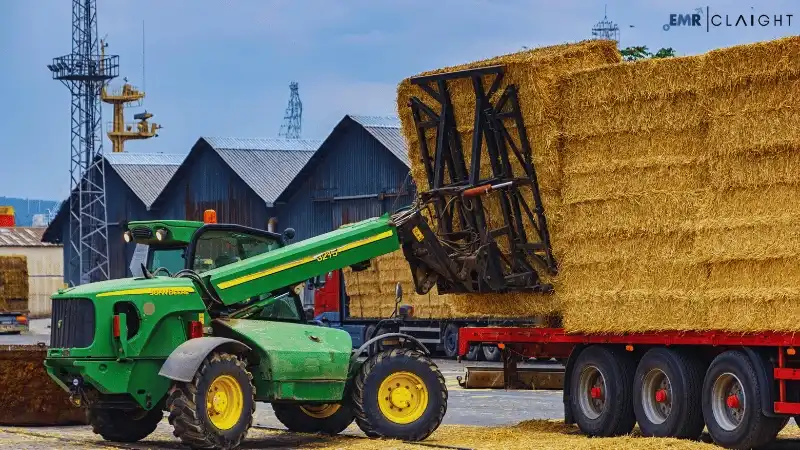
Agriculture is a significant market for telehandlers, particularly in Europe and North America. Farmers rely on these machines for loading hay, managing silage, transporting feed, and barn maintenance. In November 2024, Magni launched the THA agri telehandler series, tailored for farms needing efficient loading, lifting, and material handling performance. Agricultural models also feature all-terrain tires and operator comfort enhancements for long working hours.
The telehandler market revenue is growing from the transport and logistics sector due to uses for loading/unloading goods, container handling, and warehouse stacking. This segment is steadily growing due to the expansion of distribution hubs and e-commerce warehouses. Rotating telehandlers with telescopic booms improve vertical reach and aisle maneuverability, critical in large logistics centers. JLG and Liebherr offer advanced telehandlers equipped with GPS and telematics to optimize fleet operation.
Magnifying Telehandler Deployment in Europe & Asia Pacific
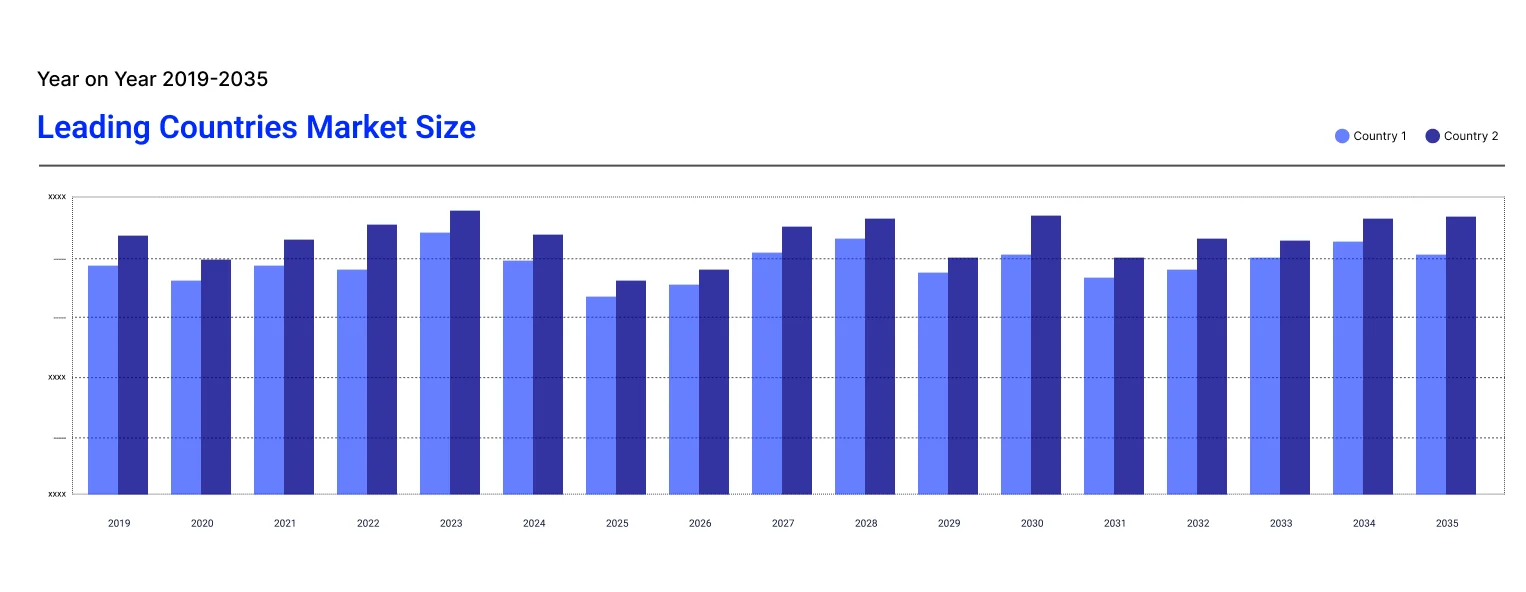
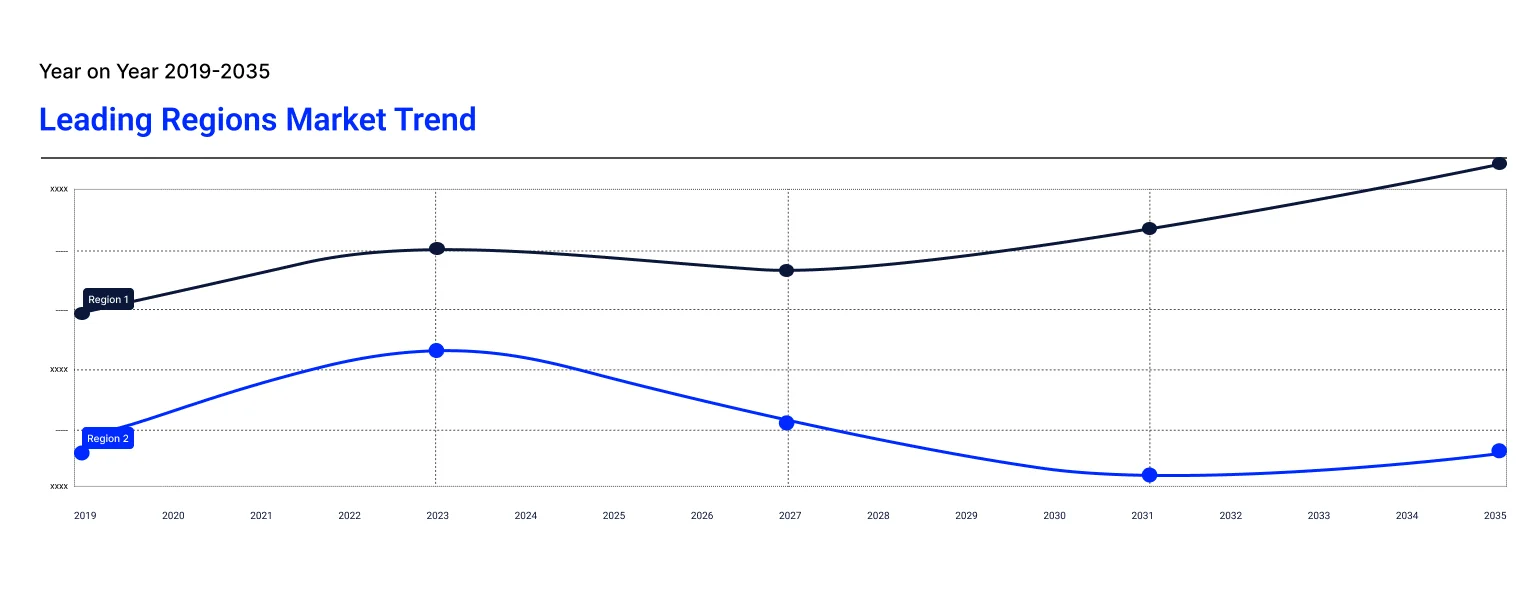
The market growth in Europe is driven by strong agricultural and construction equipment demand. The region is particularly advanced in adopting electric and compact telehandlers, given stricter environmental regulations and space-constrained job sites. Government incentives for low-emission machinery and a growing trend in rental services continue to bolster telehandler usage. In March 2025, Netherlands-based LGMG launched its first green telehandler, the H625E, offering eco-friendly, zero-emission performance for sustainable construction and lifting tasks.
Asia Pacific is witnessing rapid growth in the telehandler market due to expanding infrastructure and construction activities in China, India, and Southeast Asia. Additionally, increasing mechanization in agriculture, rising urbanization, and government investments in smart farming and logistics are accelerating demand. The growing popularity of rental equipment and the push for fuel-efficient and electric telehandlers are further shaping the market landscape.
The key players in the telehandler market have been particularly focused on innovation, geographical expansion and developing customer-driven solutions. Key manufacturers spend a lot of time and money on research & development for improving machines, things like load capacity, safety features, and fuel efficiency. Manufacturers are promoting product differentiation by integrating implements that can be used across a range of industries. They are working to expand geometrically to regions where infrastructure developments are happening.
Manufactures also look at strategic partners and collaborations with dealers and distributors to increase growth in their reach and improve service networks. Digital transformation is another important strategy. The communication of telehandlers with observing commands, providing IQ usage and predictive maintenance through IoT and telematics could help improve operational efficiencies. Companies prioritize sustainability by developing eco-friendly models using electric or hybrid powertrains, responding to increasing environmental regulations. Customizing solutions based on end-user needs and maintaining competitive pricing are also essential for market penetration.
Dieci S.r.l. was established in 1962 and is headquartered in Breganze, Italy. Known for pioneering compact and versatile telehandlers, Dieci has introduced innovations like their rotating telehandler range, enhancing maneuverability and safety in construction and agriculture, solidifying their reputation for durable and efficient lifting solutions worldwide.
Manitou Group, founded in 1958 and based in Ancenis, France, is renowned for its innovative rough-terrain forklifts and telehandlers. The company focuses on ergonomic designs and eco-friendly technologies, including electric and hybrid models, advancing safety and sustainability while expanding its global footprint across construction, agriculture, and industrial sectors.
JLG Industries, Inc. was formed in 1969 with headquarters in McConnellsburg, the United States. JLG is credited with inventing the first boom lift, continuously pushing boundaries through technological advancements like telematics and electric-powered aerial work platforms, maintaining a strong leadership position in lifting and access equipment worldwide.
Liebherr-International Deutschland GmbH, founded in 1949 and located in Kirchdorf an der Iller, Germany, excels in heavy machinery manufacturing. Liebherr’s commitment to innovation includes smart control systems and fuel-efficient engines, ensuring high performance and reliability in demanding industrial applications.
*Please note that this is only a partial list; the complete list of key players is available in the full report. Additionally, the list of key players can be customized to better suit your needs.*
Other players in the telehandler market are JCB Group, Caterpillar, and Doosan Bobcat, among others.
Discover the latest telehandler market trends 2026 with our detailed sample report. Gain strategic insights, market forecasts, and competitive analysis to empower your business decisions. Download your free sample now to stay ahead in the evolving telehandler industry landscape!


Upto 15% Off
USD
$3999 $3599
$2499 $2249
$4999 $4249
$5999 $5099


*While we strive to always give you current and accurate information, the numbers depicted on the website are indicative and may differ from the actual numbers in the main report. At Expert Market Research, we aim to bring you the latest insights and trends in the market. Using our analyses and forecasts, stakeholders can understand the market dynamics, navigate challenges, and capitalize on opportunities to make data-driven strategic decisions.*
Get in touch with us for a customized solution tailored to your unique requirements and save upto 35%!
In 2025, the market reached an approximate value of USD 5.68 Billion.
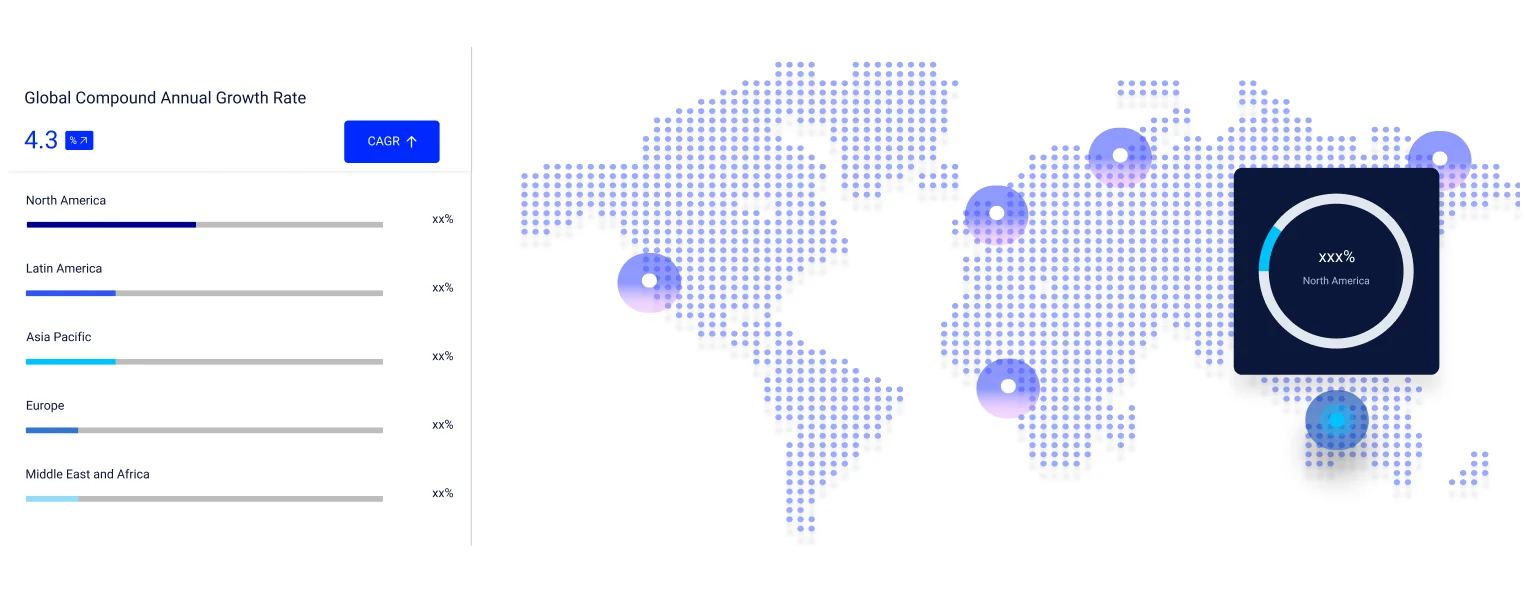
The market is projected to grow at a CAGR of 3.30% between 2026 and 2035.
Over the forecast period of 2026-2035, the market is estimated to witness healthy growth, reaching almost USD 7.86 Billion by 2035.
The key strategies driving the market include product innovation with advanced features, expanding distribution networks, strategic partnerships and acquisitions, focusing on emerging markets, enhancing after-sales services, and adopting sustainable practices. These approaches help companies meet diverse customer needs, improve efficiency, and strengthen their competitive position globally.
The key market trends include rapid growth construction industry and increased expenditure on the construction along with technological advancements.
The major regions in the market are Asia Pacific, North America, Europe, Latin America, and the Middle East and Africa.
The various products in the market include compact telehandler and large telehandler.
The major types in the market includes rotating and non-rotating.
The various ownership models in the market include rental and personal.
The different heights in the market are less than 50 ft and 50 ft and above.
In the market, the various capacity categories available are below 3 tons, 3-10 tons, and above 10 tons.
The various applications include construction, agriculture, forestry, mines and quarries, and transport and logistics, among others.
The key players in the market report include Dieci s.r.l., Manitou Group, JLG Industries, Inc., Liebherr-International Deutschland GmbH, JCB Group, Caterpillar, and Doosan Bobcat, among others.
The construction segment is dominating the market due to the boom in urban development zones and modular construction.
Explore our key highlights of the report and gain a concise overview of key findings, trends, and actionable insights that will empower your strategic decisions.
| REPORT FEATURES | DETAILS |
| Base Year | 2025 |
| Historical Period | 2019-2025 |
| Forecast Period | 2026-2035 |
| Scope of the Report |
Historical and Forecast Trends, Industry Drivers and Constraints, Historical and Forecast Market Analysis by Segment:
|
| Breakup by Product |
|
| Breakup by Type |
|
| Breakup by Ownership |
|
| Breakup by Height |
|
| Breakup by Capacity |
|
| Breakup by Application |
|
| Breakup by Region |
|
| Market Dynamics |
|
| Competitive Landscape |
|
| Companies Covered |
|
Single User License
One User
USD 3,999
USD 3,599
tax inclusive*
Datasheet
One User
USD 2,499
USD 2,249
tax inclusive*
Five User License
Five User
USD 4,999
USD 4,249
tax inclusive*
Corporate License
Unlimited Users
USD 5,999
USD 5,099
tax inclusive*
*Please note that the prices mentioned below are starting prices for each bundle type. Kindly contact our team for further details.*
Flash Bundle
Small Business Bundle
Growth Bundle
Enterprise Bundle
*Please note that the prices mentioned below are starting prices for each bundle type. Kindly contact our team for further details.*
Flash Bundle
Number of Reports: 3
20%
tax inclusive*
Small Business Bundle
Number of Reports: 5
25%
tax inclusive*
Growth Bundle
Number of Reports: 8
30%
tax inclusive*
Enterprise Bundle
Number of Reports: 10
35%
tax inclusive*
How To Order

Select License Type
Choose the right license for your needs and access rights.

Click on ‘Buy Now’
Add the report to your cart with one click and proceed to register.

Select Mode of Payment
Choose a payment option for a secure checkout. You will be redirected accordingly.
Strategic Solutions for Informed Decision-Making
Gain insights to stay ahead and seize opportunities.

Get insights & trends for a competitive edge.

Track prices with detailed trend reports.

Analyse trade data for supply chain insights.

Leverage cost reports for smart savings

Enhance supply chain with partnerships.

Connect For More Information
Our expert team of analysts will offer full support and resolve any queries regarding the report, before and after the purchase.
Our expert team of analysts will offer full support and resolve any queries regarding the report, before and after the purchase.
We employ meticulous research methods, blending advanced analytics and expert insights to deliver accurate, actionable industry intelligence, staying ahead of competitors.
Our skilled analysts offer unparalleled competitive advantage with detailed insights on current and emerging markets, ensuring your strategic edge.
We offer an in-depth yet simplified presentation of industry insights and analysis to meet your specific requirements effectively.





Share