

Consumer Insights
Uncover trends and behaviors shaping consumer choices today
Procurement Insights
Optimize your sourcing strategy with key market data
Industry Stats
Stay ahead with the latest trends and market analysis.

The South Korea fast food market was valued at USD 18.88 Billion in 2025. The surge in late-night delivery orders, particularly among the country’s single-person households and Gen Z consumers, is widening operational expansion among QSR chains in dense urban zones. As a result, the market is projected to grow at a CAGR of 4.60% during the forecast period of 2026-2035 to reach a value of USD 29.60 Billion by 2035.
Notably, the Ministry of Agriculture, Food and Rural Affairs announced the “Strategic Plan for K-Food Plus Export Innovation” to respond to a rapidly changing global trend and trade environment, promoting South Korean fast-food adaptations in domestic and international markets. In 2025, the government invested USD 1 billion into SMEs innovating in beauty and food products helping street food brands introduce AI-driven kiosks and meat-alternative dishes.
The Sout Korea fast food market growth is also fuelled by rising consumer demand for quick, spicy, and innovative meals. The fast food trend is not only shaped by convenience but also by evolving tastes, especially among urban millennials and Gen Z. Major fast food chains like Lotteria and Mom’s Touch are revamping menus to reflect local preferences over westernised offerings.
Moreover, domestic giants are collaborating with delivery apps like Baedal Minjok and Yogiyo to boost real-time ordering. The market also observes an increasing inclination towards sustainability, with brands adopting biodegradable packaging after Seoul's 2024 regulation on voluntary single-use plastics in eateries. Though the regulation is voluntary, young consumers in South Korea resonate well with this trend.
Base Year
Historical Period
Forecast Period
In South Korea, approximately 48.8% of Seoul residents consume fast food one to three times a month, while around 23.1% almost never eat fast food.
The fast food market growth is driven by factors like busy lifestyles, single households, and the appeal of convenience and variety in fast food options.
South Korea's high urbanisation rate, with 91.8% of its population residing in cities, has significantly contributed to the growth of its fast food market.
The country has witnessed a significant surge in online food delivery transactions, which reached 25.7 trillion won in 2021, representing a ninefold increase over a four-year period.
Compound Annual Growth Rate
4.6%
Value in USD Billion
2026-2035
*this image is indicative*
As per the South Korea fast food market report, consumers ordering via mobile apps or kiosks, with AI-based systems enhancing speed and accuracy is expected to grow by 12.5% over the coming years. McDonald's Korea piloted blind-friendly kiosks in September 2023 to personalise menus and speed up service. Seoul-based fast food chains are even testing robotic servers, supported by funding from the Ministry of SMEs and Startups (MSS). These innovations have become vital upgrades, especially for high-footfall stores, helping to reduce waiting times and boost order customisation.
Brands like BHC and Mom’s Touch are experimenting with global flavours fused with local staples such as Mexican Gimbap, Spicy Tteokbokki Burritos, and even Kimchi Quesadillas, to propel further fast food demand in South Korea. In July 2024, the Korea Tourism Organisation (KTO) and the Ministry of Culture, Sports, and Tourism unveiled a new food tourism campaign slogan, "Taste your Korea," with the goal of drawing tourists and enhancing Korea's standing as a top food tourism destination. As part of its basic contents, it also introduced 33 representative dishes, ingredients, and liquor varieties.
There are more than 70,000 coffee stores in the country because of the emerging coffee culture among the Korean population. On average, adult Koreans consumed approximately 300 cups of coffee in the year 2021. The steady growth of coffee chains and cafes increases the consumption of bakery and confectionery items, further supporting the market development. Franchises like Paris Baguette and A Twosome Place are expanding aggressively, blending coffee with ready-to-eat snack menus. Moreover, seasonal menu innovations, such as sweet potato lattes and red bean buns, are becoming major crowd-pullers. This crossover between beverage and fast food categories is creating lucrative micro-niches for B2B vendors in supply, packaging, and technology.
Driven by younger consumers and government encouragement, the fast food market in South Korea witnesses a rapid shift towards fast yet nutritious food. The “Mafra Live Healthy - Grow Active and Healthy”, incentivises outlets offering low-sodium, high-fibre options. This movement is helping fast food lose its “junk food” label, especially in affluent districts like Gangnam and Pangyo, where health-conscious consumers demand taste while maintaining their balanced diets. This focus also aligns with the broader K-Wellness wave gaining traction across Asia.
South Korea’s dense urban living and tech-savvy population make it ideal for cloud kitchens, or delivery-only food hubs. Brands like “Kitchen X” are launching fast food chains without physical storefronts, powered by AI to predict South Korea fast food demand forecast. Additionally, government-backed digital infrastructure like the “Smart City” initiative supports seamless integration of data analytics and logistics, pushing cloud kitchens to the frontlines of the country’s next-generation foodservice revolution. For B2B players, the scalability and minimal risk of cloud kitchens present an attractive route to penetrate into the market.
Read more about this report - REQUEST FREE SAMPLE COPY IN PDF
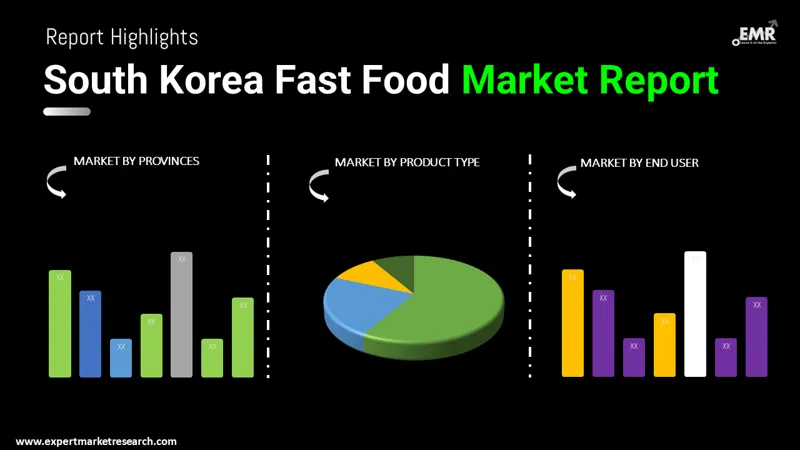
The EMR’s report titled “South Korea Fast Food Market Report and Forecast 2026-2035” offers a detailed analysis of the market based on the following segments:
Market Breakup by Product Type
Key Insight: All product categories considered in the market report, from Kimbap and Fish Cakes to Donuts and Korean Pancakes, are being reimagined for speed, portability, and unique flavour profiles. While Spicy Rice Cakes largely contribute to the accelerated the fast food consumption in South Korea due to cultural preference and price efficiency, items like Chicken Cup are growing in popularity due to format innovation. Fish Cakes and Blood Sausages are getting gourmet revamps, while Korean Pancakes are entering café menus. Other products category including products like Bulgogi Tacos and Soy Tofu Pouches, are also growing widely popular among Korean consumers.
Market Breakup by End User
Key Insight: From full-service restaurants to QSRs, and caterings, each end user category of the market addresses distinct demand engines. Full-service restaurants focus on premium experiences and plated Korean fusion, while QSRs boost the overall South Korea fast food market revenue. Caterings are reshaping the role of fast food in daily routines, especially in institutional and workplace settings. Other end users include vending kitchens and shared eating spaces in co-working hubs.
Market Breakup by Provinces
Key Insight: Based on provinces, the market is divided into some major regions, such as North Chungcheong, South Chungcheong, Gangwon, Gyeonggi, North Gyeongsang, South Gyeongsang, North Jeolla, and South Jeolla, and Jeju Special Self-Governing Province. While Gyeonggi dominates the industry due to scale and proximity to Seoul, areas like Gangwon and North Jeolla are experimenting with regional street food chains. South Gyeongsang and North Chungcheong are experiencing growth in school and factory food services. Jeju, though small, is emerging as a high-growth hub for sustainable fast-food innovation.
Read more about this report - REQUEST FREE SAMPLE COPY IN PDF
By Product Type, Spicy Rice Cakes Secure the Largest Share of the Market
With chains like Jaws Food and Yeopgi Tteokbokki scaling up rapidly by offering customisable spice levels and street-style setups, spicy rice cakes (Tteokbokki) have become dominant in the market. These are growing increasingly popular among teens and officegoers, with convenience stores even stocking microwavable versions. The product's versatility, served in cups, trays, or bowls, makes it adaptable for dine-in and delivery models. Moreover, major suppliers are increasingly innovating with sauces, pre-cooked rice cakes, and instant kits for broader reach to support the product’s dominance.
The Chicken Cup, a portable container of fried chicken bites with rice or fries, is gaining rapid popularity among urban commuters, boosting growth in the South Korea fast food market. Initially popularised through food trucks near university hubs, it has now become a regular at chain outlets like NeNe Chicken and Goobne. The rise of this format mirrors the country’s fast-moving lifestyles. With increasing demand in metro stations and convenience stores, firms are introducing flavour-infused coatings, like garlic-soy or honey butter. The Korean Food Research Institute is also exploring shelf-stable versions for export.
By End User, Quick Service Restaurants Occupy a Substantial Share of the Market Revenue
Quick Service Restaurants (QSRs) such as Lotteria, Burger King Korea, and No Brand Burger have largely contributed to the South Korea fast food market value. Offering affordability, menu localisation, and seamless digital experiences, QSRs thrive especially in urban transit zones. The expansion of smart ordering kiosks and mobile-based loyalty programmes has pushed customer retention higher. QSRs are also experimenting with dynamic pricing and automated cooking systems to optimise kitchen operations. In addition, themed events, social media marketing, speedy service, and options for customising food orders are the main factors driving the demand for quick-service restaurants in South Korea.
Catering-based fast food formats, especially for office lunches and late-night deliveries, are stimulating the market growth. Players like “Lunch On” and “BoxEat” offer premium, fast-food-style meals tailored for corporate clients. These setups are often tied to subscription models and supported by cloud kitchens for operational efficiency. Additionally, schools and factories are tapping catering services that meet regulated dietary needs while maintaining fast food taste. For B2B stakeholders, this category is ideal for long-term contracts, low churning rates, and predictable margins, especially as remote and hybrid work reshape South Korea fast food consumption patterns.
By Provinces, Gyeonggi Holds the Leading Position in the Market
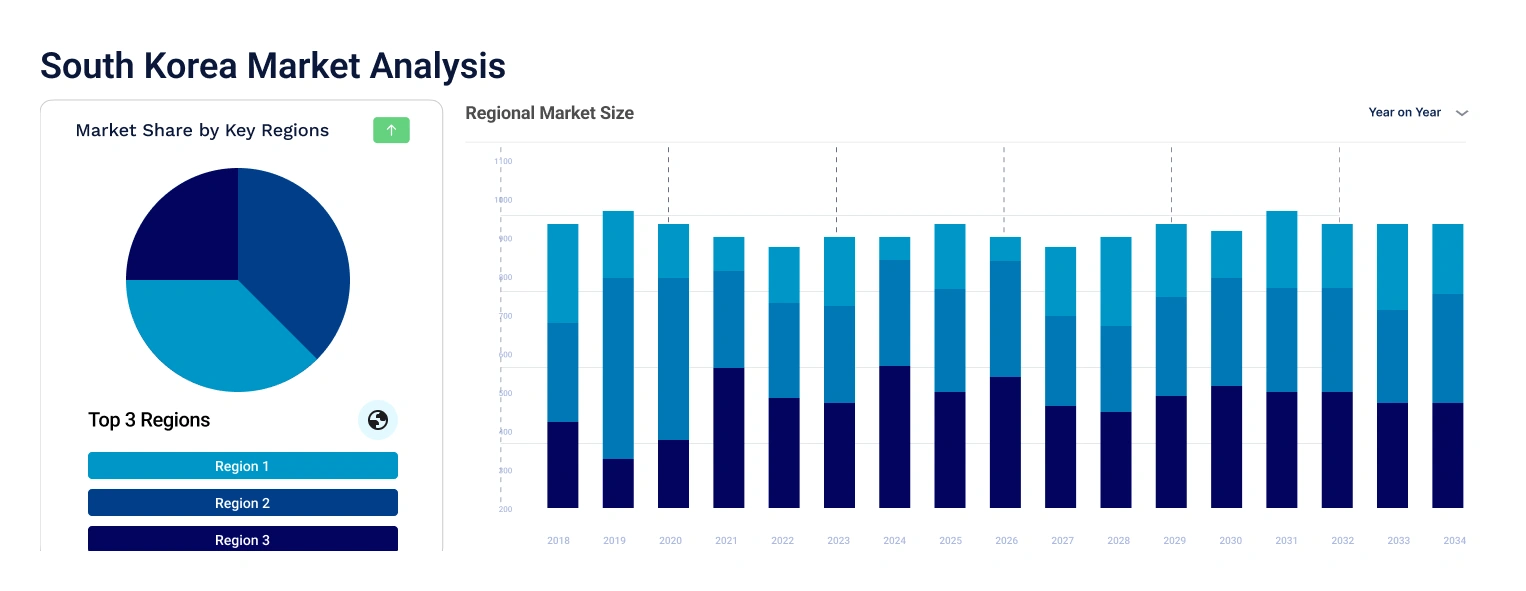
Gyeonggi Province, encircling Seoul, holds the dominant position in the market. With over 13 million residents, a tech-savvy youth population, and countless industrial hubs, South Korea observes a high demand for fast food products. Major chains and startups both use Gyeonggi for pilot rollouts, aided by logistics proximity to the capital. Areas like Suwon and Seongnam host innovation kitchens and franchise headquarters. The province’s demographic and logistical profile makes it ideal for mass-market and upscale fast food formats alike.
Jeju Island, by offering premium and tourist-focused fast food, is considerably boosting the South Korea fast food market development. With over 15 million annual visitors, food operators are launching concepts like seafood rice burger outlets and traditional Korean snack bars with eco-themes. In this province, products are tailored for tourism-focused branding. Pop-ups featuring locally sourced ingredients and cultural storytelling are also gaining traction, particularly near major attractions. Government support for sustainable tourism and food innovation hubs is further accelerating growth. Jeju Island’s status as a gourmet destination for global tourists is encouraging B2B suppliers to invest in location-specific menus, green packaging, and immersive food technology experiences.
The South Korea fast food market players are increasingly focusing on digitisation, regional flavour customisation, and sustainable sourcing. Franchise scalability, combined with hyper-local delivery logistics, presents opportunities especially in the QSR and cloud kitchen space. Leading firms are also investing in AI-driven demand prediction, robotic kitchen automation, and green packaging R&D. In addition, firms are focused on adding fresh ingredients, finding low-calorie alternatives, and menu innovation to attract customers and stay competitive in the industry.
Collaborations between tech startups and food giants are becoming common. For example, South Korea fast food companies like Woowa Brothers (Baedal Minjok) are investing in autonomous delivery pods for fast food chains in smart cities like Pangyo. There is also an opportunity in white-label production for international K-food exports. Players that can balance speed, taste, technology, and sustainability are expected to gain competitive edge in the coming years.
Lotteria Corporation was established in February 1972 in Tokyo, Japan, and later expanded to Seoul, South Korea in 1979. Company’s menu includes popular fast-food items such as burgers, French fries, fried chicken, chicken wings, and chicken fingers.
McDonald's Corporation was founded in 1940 and is headquartered in Illinois, United States. The company is a global fast-food chain known for its iconic menu items such as Big Macs, Quarter Pounders, Chicken McNuggets, and world-famous French fries. McDonald's also offers a variety of breakfast items, salads, desserts, and beverages.
KFC Corporation was founded in 1930 and is headquartered in Kentucky, United States. KFC's menu includes a variety of chicken products such as original recipe chicken, extra crispy chicken, and kentucky grilled chicken, along with sides like mashed potatoes, coleslaw, and biscuits.
Shake Shack Inc. was founded in July 2004 in New York City, United States, and is headquartered in the same city. The fast casual restaurant chain is known for its hamburgers, hot dogs, French fries, chicken, milkshakes, custards, beer, and wine, with the ShackBurger being its most famous product. Shake Shack is now operating over 400 locations globally.
*Please note that this is only a partial list; the complete list of key players is available in the full report. Additionally, the list of key players can be customized to better suit your needs.*
Other key players in the market are Toast Co., Ltd., Mom’s Touch Global, and Burger King Corporation, among others.
Explore the latest trends shaping the South Korea fast food market 2026-2035 with our in-depth report. Gain strategic insights, future forecasts, and key market developments that can help you stay competitive. Download a free sample report or contact our team for customized consultation on South Korea fast food market trends 2026.
United Kingdom Fast Food Market
Fast Food Wrapping Paper Market
United States Fast Food Market
Latin America Fast Food Market
Asia Pacific Fast Food Market
Colombia Fast Food Market
Europe Fast Food Market
Mexico Fast Food Market
Vegan Fast Food Market


Upto 15% Off
USD
$3999 $3599
$2499 $2249
$4999 $4249
$5999 $5099


*While we strive to always give you current and accurate information, the numbers depicted on the website are indicative and may differ from the actual numbers in the main report. At Expert Market Research, we aim to bring you the latest insights and trends in the market. Using our analyses and forecasts, stakeholders can understand the market dynamics, navigate challenges, and capitalize on opportunities to make data-driven strategic decisions.*
Get in touch with us for a customized solution tailored to your unique requirements and save upto 35%!
The market is projected to grow at a CAGR of 4.60% between 2026 and 2035.
Key strategies driving the market include investing in modular kitchens, partnering with local tech, scaling through hybrid QSR-catering models, and adopting AI for menu innovation.
The rising disposable income, the emergence of coffee culture, busy lifestyles, the prevalence of online transactions and doorstep delivery are the key trends aiding market expansion.
Fast food is popular due to its convenience, affordability, and quick service, catering to busy lifestyles and offering a wide variety of flavourful options.
Provinces considered in the market are North Chungcheong, South Chungcheong, Gangwon, Gyeonggi, North Gyeongsang, South Gyeongsang, North Jeolla, South Jeolla, and Jeju Special Self-Governing Province.
Based on end user, the market is divided into full-service restaurants, quick service restaurants, caterings, and others.
The different type of fast food in the industry are spicy rice cakes, chicken cup, fish cakes, kimbap, blood sausage, donuts, and Korean pancakes, among others.
The key players in the market include Mom’s Touch Global, Lotteria Corporation, Mc Donald’s Corporation, KFC Corporation, Isaac Toast Co., Ltd., Burger King Corporation, and Shake Shack Inc., among others.
In 2025, the South Korea fast food market reached an approximate value of USD 18.88 Billion.
The market is estimated to witness a healthy growth in the forecast period of 2026-2035 to reach about USD 29.60 Billion by 2035.
The key challenges are balancing fast production with health compliance, rising cost of logistics, and staff shortages in cloud kitchens.
Explore our key highlights of the report and gain a concise overview of key findings, trends, and actionable insights that will empower your strategic decisions.
| REPORT FEATURES | DETAILS |
| Base Year | 2025 |
| Historical Period | 2019-2025 |
| Forecast Period | 2026-2035 |
| Scope of the Report |
Historical and Forecast Trends, Industry Drivers and Constraints, Historical and Forecast Market Analysis by Segment:
|
| Breakup by Product Type |
|
| Breakup by End User |
|
| Breakup by Provinces |
|
| Market Dynamics |
|
| Competitive Landscape |
|
| Companies Covered |
|
Single User License
One User
USD 3,999
USD 3,599
tax inclusive*
Datasheet
One User
USD 2,499
USD 2,249
tax inclusive*
Five User License
Five User
USD 4,999
USD 4,249
tax inclusive*
Corporate License
Unlimited Users
USD 5,999
USD 5,099
tax inclusive*
*Please note that the prices mentioned below are starting prices for each bundle type. Kindly contact our team for further details.*
Flash Bundle
Small Business Bundle
Growth Bundle
Enterprise Bundle
*Please note that the prices mentioned below are starting prices for each bundle type. Kindly contact our team for further details.*
Flash Bundle
Number of Reports: 3
20%
tax inclusive*
Small Business Bundle
Number of Reports: 5
25%
tax inclusive*
Growth Bundle
Number of Reports: 8
30%
tax inclusive*
Enterprise Bundle
Number of Reports: 10
35%
tax inclusive*
How To Order

Select License Type
Choose the right license for your needs and access rights.

Click on ‘Buy Now’
Add the report to your cart with one click and proceed to register.

Select Mode of Payment
Choose a payment option for a secure checkout. You will be redirected accordingly.
Gain insights to stay ahead and seize opportunities.

Get insights & trends for a competitive edge.

Track prices with detailed trend reports.

Analyse trade data for supply chain insights.

Leverage cost reports for smart savings

Enhance supply chain with partnerships.

Connect For More Information
Our expert team of analysts will offer full support and resolve any queries regarding the report, before and after the purchase.
Our expert team of analysts will offer full support and resolve any queries regarding the report, before and after the purchase.
We employ meticulous research methods, blending advanced analytics and expert insights to deliver accurate, actionable industry intelligence, staying ahead of competitors.
Our skilled analysts offer unparalleled competitive advantage with detailed insights on current and emerging markets, ensuring your strategic edge.
We offer an in-depth yet simplified presentation of industry insights and analysis to meet your specific requirements effectively.





Share