

Consumer Insights
Uncover trends and behaviors shaping consumer choices today
Procurement Insights
Optimize your sourcing strategy with key market data
Industry Stats
Stay ahead with the latest trends and market analysis.

The global reusable water bottles market attained a value of USD 9.74 Billion in 2025 and is projected to expand at a CAGR of 4.50% through 2035. The market is further set to achieve USD 15.13 Billion by 2035. Institutional procurement from corporates, universities, and hospitality chains is accelerating bulk demand for customizable, durable bottles. This demand has encouraged suppliers to scale imprinting technology, modular components, and cost-efficient multi-SKU production.
Companies are shifting from simple stainless-steel offerings to highly engineered hydration systems, making the market undergo an innovation-heavy phase. For example, Hydro Flask offers its Flex Sip line with an upgraded leak-resistant, dual-flow lid. It is designed for heat retention stability during long outdoor use. Such a seemingly small product update actually ties to a broader reusable water bottles market trend. According to the Outdoor Industry Association, participation in trail and fitness activities across North America has increased steadily. It has further pushed brands to invest in components that survive rugged handling while offering temperature consistency.
Manufacturers are blending material science, ergonomic design, and connected technologies to shape new demand patterns. Brands are adding graphene-enhanced insulation, antimicrobial surface treatments, and modular caps compatible with filtration systems. In August 2023, Berry Global launched unique ergonomic flat bottles that can fit easily into pockets, bags and seatback storage. Many of the other firms are also relying on R&D collaborations with coating specialists and smart-hardware labs. This has become a core strategy especially as consumers become more selective about weight, durability, and the “feel” of the bottles during everyday use, thereby reshaping the reusable water bottles market dynamics. The shift towards component-level differentiation is especially visible in urban markets.
Base Year
Historical Period
Forecast Period
The packaged drinking water industry in India, with a production capacity of 40 lakh litres annually, generates an estimated turnover of Rs. 3.2 crore, according to the Ministry of MSME Report 2021. This indicates a significant market presence and growth potential for sustainable alternatives like reusable water bottles in India’s evolving eco-conscious consumer landscape.
At UNEA in March 2022, the United States, alongside other countries, adopted a resolution addressing plastic pollution. This global initiative reinforces the push towards sustainability, driving demand for reusable water bottles, which help reduce plastic waste. It strengthens the market for sustainable products worldwide.
India holds the 5th largest water and wastewater treatment market, valued at USD 11 billion, according to industry reports. This highlights the country’s significant commitment to water management, creating opportunities for eco-friendly solutions like reusable water bottles, supporting both environmental sustainability and clean water initiatives.
Compound Annual Growth Rate
4.5%
Value in USD Billion
2026-2035
*this image is indicative*
| Global Reusable Water Bottles Market Report Summary | Description | Value |
| Base Year | USD Billion | 2025 |
| Historical Period | USD Billion | 2019-2025 |
| Forecast Period | USD Billion | 2026-2035 |
| Market Size 2025 | USD Billion | 9.74 |
| Market Size 2035 | USD Billion | 15.13 |
| CAGR 2019-2025 | Percentage | XX% |
| CAGR 2026-2035 | Percentage | 4.50% |
| CAGR 2026-2035 - Market by Region | Asia Pacific | 5.4% |
| CAGR 2026-2035 - Market by Country | China | 5.2% |
| CAGR 2026-2035 - Market by Country | Brazil | 4.9% |
| CAGR 2026-2035 - Market by Material Type | Metal | 5.1% |
| CAGR 2026-2035 - Market by Distribution Channel | Online Store | 8.9% |
| Market Share by Country | India | 4.9% |
As consumer awareness of environmental issues grows, the demand for reusable water bottles has risen quite sharply. Increased concerns about plastic pollution have encouraged individuals to seek sustainable alternatives. Reusable bottles help reduce plastic waste and align with global sustainability initiatives. In May 2024, Liverpool's Turncoat Gin Distillery launched reusable aluminum bottles to minimize plastic use, reduce carbon footprints, and appeal to eco-conscious customers, thereby contributing to the reusable water bottles market growth.
Health and wellness trends are stimulating demand in the market. Consumers are becoming more health-conscious, choosing BPA-free, toxin-free bottles that support hydration. Bottles with added features, such as infusers for fruits and herbs, are also gaining popularity. In June 2021, Aptar and REBO launched a smart bottle that tracks hydration using Bluetooth technology. The bottle’s refills contribute to ocean plastic collection in developing countries, aligning with sustainability goals and promoting eco-friendly practices.
Personalization has become a prominent trend in the market. Consumers seek products that reflect their individual style, whether through unique designs, colors, or custom logos. To cater to this demand, manufacturers offer a variety of sizes and shapes. In October 2023, Alpla and Tönissteiner partnered to create a reusable PET bottle from 100% recycled material, positively influencing the reusable water bottles market revenue growth. Designed for Tönissteiner mineral water, this bottle promotes sustainability by supporting a circular economy where bottles are reused and recycled, encouraging eco-friendly practices within the beverage sector.
The integration of technology into reusable water bottles has gained strong traction. Technology offered in this field are hydration tracking and temperature control. These innovations cater to tech-savvy consumers who want to monitor their water intake effortlessly. In November 2023, air up® introduced a new line of reusable bottles made from 50% recycled content, driving new reusable water bottles market opportunities. These bottles are lightweight, shatter-resistant, and produced using 100% renewable energy, Hence, they help reduce plastic waste and further the company’s sustainability and circular economy goals.
Growing regulatory pressure to shrink single-use plastics is becoming the strongest catalyst in the market. This trend has compelled brands to develop more aggressive material and design innovation. Governments are enforcing bans, extended producer responsibility (EPR) rules, and landfill taxes, and these measures are rapidly shifting consumption patterns. The EU’s Single-Use Plastics Directive and India’s nationwide prohibition on select disposable plastics have already encouraged retailers to feature refill-friendly product lines, reshaping the reusable water bottles market trends. Companies are responding with antimicrobial steel interiors, collapsible polymer formats for mobility, and tracking-enabled bottles that support hydration apps. For example, in April 2025, AQUAPHOR launched CITY COOL Water Filter Bottle that is engineered to combine advanced filtration technology with sustainable materials and double-walled stainless steel.
Read more about this report - REQUEST FREE SAMPLE COPY IN PDF
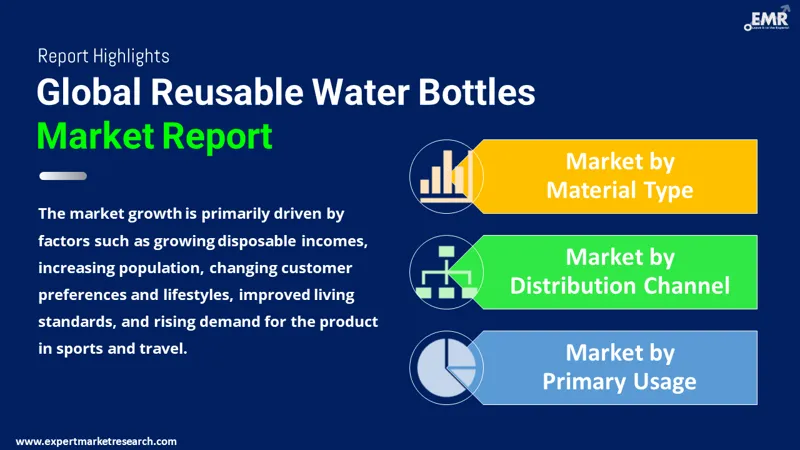
The EMR’s report titled “Global Reusable Water Bottles Market Report and Forecast 2026-2035” offers a detailed analysis of the market based on the following segments:
Market Breakup by Material Type
Key Insight: Demand across all the material types considered in the reusable water bottles market report including metal, glass, silicon, polymer, and others, is shaped by durability, safety expectations, brand aesthetics, and sustainability goals. Metal leads the market because it combines longevity with strong insulation properties. Glass attracts buyers who prefer purity and chemical neutrality, while silicon appeals to users wanting compact and flexible travel-friendly features. Polymer remains favored for affordability, lightness, and broad design versatility.
Market Breakup by Distribution Channel
Key Insight: The market is shaped by accessibility, product education, and consumer engagement. Supermarkets drive volume, while departmental stores provide curated, lifestyle-focused assorted collections. Online platforms continue transforming brand discovery with personalized selections, transparent reviews, and flexible pricing strategies, redefining the reusable water bottles market trends and dynamics. Specialty channels, including outdoor stores and corporate procurement, help brands target high-usage audiences such as fitness communities and professionals.
Market Breakup by Primary Usage
Key Insight: Everyday bottles remain the most versatile choice across the reusable water bottles market. On the other hand, sports bottles emphasize performance and ergonomics. Travel bottles attract buyers seeking collapsibility, lightweight materials, and leak-resistant protection during transit. The “others” category includes specialized applications such as corporate wellness, outdoor recreation, and kids’ hydration needs. All of these categories show a shift toward personalized hydration habits supported by innovative design, multipurpose functionality, and sustainability-driven buying behavior.
Market Breakup by Region
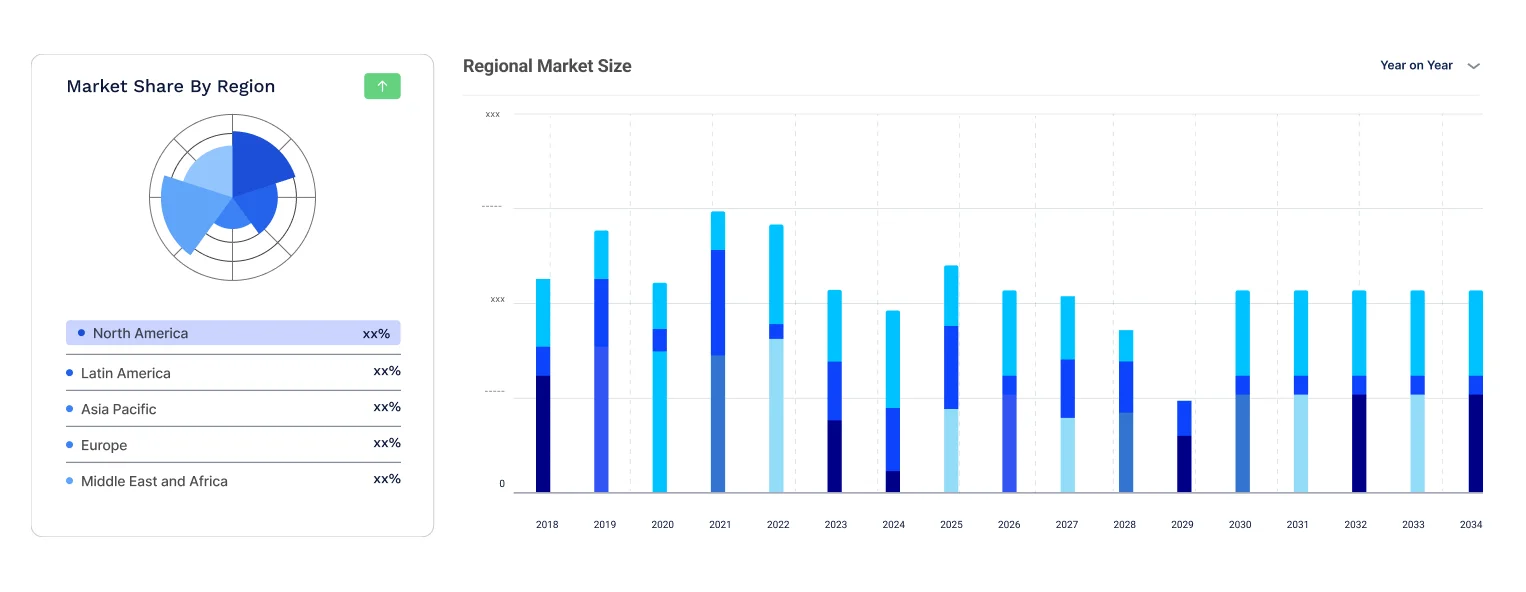
Key Insight: Regional demand patterns suggest that the market is shaped by environmental policies, lifestyle trends, and retail modernization. The reusable water bottles market in North America dominates the global industry by a high margin with a strong cultural emphasis on wellness. Europe maintains strong sustainability alignment, Asia Pacific drives volume growth, Latin America adopts bottles through affordability and lifestyle shifts, and the Middle East & Africa shows rising interest through health-conscious purchasing.
Read more about this report - REQUEST FREE SAMPLE COPY IN PDF
By material, metal bottles dominate the market owing to durability and premium insulation appeal
Metal bottles, particularly stainless steel and aluminum, dominate the reusable water bottles market shares because they offer strong durability, extended insulation performance, and compatibility with high-end functional designs. Brands are increasingly focusing on powder-coated, scratch-resistant exteriors and double-wall vacuum technologies that preserve temperature for extended periods. Metal, as a bottle material, also aligns well with sustainability-driven purchasing preferences since they are fully recyclable.
| CAGR 2026-2035 - Market by | Material Type |
| Metal | 5.1% |
| Polymer | 4.9% |
| Silicon | 4.6% |
| Glass | XX% |
| Others | XX% |
Polymer bottles experience considerable growth in the reusable water bottles market because they offer both lightweight construction and cost-efficiency. They also align with advanced safety standards enabled by BPA-free and Tritan-based formulations. Manufacturers are coming up with collapsible, squeezable, and ergonomic designs to attract travel and sports-focused consumers who prioritize portability. In May 2025, Netherlands-based Avantium announced that the company will be integrating its PEF polymer into the dry molded fiber bottle process.
By distribution channel, supermarkets account for the dominant market share driven by visibility, volume, and high turnover rates
Supermarkets and hypermarkets offer high visibility, broad SKU assortments, and immediate product availability for impulse and planned purchases. These channels often prioritize premium placements, seasonal promotions, and bundle discounts to boost adoption of metal and polymer bottles. Retailers are increasingly curating lifestyle-driven sections featuring hydration accessories and sustainable consumer products, which strengthens footfall-based conversion. For mid- to large-sized brands, supermarkets remain the primary venue for rapid reusable water bottles market penetration, especially in urban and suburban regions.
| CAGR 2026-2035 - Market by | Distribution Channel |
| Online Store | 8.9% |
| Supermarket/hypermarket | 4.8% |
| Departmental Store | XX% |
| Others | XX% |
Online channels represent the fastest-growing distribution route. The channel’s growth is driven by customization options, consumer convenience, and rapid expansion of direct-to-consumer models. Digital platforms enable brands to showcase detailed product specifications, insulation tests, user reviews, and sustainability credentials. E-commerce allows easy configuration of colorways, engravings, and accessories, supporting personalized gifting and subscription-based repeat purchases.
By primary usage, everyday bottles dominate the global industry due to broad utility
Everyday-use bottles serve diverse hydration needs across home, workplace, campus, and commute scenarios. Brands focus on ergonomic shapes and leak-proof lids that fit into everyday lifestyles. Consumers also favor minimalist designs, neutral colors, and durable materials that work across personal and professional environments. This category benefits from rising awareness around wellness routines, where steady hydration is tied to productivity and comfort, propelling the reusable water bottles market revenue growth.
Sports bottles are the fastest-growing usage category as athletes and active consumers prioritize features optimized for performance, durability, and rapid hydration. In November 2025, Lumio announced a new reusable water bottle called Elio, a funky-looking product, with a rounded triangular shape and exterior webbing that can be collapsed to fit in pockets. Brands are enhancing squeeze-flow dynamics, grip textures, and temperature retention to suit intense training sessions. Lightweight polymer and metal hybrid builds appeal to runners, cyclists, and gym users who need portability without compromising strength.
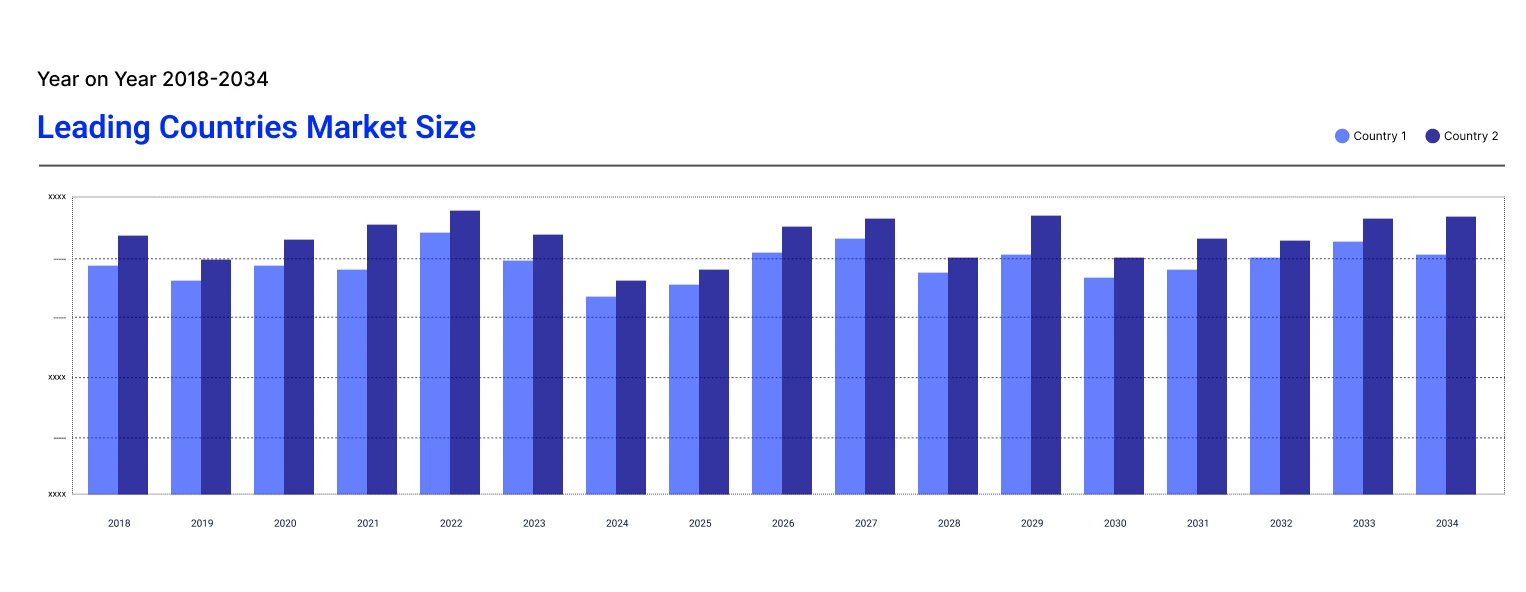
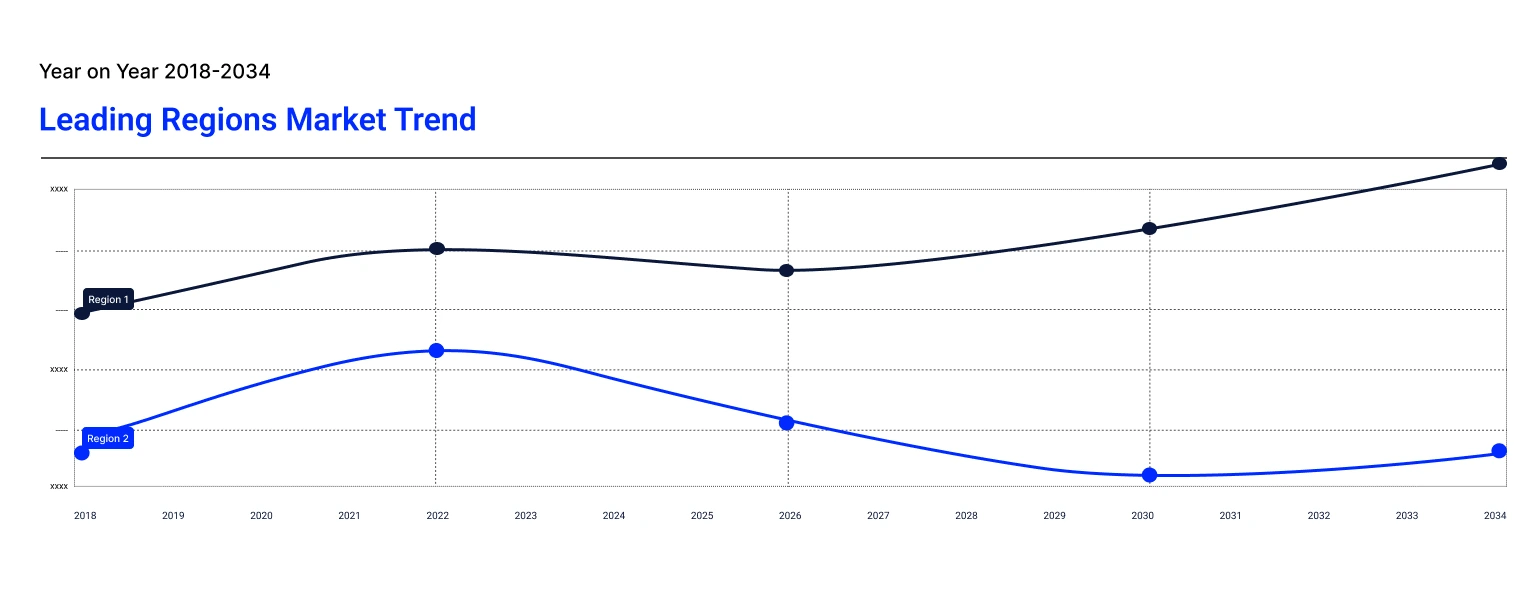
North America secures the leading position in the market due to high sustainability awareness and premium brand adoption
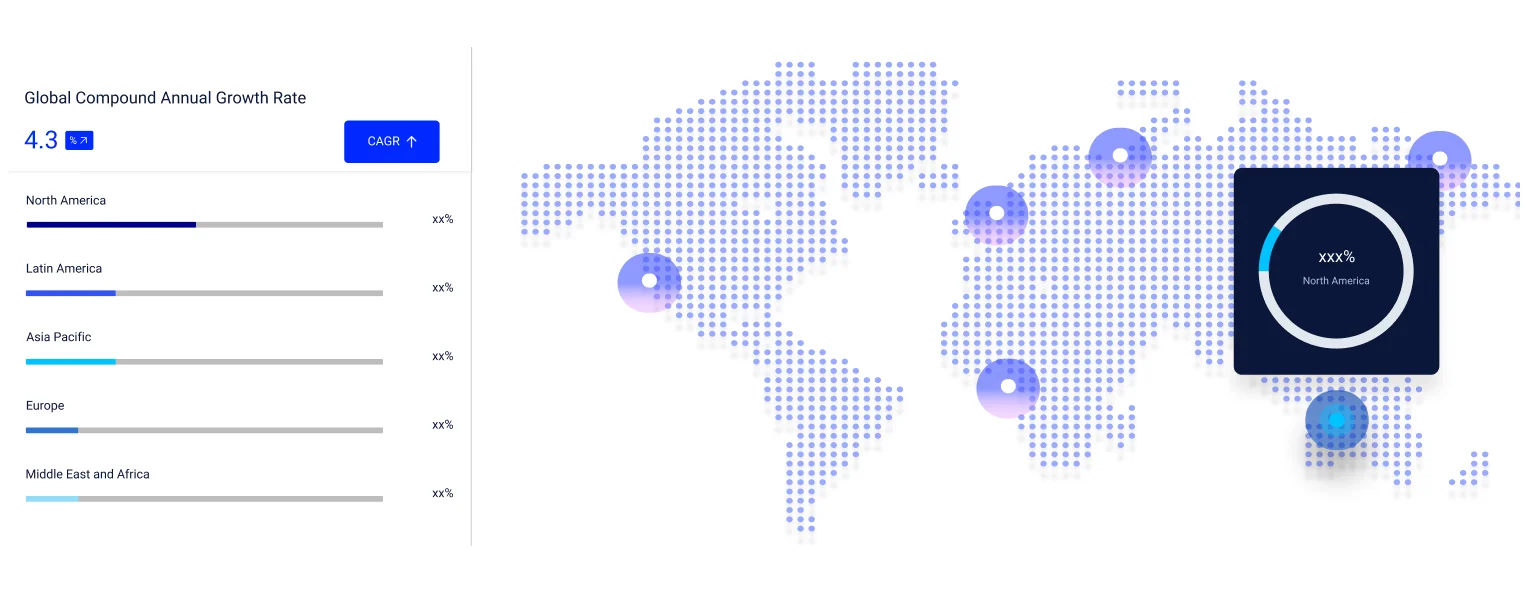
North America sustains its dominance in the market. This is due to their strong cultural emphasis on wellness. The rapid mainstreaming of reusable hydration products has been made possible as consumers in the United States and Canada actively seek insulated and premium designs. In turn, it has fueled growth of stainless steel and advanced polymer formats. Retailers emphasize sustainability labeling and in-store refill initiatives that encourage reusable behaviors.
Factors that contribute to the growth in the Asia Pacific reusable water bottles market are expanding middle-class purchasing power, rapid urbanization, and increasing environmental regulations targeting disposable plastics. Countries like India, China, Japan, and Australia are witnessing strong adoption of metal and polymer bottles driven by lifestyle transitions and rising health awareness. In August 2023, India got its first 100% recycled PET (rPET) water bottle through Coca-Cola India. The food-grade rPET for the Kinley brand water bottles is produced by Srichakra Polyplast on a Starlinger PET bottle-to-bottle recycling line.
| CAGR 2026-2035 - Market by | Country |
| China | 5.2% |
| Brazil | 4.9% |
| Mexico | 4.7% |
| UK | 4.6% |
| Canada | 4.3% |
| USA | XX% |
| Germany | XX% |
| France | XX% |
| Italy | 3.9% |
| India | XX% |
| Australia | XX% |
| Saudi Arabia | XX% |
| Japan | 3.7% |
Reusable water bottle companies are now prioritizing next-generation insulation technologies, antimicrobial surface treatments, and modular add-ons like infusion chambers and smart hydration trackers to stand out on a crowded shelf. They are also inclining toward traceable, low-carbon supply chains as corporate buyers and retailers seek clearer environmental reporting. Co-branding, corporate gifting, and specialty sports segments where high-margin, performance-tier bottles present huge opportunities.
Direct-to-consumer models are helping emerging reusable water bottles market players bypass traditional retail. Established brands invest heavily in influencer partnerships and lifestyle storytelling to retain relevance. With governments tightening rules on single-use plastics and consumers valuing durability over disposability, manufacturers that can scale eco-certified materials, offer strong customization, and streamline global distribution networks are poised to capture disproportionate long-term value in this evolving category.
Founded in 1989 and headquartered in California, United States, CamelBak is a leading manufacturer of hydration products. Known for its innovative water bottles and hydration packs, CamelBak focuses on providing convenient and durable solutions for outdoor enthusiasts, athletes, and everyday consumers seeking hydration on the go.
B Water & Beverages, Inc. is a United States-based company renowned for producing BAI beverages, including its popular BAI fruit-infused drinks. Established in 2009, the company is headquartered in New Jersey, United States. BAI focuses on offering healthy, antioxidant-rich beverages with a range of low-sugar options.
Klean Kanteen, established in 2004 and based in California, United States is a leading producer of reusable stainless steel water bottles and containers. The company is committed to sustainability, offering products that help reduce single-use plastic waste while maintaining a focus on durability, design, and environmental responsibility.
Founded in 1946, Tupperware U.S., Inc. is headquartered in Florida, United States. Known for its innovative kitchen storage solutions, Tupperware offers high-quality, durable food storage containers and kitchen products. The company is globally recognized for promoting convenience, organization, and sustainability in home kitchens and food preservation.
*Please note that this is only a partial list; the complete list of key players is available in the full report. Additionally, the list of key players can be customized to better suit your needs.*
Other key players in the market include Aquasana, Inc., Thermos L.L.C., Brita, LP., and Tupperware Brands Corporation, among others.
Unlock the latest insights with our reusable water bottles market trends 2026 report. Discover regional growth patterns, consumer preferences, and key industry players. Stay ahead of competition with trusted data and expert analysis. Download your free sample report today and drive informed decisions in the market.


Upto 15% Off
USD
$2499 $2249
$3999 $3599
$4999 $4249
$5999 $5099


*While we strive to always give you current and accurate information, the numbers depicted on the website are indicative and may differ from the actual numbers in the main report. At Expert Market Research, we aim to bring you the latest insights and trends in the market. Using our analyses and forecasts, stakeholders can understand the market dynamics, navigate challenges, and capitalize on opportunities to make data-driven strategic decisions.*
Get in touch with us for a customized solution tailored to your unique requirements and save upto 35%!
The market is projected to grow at a CAGR of 4.50% between 2026 and 2035.
Key strategies driving the market include expanding bio-based material sourcing, integrating smart-cap sensors, and co-developing corporate wellness bundles.
The rising availability of reusable water bottles on online distribution channels acts as a key trend for the market.
The major regions in the market are North America, Latin America, the Middle East and Africa, Europe, and the Asia Pacific.
Metal, glass, silicon, and polymer are the leading material types of the product in the market.
Supermarket/hypermarket, departmental store, and online store, among others, are the significant distribution channels of the product.
Everyday, sports, and travel, among others, are the major primary usages of the product in the market.
The key players in the market include CamelBak, B Water & Beverages, Inc., Klean Kanteen, Tupperware U.S., Inc., Aquasana, Inc., Thermos L.L.C., Brita, LP., and Tupperware Brands Corporation, among others.
In 2025, the market reached an approximate value of USD 9.74 Billion.
The market is estimated to witness a healthy growth in the forecast period of 2026-2035 to reach about USD 15.13 Billion by 2035.
Companies face rising material costs, strict sustainability reporting demands, slower certification cycles for new polymers, and differentiation issues in a saturated market.
Explore our key highlights of the report and gain a concise overview of key findings, trends, and actionable insights that will empower your strategic decisions.
| REPORT FEATURES | DETAILS |
| Base Year | 2025 |
| Historical Period | 2019-2025 |
| Forecast Period | 2026-2035 |
| Scope of the Report |
Historical and Forecast Trends, Industry Drivers and Constraints, Historical and Forecast Market Analysis by Segment:
|
| Breakup by Material Type |
|
| Breakup by Distribution Channel |
|
| Breakup by Primary Usage |
|
| Breakup by Region |
|
| Market Dynamics |
|
| Competitive Landscape |
|
| Companies Covered |
|
| Report Price and Purchase Option | Explore our purchase options that are best suited to your resources and industry needs. |
| Delivery Format | Delivered as an attached PDF and Excel through email, with an option of receiving an editable PPT, according to the purchase option. |
Datasheet
One User
USD 2,499
USD 2,249
tax inclusive*
Single User License
One User
USD 3,999
USD 3,599
tax inclusive*
Five User License
Five User
USD 4,999
USD 4,249
tax inclusive*
Corporate License
Unlimited Users
USD 5,999
USD 5,099
tax inclusive*
*Please note that the prices mentioned below are starting prices for each bundle type. Kindly contact our team for further details.*
Flash Bundle
Small Business Bundle
Growth Bundle
Enterprise Bundle
*Please note that the prices mentioned below are starting prices for each bundle type. Kindly contact our team for further details.*
Flash Bundle
Number of Reports: 3
20%
tax inclusive*
Small Business Bundle
Number of Reports: 5
25%
tax inclusive*
Growth Bundle
Number of Reports: 8
30%
tax inclusive*
Enterprise Bundle
Number of Reports: 10
35%
tax inclusive*
How To Order

Select License Type
Choose the right license for your needs and access rights.

Click on ‘Buy Now’
Add the report to your cart with one click and proceed to register.

Select Mode of Payment
Choose a payment option for a secure checkout. You will be redirected accordingly.
Gain insights to stay ahead and seize opportunities.

Get insights & trends for a competitive edge.

Track prices with detailed trend reports.

Analyse trade data for supply chain insights.

Leverage cost reports for smart savings

Enhance supply chain with partnerships.

Connect For More Information
Our expert team of analysts will offer full support and resolve any queries regarding the report, before and after the purchase.
Our expert team of analysts will offer full support and resolve any queries regarding the report, before and after the purchase.
We employ meticulous research methods, blending advanced analytics and expert insights to deliver accurate, actionable industry intelligence, staying ahead of competitors.
Our skilled analysts offer unparalleled competitive advantage with detailed insights on current and emerging markets, ensuring your strategic edge.
We offer an in-depth yet simplified presentation of industry insights and analysis to meet your specific requirements effectively.





Share