

Consumer Insights
Uncover trends and behaviors shaping consumer choices today
Procurement Insights
Optimize your sourcing strategy with key market data
Industry Stats
Stay ahead with the latest trends and market analysis.

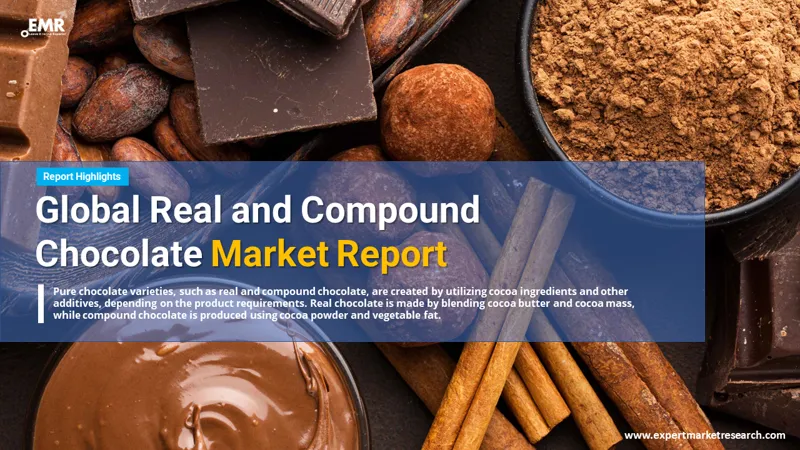
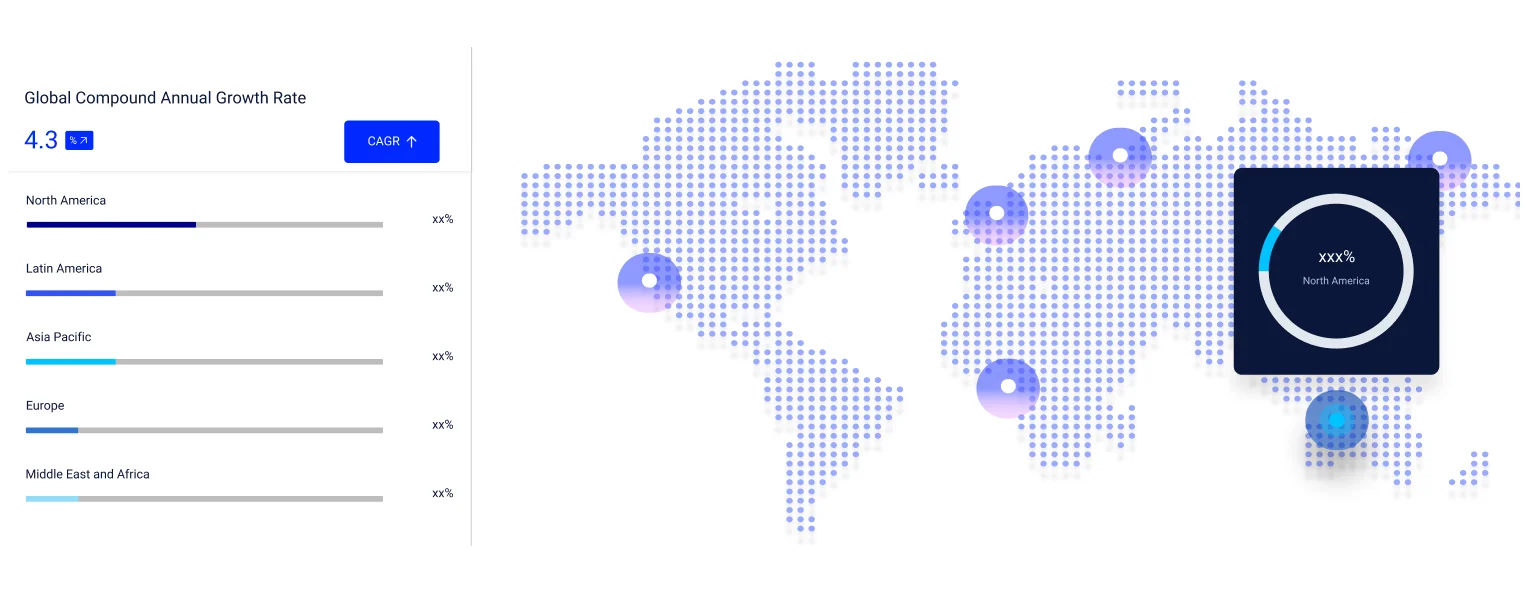
The global market size for real and compound chocolate reached a value of more than USD 48.20 Billion in 2025. The global real and compound chocolate market is expected to grow at a CAGR of 4.90% between 2026 and 2035, reaching a value of USD 77.77 Billion by 2035.
Base Year
Historical Period
Forecast Period
Compound Annual Growth Rate
4.9%
Value in USD Billion
2026-2035
*this image is indicative*
The global real and compound chocolate market is growing as manufacturers meet the increasing demand from consumers for indulgent, health-conscious options and unique bakery products. For instance, at Food & Hotel Asia 2024, Cargill presented its premium gourmet chocolate solutions, including compounds, fillings, coatings, and caramel flavors. These products focus on two main areas: appealing to those who enjoy rich, complex flavours and meeting the needs of health-conscious consumers who prefer items with high cocoa content. The company also highlighted its commitment to sustainability with "from Asia for Asia" bean-to-bar solutions, which follow regional sourcing strategies and chef-led product development.
Read more about this report - REQUEST FREE SAMPLE COPY IN PDF
Additionally, expanding demand for flexible and high-quality bakery ingredients keeps driving innovation in real and compound chocolate market. For example, in February 2024, Dawn Foods introduced Blueberry Compound Coating and Hard-Set Milk Chocolate Compound Coating to its Royal Steensma range. These coatings, made for artisanal bakers, make decorating and enrobing easier while allowing for premium finishes. With convenience and quality influencing buying choices, companies are investing in product lines that meet changing bakery needs without sacrificing performance or creativity.
As consumer demand grows for high-quality yet affordable products, innovation in the industry is essential. Companies are focusing on improving flavour, stability, and cost-efficiency through new cocoa substitutes and manufacturing methods. For instance, AAK’s launch of CEBES Choco 15 in May 2023 exemplifies this, offering a plant-based cocoa butter substitute that allows up to 15% cocoa in compounds. This innovation addresses bloom, enhances flavour, and provides a glossy, stable finish while being cost-effective and delivering premium chocolate products.
As consumers increasingly seek mindful indulgence, there is a rising demand for innovative chocolate products in real and compound chocolate market that prioritise flavour purity, reduced sugar content, and enhanced sustainability, enabling manufacturers to create new, healthier formulations while maintaining high quality. On October 27, 2022, Barry Callebaut introduced the second generation of chocolate. This innovation, made with 60-80% more cocoa and 50% less sugar, aligns with growing consumer demand for healthier indulgence, crafted using the Cocoa Cultivation & Craft (CCC) principle.
The increasing consumer preference for natural ingredients is creating a major opportunity in the market. As demand grows for clean-label, minimally processed, and plant-based components, chocolate manufacturers are changing their products to meet these new expectations. This supports healthier indulgence and builds brand transparency and trust. By using natural flavors, sweeteners, and sustainable ingredients, producers provide varied offerings in a market that is more health- and quality-conscious.
The global real and compound chocolate market is increasingly shaped by demand for health-oriented formulations. Manufacturers are developing products that align with consumer priorities such as reduced sugar, added protein, and plant-based ingredients. This shift is prompting investments in R&D and strategic collaborations to build portfolios that go beyond traditional indulgence. In June 2023, Puratos Canada’s acquisition of Foley’s Chocolates reflected this trend, bringing together a combined offering that includes plant-based, protein-enhanced, and low-sugar chocolate solutions. This focus on functionality is helping brands tap into new segments while staying competitive in a rapidly diversifying market.
With sustainability becoming a key driver in the food industry, the global chocolate market is witnessing a shift toward eco-friendly and upcycled ingredients. As consumer preferences continue to evolve, manufacturers are incorporating sustainable options into their offerings. A notable example comes from Barry Callebaut, which expanded its portfolio in November 2024 with the introduction of upcycled cacaofruit products. These innovative ingredients not only contribute to sustainability efforts but also support the creation of high-quality chocolate products while reducing food waste.
Read more about this report - REQUEST FREE SAMPLE COPY IN PDF
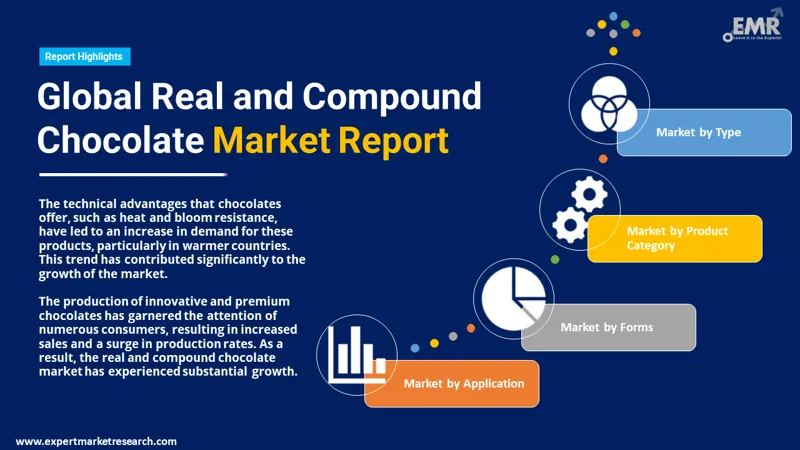
The Expert Market Research’s report titled “Real and Compound Chocolate Market Report and Forecast 2026-2035” offers a detailed analysis of the market based on the following segments:
Market Breakup by Type
The global real and compound chocolate market is seeing dynamic growth across white, dark, and milk chocolate segments. White chocolate continues to thrive, particularly in Europe, where exports remain strong with Belgium playing a pivotal role. Recent trends show that boutique chocolatiers in markets like Europe and Japan are introducing unique white chocolate blends featuring ingredients such as matcha, raspberry, and oat milk. These innovations are designed to appeal to younger, health-conscious consumers and cater to specialty retail channels. Simultaneously, dark chocolate is gaining momentum, driven by consumer preference for its high cocoa content and health benefits, particularly antioxidants. Brands like Lindt and Green & Blacks have capitalized on this trend, expanding their premium dark chocolate offerings, including single-origin lines.
Market Breakup by Product Category
The global real and compound chocolate market is segmented into two primary categories: real chocolate and compound chocolate. Real chocolate remains the largest segment, driven by consumer preference for high-quality, authentic products made with cocoa butter. Its premium appeal continues to dominate both the retail and culinary sectors. Meanwhile, compound chocolate is growing at the fastest rate due to its cost-effectiveness and versatile applications in mass-market products, coatings, and confectionery. As demand for affordable options increases, compound chocolate’s popularity continues to rise. In line with the premium chocolate trend, Masqa launched a gourmet couverture chocolate range in 2023, emphasizing high quality and artisanal production. In the same year, Belcolade debuted its first plant-based white couverture chocolate, catering to the growing demand for premium, plant-based chocolate options.
Market Breakup by Forms
The global real and compound chocolate market is segmented into slabs, coatings, and chips. Slabs are the largest category, preferred for their versatility in a wide range of applications, particularly in the baking, confectionery, and culinary industries. Their solid form offers flexibility for customization in premium products. For instance, In March 2024, Cargill showcased its NatureFresh Professional block chocolates at India’s AAHAR fair. Available in slab form, these chocolates come in Intense Dark, Dark, Milk, and White variants, catering specifically to bakery and ice cream manufacturers for use in applications such as ganache, mousse, fillings, garnishing, moulding, and enrobing. Coatings, on the other hand, are the fastest-growing segment due to the rising demand for ready-to-use chocolate coatings in mass-market goods like cookies, chocolates, and ice cream.
Market Breakup by Application
Confectionery has the largest share because of the steady demand for chocolate treats and products in many regions. The flexibility and enjoyment linked to chocolate make it essential in the confectionery industry. Bakery is the fastest-growing segment, driven by the rising popularity of high-quality baked goods. This includes chocolates used in fillings, coatings, and toppings, particularly in artisanal and health-focused items. Dairy also plays an important role in the market. Chocolate is used in dairy products such as milk chocolates, ice cream, and chocolate-flavored drinks. The connection between dairy and chocolate is expanding as consumers look for rich, creamy chocolate experiences.
Market Breakup by Region
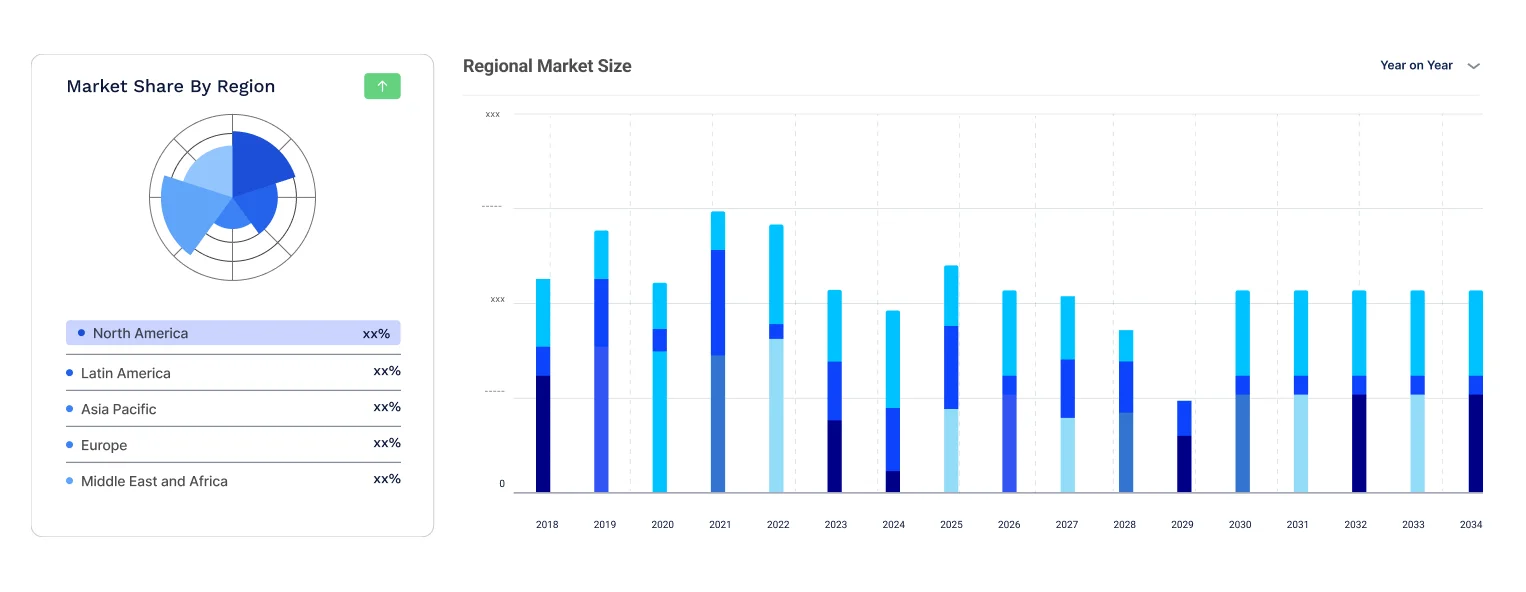
The global real and compound chocolate market shows diverse regional growth patterns. Europe remains the largest market, driven by strong consumer demand for premium and innovative chocolate products. In December 2023, Guan Chong Bhd (GCB) began operations at its new industrial chocolate facility in the UK, with an annual capacity of 16,000 tonnes, aimed at meeting the rising chocolate demand in the region. Producers are also introducing novel products, such as Sarunds' Sablo chocolate couverture, crafted with premium cocoa beans from Ghana, catering to evolving consumer tastes. Asia Pacific is the fastest-growing region, driven by increasing chocolate consumption in emerging markets like China and India. North America holds a strong share, while Latin America, Middle East, and Africa show steady growth in demand, particularly for specialty chocolate products.
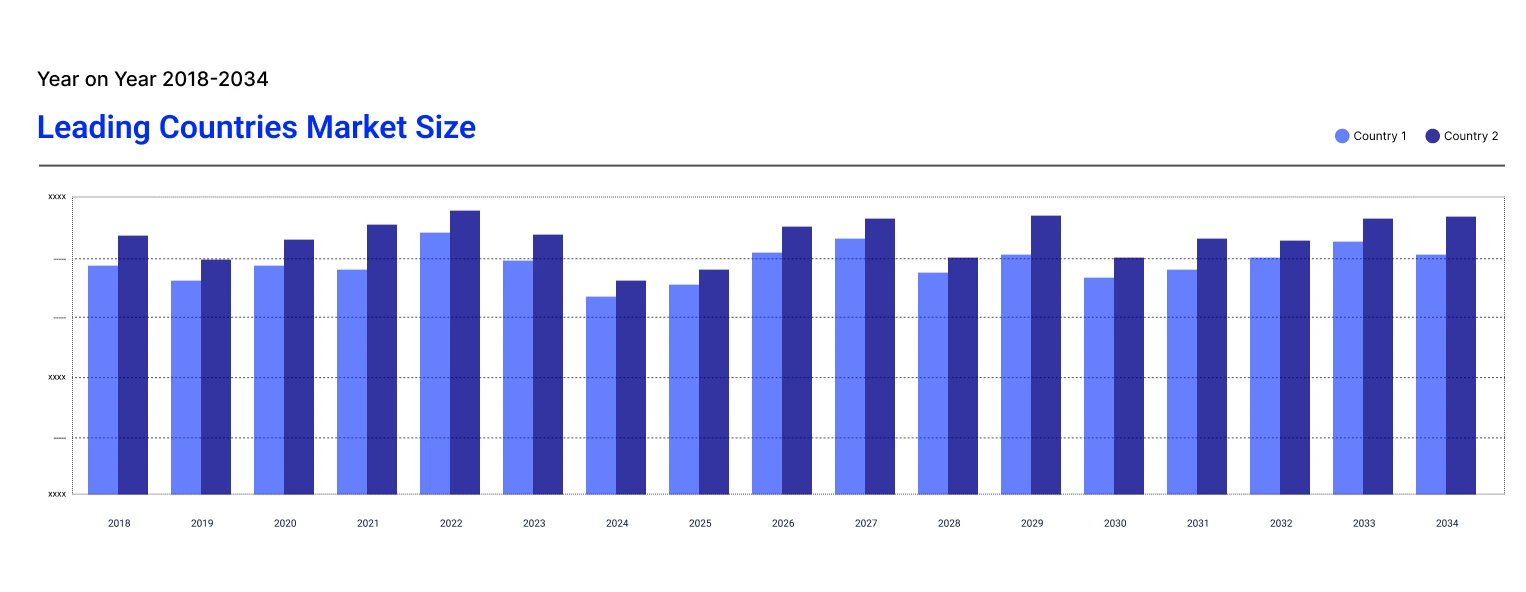
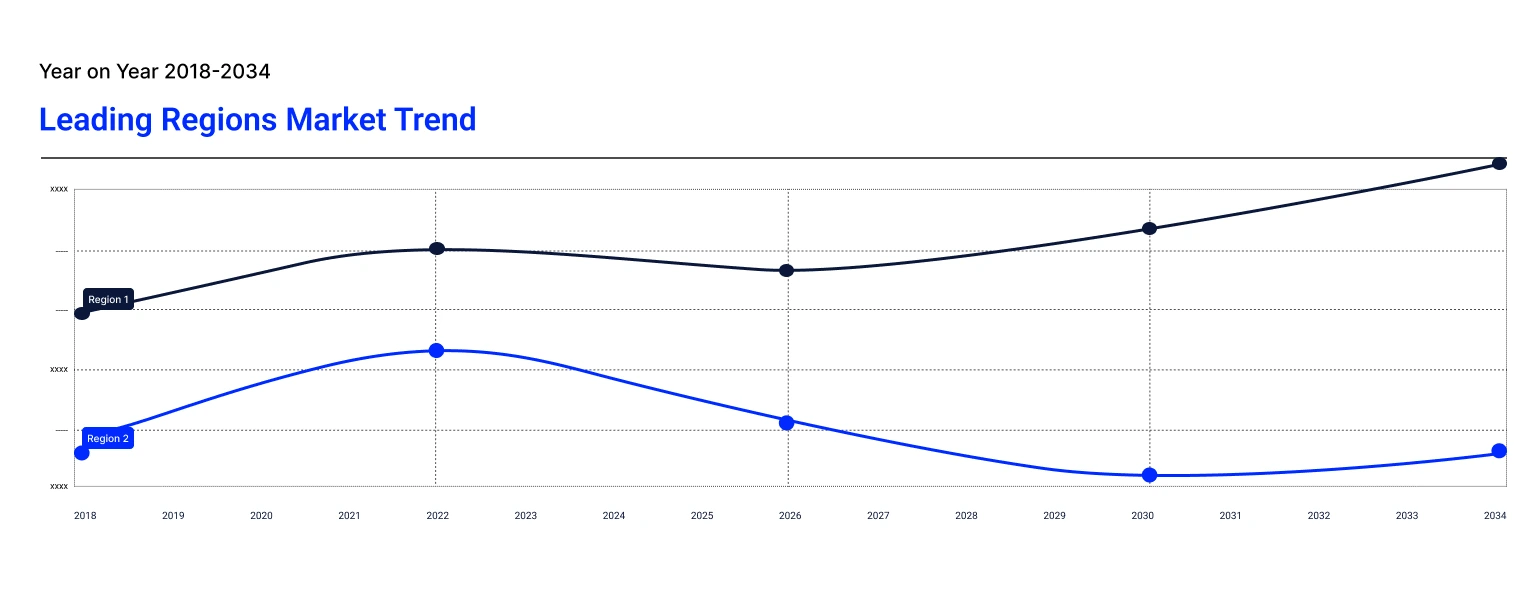
Milk Chocolate is the dominant chocolate type consumed
Milk chocolate is the largest part of the global chocolate market, taking up the major share. Its smooth texture and sweet flavor keep consumers engaged. For instance, in 2023, Oobli launched world first ever low sugar milk chocolate bars with no added artificial sweeteners. Additionally, Milk chocolate remains popular in many regions, particularly in North America, Europe, and Southeast Asia. Major companies like Mondelez and Nestlé have invested greatly in production facilities in these regions to meet the rising demand. This lasting popularity and strong consumer base make milk chocolate the top segment in the global market.
The dark chocolate segment is expected to witness the highest growth rate, driven by increasing demand for its health benefits, including its high cocoa content and antioxidant properties. This segment is projected to grow at a rate of 5.16% during forecast period 2025-2034. The growing consumer preference for premium, clean-label, and reduced-sugar products has been a key driver of dark chocolate's rapid expansion. Brands like Cargill, Nestlé, Mars, and Hershey’s are expanding production capabilities, particularly for dark chocolate, to cater to the demand for healthier, indulgent options, positioning it as the fastest-growing sub-segment in the market.
Rising demand for real chocolate drives the market
Real chocolate holds the largest share of the global real and compound chocolate market, accounting for the majority of the market segment. The demand for real chocolate remains strong due to its authentic taste, premium ingredients, and high-quality cocoa butter content. Real chocolate is preferred in both mass-market and premium products, with significant consumer interest in sustainability and fair-trade sourcing. Major brands continue to invest in expanding production capabilities to meet the ever-growing demand for high-quality real chocolate, especially in markets like Europe, North America, and Asia.
Compound chocolate is the fastest-growing sub-segment. Its growth comes from being cost-effective, easy to use, and in demand for affordable mass-market products. Made with vegetable fats instead of cocoa butter, compound chocolate offers a more accessible option that doesn’t sacrifice flavor. This growth is driven by consumer interest in chocolate coatings, fillings, and sweets that are both affordable and good quality
High Chocolate Demand Drives Slabs Market Growth
Slabs dominate the global real and compound market, accounting for a significant portion of the market share. Slab chocolates are widely used in confectionery, baking, and culinary applications, offering flexibility for manufacturers to create a wide range of custom chocolate products. The high demand for quality slabs in various food industries solidifies its position as the largest form in the market.
Coatings represent the fastest-growing segment in the real and compound chocolate market. The rise of ready-to-use chocolate coatings is driven by their versatility and convenience in mass-market products like chocolates, cookies, and ice cream. Coatings offer ease of production and consistent quality, making them ideal for large-scale manufacturers. As demand for chocolate-covered products continues to increase, the coatings segment is expanding rapidly, for example, in 2025, Wells Enterprises in collaboration with Ferrero North America. The product line will feature ice creams with enveloped in chocolate coatings.
Confectionery Leads while Bakery Experiences Strongest Growth in the Chocolate Market
The confectionery segment is the largest application sub-segment in the global real and compound chocolate market, accounting for a significant share of the market. It has been growing steadily, driven by the consistent consumer demand for chocolate-based products such as bars, truffles, and seasonal treats. Confectionery remains a staple indulgence, with both mass-market and premium chocolates continuing to dominate. The expansion of premium and health-conscious product offerings, along with seasonal demand spikes, ensures that confectionery retains its position as the largest application category in the chocolate market.
The bakery sub-segment is the fastest-growing application segment in the real and compound chocolate market, driven by the increasing demand for high-quality baked goods and artisanal products. By 2025, the bakery segment is expected to reach USD 13,344.0 million, continuing its robust growth trajectory. Chocolate is widely used in bakery products such as cakes, cookies, and pastries, particularly in premium offerings.
Europe Dominates the Global Real and Compound Chocolate Market
Europe holds the largest share in the global real and compound chocolate market, driven by a strong industrial base, consumer demand, and major chocolate manufacturing hubs such as Switzerland, the Netherlands, Germany, and Belgium. For instance, In 2024, Belgium alone is expected to export over USD 4.6 billion worth of chocolate, with key destinations including the Netherlands, France, and the United Kingdom. The ongoing investment in production facilities and research further solidifies Europe’s position as the dominant region in the chocolate market.
Asia Pacific is emerging as a major growth region in the global chocolate market. The region is expected to experience rapid growth, driven by rising consumer incomes, urbanization, and an increasing appetite for chocolate products, especially in countries like China and India. As consumer preferences shift towards indulgent yet affordable options, chocolate manufacturers are responding with a range of innovative products tailored to local tastes.
Major players in the global real and compound chocolate market are increasing their production capabilities to meet the growing demand for chocolate products. At the same time, these companies are focusing on sustainable practices. They are using renewable energy in their production and adopting recycling and waste-to-energy systems to lessen their environmental impact. To follow strict regulations, like the EU's cocoa processing standards, businesses are also improving transparency in their supply chains. The use of technologies like blockchain is helping to ensure the traceability of cocoa, from farm to final product. These efforts aim to boost production efficiency and reduce costs while meeting the rising consumer demand for ethically sourced, high-quality chocolate.
Barry Callebaut AG was founded in 1996 and is based in Zurich, Switzerland. It is one of the leading producers of high-quality cocoa and chocolate products. The company offers a variety of solutions for food manufacturers and professional chocolate users. Its broad range of products, commitment to sustainability, and technological improvements have made Barry Callebaut an important player in the global cocoa and chocolate market.
Cargill Incorporated was founded in 1865 and is based in Minneapolis, Minnesota. It is a global leader in food and agricultural products, including cocoa and chocolate. The company actively sources, processes, and distributes cocoa beans. It offers a variety of products to meet consumer demand.
Fuji Oil Co., Ltd. was founded in 1950 and is based in Osaka, Japan. The company is a top global supplier of edible oils, fats, and specialty ingredients, focusing on delivering high-quality products for the food, cosmetics, and pharmaceutical industries. With its wide network of production facilities and commitment to sustainability, Fuji Oil Co. plays an important role in the global edible oils and fats market.
Ferrero International S.A. was founded in 1946 and is based in Luxembourg. The company is among the largest chocolate and candy makers in the world, recognized for well-known brands like Ferrero Rocher, Kinder, and Tic Tac. With a strong focus on quality, new ideas, and sustainability, Ferrero works worldwide, offering a variety of chocolate products, pralines, and snacks.
*Please note that this is only a partial list; the complete list of key players is available in the full report. Additionally, the list of key players can be customized to better suit your needs.*
Other key players in the real and compound chocolate market are, Mars, Incorporated , The Hershey Company , Nestlé S.A , Guittard Chocolate Company, Alpezzi Chocolate , Puratos NV/SA among others.
Unlock valuable insights by downloading a free sample of the real and compound chocolate market. Stay ahead with expert analysis of market trends, growth drivers, and strategic forecasts. Learn how key players are shaping the future of real and compound chocolate sector and gain a competitive edge in this evolving sector.


Upto 15% Off
USD
$2499 $2249
$3999 $3599
$4999 $4249
$5999 $5099


*While we strive to always give you current and accurate information, the numbers depicted on the website are indicative and may differ from the actual numbers in the main report. At Expert Market Research, we aim to bring you the latest insights and trends in the market. Using our analyses and forecasts, stakeholders can understand the market dynamics, navigate challenges, and capitalize on opportunities to make data-driven strategic decisions.*
Get in touch with us for a customized solution tailored to your unique requirements and save upto 35%!
In 2025, the market reached an approximate value of USD 48.20 Billion.
The market is projected to grow at a CAGR of 4.90% between 2026 and 2035.
The key players in the market report include Barry Callebaut AG, Cargill Incorporated, Fuji Oil Co., Ltd., Ferrero International S.A, Mars, Incorporated, The Hershey Company, Nestlé S.A, Guittard Chocolate Company, Alpezzi Chocolate, Puratos NV/SA , among others.
Dark Chocolate type is the dominant type in the real and compound chocolate market, driven by high demand among healthy consumers.
Key strategies driving the real and compound chocolate market include product innovation, sustainability, and growth in emerging markets. Companies are focused on creating new chocolate varieties, such as premium, plant-based, and health-conscious options, to meet changing consumer preferences. Sustainability is important, with manufacturers using ethical sourcing, renewable energy, and waste-reduction methods to satisfy consumer demand for responsibly made products.
Explore our key highlights of the report and gain a concise overview of key findings, trends, and actionable insights that will empower your strategic decisions.
| REPORT FEATURES | DETAILS |
| Base Year | 2025 |
| Historical Period | 2019-2025 |
| Forecast Period | 2026-2035 |
| Scope of the Report |
Historical and Forecast Trends, Industry Drivers and Constraints, Historical and Forecast Market Analysis by Segment:
|
| Breakup by Type |
|
| Breakup by Product Category |
|
| Breakup by Forms |
|
| Breakup by Application |
|
| Breakup by Region |
|
| Market Dynamics |
|
| Trade Data Analysis |
|
| Competitive Landscape |
|
| Companies Covered |
|
Datasheet
One User
USD 2,499
USD 2,249
tax inclusive*
Single User License
One User
USD 3,999
USD 3,599
tax inclusive*
Five User License
Five User
USD 4,999
USD 4,249
tax inclusive*
Corporate License
Unlimited Users
USD 5,999
USD 5,099
tax inclusive*
*Please note that the prices mentioned below are starting prices for each bundle type. Kindly contact our team for further details.*
Flash Bundle
Small Business Bundle
Growth Bundle
Enterprise Bundle
*Please note that the prices mentioned below are starting prices for each bundle type. Kindly contact our team for further details.*
Flash Bundle
Number of Reports: 3
20%
tax inclusive*
Small Business Bundle
Number of Reports: 5
25%
tax inclusive*
Growth Bundle
Number of Reports: 8
30%
tax inclusive*
Enterprise Bundle
Number of Reports: 10
35%
tax inclusive*
How To Order

Select License Type
Choose the right license for your needs and access rights.

Click on ‘Buy Now’
Add the report to your cart with one click and proceed to register.

Select Mode of Payment
Choose a payment option for a secure checkout. You will be redirected accordingly.
Gain insights to stay ahead and seize opportunities.

Get insights & trends for a competitive edge.

Track prices with detailed trend reports.

Analyse trade data for supply chain insights.

Leverage cost reports for smart savings

Enhance supply chain with partnerships.

Connect For More Information
Our expert team of analysts will offer full support and resolve any queries regarding the report, before and after the purchase.
Our expert team of analysts will offer full support and resolve any queries regarding the report, before and after the purchase.
We employ meticulous research methods, blending advanced analytics and expert insights to deliver accurate, actionable industry intelligence, staying ahead of competitors.
Our skilled analysts offer unparalleled competitive advantage with detailed insights on current and emerging markets, ensuring your strategic edge.
We offer an in-depth yet simplified presentation of industry insights and analysis to meet your specific requirements effectively.





Share