

Consumer Insights
Uncover trends and behaviors shaping consumer choices today
Procurement Insights
Optimize your sourcing strategy with key market data
Industry Stats
Stay ahead with the latest trends and market analysis.

The global pressure sensor market attained a value of USD 20.48 Billion in 2025 and is projected to expand at a CAGR of 10.30% through 2035. The market is further expected to achieve USD 54.59 Billion by 2035. Rising adoption of automated safety controls in industrial plants is increasing demand for pressure sensors that provide stable, real-time diagnostics, helping operators reduce unplanned shutdowns and optimize energy use under tighter regulatory expectations.
The global market is entering a new development cycle as manufacturers push deeper into high-accuracy, low-power designs for industrial automation, EV platforms, and next-gen medical devices. For example, the BMP581 barometric pressure sensor from Bosch Sensortec, launched in April 2022, combines exceptional precision with low power consumption to enable altitude tracking in wearables, hearables, or Internet of Things devices. This feature makes it perfect for applications like indoor localization, fitness tracking, fall detection, and navigation, opening up previously unattainable new use cases. Pressure-based monitoring is now embedded in most thermal-management systems for EVs, and the demand rises as electrification ramps. This pressure sensor market trend pushes suppliers to focus on drift reduction, extreme-temperature reliability, and digital calibration.
Manufacturers are now prioritizing edge-ready sensors with integrated ASICs, enabling real-time diagnostics for safety-critical environments. For example, in September 2025, ASICS Corporation and TDK Corporation announced the launch of a joint research project for a next generation sensing device designed to visualize athletes’ movements during training, with the aim of improving the performance of top athletes. Many industrial buyers want predictive maintenance, so vendors embed self-test logic that flags anomalies before downtime occurs. Medical device makers are moving toward ultra-miniature sensors with very low noise features, since wearable devices need long battery life and precise readings, thereby propelling the pressure sensor market expansion.
Base Year
Historical Period
Forecast Period
Compound Annual Growth Rate
10.3%
Value in USD Billion
2026-2035
*this image is indicative*
| Global Pressure Sensor Market Report Summary | Description | Value |
| Base Year | USD Billion | 2025 |
| Historical Period | USD Billion | 2019-2025 |
| Forecast Period | USD Billion | 2026-2035 |
| Market Size 2025 | USD Billion | 20.48 |
| Market Size 2035 | USD Billion | 54.59 |
| CAGR 2019-2025 | Percentage | XX% |
| CAGR 2026-2035 | Percentage | 10.30% |
| CAGR 2026-2035 - Market by Region | Asia Pacific | 11.6% |
| CAGR 2026-2035 - Market by Country | India | 13.3% |
| CAGR 2026-2035 - Market by Country | China | 11.1% |
| CAGR 2026-2035 - Market by Application | Automotive | 14.6% |
| CAGR 2026-2035 - Market by Type | Gauge Pressure Sensor | 10.1% |
| Market Share by Country 2025 | Saudi Arabia | 1.9% |
Electrification in automotive applications is creating pressure sensors demand as these are used in thermal management, brake systems, and HVAC systems. Regulators tightening vehicle safety and battery thermal regulations are making validated sensor performance mandatory for platform approvals. Bosch and other suppliers are moving to ASIC-integrated designs that reduce recalibration and improve lifetime. In June 2025, Bosch unveiled its latest innovation in automotive sensor technology with the launch of the SMP290. The SMP290 is Bosch's latest innovational automotive sensor technology and a state-of-the-art Bluetooth-enabled Micro Electromechanical System (MEMS) tire pressure sensor. Fleet operators prefer vendors who supply lifecycle test data and in-field recalibration tools, reducing warranty exposure, thereby opening up new pressure sensor market opportunities.
Industrial automation is pushing manufacturers to develop pressure sensors with predictive maintenance and closed-loop control systems. Factories demand sensors with digital diagnostics, self-test routines, and calibrated traceability. Siemens and Honeywell are integrating pressure transducers into digital twin architectures to model process behavior and predict valve failures, impacting the overall pressure sensor market growth. In May 2025, Superior Sensor Technology announced the expansion of its CP Series with the introduction of the CP203 and CP303 dual pressure sensors. Vendors offering on-device analytics and secure firmware updates, plus remote over-the-air updates, are winning multi-year agreements by lowering downtime and simplifying plant-level rollouts.
Medical and wearable devices markets are demanding ultra-miniature, low-noise pressure sensors for respiratory monitors and infusion pumps. Miniaturization requires advanced MEMS, biocompatible packaging, and ultra-low power modes to preserve battery life. Firms like Sensirion and TE Connectivity are tailoring sensor modules with integrated temperature compensation and sterile housings, accelerating the pressure sensor market trends and dynamics. Novosound also demonstrated ultrasound blood pressure monitoring at CES 2025 in Las Vegas in January 2025. Hospitals and telehealth providers prefer vendors who supply clinical validation studies and logistics for sterile supply chains.
Environmental monitoring and smart buildings are increasing demand for networked pressure sensors in HVAC, water and air systems. Owners want low-power sensors that integrate with BACnet, Modbus, and IoT platforms for energy optimization and compliance. Governments rolling out retrofit incentives and stricter building codes are accelerating sensor upgrades for airflow control and leak detection. In September 2025, Pressac launched new IAQ sensor that aligns with the company's mission to simplify smart building management through reliable, easy-to-integrate solutions. Suppliers providing standardized data schems, low-install-cost kits, and metering verification services are capturing municipal and commercial retrofit contracts, expanding the pressure sensor market scope.
Aerospace, defense, and oil and gas sectors are demanding pressure sensors that endure extreme conditions and strict certification regimes. Suppliers must provide devices rated for high shock, vibration and broad temperature ranges, along with traceable manufacturing records and lot-level testing. Firms like Honeywell and TE Connectivity are supplying radiation-tolerant electronics and AS9100 or MIL-grade certifications to secure contracts, contributing to the overall pressure sensor market value. In June 2023, STMicroelectronics announced the release of a new piezoresistive-based MEMS pressure sensor designed for industrial applications.
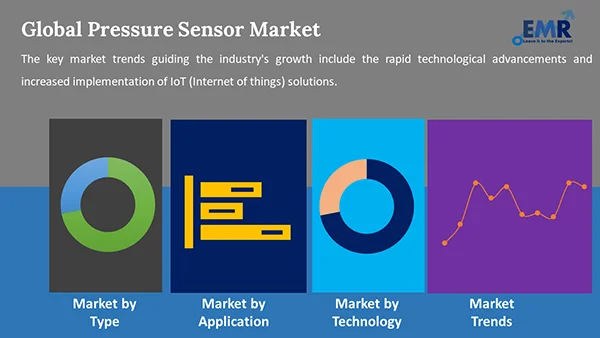
Read more about this report - REQUEST FREE SAMPLE COPY IN PDF
The EMR’s report titled “Global Pressure Sensor Market Report and Forecast 2026-2035” offers a detailed analysis of the market based on the following segments:
Market Breakup by Type
Key Insight: Absolute sensors provide vacuum-referenced stability for aerospace and sealed processes, making them a go-to for altitude-compensated platforms, thereby retaining their dominance in the pressure sensor market. Gauge sensors work well for brake systems and HVAC because they measure pressure relative to the surrounding environment and are both affordable and robust. Differential sensors excel in flow, filter monitoring, and level sensing and are growing due to diagnostics and auto-zero capabilities that shorten maintenance cycles.
Market Breakup by Technology
Key Insight: As per the pressure sensor market report, piezoresistive continues to lead the market due to cost and integration ease, capacitive types are chosen for low-pressure sensitivity, and electromagnetic sensors serve heavy-duty applications needing robustness. Resonant solid-state is growing for metrology-grade accuracy, while optical pressure sensors are preferred where electrical isolation and EMI immunity are required. Other niche technologies address explosive atmospheres and high-radiation zones.
Market Breakup by Application
Key Insight: Pressure sensors are widely used across automotive, oil and gas, consumer electronics, medical and industrial domains, each with distinct priorities. Automotive demands automotive-grade robustness and network compatibility. Oil and gas prioritizes explosion-proof packaging and high-pressure ranges for harsh environments. Consumer electronics needs ultra-miniaturization and low power for wearables and handsets, driving demand in the pressure sensor market. The medical sector requires sterilization, clinical validation, and traceable calibration for approvals.
Market Breakup by Region
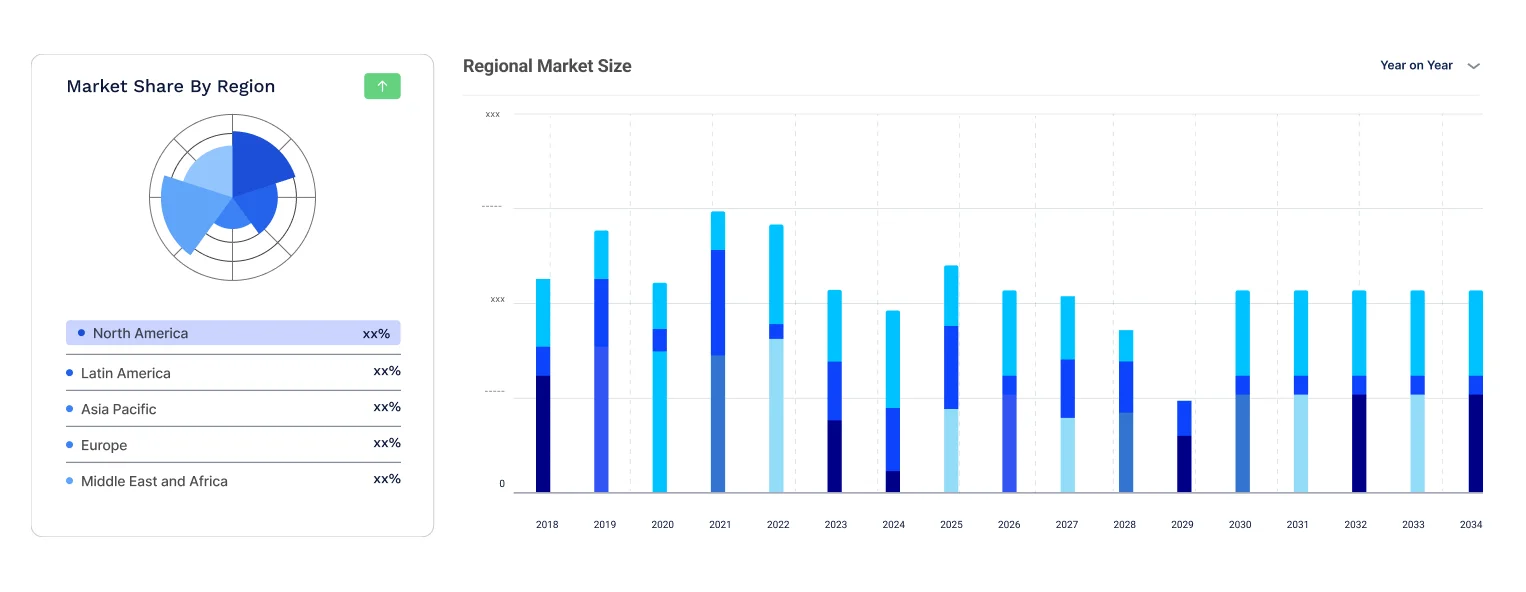
Key Insight: North America leads the pressure sensor market through deep industrial automation and automotive demand. Europe emphasizes compliance, functional safety and traceable supply chains, while Asia Pacific boasts growth owing to expanding manufacturing and EV-related sensor needs. Latin America and Middle East Africa show niche growth tied to energy and infrastructure projects where ruggedized devices are often demanded.
By type, absolute pressure sensors dominate the market due to vacuum reference stability and reliability
Absolute pressure sensors dominate in sectors requiring a fixed baseline, such as aerospace, vacuum systems, and sealed-process monitoring. These devices measure against an absolute vacuum, removing drift introduced by changing atmospheric conditions. Procurement teams choose absolute units for altitude-compensated platforms and for battery-backed telemetry where reference stability reduces calibration frequency. In July 2025, Kistler launched the 4012A absolute pressure sensor for hydrogen pressure measurements, designed to deliver reliable measurements to optimize hydrogen-fueled combustion engines and for pressure monitoring in fuel cells.
Differential pressure sensors are quickly expanding their share in the pressure sensor market as they enable critical flow, filter and level measurements across industrial process lines. Operators use differential sensors to monitor filter clogging, measure laminar flow in HVAC systems, and control pump head performance. Suppliers are introducing dual-range MEMS chips and digital output options that let PLCs read delta values directly without external electronics.
By technology, piezoresistive sensors account for the largest share of the market due to cost-effectiveness, integration, robustness, and versatility
Piezoresistive sensors remain the dominant technology because they balance cost, robustness and wide-range accuracy for many industrial applications. Their silicon-based strain gauges convert pressure into resistance changes, allowing stable measurements across harsh environments and broad temperature windows. In December 2025, Waites Sensor Technologies, Inc. announced the launch of PiezoNode, an advanced quad-channel condition monitoring device built for high-heat, high-stress rotating equipment. OEM buyers select piezoresistive modules when producers need reliable analog outputs and straightforward integration with existing ADC chains.
Resonant solid-state sensors are experiencing fast growth in the pressure sensor market as they offer exceptional stability and very low drift suited for high-precision metrology. These devices rely on resonating elements whose frequency shifts under pressure, delivering digital outputs with outstanding repeatability and temperature resilience. Manufacturers are integrating resonant sensors into lab-grade process instruments and into flow metering where traceable accuracy matters.
Automotive applications lead the market owing to safety, EV thermal needs and volume
Automotive remains the dominant application for pressure sensors because modern vehicles embed many pressure nodes across powertrain, braking, climate, and battery management systems. Automakers require sensors that meet AEC-Q standards, deliver long-term drift stability, and integrate into high-speed CAN and LIN networks. Vehicle manufacturers also demand production-screening, traceability, and lifetime drift metrics to reduce recall risk. Vendors are offering vehicle-level validation kits, lifetime drift reports and production-screening services to simplify OEM qualification cycles and speed up platform launches, thereby driving the pressure sensor market revenue.
The medical application represents the fastest-growing category as demand increases for precise, miniature pressure sensors in ventilators, infusion pumps and wearable monitors. Clinical OEMs need devices with biocompatible packaging, sterilization resilience, and traceable calibration paths to satisfy regulators. In October 2024, Sensocon, Inc. announced the launch of its advanced Wireless Solutions Package, serving a broad array of markets including pharmaceutical, HVAC, industrial equipment, agriculture, healthcare, oil and gas and more, offering unmatched ease-of-use, efficiency and scalability. Integration into hospital telemetry systems also requires secure data links and audit-ready calibration logs.
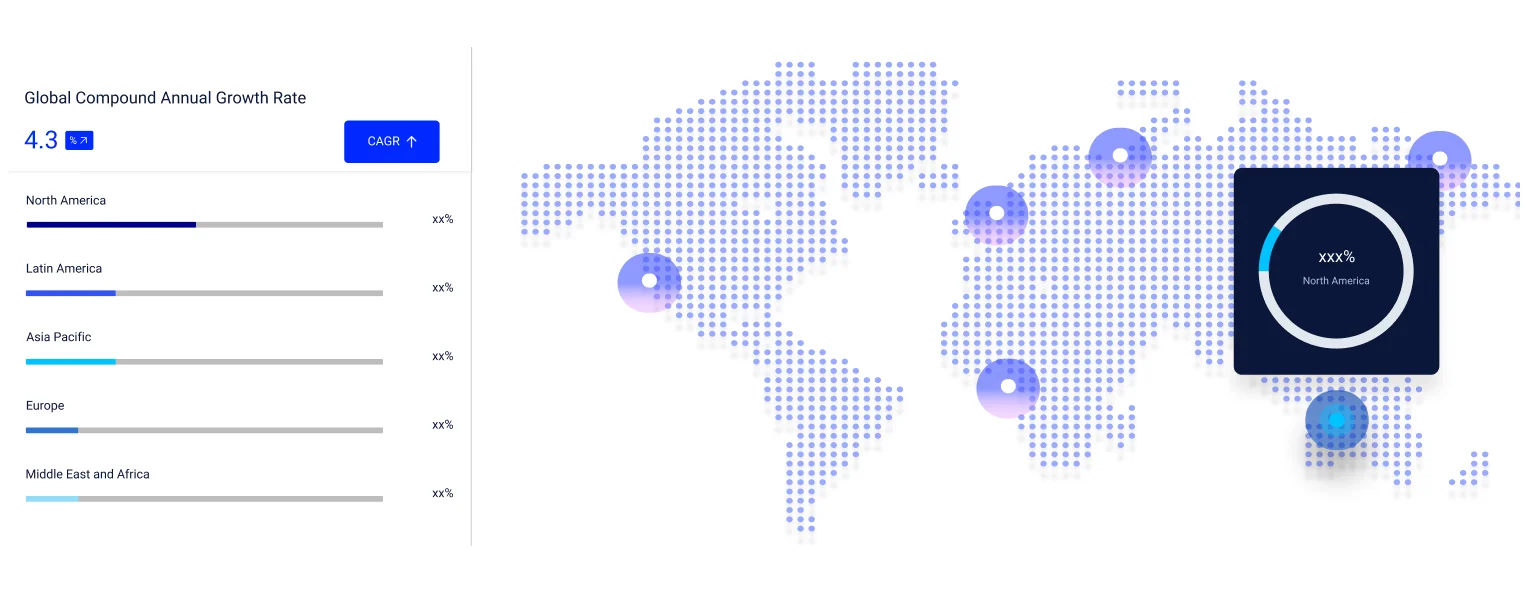
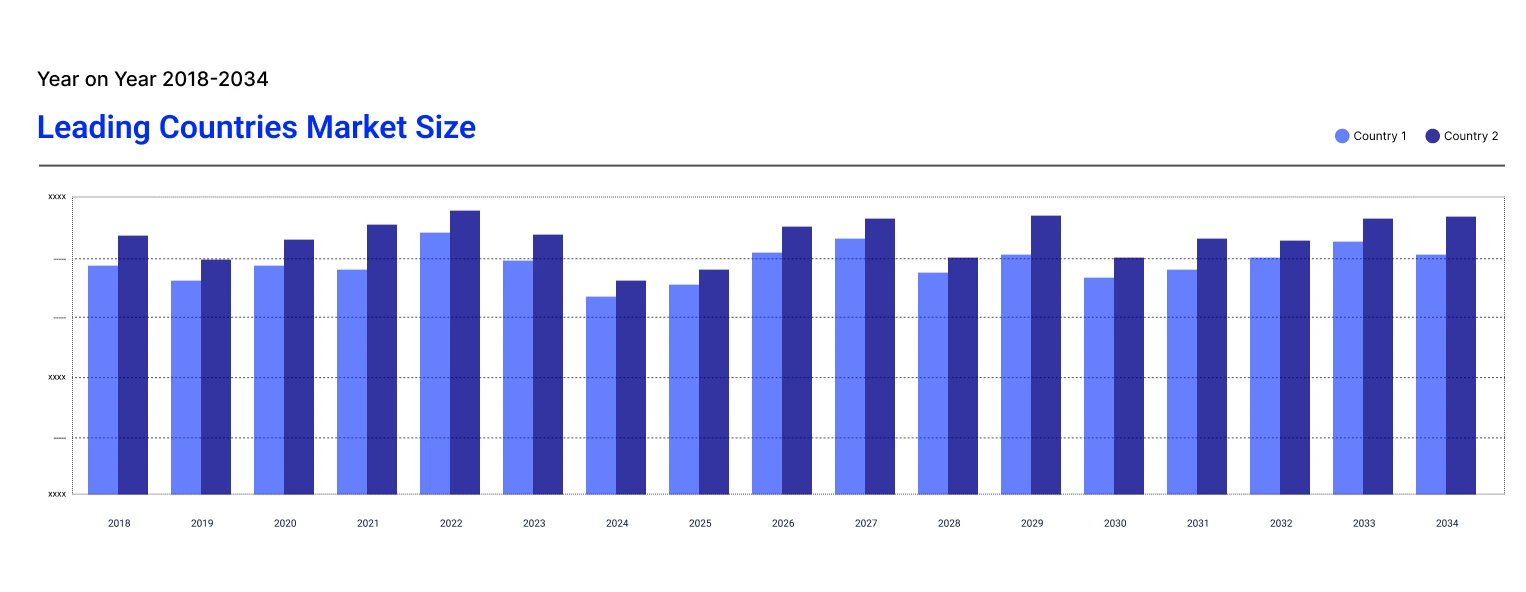
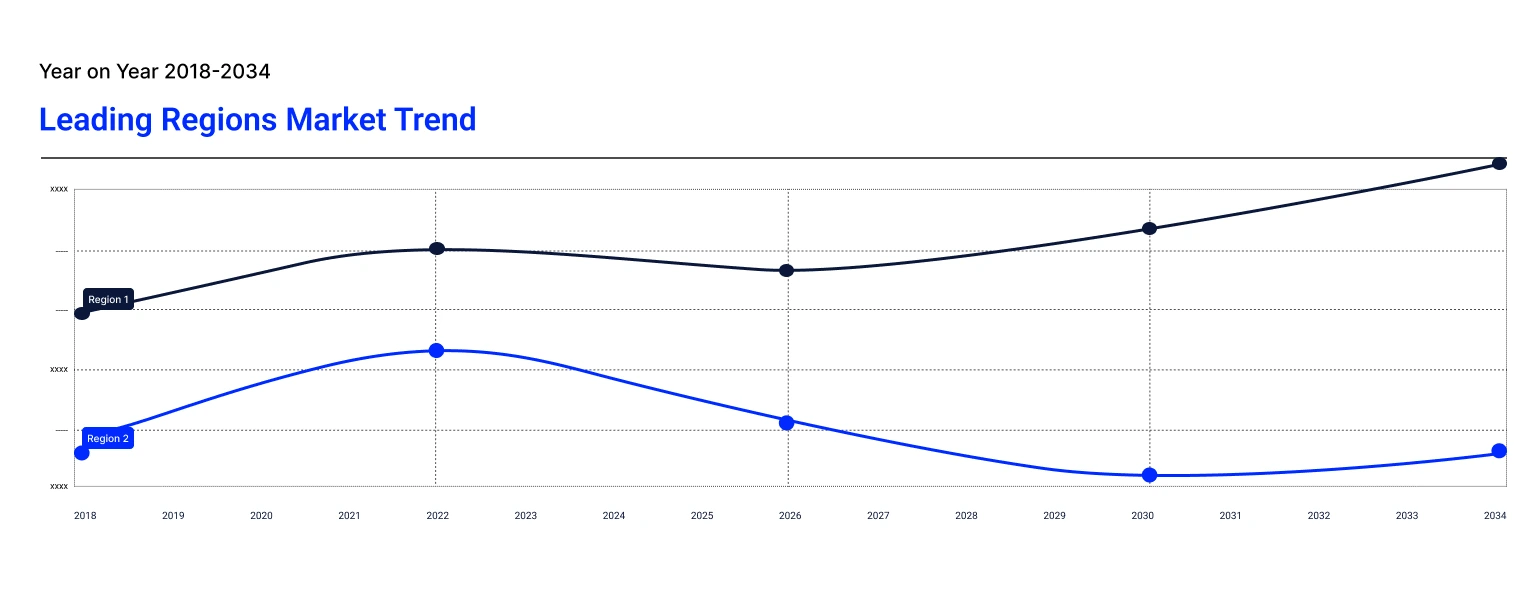
North America secures the leading position in the market due to infrastructure, tech adoption, and procurement
North America largely drives pressure sensor demand because advanced manufacturing hubs, major automotive clusters, and instrumentation companies concentrate both R&D and procurement in the region. OEMs in the United States and Canada require sensors with documented lifecycle tests, supply-chain transparency and integration support for automotive, aerospace and industrial automation.
The Asia Pacific pressure sensor market expansion is mostly led by rapid industrialization, electronics manufacturing growth, and expanding EV production. Countries such as China, India and Southeast Asian hubs are scaling sensor assembly and integrating sensors into consumer devices and industrial controls. Local OEMs are partnering with global MEMS foundries to shorten qualification cycles and to adopt low-cost packaging innovations.
| CAGR 2026-2035 - Market by | Country |
| India | 13.3% |
| China | 11.1% |
| Mexico | 10.4% |
| USA | 9.4% |
| UK | 9.1% |
| Canada | XX% |
| Germany | XX% |
| France | 8.3% |
| Italy | XX% |
| Australia | XX% |
| Saudi Arabia | XX% |
| Brazil | XX% |
| Japan | 7.3% |
The competitive landscape in the global market is centering around accuracy, miniaturization, and system-level integration. Pressure sensor market players are investing in resonant solid-state designs, hermetic MEMS packaging, and secure digital identifiers to reduce calibration cycles and enable traceable supply chains. Opportunities exist in bundled sensor suites that combine pressure, temperature, and diagnostic telemetry for predictive maintenance in factories and in EV thermal systems.
Pressure sensor companies are also exploring subscription calibration services and lifetime-drift guarantees to lower OEM qualification friction. Niche players are developing radiation-tolerant and chemically resistant sensor packages for energy and aerospace clients, while larger firms are building platform solutions that integrate sensors directly into cloud analytics systems. Regional service networks and fast-replacement depots are shortening procurement risk, capturing larger shares, and commanding premium margins.
Honeywell International Inc. is currently focusing on rugged industrial pressure sensors with embedded diagnostics and secure digital IDs for traceable calibration. Its roadmap highlights resonant solid-state devices for metrology and hermetic packages for harsh chemistry lines. The company, founded in 1906 and headquartered in North Carolina, United States, bundles cloud analytics and calibration services to shorten OEM qualification cycles, supports aerospace, process automation and smart buildings.
Emerson Electric Co. was founded in 1890 and is headquartered in St. Louis, Missouri, United States. Emerson is accelerating pressure sensor innovation for process control with a focus on intrinsic safety, digital twins and fieldbus integration. Their product lines include high-temperature, high-pressure transmitters, and smart differential modules that stream diagnostics into control systems.
Founded in 2006 and headquartered in Massachusetts, United States, Sensata is targeting automotive and industrial markets with MEMS pressure sensors optimized for EV thermal loops and fuel systems. The company is developing multi-sensor modules that combine pressure, temperature, and humidity sensing with secure digital calibration records.
BD|SENSORS GmbH was founded in 1995 and is headquartered in Bedburg-Hau, Germany. BD SENSORS is focusing on rugged industrial transmitters, differential modules and explosion-proof designs for oil, gas, and chemical plants. Their portfolio includes SIL-rated transmitters, ceramic capacitive sensors, and hermetically sealed diaphragms for corrosive media.
*Please note that this is only a partial list; the complete list of key players is available in the full report. Additionally, the list of key players can be customized to better suit your needs.*
Other key players in the market include ChampionX Corporation, among others.
Unlock the latest insights with our pressure sensor market trends 2026 report. Discover regional growth patterns, consumer preferences, and key industry players. Stay ahead of competition with trusted data and expert analysis. Download your free sample report today and drive informed decisions on the market.


Upto 15% Off
USD
$2499 $2249
$3999 $3599
$4999 $4249
$5999 $5099


*While we strive to always give you current and accurate information, the numbers depicted on the website are indicative and may differ from the actual numbers in the main report. At Expert Market Research, we aim to bring you the latest insights and trends in the market. Using our analyses and forecasts, stakeholders can understand the market dynamics, navigate challenges, and capitalize on opportunities to make data-driven strategic decisions.*
Get in touch with us for a customized solution tailored to your unique requirements and save upto 35%!
In 2025, the market reached an approximate value of USD 20.48 Billion.
The market is projected to grow at a CAGR of 10.30% between 2026 and 2035.
Suppliers are co-developing resonant MEMS, expanding local calibration labs, bundling analytics services, certifying rugged packages, and offering subscription-based lifecycle maintenance to reduce adoption friction and support.
The key trends guiding the market growth include rapid technological advancements, increased usage of pressure sensors in smartphones and biosensors to track health status, rising implementation of IoT (Internet of things) solutions, and growing usage in gaming experiences such as VR headsets.
The major regions in the market are North America, Latin America, the Middle East and Africa, Europe, and the Asia Pacific.
The significant types of pressure sensors include absolute pressure sensor, gauge pressure sensor, and differential pressure sensor.
The important technologies include piezoresistive, electromagnetic, capacitive, resonant solid state, and optical, among others.
The applications of pressure sensor include automotive, oil and gas, consumer electronics, medical, and industrial.
The key players in the market include Honeywell International Inc., Emerson Electric Co., Sensata Technologies, Inc., BD|SENSORS GmbH, and ChampionX Corporation, among others.
The market is estimated to witness a healthy growth in the forecast period of 2026-2035 to reach a value of USD 54.59 Billion by 2035.
High-precision qualification time, supply-chain volatility, certification burdens, rising raw-material costs, and integrating digital diagnostics while maintaining low unit pricing are constraining supplier margins and slowing rollouts and increasing customer scrutiny.
Explore our key highlights of the report and gain a concise overview of key findings, trends, and actionable insights that will empower your strategic decisions.
| REPORT FEATURES | DETAILS |
| Base Year | 2025 |
| Historical Period | 2019-2025 |
| Forecast Period | 2026-2035 |
| Scope of the Report |
Historical and Forecast Trends, Industry Drivers and Constraints, Historical and Forecast Market Analysis by Segment:
|
| Breakup by Type |
|
| Breakup by Technology |
|
| Breakup by Application |
|
| Breakup by Region |
|
| Market Dynamics |
|
| Competitive Landscape |
|
| Companies Covered |
|
| Report Price and Purchase Option | Explore our purchase options that are best suited to your resources and industry needs. |
| Delivery Format | Delivered as an attached PDF and Excel through email, with an option of receiving an editable PPT, according to the purchase option. |
Datasheet
One User
USD 2,499
USD 2,249
tax inclusive*
Single User License
One User
USD 3,999
USD 3,599
tax inclusive*
Five User License
Five User
USD 4,999
USD 4,249
tax inclusive*
Corporate License
Unlimited Users
USD 5,999
USD 5,099
tax inclusive*
*Please note that the prices mentioned below are starting prices for each bundle type. Kindly contact our team for further details.*
Flash Bundle
Small Business Bundle
Growth Bundle
Enterprise Bundle
*Please note that the prices mentioned below are starting prices for each bundle type. Kindly contact our team for further details.*
Flash Bundle
Number of Reports: 3
20%
tax inclusive*
Small Business Bundle
Number of Reports: 5
25%
tax inclusive*
Growth Bundle
Number of Reports: 8
30%
tax inclusive*
Enterprise Bundle
Number of Reports: 10
35%
tax inclusive*
How To Order

Select License Type
Choose the right license for your needs and access rights.

Click on ‘Buy Now’
Add the report to your cart with one click and proceed to register.

Select Mode of Payment
Choose a payment option for a secure checkout. You will be redirected accordingly.
Gain insights to stay ahead and seize opportunities.

Get insights & trends for a competitive edge.

Track prices with detailed trend reports.

Analyse trade data for supply chain insights.

Leverage cost reports for smart savings

Enhance supply chain with partnerships.

Connect For More Information
Our expert team of analysts will offer full support and resolve any queries regarding the report, before and after the purchase.
Our expert team of analysts will offer full support and resolve any queries regarding the report, before and after the purchase.
We employ meticulous research methods, blending advanced analytics and expert insights to deliver accurate, actionable industry intelligence, staying ahead of competitors.
Our skilled analysts offer unparalleled competitive advantage with detailed insights on current and emerging markets, ensuring your strategic edge.
We offer an in-depth yet simplified presentation of industry insights and analysis to meet your specific requirements effectively.





Share