

Consumer Insights
Uncover trends and behaviors shaping consumer choices today
Procurement Insights
Optimize your sourcing strategy with key market data
Industry Stats
Stay ahead with the latest trends and market analysis.

The global photonic integrated circuits (PIC) market attained a value of USD 25443.45 Million in 2025 and is projected to expand at a CAGR of 20.30% through 2035. The market is further expected to achieve USD 161522.22 Million by 2035. Increasing demand for low-latency, high-bandwidth optical links in AI data centers is pushing PIC adoption in mainstream compute infrastructure.
As hyperscale operators struggle to move data fast enough between GPU clusters, storage and memory pools, they are turning to photonics to overcome electrical interconnect bottlenecks. In December 2025, Ayar Labs and Alchip demonstrated the first commercial optical-I/O engine built on TSMC’s Compact Universal Photonic Engine (COUPE) platform, delivering up to 100 Tb/s per accelerator using integrated PIC-based links. By offering scalable, energy-efficient optical connectivity, this photonic integrated circuits (PIC) market development confirms that PICs are moving from niche telecom use to mainstream data-center and AI-compute infrastructure.
The demand for highly integrated photonic chips is also rising across data centers, telecom networks, and sensing applications. Companies are rapidly adopting silicon photonics to compress multiple optical functions such as lasers, modulators, waveguides into a single, compact chip, enabling lower latency, reduced energy per bit, and easier scaling, redefining the photonic integrated circuits (PIC) market trends and dynamics. For example, in September 2025, STMicroelectronics announced that it is leading a newly launched consortium that has been selected by the European Commission under the EU CHIPS Joint Undertaking initiative. The project is called the 300mm Silicon Technology for Applications Relying on Light with Photonics Devices (STARLight).
Base Year
Historical Period
Forecast Period
The market for photonic integrated circuits is being driven by its increasing application in various end-use sectors, including data and telecommunications, medical and healthcare, engineering and transport.
Infinera Corporation, Coherent Corp. (II-VI Incorporated), and Intel Corporation are some of the major companies in the market.
Use of the internet has grown rapidly across the globe, reaching about 91% of the population in North America, 87% in Europe and 73% in Asia Pacific.
Compound Annual Growth Rate
20.3%
Value in USD Million
2026-2035
*this image is indicative*
| Global Photonic Integrated Circuits (PIC) Market Report Summary | Description | Value |
| Base Year | USD Million | 2025 |
| Historical Period | USD Million | 2019-2025 |
| Forecast Period | USD Million | 2026-2035 |
| Market Size 2025 | USD Million | 25443.45 |
| Market Size 2035 | USD Million | 161522.22 |
| CAGR 2019-2025 | Percentage | XX% |
| CAGR 2026-2035 | Percentage | 20.30% |
| CAGR 2026-2035 - Market by Region | North America | 20.6% |
| CAGR 2026-2035 - Market by Country | S. Korea | 20.9% |
| CAGR 2026-2035 - Market by Country | India | 20.8% |
| CAGR 2026-2035 - Market by Component | Detectors | 20.7% |
| CAGR 2026-2035 - Market by Application | Modulators | 20.4% |
| Market Share by Country 2025 | China | 19.4% |
The surge in AI workloads and hyperscale data centers is creating huge demand for high-bandwidth, low-latency optical links, which is a core strength of PICs. Copper-based interconnects increasingly fail to meet the bandwidth, latency, and power-efficiency needs of multi-GPU AI clusters, indirectly resulting in an increased demand in the photonic integrated circuits (PIC) market. In September 2025, Tower Semiconductor and Xscape Photonics announced the successful prototyping and validation kit availability of an on-chip, optically pumped, multi-wavelength laser source. Built on Tower’s PH18 silicon photonics platform, the solution aims to support CWDM and DWDM wavelength grids and is tailored for AI datacenter fabrics.
The rapid rollout of 5G and the groundwork for future 6G demands more optical backhaul capacity, tighter latency budgets, and higher signal integrity. PICs offer compact, integrated transmitters and receivers with high bandwidth, making them ideal for telecom upgrades. In February 2025, Altair and L&T Technology Services announced the launch of a groundbreaking 5G-6G Wireless Center of Excellence (CoE), propelling the photonic integrated circuits (PIC) market value. As mobile networks densify and edge compute grows popular, service providers are investing heavily in photonic components to support data-heavy 5G traffic and future-proof their infrastructure.
Advances in hybrid integration, combining silicon with III-V materials or thin-film platforms are lowering the cost and improving manufacturing scalability of PICs. As hybrid PIC fabrication becomes more mature and yields improve, unit cost declines, which makes photonic chips feasible for both high-end telecom and mid-range uses. In November 2025, PHIX, Ligitek, Liverage, and ITRI partnered to develop next-generation high-speed and energy-efficient optical transceivers to address global challenges in data connectivity. This photonic integrated circuits (PIC) market advancement in high-speed optical engines strengthens Netherlands-Taiwan collaboration and prepares new semiconductor packaging innovations for scalable volume manufacturing.
Governments across multiple regions are recognizing photonics as strategic technology, funding R&D, supporting photonics-fab investments, and incentivizing domestic optical-component production. This public support reduces risk for companies developing PICs and encourages expansion of capacity, especially in regions with growing demand for cloud and telecom infrastructure. In March 2025, Photonic chip accelerator PhotonDelta established a strategic collaboration with Silicon Catalyst, the world’s only incubator and accelerator focused on the global semiconductor industry, boosting the photonic integrated circuits (PIC) market growth.
PICs are being increasingly adopted for new applications including on-chip sensing for biomedical or LIDAR, quantum communication, and even photonic compute cores that deliver orders-of-magnitude improvements in speed and energy efficiency compared to traditional electronic processors. In November 2024, IonQ announced a partnership with NKT Photonics to deliver three innovative prototype optical subsystems to IonQ. This diversification broadens the photonic integrated circuits (PIC) market scope, offering multiple vertical growth paths rather than relying solely on network and data-center demand.
The EMR’s report titled “Global Photonic Integrated Circuits (PIC) Market Report and Forecast 2026-2035” offers a detailed analysis of the market based on the following segments:
Market Breakup by Integration Type
Key Insight: Across all the integration types considered in the photonic integrated circuits (PIC) market report, monolithic PICs lead the demand growth because they align well with CMOS manufacturing practices, predictable yield learning, and straightforward packaging flows. Hybrid integration, however, grows faster as vendors seek combinations of low-loss routing, efficient lasers, and high-performance modulators that a single material system rarely delivers.
Market Breakup by Raw Material
Key Insight: Silicon-on-insulator accounts for the dominant share of the photonic integrated circuits (PIC) market revenue because it leverages mature CMOS lines, familiar design flows and attractive economics for large-volume datacom and short-reach telecom deployments. III–V compounds are also expanding their shares as integrated lasers and advanced modulators become decisive differentiators in high-performance links and specialized sensing. Lithium-niobate platforms capture interest for ultra-linear, high-speed modulation, while silica and other glasses continue to serve low-loss routing needs.
Market Breakup by Component
Key Insight: Lasers remain the key growth engine of the photonic integrated circuits (PIC) market revenue because they generate the optical carrier that enables nearly all PIC functionality. Modulators are expanding at the fastest rate, propelled by the push toward higher modulation formats and baud rates in datacom and telecom networks. Meanwhile, detectors, attenuators, multiplexers and amplifiers continue to play critical supporting roles by shaping link budgets and extending transmission reach. Many vendors now package these functions as building blocks or design kits rather than selling standalone parts, encouraging OEMs to assemble application-specific PICs.
Market Breakup by Application
Key Insight: Telecom remains the core volume application as carriers rely on PICs to keep increasing fiber capacity while controlling power, size, and cost per bit. Data centers are rapidly increasing their share in the photonic integrated circuits (PIC) market as AI and cloud operators cross bandwidth limits with electrical links and look for co-packaged or pluggable optics. Biomedical and optical-sensor applications, including LiDAR, add diversification by applying PIC platforms to precise measurement and imaging tasks.
Market Breakup by Region
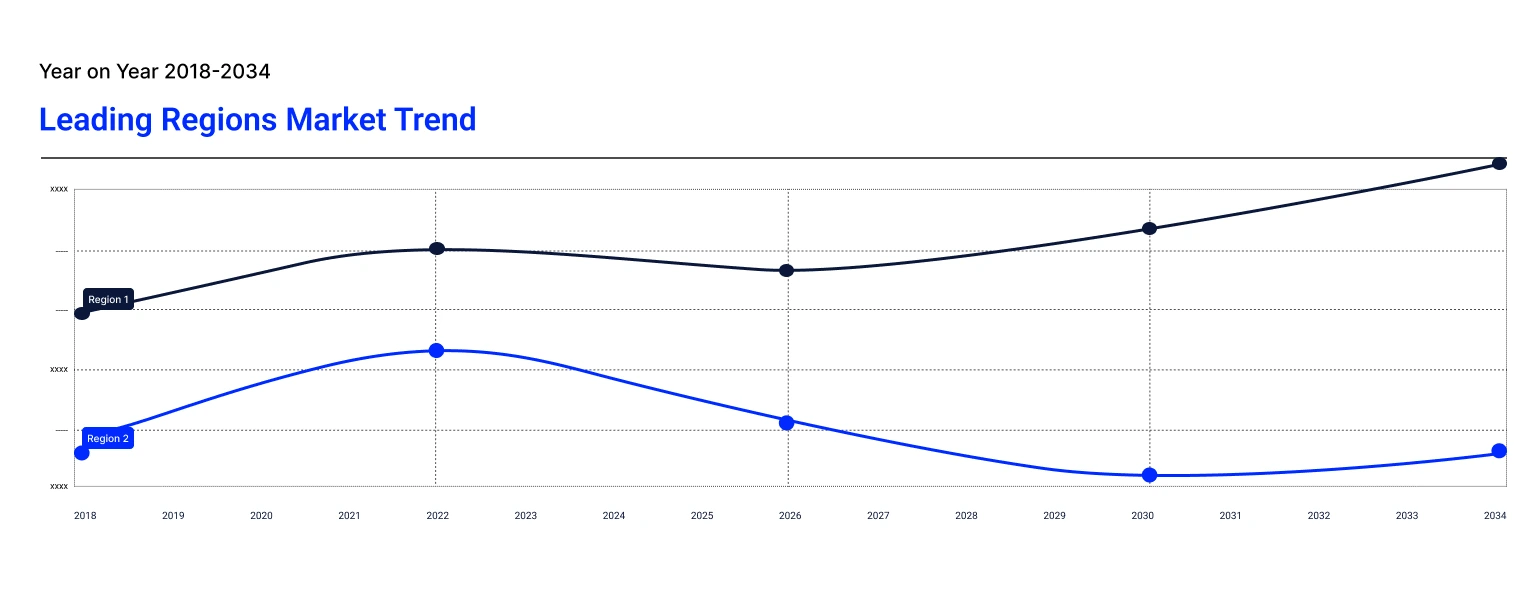
Key Insight: Regional photonic integrated circuits (PIC) market dynamics indicate that North America leads the market due to concentrated hyperscale cloud operators, strong telecom vendors, and a mature silicon-photonics ecosystem that underpins many global deployments. Asia Pacific boosts market growth as governments fund photonics capacity, 5G infrastructure and cloud regions, becoming a demand and supply hub. Europe maintains strength in research, industrial photonics and strict energy-efficiency projects, while Latin America and Middle East and Africa adopt PICs selectively as infrastructure upgrades and data-center builds justify investment.
By integration type, monolithic integration dominates the market due to compact architecture and CMOS-foundry compatibility
Monolithic integration dominates the global industry because it most closely matches the semiconductor industry’s scaling model. Designers can place lasers, modulators, detectors and passive waveguides on a single substrate, reducing assembly steps and alignment effort. Foundries prefer working with monolithic flows since they reuse existing CMOS tooling, metrology and yield-management systems, which lowers incremental capex, creating new photonic integrated circuits (PIC) market opportunities. In March 2025, Keysight Technologies, Inc. announced the launch of Photonic Designer, an innovative photonic design automation (PDA) software solution engineered to provide unparalleled accuracy and compliance-driven design validation.
Hybrid integration represents the fastest-growing category because it lets engineers combine the best of several material systems on one functional platform. Silicon handles routing and passive components, while III–V or lithium-niobate chips bring high-performance lasers and modulators. This strategy avoids the limitations of pure monolithic approaches, particularly in applications that demand high output power or ultra-linear modulation.
By raw material, silicon-on-insulator wafers account for the largest market share as they leverage mature CMOS fabrication ecosystems
Silicon-on-insulator remains the dominant raw material as it allows designers to reuse mature process design kits, lithography tools and metrology to build waveguides, couplers and passive elements with strong yield learning. For many datacom and short-reach telecom applications, SOI delivers sufficiently low loss at a highly competitive cost, especially when combined with external laser sources.
III–V materials experience significant growth in the photonic integrated circuits (PIC) market as they are widely used in efficient lasers and high-power modulators. Indium phosphide and related compounds support narrow-linewidth sources, high output powers, and temperature resilience, which are vital for long-haul transmission. In November 2025, CORNERSTONE Photonics Innovation Centre (C-PIC) launched its new Open Platform, which aims to enable true open-source collaboration for researchers and industry.
By component, integrated lasers largely contribute to the market revenue by enabling reliable on-chip light generation
Lasers remain the dominant component category in the photonic integrated circuits (PIC) market dynamics because without a stable, efficient light source, no PIC-based system works properly. In March 2025, Centera Photonics Inc. announced the industry-first 1.6 terabits per seconds transceiver module featuring the NewPhotonics NPG10201 PIC transmitter-on-chip (TOC). Vendors with strong laser IP, including narrow-linewidth and temperature-tolerant designs, command strategic influence over transceiver roadmaps.
| CAGR 2026-2035 - Market by | Component |
| Detectors | 20.7% |
| Modulators | 20.4% |
| Lasers | XX% |
| Attenuators | XX% |
| Multiplexers/De-multiplexers | XX% |
| Optical Amplifiers | XX% |
Modulators represent the fastest-growing PIC component because they are at the core of higher-order modulation formats and rising baud rates. System designers require ultra-linear, low-loss modulators to push more bits through limited spectral windows without increasing power consumption. Lithium-niobate-on-insulator, thin-film platforms and advanced III–V technologies are all competing to meet this requirement, offering improved bandwidth and lower drive-voltage characteristics.
Telecommunication applications dominate the market as carriers upgraded backbone capacity using integrated photonics
Telecommunications remain the dominant application for photonic integrated circuits because operators depend on coherent optics and dense wavelength division multiplexing to keep infrastructure capacity rising. PICs reduce size, power and complexity in transponders and pluggable modules used across long-haul, metro and access networks. Carriers value the technology because it extends fiber life and increases throughput on existing routes, accelerating the photonic integrated circuits (PIC) market growth.
| CAGR 2026-2035 - Market by | Application |
| Biomedical | 20.7% |
| Data Centers | 20.5% |
| Telecommunications | XX% |
| Optical Sensors (LiDAR) | XX% |
| Others | XX% |
Data centers represent the fastest-growing application category as AI training clusters, cloud workloads and storage traffic overwhelm traditional copper interconnects. Hyperscalers and leading cloud providers increasingly evaluate PIC-based transceivers and co-packaged optics to deliver higher bandwidth at lower energy per bit. In September 2024, Softbank and NewPhotonics announced collaboration on advanced photonics technology for LPO, CPO and All-Optics Switch Fabric Targeting AI-RAN.
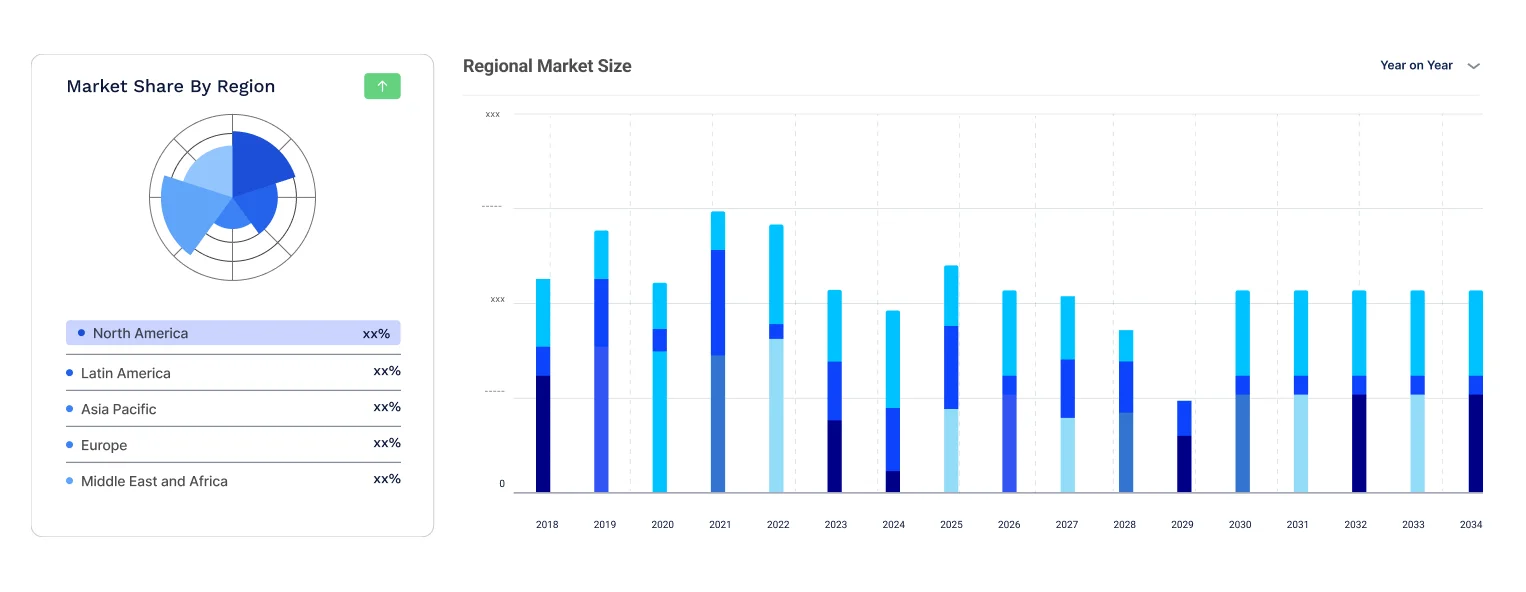

North America secures the leading position in the market owing to incumbents led large-scale photonic circuit deployments
North America is the dominant regional market for photonic integrated circuits because it combines hyperscale data-center investment, strong telecom spending, and a deep ecosystem of photonics start-ups and foundries. Large cloud operators in the United States actively test PIC-based interconnects for AI and storage clusters, creating opportunities. At the same time, North American network vendors and system integrators drive coherent optics adoption globally.
The photonic integrated circuits (PIC) industry in Asia Pacific is powered by countries that invest heavily in 5G, data-center capacity and domestic semiconductor ecosystems. China, Japan, South Korea, and Taiwan all support photonics manufacturing through industrial policies, research grants and incentives for local champions. Hyperscale cloud expansion in Southeast Asia and India adds further pull for datacom-oriented PIC solutions.
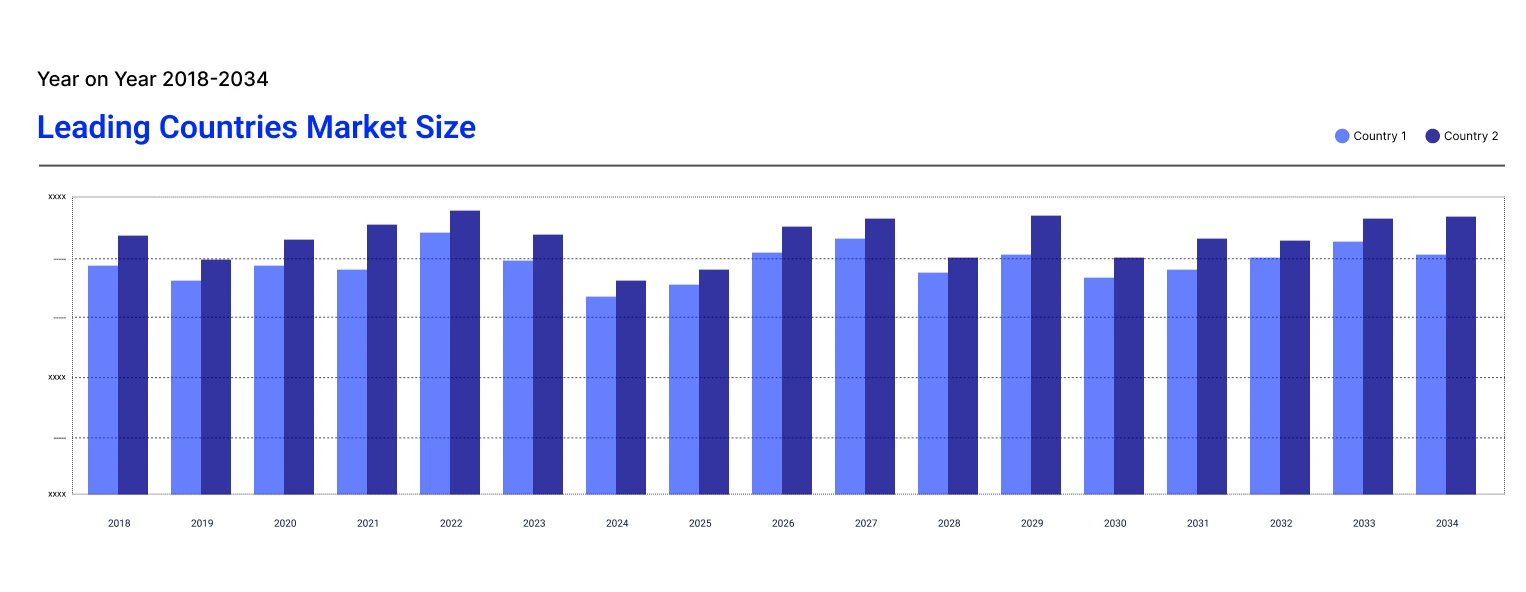
| CAGR 2026-2035 - Market by | Country |
| S. Korea | 20.9% |
| Germany | 20.8% |
| India | 20.8% |
| Taiwan | 20.6% |
| USA | 20.5% |
| China | 20.4% |
| Canada | XX% |
| UK | XX% |
| France | XX% |
| Italy | XX% |
| Japan | XX% |
| Brazil | XX% |
| Mexico | XX% |
Leading photonic integrated circuits (PIC) market players like Infinera, Coherent, Intel and Lumentum are offering complete optical engines and reference designs for 400G, 800G and future 1.6T links that cloud and telecom customers can scale across product generations. The focus has shifted toward integrating lasers, modulators, and control electronics into tightly packaged engines that cut power per bit while simplifying assembly.
Photonic integrated circuits (PIC) companies that combine wafer capacity, advanced packaging, firmware, and co-development support for optical I/O and co-packaged optics, stand to benefit the most, over the forecast period. For niche players, there is an attractive opportunity in novel materials, testing platforms, and design automation that let tier-two module makers adopt PIC technology without owning fabs and without carrying massive long-term capital expenditure on their balance sheets.
Infinera Corporation, founded in 2000 and headquartered in California, United States, is known as a pioneer of large-scale indium-phosphide photonic integrated circuits. It designs and manufactures its own PICs, coherent engines and transport platforms, giving operators tightly integrated optical systems for long-haul, subsea and metro networks.
Coherent Corp., founded in 1971 and headquartered in Pennsylvania, United States, is a global photonics supplier spanning materials, lasers and networking components. In the PIC arena, it provides vertically integrated datacom and telecom transceivers, leveraging silicon photonics, InP devices, VCSELs and passive optics from its own technology stack.
Intel Corporation, founded in 1968 and headquartered in California, United States, brings silicon-photonics expertise alongside its data-center and networking silicon. Through its Silicon Photonics product line, Intel ships 400G and 800G optical transceivers and licenses designs to ecosystem partners, enabling scalable interconnects for AI clusters and cloud switches.
Lumentum Holdings Inc., created as an independent company in 2015 and headquartered in California, United States, focuses on optical communications and commercial lasers. In PIC-related markets, it supplies coherent and high-speed pluggable transceivers, optical circuit switches and InP laser technology for cloud, AI and telecom networks.
*Please note that this is only a partial list; the complete list of key players is available in the full report. Additionally, the list of key players can be customized to better suit your needs.*
Other key players in the market include IBM Corporation, Cisco Systems, Inc., and STMicroelectronics N.V., among others.
Unlock the latest insights with our photonic integrated circuits (PIC) market trends 2026 report. Discover regional growth patterns, consumer preferences, and key industry players. Stay ahead of competition with trusted data and expert analysis. Download your free sample report today and drive informed decisions in the market.
Application Specific Integrated Circuit Market


Upto 15% Off
USD
$2499 $2249
$3999 $3599
$4999 $4249
$5999 $5099


*While we strive to always give you current and accurate information, the numbers depicted on the website are indicative and may differ from the actual numbers in the main report. At Expert Market Research, we aim to bring you the latest insights and trends in the market. Using our analyses and forecasts, stakeholders can understand the market dynamics, navigate challenges, and capitalize on opportunities to make data-driven strategic decisions.*
Get in touch with us for a customized solution tailored to your unique requirements and save upto 35%!
In 2025, the market reached an approximate value of USD 25443.45 Million.
The market is projected to grow at a CAGR of 20.30% between 2026 and 2035.
The market is estimated to witness a healthy growth in the forecast period of 2026-2035 to reach around USD 161522.22 Million by 2035.
Key strategies driving the market include standardizing interoperable PIC platforms, co-developing reference designs with hyperscalers, expanding III–V and SOI capacity, investing in packaging, and building partnerships around design tools, testing, and domain-focused photonic engines.
The key trends include the rising telecommunication network traffic and growing demand for data centres that require higher speed, increased bandwidth, and peak data rates.
The different integration types of PIC include monolithic integration and hybrid integration.
The major raw materials used in PIC include III-V material, lithium niobate, silica-on-silicon, and silicon-on-insulator, among others.
The key players in the market include Infinera Corporation, Coherent Corp. (II-VI Incorporated), Intel Corporation, Lumentum Holdings Inc., IBM Corporation, Cisco Systems, Inc., and STMicroelectronics N.V., among others.
Companies face high fab costs, yield learning risk, complex packaging, talent shortages, long qualification cycles, and pressure to hit lower power-per-bit targets while protecting margins in fiercely price-sensitive optical markets.
Explore our key highlights of the report and gain a concise overview of key findings, trends, and actionable insights that will empower your strategic decisions.
| REPORT FEATURES | DETAILS |
| Base Year | 2025 |
| Historical Period | 2019-2025 |
| Forecast Period | 2026-2035 |
| Scope of the Report |
Historical and Forecast Trends, Industry Drivers and Constraints, Historical and Forecast Market Analysis by Segment:
|
| Breakup by Integration Type |
|
| Breakup by Raw Material |
|
| Breakup by Component |
|
| Breakup by Application |
|
| Breakup by Region |
|
| Market Dynamics |
|
| Competitive Landscape |
|
| Companies Covered |
|
| Report Price and Purchase Option | Explore our purchase options that are best suited to your resources and industry needs. |
| Delivery Format | Delivered as an attached PDF and Excel through email, with an option of receiving an editable PPT, according to the purchase option. |
Datasheet
One User
USD 2,499
USD 2,249
tax inclusive*
Single User License
One User
USD 3,999
USD 3,599
tax inclusive*
Five User License
Five User
USD 4,999
USD 4,249
tax inclusive*
Corporate License
Unlimited Users
USD 5,999
USD 5,099
tax inclusive*
*Please note that the prices mentioned below are starting prices for each bundle type. Kindly contact our team for further details.*
Flash Bundle
Small Business Bundle
Growth Bundle
Enterprise Bundle
*Please note that the prices mentioned below are starting prices for each bundle type. Kindly contact our team for further details.*
Flash Bundle
Number of Reports: 3
20%
tax inclusive*
Small Business Bundle
Number of Reports: 5
25%
tax inclusive*
Growth Bundle
Number of Reports: 8
30%
tax inclusive*
Enterprise Bundle
Number of Reports: 10
35%
tax inclusive*
How To Order

Select License Type
Choose the right license for your needs and access rights.

Click on ‘Buy Now’
Add the report to your cart with one click and proceed to register.

Select Mode of Payment
Choose a payment option for a secure checkout. You will be redirected accordingly.
Gain insights to stay ahead and seize opportunities.

Get insights & trends for a competitive edge.

Track prices with detailed trend reports.

Analyse trade data for supply chain insights.

Leverage cost reports for smart savings

Enhance supply chain with partnerships.

Connect For More Information
Our expert team of analysts will offer full support and resolve any queries regarding the report, before and after the purchase.
Our expert team of analysts will offer full support and resolve any queries regarding the report, before and after the purchase.
We employ meticulous research methods, blending advanced analytics and expert insights to deliver accurate, actionable industry intelligence, staying ahead of competitors.
Our skilled analysts offer unparalleled competitive advantage with detailed insights on current and emerging markets, ensuring your strategic edge.
We offer an in-depth yet simplified presentation of industry insights and analysis to meet your specific requirements effectively.





Share