

Consumer Insights
Uncover trends and behaviors shaping consumer choices today
Procurement Insights
Optimize your sourcing strategy with key market data
Industry Stats
Stay ahead with the latest trends and market analysis.

The global military robots market attained a value of nearly USD 22490.13 Million in 2025. The market is further expected to grow at a CAGR of 8.10% during the forecast period of 2026-2035 to reach a value of USD 49005.96 Million by 2035.
Growing global demand for unmanned systems, robotic combat vehicles, and surveillance systems is anticipated to spur growth of the market. Military robots are being increasingly used to increase safety, operational efficiency, and cost-effectiveness. The military robots market is expected to grow as countries continue to modernize their defense systems. Moreover, the future of military robotics is anticipated to be driven by innovations.
Base Year
Historical Period
Forecast Period
Compound Annual Growth Rate
8.1%
Value in USD Million
2026-2035
*this image is indicative*
Read more about this report - REQUEST FREE SAMPLE COPY IN PDF
The market for military robots is rapidly expanding with a strong CAGR, propelled by rising defense procurement and the necessity for advanced robots. These robots play a critical role in surveillance, border security and military operations. This trend was accelerated by the COVID-19 pandemic, in which the potential of unmanned systems for defense is being embraced as a more effective and safer solution. In the post-pandemic environment, procurement trends are increasingly forming around a shift to robotic systems, improving military prowess worldwide. For instance, the Defense Department will receive around $7.5 billion in fiscal year 2021 for a range of robotic platforms and related technology.
Technological advancements and the move to autonomous systems are promoting expansion in the military robots market. These machines including aerial robots, play an important role in surveillance and reconnaissance during modern warfare. The proliferation of autonomous robots, capable of performing high-risk tasks like surveillance without human intervention, increases operational efficiency. As various militaries around the world fill their ranks with these kinds of machines or robots, their deployment within military operations increases, scaling advantages like safety by preserving human life, precision through efficient targeting, and adaptability in a convoluted battle space.
The military robotics market is witnessing unprecedented changes over the years with key market players acquiring robotics capabilities. In August 2018, one of the major moves has been the acquisition of Endeavor Robotics, the leading robotics technology to enhance its division in defense. However, the most significant technological development has been in the presence of Unmanned Aerial Vehicles (UAVs) which provide greater additional capacity to broaden the battlefield for military operations. These robots increase efficiency and safety, lowering the danger to humans in hostile environments. While predictive analytics and machine learning are enabling manufacturers to develop innovative robotics, advancements in the military robots market, including the use of autonomous systems and UAVs, are transforming global defense strategies.
| Global Military Robots Market Report Summary | Description | Value |
| Base Year | USD Million | 2025 |
| Historical Period | USD Million | 2019-2025 |
| Forecast Period | USD Million | 2026-2035 |
| Market Size 2025 | USD Million | 22490.13 |
| Market Size 2035 | USD Million | 49005.96 |
| CAGR 2019-2025 | Percentage | XX% |
| CAGR 2026-2035 | Percentage | 8.10% |
| CAGR 2026-2035 - Market by Region | Asia Pacific | 9.3% |
| CAGR 2026-2035 - Market by Country | India | 10.7% |
| CAGR 2026-2035 - Market by Country | China | 9.0% |
| CAGR 2026-2035 - Market by Platform | Airborne | 8.9% |
| CAGR 2026-2035 - Market by Mode of Operation | Autonomous | 11.3% |
| Market Share by Country 2025 | India | 3.5% |
The COVID-19 pandemic has also had a powerful impact on the global market. The supply chain was disrupted during the pandemic, causing delays in production and deployment. Yet the conflict also sped up the adoption of military robots, as defense companies sought safer, more efficient technologies that would allow them to keep humans out of risky operations. The consequences of the pandemic exposed weaknesses in the supply chain but also generated innovation in the defense industry. Major players in the market are responding to these challenges by concentrating on autonomous systems. With the world gradually recovering from the devastating effects of the pandemic, the military robots market is expected to continue to grow.
Expanding robotics and human augmentation to support growth
Increasing human augmentation and robotics contribute to the growth of the military robots market. Multi-mission ground robots and killer robots are being used more frequently in wartime, which gives an advantage at the battlefield. They supply military forces with advanced electronic components, enhancing operational effectiveness. The Australian military forces, for example, are more focused on operating such systems in order to protect its forces and augment its military warfare. Military robots provide a wide range of technological applications, and their market share is growing with the evolution of defense technologies and increasing competition among the major players. Military robots are therefore the future of unmanned warfare and will lead to the continued development of the market. The Spanish government has put aside an initial 1.43 billion pounds for its contribution to the unmanned aerial vehicle program from 2022 to 2028. The budget accounts for 23% of total program funding, with Spanish industry obtaining at least 19% of work share.
Using cutting-edge technology in military robots to drive the market
The growing adoption of advanced technologies, such as artificial intelligence (AI) and the Internet of Things (IoT), is driving military robots market growth. These robots are relied upon in ISR (intelligence, surveillance, and reconnaissance) operations, carrying out surveillance and reconnaissance missions in air, ground, or sea platforms. The military has integrated robots into its combat modern warfare operations because they can work independently and in complex environments, which greatly increases operational efficiency. As these technologies continue to advance, military robots are playing bigger roles in modern battlefields.
The increasing adoption of advanced technologies in military robots is augmenting the growth of the market. Ground-based applications are changing the dynamics for military operations through real-time data processing. Systems such as autonomous navigation and the development of more advanced sensors are allowing robots to operate more effectively in highly dynamic environments. Military robots can perform extensively well in the battleground with advancements in technologies. These innovations will pave the way for a growing market in military robots, with developments aligning with the requirements of modern-day defenses.
Exorbitant initial expenses that impede market expansion
Military robots have high initial costs, which act as a restraining factor to the growth of the market. They are also expensive, both to buy and program, resulting in high initial costs for military applications. Manufacturing costs make it difficult for many defense organizations in regard to procurement of such robots, thereby restricting the market entry. Though these robots use up less time for establishment and work, the development which includes discharge and market penalties programming expenses come at a cost which can lead to slow development in the market. This challenge must be overcome for militaries around the world to adopt robots on a wider basis.
Growing fears about border security is expected to drive the market growth
The airborne platform segment in the military robots market is the fastest growing segment owing to the growing demand for unmanned aerial vehicles (UAV), like the drones employed for surveillance, reconnaissance, and combat operations. These robots can deliver live data which further supports military operations execution and improves operational efficacy. Unmanned air platforms are crucial for intelligence gathering, border control, and precision strikes, providing increased safety and lowering the risk to personnel in the field.
Land-based military robots play a crucial role in ground operations, especially in surveillance, bomb disposal, and combat situations. These robots offer improved mobility, allowing them to traverse varied terrains and perform functions like reconnaissance and tactical assistance. The capacity of land robots to perform dangerous tasks down-pressures threats to the soldiers. Land robots are also becoming reliable and autonomous due to advances in technology, resulting in the growth of the land platform segment of the market.
Moreover, the naval platform segment in the military robots market is projected to capture the attention of end-users due to their significant role in maritime defense missions. Autonomous underwater vehicles (AUVs) and surface vessels operate for surveillance, mine detection and anti-submarine operations. More recently, these naval autonomous systems are accentuated to improve their operational capabilities without human presence in risky nautical environments.
Read more about this report - REQUEST FREE SAMPLE COPY IN PDF
Over the course of the forecast period, the autonomous segment is anticipated to grow significantly
Human-operated military robots require human operators to control them and perform various duties including surveillance, reconnaissance, and bomb disposal. Operators make real-time decisions based on the robot’s feedback, which can be achieved only when cost is not a major factor compared to precision in work. While they are great for human oversight, the requirement of constant human undertaking hinders the speed and scalability of operation.
Semi-autonomous military robots, on the other hand, can accomplish simple things without human guidance, such as navigating or sensing road impediments, but need a human to add creativity to the mix when decisions need to be taken at a higher level. This not only requires human intervention but also helps with flexible operations, improving military forces. The use of semi-autonomous robots for surveillance and reconnaissance helps make these missions more effective and eases the workload on operators.
Military robots that function without human control are known as autonomous military robots. These machines can perform complex operations including intelligence gathering, border patrol and combat. In autonomous mode, they derive considerable efficiency and risk advantage because they can engage with their environment and make decisions internally without the need for human operators. With the evolution of AI technology, the use of autonomous robots is likely to become more mainstream in military machinery.
The market is predicted to grow faster due to the rising demand for electric-powered robots for use in naval and aerial applications.
Military robots electric propulsion is well-known in the world for its effectiveness and eco-friendly nature. The robots work with battery-powered electric motors with quieter operations and reduced heat signatures. Electric propulsion lends itself well to operations that demand stealth and endurance, like surveillance and reconnaissance missions. Relying on electric-powered robots that leverage rapidly-developing battery technology means military robots can now operate for extended periods of time on the battlefield.
Military robots often employ mechanical propulsion systems based on internal combustion engines or mechanical systems such as treads or wheels. The robustness and high-throughput nature of these propulsion methods make them suitable for military robots operating in rough terrain, or extreme conditions. Land-based robots employed for tactical missions—bomb disposal, combat support, and more, use mechanical propulsion. Hybrid systems combine electric and mechanical technologies. These systems enable robots to navigate in various conditions, with the electric motor generating silent, energy-efficient propulsion during sneak missions and the mechanical system supplying torque for more punish tasks such as heavy hauling or high-speed travel. Hybrid propulsion is becoming popular between land-based and airborne robots as it provides more operational flexibility and longer mission duration.
ISR initiatives to dominate the market
One of the prominent applications for military robots is in Intelligence, Surveillance and Reconnaissance (ISR) owing to their capability to operate in hostile and high-risk conditions. Unmanned aerial vehicles (UAV'S) and ground robots are being used to gather real-time data and intelligence as well as monitor organizations without putting human resources at risk. It allows situational awareness to be raised and better mission planning.
In search and rescue (SAR) operations, military robots have become increasingly valuable, especially in mines or other areas that are dangerous, inaccessible, or could be affected by a disaster. Search and rescue robots with sophisticated sensors and cameras are capable of maneuvering through rubble, spotting survivors, and sending valuable data back to rescue teams. These robots minimize the introduction of human risks. Military robots are critical in combat support, for tasks like bomb disposal, reconnaissance, and logistical support. These robots support battlefield operations by generating actionable intelligence, eliminating threats, and transporting resources to low front soldiers, reduce casualties and improve mission success.
Artificially intelligent machines are being used more frequently in military operations for transportation tasks, particularly in supply chains and logistical operations. High-risk zones eliminate the need for human convoys in dangerous zones, supply transportation by autonomous ground robots and UAVs for supplies, ammunition, and equipment across challenging terrains. This train facilitates the ever-increasing social acceptance of robotic transportation solutions, conducting fields of operation with fewer human casualties and increased mission effectiveness in military logistics and field operation.
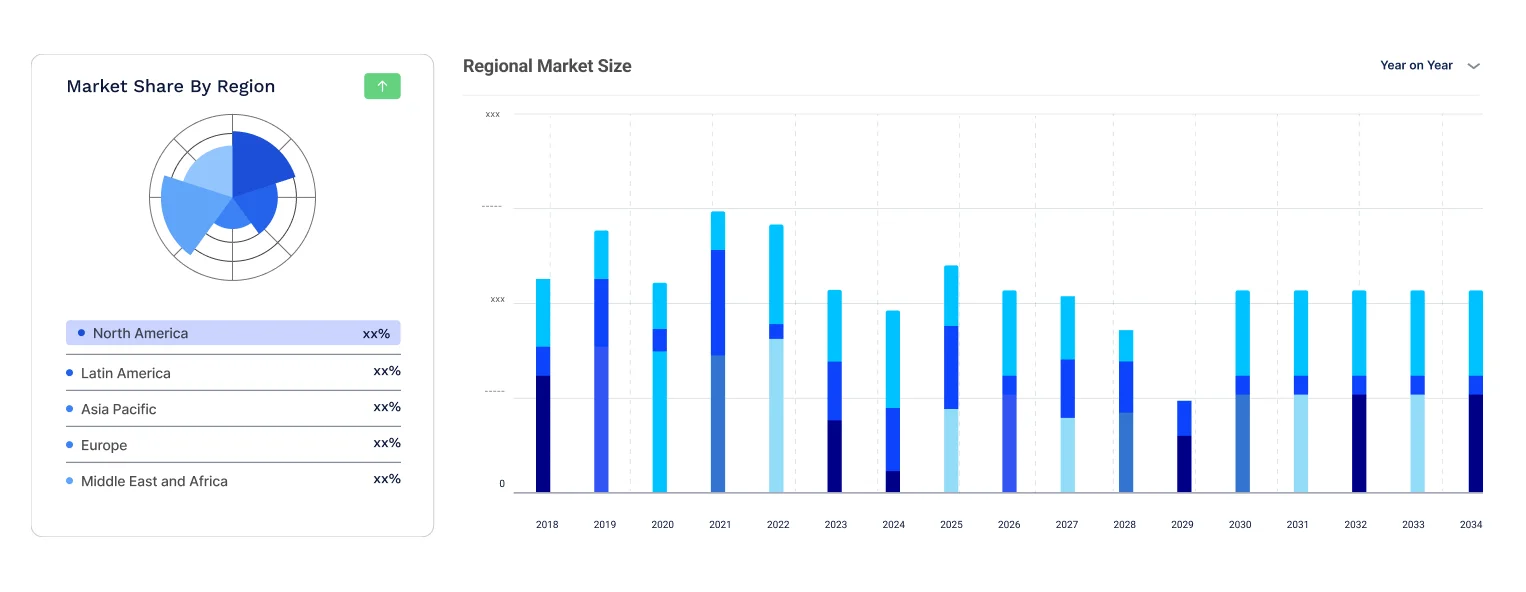

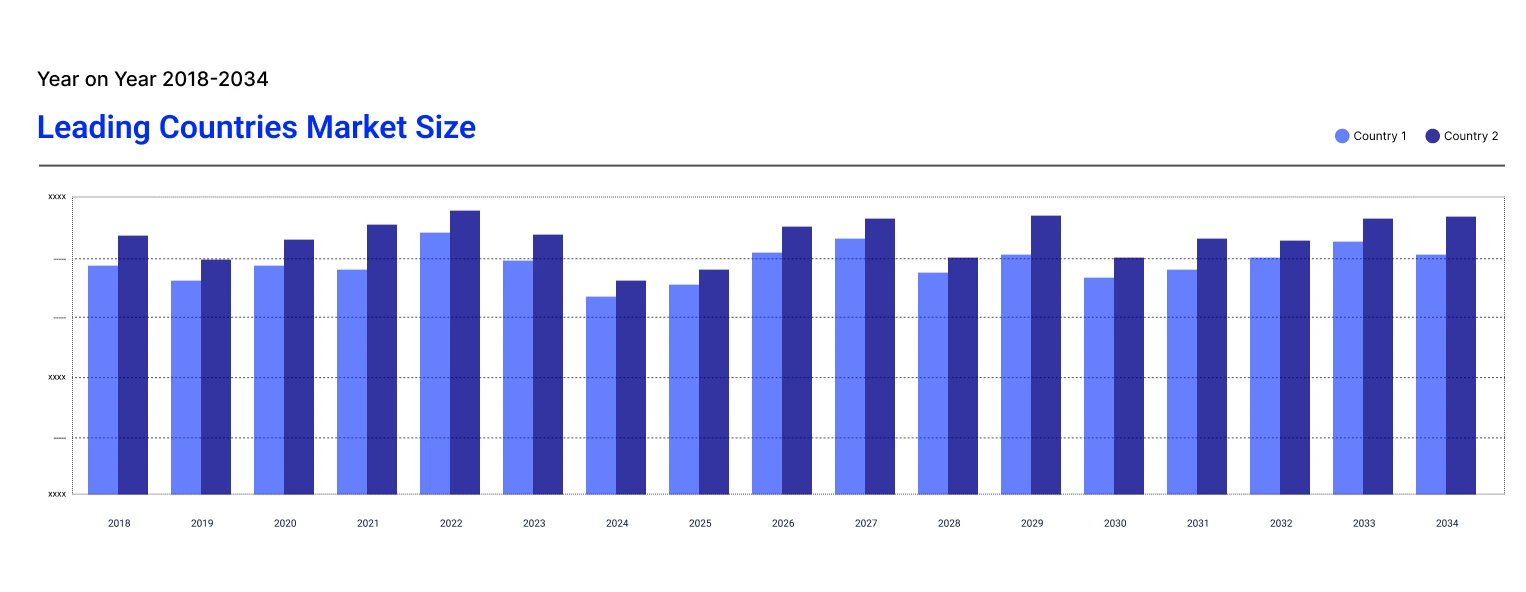
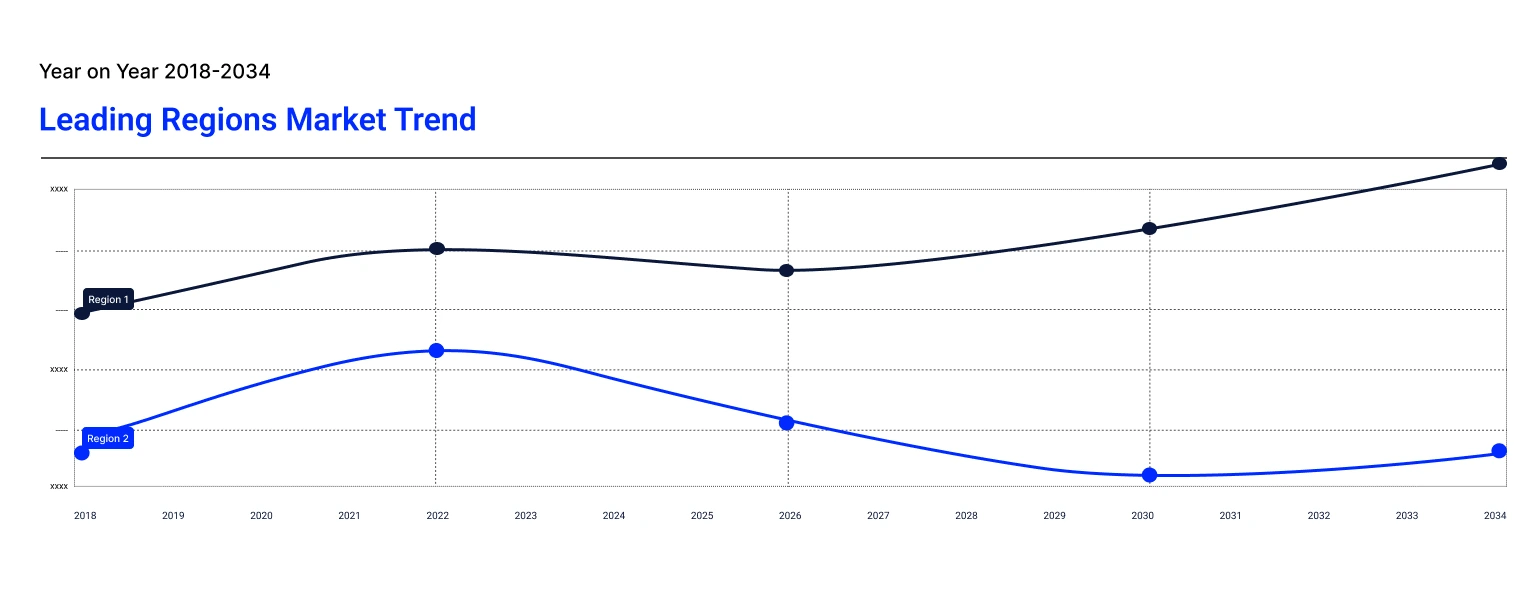
Military robots utilization in North America is holding a significant market share, largely supported by the spending by the U.S., a global defense technology leader. The U.S. military has led the way in developing advanced robotics for ISR (intelligence, surveillance, reconnaissance). This, along with availability of major defense contractors and a fertile research & development environment for the consumer electronics industry, aid in propelling the market growth. The growing demand for unmanned aerial vehicles (UAVs) and autonomous systems in military operations further bolsters North America's market position, driving continuous growth and innovation in military robotics.
Europe has a robust presence in military segment of the robotics market with a number of countries investing in the automation and robotics to boost up their versatile capabilities. Some countries like the UK, Germany and France have been early adopters of military robotics with heavy investments in research and development. Demand for advanced military robots is fueled by the region’s focus on modern warfare, intelligence gathering and border security. Furthermore, expected partnerships between the defense firms and government organizations in the Europe region are predicted to drive the market growth for the land and airborne robots for defense applications.
The military robots market in Asia Pacific is rapidly growing. The market growth is supported by the rising defense spending and modernization programs across key nations namely China, India, Japan, and South Korea. For example, China is heavily investing in autonomous military systems and robotics to augment its military capabilities. There is growing interest among near-Eastern countries in the use of drones, UAVs, and land-based robots for surveillance, reconnaissance and defense applications.
Demand for military robots is increasing in the Middle East & Africa region due to the necessity to strengthen security & defense capabilities. Middle Eastern countries, including Saudi Arabia and the United Arab Emirates are constantly seeking the latest robotic systems for force multiplication in terms of border patrol, surveillance, and combat operations. Moreover, the region's unstable security environment has triggered greater interest in unmanned systems capable of performing high-risk missions and reducing human casualties.
Brazil and Argentina are two countries in Latin America that are working on military robots, which increasingly utilize unmanned systems for surveillance and defense operations. The area is slowly implementing state of the art military technologies, though there is an increasing interest in robotics when it comes to border security and law enforcement. Although still in an emerging phase compared to more mature markets elsewhere, growing defense budgets and the need to face modernized security challenges are expected to help drive growth.
| CAGR 2026-2035 - Market by | Country |
| India | 10.7% |
| China | 9.0% |
| USA | 7.2% |
| Germany | 6.7% |
| France | 6.3% |
| Canada | XX% |
| UK | XX% |
| Italy | XX% |
| Japan | 5.6% |
| Australia | XX% |
| Saudi Arabia | XX% |
| Brazil | XX% |
| Mexico | XX% |
The advancements in the UAV, ground robots, and military autonomous systems are being increasingly created by leading market players. These are carried out through extensive efforts in research and development to drive the adoption of military autonomous systems market. Through their strategic partnerships, acquisitions, and investments in cutting-edge technologies, they are shaping the future of military robotics and improving global defense capabilities.
February 2025
Thales and Sopra Steria, two companies with headquarters in France, have partnered strategically to introduce a new platform that will enhance aircraft operations throughout European airspace. The two businesses will work together for several years to create and provide the OpenSky Platform, a new digital platform that will help Air Navigation Service Providers (ANSPs) with their operations.
February 2025
In a recent live experiment, scientists from the Ministry of Defence successfully detected and neutralized bomb threats utilizing sophisticated robotic equipment, including robot dogs. The trial demonstrates how defense can be a growth engine while preserving national security and advancing new technologies at a quick pace, supporting important elements of the UK Government's Plan for Change.
December 2024
China unveiled the first mobile 5G base station in history, designed to survive the harsh circumstances of combat zones. The People's Liberation Army (PLA) and China Mobile Communications Group collaborated to build this cutting-edge system, which is said to provide ultra-secure, high-speed, and low-latency data transfer for up to 10,000 users within a 3-kilometer radius.
July 2024
Zen Technologies, a prominent supplier of anti-drone technology and defense training solutions, introduced a number of new products for the international defense market. Their product line has advanced significantly with this announcement, which was produced in partnership with AI Turing Technologies, a subsidiary.
December 2023
The X-37B, a classified robotic spacecraft of the United States military, launched from Florida on its seventh mission. For the first time, the aircraft was launched on a SpaceX Falcon Heavy rocket, which can carry it into a higher orbit than it has previously been in.
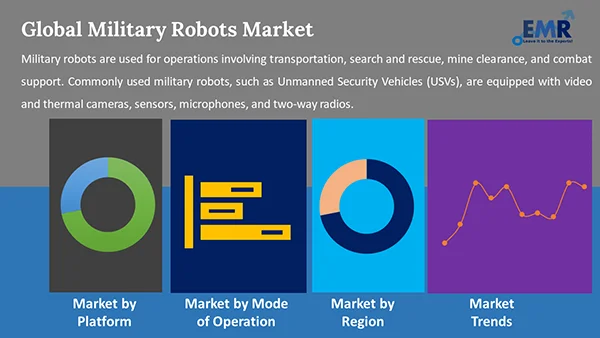
The EMR’s report titled “Military Robots Market Report and Forecast 2026-2035” offers a detailed analysis of the market based on the following segments:
Market Breakup by Platform
Market Breakup by Mode of Operation
Market Breakup by Mode of Propulsion
Market Breakup by Application
Market Breakup by Region


Upto 15% Off
USD
$2499 $2249
$3999 $3599
$4999 $4249
$5999 $5099


*While we strive to always give you current and accurate information, the numbers depicted on the website are indicative and may differ from the actual numbers in the main report. At Expert Market Research, we aim to bring you the latest insights and trends in the market. Using our analyses and forecasts, stakeholders can understand the market dynamics, navigate challenges, and capitalize on opportunities to make data-driven strategic decisions.*
Get in touch with us for a customized solution tailored to your unique requirements and save upto 35%!
In 2025, the market reached an approximate value of USD 22490.13 Million.
The market is projected to grow at a CAGR of 8.10% between 2026 and 2035.
The surging terrorism activities, the increasing geopolitical tensions, and the implementation of various military modernisation programmes are the major market drivers.
The growing integration of AI in military robots, the increasing focus on developing unmanned military systems, and surging defence investments by governments are the key trends propelling the market growth.
The major regions in the military robots market are North America, Latin America, the Middle East and Africa, Europe, and the Asia Pacific.
The various platforms of military robots considered in the market report are land, marine, and airborne, among others.
Human operated and automated are the major segments based on modes of operation of the product included in the market report.
The major players in the market are Thales Group, Cobham Limited , QinetiQ, Northrop Grumman, Lockheed Martin Corporation, AeroVironment Inc., FLIR Systems Inc., Clearpath Robotics Inc., BAE Systems., Elbit Systems Ltd., and Raytheon Technologies, among others.
The market is estimated to reach USD 49005.96 Million by 2035.
The land platform segment is expected to lead the market.
The Asia Pacific region is expected to grow as the fastest-growing region over the forecast period.
As per the market report, the ISR application segment has held the major market share.
Explore our key highlights of the report and gain a concise overview of key findings, trends, and actionable insights that will empower your strategic decisions.
| REPORT FEATURES | DETAILS |
| Base Year | 2025 |
| Historical Period | 2019-2025 |
| Forecast Period | 2026-2035 |
| Scope of the Report |
Historical and Forecast Trends, Industry Drivers and Constraints, Historical and Forecast Market Analysis by Segment:
|
| Breakup by Platform |
|
| Breakup by Mode of Operation |
|
| Breakup by Mode of Propulsion |
|
| Breakup by Application |
|
| Breakup by Region |
|
| Market Dynamics |
|
| Competitive Landscape |
|
| Companies Covered |
|
| Report Price and Purchase Option | Explore our purchase options that are best suited to your resources and industry needs. |
| Delivery Format | Delivered as an attached PDF and Excel through email, with an option of receiving an editable PPT, according to the purchase option. |
Datasheet
One User
USD 2,499
USD 2,249
tax inclusive*
Single User License
One User
USD 3,999
USD 3,599
tax inclusive*
Five User License
Five User
USD 4,999
USD 4,249
tax inclusive*
Corporate License
Unlimited Users
USD 5,999
USD 5,099
tax inclusive*
*Please note that the prices mentioned below are starting prices for each bundle type. Kindly contact our team for further details.*
Flash Bundle
Small Business Bundle
Growth Bundle
Enterprise Bundle
*Please note that the prices mentioned below are starting prices for each bundle type. Kindly contact our team for further details.*
Flash Bundle
Number of Reports: 3
20%
tax inclusive*
Small Business Bundle
Number of Reports: 5
25%
tax inclusive*
Growth Bundle
Number of Reports: 8
30%
tax inclusive*
Enterprise Bundle
Number of Reports: 10
35%
tax inclusive*
How To Order

Select License Type
Choose the right license for your needs and access rights.

Click on ‘Buy Now’
Add the report to your cart with one click and proceed to register.

Select Mode of Payment
Choose a payment option for a secure checkout. You will be redirected accordingly.
Gain insights to stay ahead and seize opportunities.

Get insights & trends for a competitive edge.

Track prices with detailed trend reports.

Analyse trade data for supply chain insights.

Leverage cost reports for smart savings

Enhance supply chain with partnerships.

Connect For More Information
Our expert team of analysts will offer full support and resolve any queries regarding the report, before and after the purchase.
Our expert team of analysts will offer full support and resolve any queries regarding the report, before and after the purchase.
We employ meticulous research methods, blending advanced analytics and expert insights to deliver accurate, actionable industry intelligence, staying ahead of competitors.
Our skilled analysts offer unparalleled competitive advantage with detailed insights on current and emerging markets, ensuring your strategic edge.
We offer an in-depth yet simplified presentation of industry insights and analysis to meet your specific requirements effectively.





Share