

Consumer Insights
Uncover trends and behaviors shaping consumer choices today
Procurement Insights
Optimize your sourcing strategy with key market data
Industry Stats
Stay ahead with the latest trends and market analysis.

The global Merino wool market was volumed at 305.22 KMT in 2025. The market is expected to grow at a CAGR of 0.40% during the forecast period of 2026-2035 to reach a volume of 317.65 KMT by 2035. The market is growing rapidly, and one of the drivers behind this trend is consumer demand for sustainable, high-performance natural fibers.
Merino wool has gained a reputation for being a soft fiber, due to its soft, breathable, moisture-wicking properties. It now plays a major role in luxury apparel, activewear, and home textiles. There is appeal for Merino wool since it relates to the circular economy and because both brands and consumers want more biodegradable eco-friendly alternatives to synthetics too. Growth is in the premium and high-end segments, with Merino wool preferred for designer wool suits and performance in outdoor gear, along with a stream of innovation in methods of processing and blending for enhanced durability and versatility for consumers.
Key producers of wool, including Australia, New Zealand, and China, are still driving global supply, with demand in emerging economies speeding up. The Merino wool industry is also fueled by the fast growth of e-commerce, which opens up access to high-quality Merino wool goods globally. Significantly, in early 2025, wool prices increased by more than 3% as global demand continued to outstrip supply, reflecting continued popularity of premium attributes of Merino wool. As sustainability and responsible sourcing continue to be core to consumer decisions, Merino wool's natural and sustainable properties put it at the forefront as a key growth driver in the world's textile market. The market growth is driven by a wave of new product innovations and sustainability-focused advancements.
LILYSILK, for example, released its first-ever machine wash Merino wool line in 2024, which not only made luxury wool fashion more accessible to consumers but also greatly enhanced marketability. New breakthroughs in sustainable dyeing methods, such as the use of biodegradable natural dyes including sulphonated lignin, are also significantly reducing the environmental footprint of Merino wool market, contributing to efforts to advance sustainability globally.
Base Year
Historical Period
Forecast Period
Compound Annual Growth Rate
0.4%
Value in KMT
2026-2035
*this image is indicative*
| Global Merino Wool Market Report Summary | Description | Value |
| Base Year | KMT | 2025 |
| Historical Period | KMT | 2019-2025 |
| Forecast Period | KMT | 2026-2035 |
| Market Size 2025 | KMT | 305.22 |
| Market Size 2035 | KMT | 317.65 |
| CAGR 2019-2025 | Percentage | XX% |
| CAGR 2026-2035 | Percentage | 0.40% |
| CAGR 2026-2035 - Market by Region | Asia Pacific | 0.7% |
| CAGR 2026-2035 - Market by Country | India | 1.2% |
| CAGR 2026-2035 - Market by Country | China | 0.7% |
| CAGR 2026-2035 - Market by End Use | Apparel | 0.6% |
| CAGR 2026-2035 - Market by Application | Woven | 0.8% |
| Market Share by Country 2025 | Germany | 5.1% |
The Merino wool market is undergoing an enormous transition driven by sustainability and circular economy considerations. At the end of 2024, Woolmark launched Woolmark+ and introduced a new global standard to the industry that has a focus on climate action, resource stewardship and animal welfare. More and more brands and woolgrowers are adopting methods such as regenerative agriculture, traceability, and environmental on-farm certifying. In addition, recycling and upcycling initiatives are gaining momentum, with new legislation in Europe prompting the industry toward cleaner emissions and waste.
Merino wool's position in the upscale and luxury fashion markets has been solidified by its exceptional softness, drape, and thermal insulation. Merino wool was used in 2024 collections by well-known designers Ulla Johnson, Maison Margiela, and Stella McCartney, demonstrating its adaptability to both classic and modern styles. Additionally, companies like Lafayette 148 introduced Woolmark-certified Merino collections, emphasizing quality and transparency. High-end consumers who appreciate sustainable luxury are increasingly using the fiber because of its naturally occurring anti-odor and moisture-wicking qualities, which are highly sought after in high-end clothing and household goods.
To increase the applications of the worldwide Merino wool industry, manufacturers are investing heavily in cutting-edge spinning, mixing, and dyeing technologies. For example, the twist-free spinning method used by Nuyarn creates Merino textiles that are lighter, stronger, and more resilient, perfect for technical equipment and outdoor activities. The increasing need for comfort, sustainability, and durability in contemporary textiles is being met by the blending of Merino with other fibers, which is also opening new possibilities in seamless knits, machine-washable clothing, and medical fabrics.
The demand for performance apparel made of Merino wool has significantly expanded due to the growing popularity of outdoor activities and athleisure. A complete Merino run kit was introduced by Smartwool and Altra in 2024, demonstrating the fiber's odor-resistant, moisture-wicking, and lightweight qualities. Merino wool is becoming a vital component for active lifestyles, according to brands like Patagonia and Smartwool, which recorded significant sales increase in North America. These patterns highlight the desire of consumers for high-performance, adaptable textiles that blend sustainability and comfort, making them appropriate for a variety of activities and climates.
The digitalization of the textile industry rapidly increases Merino wool demand. Luxury brands are establishing new Merino collections and using digital campaigns and e-commerce shops to efficiently market and sell them. Furthermore, the alteration of wool-rich product information including sustainability credentials and traceability online gives brands greater opportunity to engage with engaged eco-conscious and other consumers. In August 2023, Edition, a Chinese womenswear brand, launched its first Merino wool collection that provided full traceability of the superfine wool supplied by Victoria (Australia). Digital transformation increases opportunities for brands to respond to updated fashion trends while affording increased transparency and accessibility.
Read more about this report - REQUEST FREE SAMPLE COPY IN PDF
The EMR’s report titled “Global Merino Wool Market Report and Forecast 2026-2035” offers a detailed analysis of the market based on the following segments:
Market Breakup by Type
Key Insight: Worsted Merino wool, which has a long, fine fiber with a smooth finish is the primary fiber for premium apparel and suiting and is appreciated for its durability and attractive drape. Woolen Merino wool, which has shorter fibers and is loftier in texture, is used for things like knitwear and winter accessories, and is prized for its warmth and soft touch. The worst side of the industry is continuing to benefit from demand for luxury and formal wear, while the woolen side is gaining momentum from athleisure and casualwear, particularly in colder areas. Both segments are making progress as they adopt new processing techniques that improve comfort or sustainability.
Market Breakup by Weave
Key Insight: Plain weave Merino wool market, with tropical and high-twist varieties included, is becoming more common and used to make lightweight lightly breathable fabrics, suitable for climates with warmer weather and summer suiting. Hopsack weaves add a level of visual texturing and durability to provide estilo, having become quite widely used in men’s contemporary tailors. Twill weaves like serge, herringbone, and worsted flannel have desired drape and structure, strength and durability especially for formalwear and outerwear markets. Recent advancements in weaving technology have also led to Merino wool fabrics exhibiting greater stretch, breathability and wrinkle resistance to match with historical and contemporary fashion trends.
Market Breakup by Application
Key Insight: Woven Merino wool has been the foundation fabric for luxury suiting, jackets and outerwear for years, prized for its structure, smoothness and how well it wears. It is this category that drives the perennial appetite for luxury, tailored garments across both developed markets and those on the rise. The knitted segment is quickly starting to gain the Merino wool market share due to its flexibility/stretch and comfort. It is ideal for casualwear, activewear, and performance apparel. The increase in athleisure and outdoor activity has catalyzed the innovation of Merino knits with seamless, lightweight, and thermoregulating product developments becoming commonplace.
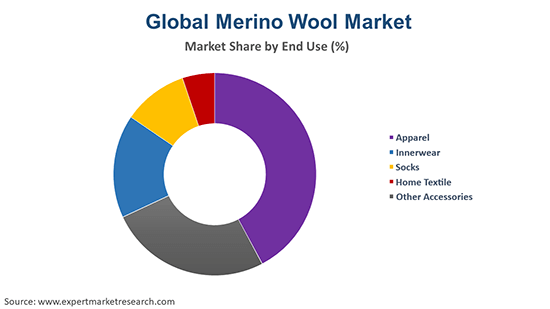
Market Breakup by End Use
Key Insight: Wool fabrics are appreciated for being luxuriously soft while also breathable and flexible. As for the remaining segments of anti-insensitive socks and undergarments, the increasing demand for Merino’s moisture wicking and odor resistant properties in base layers and activewear makes it noteworthy. Activewear base layers also utilize the increasing demand for Merino apparel’s moisture wicking and odor resistance for added comfort. Velvety bedding and plushy throws are also gaining popularity as more consumers prioritize hypoallergenic and temperature controlling fabrics for better sleep and overall wellness. As more businesses adopt new blends and finish in line with their consumer's varied interests, it continues to foster the growth of the Merino wool industry.
Market Breakup by Region
Key Insight: Asia Pacific holds the most market share which is spearheaded on the one hand by the dominant production from Australia and China and the on the other hand by the growing consumption from India and Southeast Asia. Supply chains, government policies, and growing discretionary spending also help. Europe is an important market too with a long history in the processing of wool and the luxury fashion industry, while North America is increasingly growing by the demand of Merino based activewear and other sustainable textiles. Local dynamics are also driven by socio-economic factors such as buyer behavior, weather patterns, and local textile production with the most active Asia Pacific and Europe region.
| CAGR 2026-2035 - Market by | Region |
| Asia Pacific | 0.7% |
| North America | 0.5% |
| Europe | XX% |
| Latin America | XX% |
| Middle East and Africa | XX% |
By type, worsted wool to lead the market due to increased bidding initiatives
Worsted Merino wool market continues to dominate globally, especially in luxury suiting and premium formalwear. The rise of this segment reflects the steady demand from high-end fashion houses and textile manufacturers in Europe and North America. Recent auction results from Australia indicate robust bidding for worsted Merino broader than 20 microns, with Chinese mills leading purchases, reflecting sustained global confidence in this segment. Ongoing investments in traceable, sustainable production and innovative blends are expected to further strengthen worsted Merino’s market position, as seen in the 2025 International Woolmark Prize collections.
The woolen segment is the fastest-growing type in the global industry, driven by surging interest in knitwear, athleisure, and casual fashion. Technological advances, such as twist-free spinning, and new launches targeting younger demographics are fueling this expansion. Partnerships highlighted at Bharat Tex 2025 and increased adoption in India and Southeast Asia are expected to further accelerate growth, with woolen Merino’s comfort and versatility appealing to a broadening consumer base.
Twill weaves to capture significant share due to ongoing innovations
Twill weaves hold the leading share in the Merino wool market, especially for premium suiting and outerwear. Auction data from early 2025 shows strong demand for twill-woven Merino from both Chinese and European mills, reflecting its ongoing appeal for luxury and performance apparel. The segment benefits from continuous innovation in weaving and finishing, as demonstrated in the Alaïa “One Yarn” collection, which leverages twill’s durability and premium aesthetics.
| CAGR 2026-2035 - Market by | Application |
| Woven | 0.8% |
| Knits | XX% |
Plain weave Merino, including tropical, high-twist, and hopsack variants, is the fastest-growing weave segment. Growth is driven by consumer demand for lightweight, breathable fabrics, especially in warmer climates and urban markets. Recent launches highlight the adaptability of plain weaves, while advances in spinning and finishing are enhancing both sustainability and performance. In June 2022, Sportscraft launched its Woolmark-certified collections that included knitwear and plain weave Merino wool, emphasizing comfort, traceability, and versatile natural fibers.
Woven wool to lead market growth due to rising apparel demand
The woven Merino wool market remains the largest application segment, particularly in luxury suiting, jackets, and structured outerwear. This leadership is reinforced by ongoing demand from high-end tailoring and formalwear, with brands leveraging Merino’s natural drape, breathability, and anti-odor properties to cater to discerning consumers. Take, for instance, Tod's Field Jacket, featuring a sophisticated 15-micron woven Merino wool, with a breathable and water-repellent membrane for both luxury and functionality. The sector's value is evidenced through healthy auction results in Australia, and with Chinese mills leading purchases for woven-grade Merino, this reflects the level of confidence in the sector globally.
The impressive CAGR for Merino knits has been largely influenced by the growth of athleisure and sportswear in conjunction with the growing interest in layering and easy-care, seamless garments, especially seen in India and the Asia Pacific. Emerging smart textiles and technical yarns, including twist-free Merino, are expanding the scope of lightweight, thermoregulating knitwear. Many digital marketing campaigns are driving e-commerce sales and thus, enabling more merchandisable opportunities to consumers across the globe, while many brands are showcasing new collections with the focus on sustainability and performance. The rapid growth of the sector is also due to the increase in outdoor recreation participation, increased interest in wellness, and preference for natural, breathable fabrics by young, active consumers.
| CAGR 2026-2035 - Market by | End Use |
| Apparel | 0.6% |
| Innerwear | 0.4% |
| Socks | XX% |
| Home Textile | XX% |
Apparel to lead market growth due to surging incomes
Apparel is the most significant end-use segment of the Merino wool market. Major product endorsements and collaborations, for example, Sportscraft's 2025 Merino range and New Zealand Wool's entry in India, are solidifying Merino's place in traditional as well as modern fashion. Apparel companies are focusing more and more on traceability and eco-certification, keeping in line with consumer expectations for sustainable luxury. Dominance in the segment is also underpinned by increasing disposable incomes in major markets, the trend towards sustainable fashion, and the natural anti-odor and moisture-wicking attributes of the fiber, which are of considerable value to both mature as well as new consumer groups
Home textiles are the most rapidly expanding end-use category, driven by consumer attention to wellness, comfort, and sustainability. Demand is supported by Merino's hypoallergenic and temperature-management characteristics, increasingly valued in bedding, blankets, and home decor. Product development and manufacturing innovations, such as blending with other natural fibers and novel weaving technologies, are extending the portfolio of Merino home textile products. Suedwolle, Lenzing & Culp launched 50% Merino wool/Tencel Lyocell home textiles with comfort, warmth, cooling, breathability, and fashionable contemporary looks in January 2025.
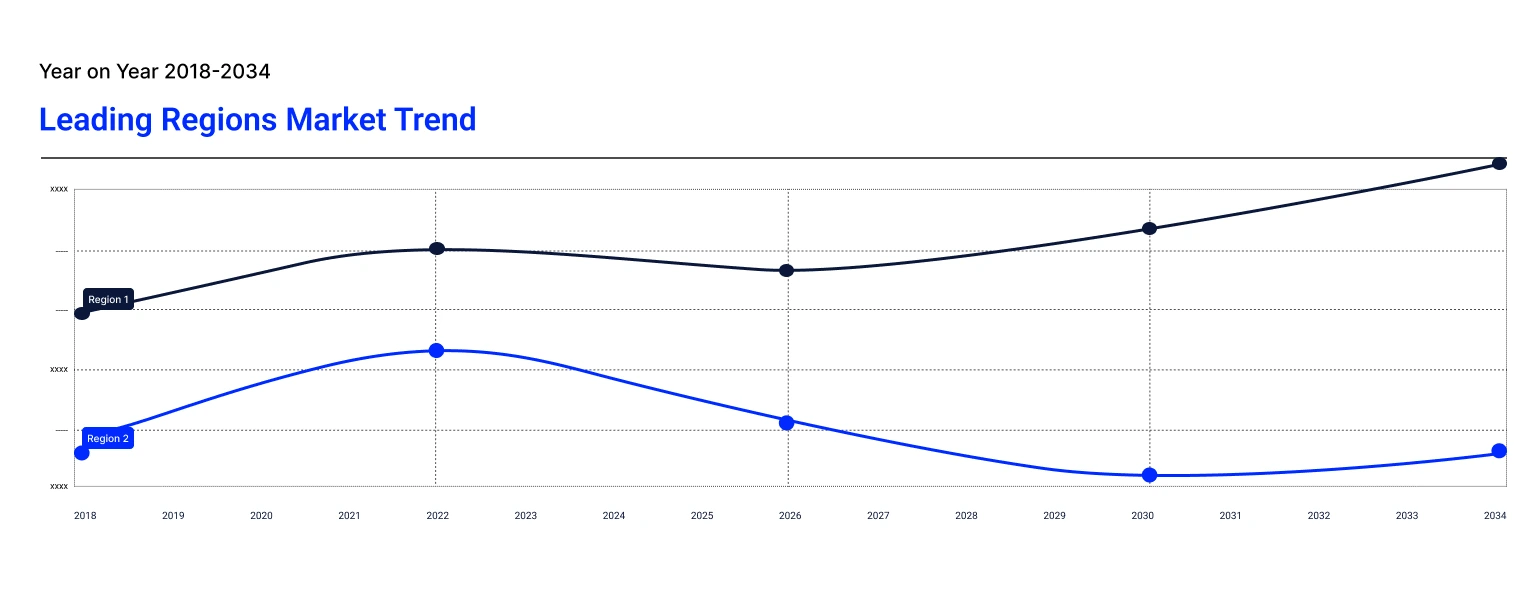
Asia Pacific claims the dominant market position owing to rising production
Asia Pacific is the dominant region in the global Merino wool market, accounting for the largest share of both production and consumption. Australia continues to be the world’s leading producer, while China plays a significant role as both a manufacturer and consumer of Merino wool. At nearly 350 million kilograms of wool produced annually; Australia is the foremost exporter of merino wool in the world. The regional growth is further supported by the region’s well-established manufacturing capabilities, making it a key player in the global supply chain.
Europe is set to embrace Merino wool, driven by increasing consumer demand for sustainable, high-performance textiles. Luxury fashion brands and manufacturers of outdoor apparel are using Merino wool for its natural breathability, temperature regulation, and biodegradability. This trend will continue with more prescriptive traceability programs and, also, innovative new fabric blends that will improve performance and comfort. In October 2022, Milan-based brand, Sease launched a 19-piece collection that transforms formal fabrics into jackets, pants, and more, made with performance-finished Merino wool.
| CAGR 2026-2035 - Market by | Country |
| India | 1.2% |
| China | 0.7% |
| Canada | 0.6% |
| Australia | 0.5% |
| Germany | 0.4% |
| USA | XX% |
| UK | XX% |
| France | XX% |
| Italy | XX% |
| Japan | XX% |
| Saudi Arabia | XX% |
| Brazil | XX% |
| Mexico | XX% |
In the global Merino wool market, the competitive environment is accentuated by major competitors investing heavily in renewables and innovation, as well as collaboration with other parties, to mitigate rivalry. The commitment to new processing technologies, from environmentally sustainable dyeing techniques, to supply chain traceability engagement, reflects efforts of the companies in the sector to meet consumer expectations and new legislative demands. The contributions of the growth strategies also benefit from collaboration with wool growers, fashion brands and technology companies to design and develop high performance luxury sustainable Merino wool products. The strategies to mitigate competition include expanding product lines of Merino wool, exploring new geographic markets, as well as entering new consumer segments by selling directly to consumers through online selling channels.
Established in 1983, with headquarters in Germany, Südwolle Group is a worldwide pioneer in processing fine and superfine wool. An industry leader in developing sustainable wool processing, they have introduced innovative dyeing methods and green treatments, improving wool quality while minimizing environmental impact to global markets.
Founded in 1974 and headquartered in the United States, Brown Sheep Company is a wool yarn manufacturer specializing in high-quality hand-knitting wool yarns. They have established themselves for their focus on sustainable sourcing and advancements in wool spinning technology, improving fiber softness and durability for craft and commercial markets.
Established in 1994 with its headquarters in Thailand, Indorama Ventures is a international chemical manufacturer with a reputation for incorporating sustainability in its operations. Its innovations involve manufacturing recycled fibers and high-performance polyester blends, spearheading circular economy initiatives in textiles and packaging sectors globally.
Europa Wools, established in 1996 and based in the United Kingdom, specializes in sourcing and supplying high-quality wool fibers. The firm has established revolutionary traceability systems and quality control measures to provide excellent wool standards to high-end textile producers and enhance the integrity of the wool supply chain.
*Please note that this is only a partial list; the complete list of key players is available in the full report. Additionally, the list of key players can be customized to better suit your needs.*
Other key players in the market are Xinao Textiles Inc., Yünsa A.S., and Laxtons Limited, among others.
Unlock the latest insights and trends shaping the Global Merino Wool Market in 2026. Download your free sample report today to explore the Global Merino Wool Market Size, forecast 2026 - 2035, and actionable strategies for growth. Stay ahead of the competition with trusted, data-driven intelligence-ideal for manufacturers, investors, and brands seeking to capitalize on the rising demand for sustainable, high-performance textiles worldwide.


Upto 15% Off
USD
$2499 $2249
$3999 $3599
$4999 $4249
$5999 $5099


*While we strive to always give you current and accurate information, the numbers depicted on the website are indicative and may differ from the actual numbers in the main report. At Expert Market Research, we aim to bring you the latest insights and trends in the market. Using our analyses and forecasts, stakeholders can understand the market dynamics, navigate challenges, and capitalize on opportunities to make data-driven strategic decisions.*
Get in touch with us for a customized solution tailored to your unique requirements and save upto 35%!
In 2025, the market reached an approximate volume of 305.22 KMT.
Key strategies include a strong focus on sustainability and ethical sourcing, supported by certifications and animal welfare standards. Innovation in textile technology, such as the development of finer fibers and performance-enhancing finishes, is enhancing product appeal. The growing popularity of activewear and outdoor apparel continues to expand Merino wool’s market presence.
The key trends guiding the market growth are the rising trend of internet shopping, the surging population, and the growing usage of natural fibres in in the textile sector.
The major regions in the market are North America, Latin America, the Middle East and Africa, Europe, and the Asia Pacific.
The significant types of merino wool are worsted and wollen.
The major segments based on weaves of merino wool considered in the market report are plain weave and twill.
The various applications of merino wool include woven and knits.
The several end uses of merino wool are apparel, innerwear, socks, home textile, among other accessories.
The key players in the market include Südwolle Group, Brown Sheep Company, Inc., Indorama Ventures Public Company Limited, Europa Wools Ltd., Xinao textiles inc., Yünsa A.S., and Laxtons Limited, among others.
The market is projected to grow at a CAGR of 0.40% between 2026 and 2035.
Significant challenges include the raw wool price volatility caused by climatic factors and associated supply fluctuations. Increased production costs, especially when compared to synthetic production alternatives, limit competitiveness. The wool market also suffers from strong competition from cheaper, high-performance synthetic fibers.
Explore our key highlights of the report and gain a concise overview of key findings, trends, and actionable insights that will empower your strategic decisions.
| REPORT FEATURES | DETAILS |
| Base Year | 2025 |
| Historical Period | 2019-2025 |
| Forecast Period | 2026-2035 |
| Scope of the Report |
Historical and Forecast Trends, Industry Drivers and Constraints, Historical and Forecast Market Analysis by Segment:
|
| Breakup by Type |
|
| Breakup by Weave |
|
| Breakup by Application |
|
| Breakup by End Use |
|
| Breakup by Region |
|
| Market Dynamics |
|
| Competitive Landscape |
|
| Companies Covered |
|
| Report Price and Purchase Option | Explore our purchase options that are best suited to your resources and industry needs. |
| Delivery Format | Delivered as an attached PDF and Excel through email, with an option of receiving an editable PPT, according to the purchase option. |
Datasheet
One User
USD 2,499
USD 2,249
tax inclusive*
Single User License
One User
USD 3,999
USD 3,599
tax inclusive*
Five User License
Five User
USD 4,999
USD 4,249
tax inclusive*
Corporate License
Unlimited Users
USD 5,999
USD 5,099
tax inclusive*
*Please note that the prices mentioned below are starting prices for each bundle type. Kindly contact our team for further details.*
Flash Bundle
Small Business Bundle
Growth Bundle
Enterprise Bundle
*Please note that the prices mentioned below are starting prices for each bundle type. Kindly contact our team for further details.*
Flash Bundle
Number of Reports: 3
20%
tax inclusive*
Small Business Bundle
Number of Reports: 5
25%
tax inclusive*
Growth Bundle
Number of Reports: 8
30%
tax inclusive*
Enterprise Bundle
Number of Reports: 10
35%
tax inclusive*
How To Order

Select License Type
Choose the right license for your needs and access rights.

Click on ‘Buy Now’
Add the report to your cart with one click and proceed to register.

Select Mode of Payment
Choose a payment option for a secure checkout. You will be redirected accordingly.
Gain insights to stay ahead and seize opportunities.

Get insights & trends for a competitive edge.

Track prices with detailed trend reports.

Analyse trade data for supply chain insights.

Leverage cost reports for smart savings

Enhance supply chain with partnerships.

Connect For More Information
Our expert team of analysts will offer full support and resolve any queries regarding the report, before and after the purchase.
Our expert team of analysts will offer full support and resolve any queries regarding the report, before and after the purchase.
We employ meticulous research methods, blending advanced analytics and expert insights to deliver accurate, actionable industry intelligence, staying ahead of competitors.
Our skilled analysts offer unparalleled competitive advantage with detailed insights on current and emerging markets, ensuring your strategic edge.
We offer an in-depth yet simplified presentation of industry insights and analysis to meet your specific requirements effectively.





Share