

Consumer Insights
Uncover trends and behaviors shaping consumer choices today
Procurement Insights
Optimize your sourcing strategy with key market data
Industry Stats
Stay ahead with the latest trends and market analysis.

The Latin America fast food market was valued at USD 70.34 Billion in 2025. The industry is expected to grow at a CAGR of 5.60% during the forecast period of 2026-2035 to reach a value of USD 121.29 Billion by 2035. The market is observing notable growth as fast‑food operators in Latin America are increasingly focusing on digital transformation and innovative operational models to capture growing consumer demand for convenience and on‑demand dining.
Rapid urbanization, a growing number of smartphone users, and changing lifestyles throughout Latin America are the main factors that have led consumers to order food online more frequently. Moreover, as delivery and technology have become the core of the development of the Latin America fast food market, brands are signing deals and using cloud-based solutions to reach more customers in a less expensive way.
As an example, in May 2025, Uber and iFood, two of the biggest platforms in Brazil, announced a partnership with a new feature that allowed iFood users to book rides via Uber, while Uber users were able to access iFood deliveries from the same app. Such a merger extends the customer base, makes the process more comfortable, and improves the digital ordering capabilities of fast-food chains across the urban centers of the Latin America fast food market. At the same time, cloud kitchens are turning into an essential instrument for the growth of brands. In August 2023, the virtual-restaurant operator Foodology in Latin America announced a USD 17 million funding round to expand its cloud-kitchen network in Colombia, Mexico, Brazil, and Peru, thus allowing brands to test new ideas, lower their CAPEX, and quickly scale in crowded urban areas.
By using these strategies together, fast-food chains are able to deliver efficiently, maintain the quality of their menu, and increase the frequency of orders. Through digital partnerships and asset-light models, companies will have the ability to be flexible in the face of changing consumer preferences, reduce the risk of their operations, and have a secure way of growing sustainably in competitive landscape of the Latin America fast food market.
Base Year
Historical Period
Forecast Period
As per the McDonald's corporate report, the fast-food chain operated 2,566 restaurants in Latin America as of 2023.
As per the National Institute of Statistics and Censuses, spending on Hotels and Restaurants in Argentina in 2023 was ARS 12.1 billion.
As per Statistics Canada, consumer foodservice sales in Mexico totalled USD 50.3 billion in 2022.
Compound Annual Growth Rate
5.6%
Value in USD Billion
2026-2035
*this image is indicative*
Fast food chains leverage master franchise agreements to accelerate their growth in Latin America. By doing this, they acquire local expertise and can expand quickly. As an example, Subway has signed a deal with SouthRock in Brazil, a local operator, where SouthRock is responsible for managing and developing all Subway locations in the country, thus going beyond its existing mark of 1,600 restaurants over a multi-decade term. Such partnerships allow not only accelerated expansion but also better penetration in the Latin America fast food market and strengthening of regional bases by combining global brand standards with local execution.
Large global foodservice groups are opting for consolidations through acquisitions and stake sales in the Latin America food service market. In May 2025, it was announced that Alsea purchased the 30% stake in Starbucks Colombia which was previously owned by Nutresa, thereby giving Alsea complete control of the 72 stores operated by the former franchisee. This move not only consolidates Alsea's presence in the Colombian market but also facilitates the implementation of integrated management in operations, supply chain, and expansion strategy, thus enhancing efficiency and fostering growth in the fast food and coffee segments of the region.
To keep up with changing consumer tastes, foodservice chains in Latin America are heavily investing in product innovation and menu localization. For example, McDonald's reintroduced its McCrispy chicken strips worldwide in April 2025 as part of a broader focus on chicken offerings and menu refreshes. With these updates, operators can lure customers who are looking for variety and comfort food, while at the same time, they get the liberty to tailor their offerings in different LATAM markets. Constant menu innovation is one of the ways fast-food brands can remain relevant and competitive across different regional palates.
The health and environmentally conscious consumers have spurred fast-food chains to across the Latin America food service market to expand their menus to include plant-based and alternative proteins. For example, in Mexico, Burger King unveiled the plant-based "Whopper Vegetal" across 201 locations, "a 100 % meatless option designed for flexitarians." This feat allows the chains to introduce new customer segments who are looking for healthier or more ethical diets. Operators, by diversifying their menus beyond conventional meat-based burgers, can increase brand appeal, meet changing consumer preferences, and support long-term growth with more inclusive offerings.
Digital tools are spurring transformation in the Latin America food service market where operational efficiency and customer retention have become easier. Brands use loyalty programs, cloud POS, and mobile ordering platforms more and more to facilitate the service. For example, in December 2023, McDonald's teamed up with Google Cloud to modernize ordering, loyalty, and in-restaurant systems worldwide. Additional investments in May 2024 and August 2025 were aimed at broadening digital ordering channels, cloud/edge infrastructure, and loyalty engagement. The integration of these technologies not only facilitates order management but also enhances the customer experience and brand loyalty development, thereby positioning them for the future.
The EMR’s report titled “Latin America Fast Food Market Report and Forecast 2026-2035” offers a detailed analysis of the market based on the following segments:
Market Breakup by Product Type
Key Insights: The growth of the Latin America food service market is powered by various product segments that employ different growth strategies. The major segment of burgers and sandwiches is the leading one where the mentioned top three brands McDonald’s, Burger King, and Subway are aggressively expanding franchises, offering value meals, and introducing plant-based options. In contrast to that, Pizza and pasta rely heavily on the delivery-centric expansion of Domino’s and Papa John’s, while Asian and Latin American foods attract consumers through local chains and ethnic cuisine concepts that emphasize authentic flavors. The “Others” segment that includes desserts, coffee, and beverages contributes to the market through the proliferation of specialty cafes and social-media-driven promotions that not only create new consumption occasions but also attract new customers and thus increase overall market penetration.
Market Breakup by End Use
Key Insights: The Latin America fast food market scope comprises a combination of full-service restaurants, quick-service restaurants (QSRs), and “others” (cafés, kiosks, takeaway, etc.). Each type of establishment develops through different strategies. QSRs are still the leading ones, as chains like KFC keep adjusting their business models and expanding regionally under new joint ventures and ownership structures. For instance, in March 2025 a new joint venture was established to manage KFC restaurants all over Brazil under a restructured operating agreement. At the same time, full-service venues and “others” are getting more customer attention due to the diversification of their menus, the convenience of their formats, and the rising demand for casual dine-in and takeaway options.
Market Breakup by Region
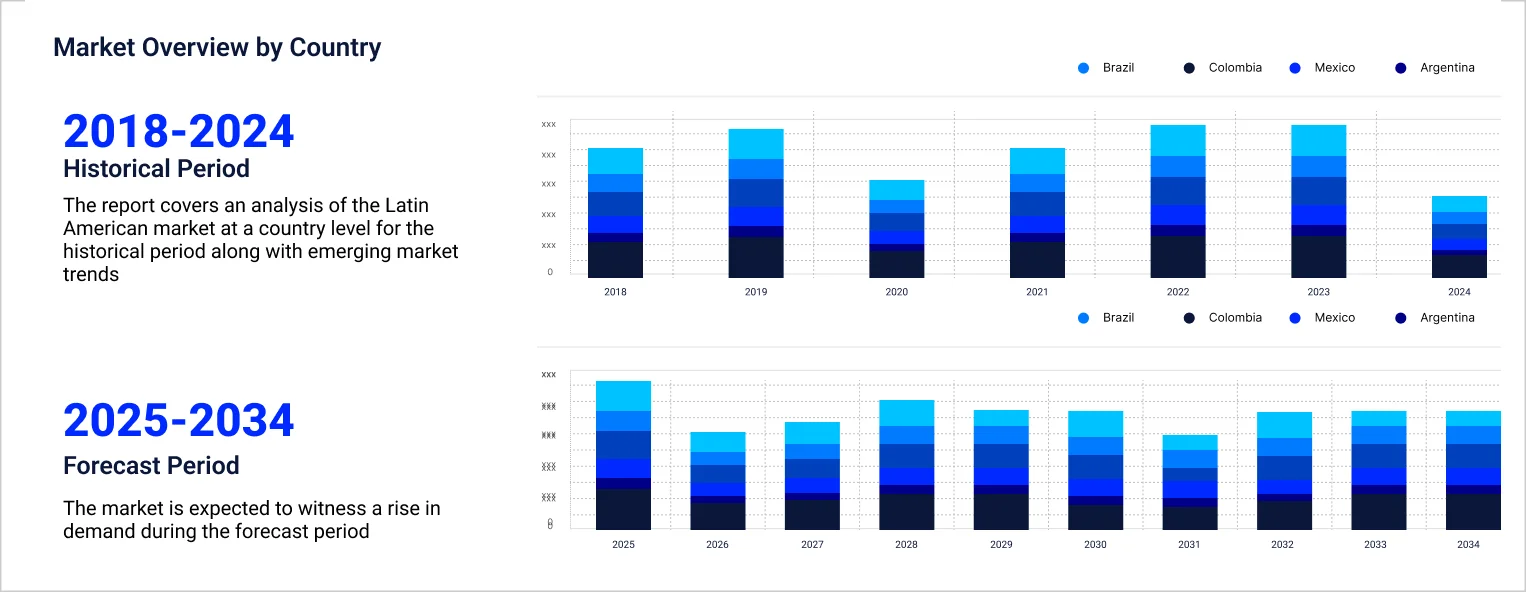
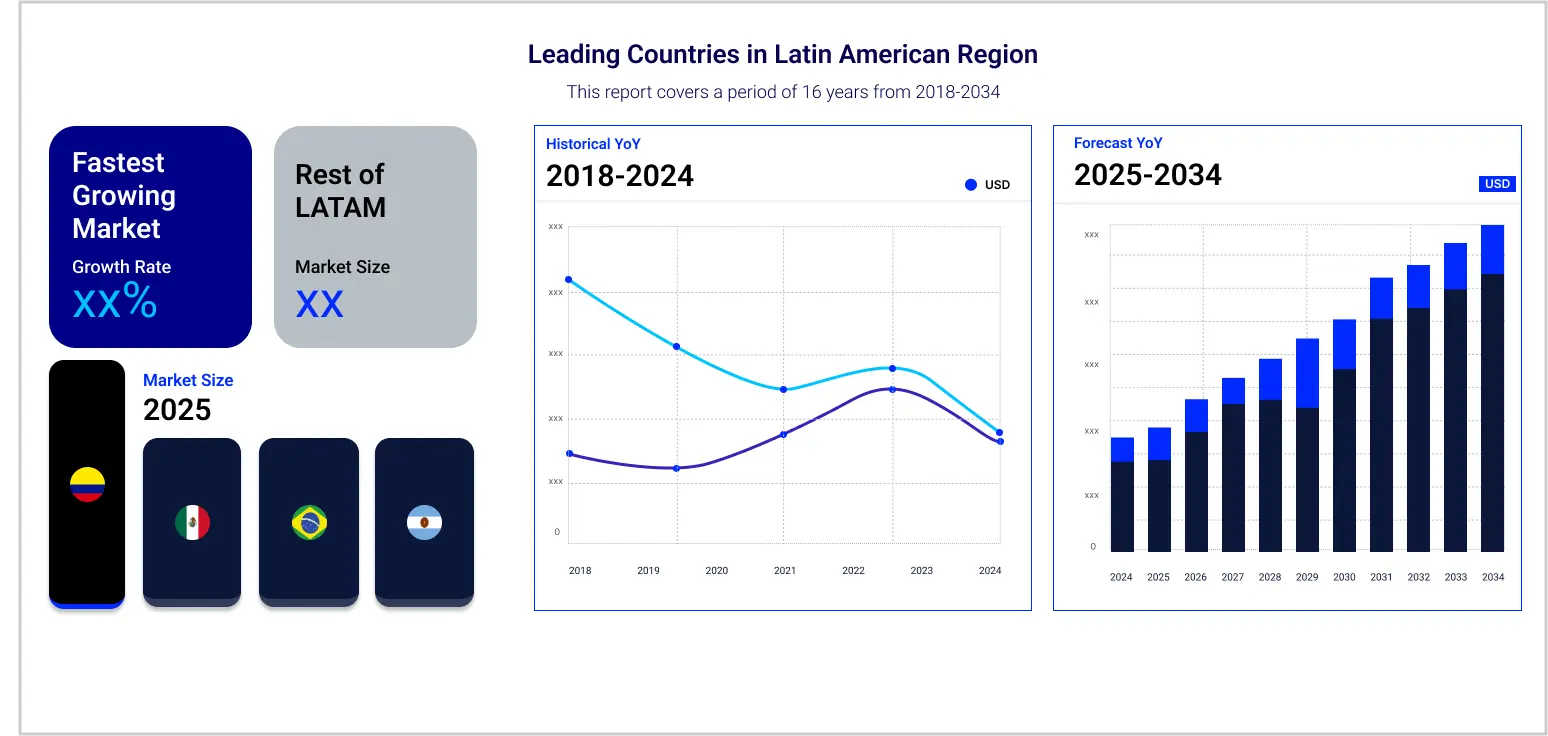
Key Insights: Brazil plays a leading role in the Latin America fast food market growth where major QSR chains like McDonald's and Burger King are able to reap the benefits of large population centers, robust digital ordering penetration, and high urban demand. In addition to that, Mexico is experiencing a rapid growth trend due to an increasing number of consumers adopting convenient meal solutions and the continuous expansion of the franchise network. On the other hand, Argentina has shown a steady progress that is mainly attributed to the rise of disposable incomes and the process of urbanization, while “Others” (countries such as Colombia, Chile, Peru, and more) are becoming attractive places for both global chains and local operators who are eager to benefit from the booming delivery infrastructure and the evolution of consumer lifestyles.
By product type, pizza/pasta dominate the demand in the market
Pizza and pasta generate massive revenue in Latin America fast food market as global chains are aggressively looking for expansions in new markets. This expansion is also made possible and efficient due to the use of modern operations technology and structured rollouts. Globally, Marco’s Pizza, a United States-based chain, signed a deal in October 2025 to implement NCR Voyix's Aloha Essentials platform for new store openings in Mexico and across Latin America. By this cooperation, Marco's production assures the quality is always the same and the order processing is quicker – as a result, the company can increase the number of stores in a very short time while it is still able to maintain the existing services.
The burger/fast food chicken segment is booming in the Latin America fast food market as operators utilize regional franchise partnerships to meet the rising consumer demand for quick, affordable meals. One of the examples could be Popeyes, which on October 2, 2025, declared that it would be launching more than 300 new restaurants over the next ten years in Mexico through local franchisee development agreements in different regions. This growth shows the firm’s confidence in the Latin American market for fast casual chicken and burger meals and also points out that the primary factor behind the segment’s substantial increase in franchising activities rather than corporate expansion only.
By end-use, full-service restaurants (FSR) gather substantial revenue
In Latin America, full-service restaurants (FSRs) are emerging as significant contributors to the Latin America fast food market revenue, as consumers these days are willing to go out and eat and casual dining players are broadening their presence. Exemplifying this, Alsea, a prominent restaurant operator, declared that during Q3 2025 “same-store sales growth of 4.1%” was achieved by its FSR segment, which was facilitated by new store openings and the increased use of digital ordering. FSRs are underlining their resilience through this achievement, reflecting how sit-down dining has overcome key challenges by strategically expanding and improving menus and customer experience. They remain relevant in the market and are recovering at a fast pace despite ongoing economic shocks.
Quick-service chains hold a substantial share of the Latin America fast food market expansion by collaborating with local franchisees to achieve speed and low costs in their growth. As an illustration, Shake Shack allied with Grupo Attie Multifood Enterprises to enter the Panamanian market and in May 2025 declared that they had a 10-years plan to open 12 new restaurants in the entire country, the first location was scheduled for 2026. This development utilizes the local knowledge and meets the growing demand in urban areas, therefore, the QSR sector in the entire Latin America is getting stronger.

By Region, Brazil emerges to be a hotspot
Brazil as the most prominent fast-food market in Latin America is reaping the benefits of urbanization, a high smartphone user base, and a growing trend towards digital ordering. Chains are doing everything possible to take advantage of these changes and at the same time rapidly increase the number of their outlets in the QSR sector. Domino’s in Brazil and iFood joined forces to improve the online ordering and delivery experience in June 2024, thus reaching more people from urban and suburban areas. The technology combined with franchise expansion becomes a very powerful tool for operators in Brazil, as they are able to significantly raise order volumes and at the same time deliver a better experience to the customer which results in them solidifying their position as market leaders across QSR and delivery channels.
Mexico has become a popular hotspot in the Latin America fast food market as global and regional QSR players are expanding rapidly to meet the ever-increasing demand for convenience meals and urban consumption patterns. One of the instances is the November 2024 press release where Fatburger & Buffalo's Express, the brand known for its burgers and wings, made public their expansion plans in Mexico City through a partnership with the local franchisee Red Rombo Group. The announcement of the opening of new locations, five at the least, in the central urban zones was the main point of the release. The expansion here is a reflection of the growing confidence of investors, taking advantage of local market insight to execute the best strategies, and fortify Mexico's position as one of the fastest-growing QSR hubs in Latin America.
Major Latin America fast food market players are doubling down on digital ordering, delivery partnerships, and tech-enabled operations to be able to serve urban and suburban consumers in a more efficient way. Chains are connecting with third-party apps, upgrading last-mile logistics, and presenting mobile-friendly platforms. By way of illustration, Burger King Brazil collaborated with a delivery-management platform in 2023 to upgrade delivery efficiency, cut delivery costs, and thus provide a quicker service to customers. These techniques are giving players the freedom to broaden their consumer base, to brand-build, and to tap into the increasing demand for easily accessible fast-food in the region of Latin America.
International and local fast-food brands across the Latin America fast food market are concentrating on menu localization, launching new products, and network expansion through a well-planned strategy to win different consumer bases in Latin America. On one hand, Domino's Pizza and Subway tailor their offers to fit the tastes and the cultural preferences of the locals, on the other hand, they open new stores in smaller towns and in the rapidly developing urban areas. By blending regional customization with franchise expansion, operators deepen market penetration, raise customer loyalty, and get a share of the region's rising middle class as well as convenience-oriented lifestyles.
Domino's Pizza Inc., established in 1960 and headquartered in Ann Arbor, Michigan, is a global leader in pizza delivery and takeout services. The company is popular in the Latin America fast food market for its effectively managed delivery system along with cutting-edge digital ordering platforms that serve various markets.
Yum! Brands, Inc., established in 1997 and based in Louisville, Kentucky, runs the top fast-food chains like KFC, Pizza Hut, and Taco Bell. The emphasis is on franchising and worldwide extension of the company, therefore, by making use of its brand portfolio, it is able to reach emerging markets.
McDonald's Corp., established in 1940 and headquartered in Chicago, Illinois, is among the most famous fast-food chains of the world. The company is known for its uniform menu and operational productivity, and it has been a major force in the global fast-food industry, and has emerged to a well-known QSR in the Latin America fast food market.
Papa John's International, Inc., established in 1984 and headquartered in Louisville, Kentucky, is a worldwide pizza delivery and carryout brand. The company goes for quality ingredients and innovative menu offerings as a way to separate itself in the competitive fast-food markets.
*Please note that this is only a partial list; the complete list of key players is available in the full report. Additionally, the list of key players can be customized to better suit your needs.*
Other players in the market include Subway IP LLC, Restaurant Brands International Inc., Inspire Brands, Inc., Focus Brands LLC, Wendy’s International, LLC, and Little Caesar Enterprises, Inc., among others.
Explore the latest trends shaping the Latin America Fast Food Market 2026-2035 with our in-depth report. Gain strategic insights, future forecasts, and key market developments that can help you stay competitive. Download a free sample report or contact our team for customized consultation on Latin America fast food market trends 2026.


Upto 15% Off
USD
$2499 $2249
$3999 $3599
$4999 $4249
$5999 $5099


*While we strive to always give you current and accurate information, the numbers depicted on the website are indicative and may differ from the actual numbers in the main report. At Expert Market Research, we aim to bring you the latest insights and trends in the market. Using our analyses and forecasts, stakeholders can understand the market dynamics, navigate challenges, and capitalize on opportunities to make data-driven strategic decisions.*
Get in touch with us for a customized solution tailored to your unique requirements and save upto 35%!
In 2025, the Latin America fast food market reached an approximate value of USD 70.34 Billion.
The market is projected to grow at a CAGR of 5.60% between 2026 and 2035.
The revenue generated from the fast-food market is expected to reach USD 121.29 Billion in 2035.
Based on product type, the fast-food market is split into pizza/pasta, burgers/sandwiches, Asian/Latin American food, and others.
The key players in the market include Domino's Pizza Inc., Yum! Brands, Inc., McDonald's Corp., Papa John's International, Inc., Subway IP LLC, Restaurant Brands International Inc., Inspire Brands, Inc., Focus Brands LLC, Wendy’s International, LLC, Little Caesar Enterprises, Inc., and other regional and local operators.
Based on the end use, the market is split between full-service restaurants, quick-service restaurants and others.
Key strategies driving the market include menu localization, product innovation, digital ordering and delivery integration, franchising and co-branding partnerships, and expansion into emerging urban and suburban regions.
The major challenges that the Latin America fast food market faces include rising operational costs, intense competition, changing consumer preferences toward healthier options, regulatory compliance, and supply chain disruptions.
Explore our key highlights of the report and gain a concise overview of key findings, trends, and actionable insights that will empower your strategic decisions.
| REPORT FEATURES | DETAILS |
| Base Year | 2025 |
| Historical Period | 2019-2025 |
| Forecast Period | 2026-2035 |
| Scope of the Report |
Historical and Forecast Trends, Industry Drivers and Constraints, Historical and Forecast Market Analysis by Segment:
|
| Breakup by Product Type |
|
| Breakup by End Use |
|
| Breakup by Region |
|
| Market Dynamics |
|
| Competitive Landscape |
|
| Companies Covered |
|
Datasheet
One User
USD 2,499
USD 2,249
tax inclusive*
Single User License
One User
USD 3,999
USD 3,599
tax inclusive*
Five User License
Five User
USD 4,999
USD 4,249
tax inclusive*
Corporate License
Unlimited Users
USD 5,999
USD 5,099
tax inclusive*
*Please note that the prices mentioned below are starting prices for each bundle type. Kindly contact our team for further details.*
Flash Bundle
Small Business Bundle
Growth Bundle
Enterprise Bundle
*Please note that the prices mentioned below are starting prices for each bundle type. Kindly contact our team for further details.*
Flash Bundle
Number of Reports: 3
20%
tax inclusive*
Small Business Bundle
Number of Reports: 5
25%
tax inclusive*
Growth Bundle
Number of Reports: 8
30%
tax inclusive*
Enterprise Bundle
Number of Reports: 10
35%
tax inclusive*
How To Order

Select License Type
Choose the right license for your needs and access rights.

Click on ‘Buy Now’
Add the report to your cart with one click and proceed to register.

Select Mode of Payment
Choose a payment option for a secure checkout. You will be redirected accordingly.
Gain insights to stay ahead and seize opportunities.

Get insights & trends for a competitive edge.

Track prices with detailed trend reports.

Analyse trade data for supply chain insights.

Leverage cost reports for smart savings

Enhance supply chain with partnerships.

Connect For More Information
Our expert team of analysts will offer full support and resolve any queries regarding the report, before and after the purchase.
Our expert team of analysts will offer full support and resolve any queries regarding the report, before and after the purchase.
We employ meticulous research methods, blending advanced analytics and expert insights to deliver accurate, actionable industry intelligence, staying ahead of competitors.
Our skilled analysts offer unparalleled competitive advantage with detailed insights on current and emerging markets, ensuring your strategic edge.
We offer an in-depth yet simplified presentation of industry insights and analysis to meet your specific requirements effectively.





Share