

Consumer Insights
Uncover trends and behaviors shaping consumer choices today
Procurement Insights
Optimize your sourcing strategy with key market data
Industry Stats
Stay ahead with the latest trends and market analysis.

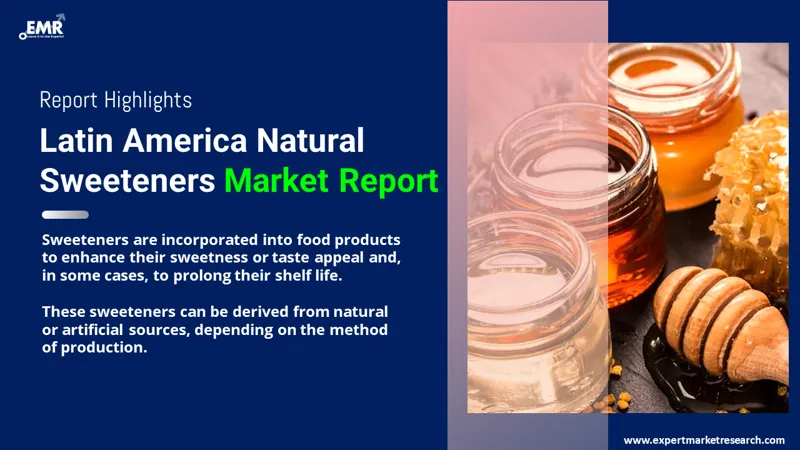
The Latin America natural sweeteners market attained a value of USD 2.07 Billion in 2025 and is projected to expand at a CAGR of 6.80% through 2035. The market is further expected to achieve USD 4.00 Billion by 2035. The region’s surging sports-nutrition and energy drink demand is pushing brands to adopt natural sweeteners that tolerate high-acid, high-caffeine matrices while preserving sweetness intensity across elevated processing temperatures.
R&D teams are moving past generic stevia and searching for next-generation glycosides that behave predictably in challenging beverage bases. Shelf-life stability, solubility curves, and masking performance now influence procurement decisions as strongly as clean-label claims and regulatory approvals in key Latin America natural sweeteners markets. In April 2022, Sweegen expanded its Signature stevia footprint in the region after Colombia approved its stevia sweeteners made by bioconversion, a method for producing clean and non-GMO ingredients.
Manufacturers want natural sweeteners that slot into existing production lines without compromising flavor enhancements. So, suppliers like Cargill, ADM, and Sdzucker are competing to commercialize fermentation-based stevia, monk fruit glycosides, and allulose designed for high-brix formulations that need low viscosity variation. In March 2025, Arzeda announced a strategic expansion of production into Europe for its flagship ProSweet Reb M stevia. This move is aimed at meeting the growing demand for Arzeda's stevia among consumer-packaged goods (CPG) companies, supporting Latin America natural sweeteners market expansion. Beverage companies and major confectionery groups are now co-developing sweetener systems with suppliers rather than just buying off-the-shelf ingredients.
Base Year
Historical Period
Forecast Period
Compound Annual Growth Rate
6.8%
Value in USD Billion
2026-2035
*this image is indicative*
Front-of-pack warning labels in Mexico, Chile, Argentina and Brazil keep pushing brands away from traditional sugar. This is why firms like Coca-Cola, PepsiCo, and Nestlé have all been running regional sensory trials of new stevia and monk fruit blends designed to mimic cane sugar profiles in carbonated drinks, flavored waters and kids’ beverages, redefining the Latin America natural sweeteners market trends. In February 2025, Oobli announced its partnership with Ingredion to accelerate industry access to great-tasting, affordable and healthier sweetener systems by bringing natural sweetener solutions like stevia alongside Oobli proteins.
Latin American food and beverage companies are tired of the aftertaste problem that traditional stevia extracts create. That explains why fermentation-derived stevia and monk fruit glycosides are gaining huge popularity. ADM and Cargill have been holding private demonstrations with beverage formulators in São Paulo and Monterrey showing fermentation-based Reb M profiles that deliver a cleaner sweetness curve at low cost-in-use ratios. According to the Latin America natural sweeteners market analysis, precision-fermented sweetener delivers sugar-like taste with up to 97% fewer resources than traditional production, meeting consumer demand. The shift also nudges suppliers toward biotech partnerships rather than just farming expansion.
Latin America’s sports nutrition and energy drinks category is booming, so brands are demanding natural sweeteners that tolerate caffeine, electrolytes and high-acid flavor systems without collapsing sweetness intensity. Confectionery and dairy need consistency, but energy drinks require resilience under aggressive ingredient loads and pasteurization cycles, accelerating demand in the Latin America natural sweeteners market. In December 2025, Jungbunzlauer launched TayaGel Modus, a gellan gum designed to deliver exceptional clarity and high gel strength in a wide range of applications. Suppliers like Ingredion and PureCircle have been pitching new stevia grades able to retain sweetness across heat stress and carbonation.
Agave syrup and inulin are no longer treated as boutique ingredients for niche health brands. Beverage and bakery giants are running R&D projects around hybrid sweetness systems blending agave with stevia or allulose to balance taste and mouthfeel. For example, in March 2023, Monin Americas announced the launch of its new Spicy Agave Sweetener, organic agave infused with a unique blend of Hatch and Guajillo chile peppers. Local sourcing appeals to brands that want shorter supply chains and regional storytelling on their product pack. Mexican and Peruvian processors are investing aggressively in refining technology to provide consistent solids content and color, which makes agave more predictable in large-scale production, creating new Latin America natural sweeteners market opportunities.
One important growth engine in the market is Latin America’s retail private-label segment, which is rapidly increasing its presence in bakery products, infant snacks, dairy beverages, and flavored yogurt categories. Major retailers want reduced-sugar versions of their bestsellers without raising costs, so they lean heavily on suppliers who can provide turnkey sweetening systems. In May 2024, Oobli and Grupo Bimbo entered into a formal agreement to integrate sweet proteins as a completely new way to sweeten baked goods, propelling the Latin America natural sweeteners market value.
Read more about this report - REQUEST FREE SAMPLE COPY IN PDF
The EMR’s report titled “Latin America Natural Sweeteners Market Report and Forecast 2026-2035” offers a detailed analysis of the market based on the following segments:
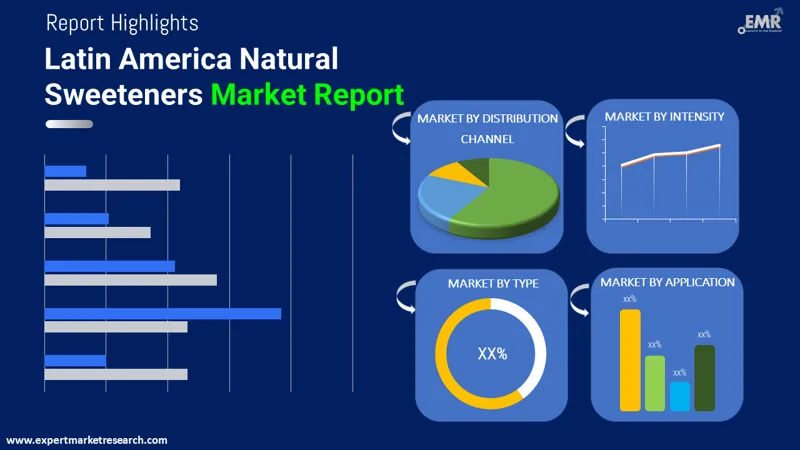
Market Breakup by Intensity
Key Insight: Latin American manufacturers use high intensity sweeteners when they need sharp sugar reductions in beverages and yogurts. However, low intensity options are most demanded when functional performance matters more than maximum reduction, especially in bakery, snacks, and dairy desserts. Many brands now run hybrid systems that blend both types, fine tuning taste and cost in each recipe, sustaining demand in the Latin America natural sweeteners market.
Market Breakup by Type
Key Insight: As per the Latin America natural sweeteners market report, stevia has become common in most of the reformulation plans because it combines intense sweetness with a familiar, plant-based flavor. Coconut sugar has gained popularity with the premium indulgence wave, helping brands differentiate cereals, granola clusters, and hot drinks. Raw honey and molasses stay important where heritage recipes and flavor depth matter more than strict calorie reduction. Maple syrup remains niche yet visible in gourmet, imported or foodservice concepts.
Market Breakup by Application
Key Insight: Among all application categories, beverages face sugar regulations first, making them the earliest and most aggressive adopters of natural sweeteners. Food categories also contribute to market growth owing to their texture, color and shelf life. Pharmaceuticals use natural sweeteners in syrups, lozenges and nutraceutical formats where taste and label claims must align, further redefining the trends in the Latin America natural sweeteners market. Personal care brands lean on stevia and plant-based syrups for oral care, gummies and wellness shots.
Market Breakup by Distribution Channel
Key Insight: Hypermarkets and supermarkets remain the anchor for volume, brand recognition and mainstream household reach, widening the Latin America natural sweeteners market scope. Convenience and traditional retail stores boost natural sweetener accessibility through everyday products like coffee, tea, and bakery staples. Online retailers create room for experimentation with premium formats, bundles, and educational content, encouraging younger and higher-income shoppers to trade up. Specialist health and organic stores fall under the “others” category and help shape early demand for new and novel sweetener ingredients.
Market Breakup by Region
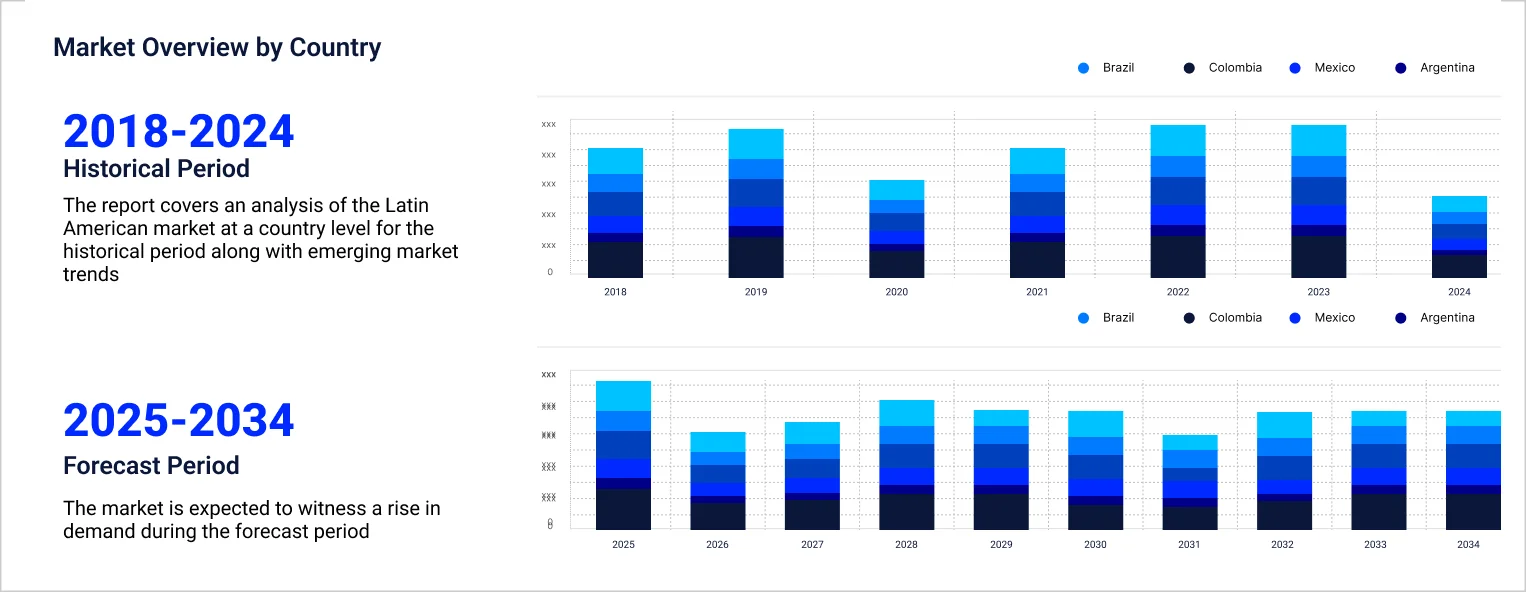
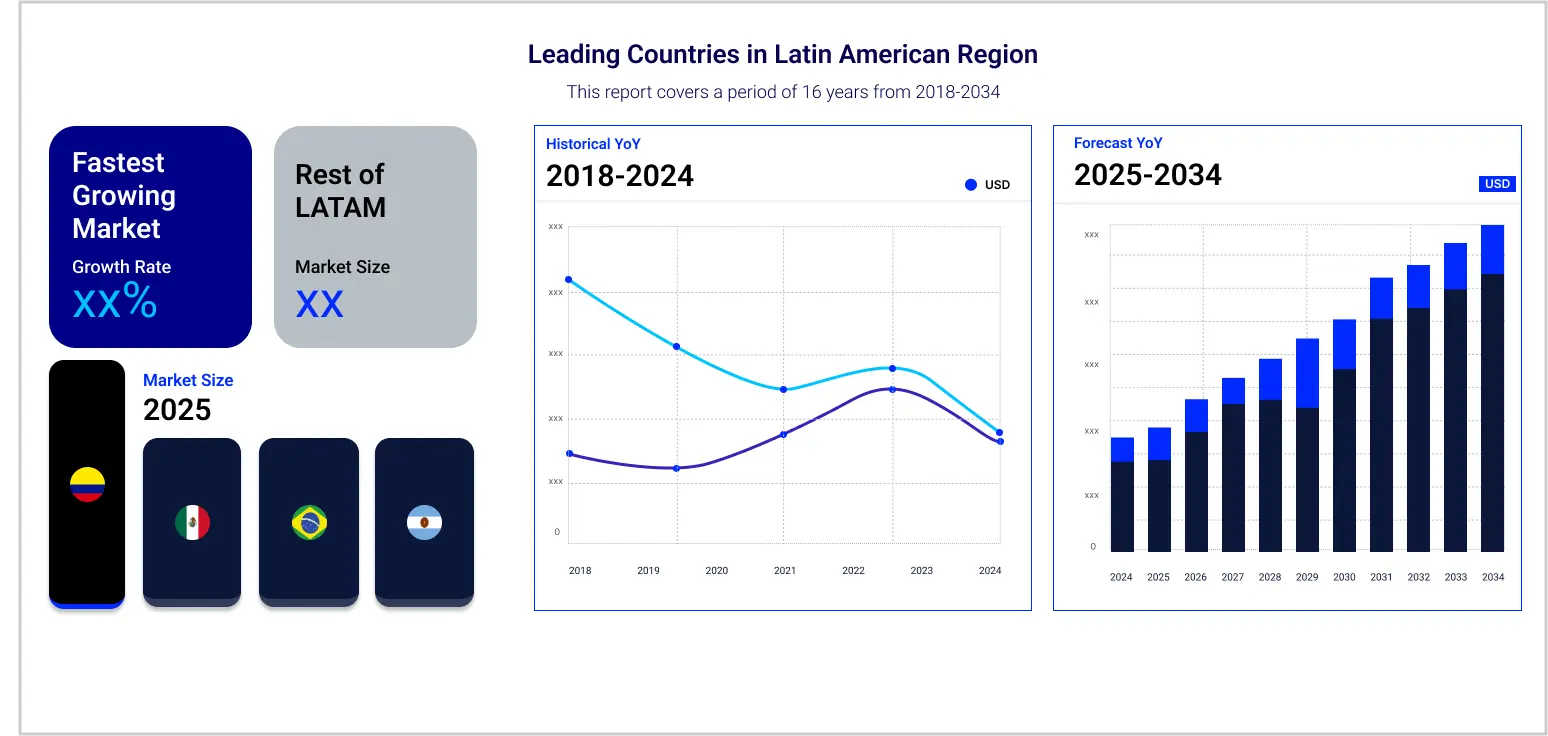
Key Insight: Regionally, Brazil leads the market owing to its large-scale manufacturing capacity and broad retail coverage, while Mexico drives regulatory-driven experimentation and early sugar-reduction moves. Argentina and Colombia add depth through strong dairy, bakery and confectionery traditions that adapt gradually to natural sweeteners. Smaller markets and the “others” group often import both finished goods and ingredients, but they still follow labeling and health debates from the larger economies, expanding the overall Latin America natural sweeteners market shares.
Read more about this report - REQUEST FREE SAMPLE COPY IN PDF
High intensity sweeteners account for the largest share of the market due to strong sweetness, low-use levels
High intensity sweeteners hold the dominant share in Latin America because beverage and dairy brands require significant sugar reduction without reformulating entire recipes from scratch. Stevia and monk fruit-based items plug into existing syrup and flavor bases, allowing factories to switch formulations quickly when new labeling rules or retailer requirements come into play. For procurement teams, one kilogram of high intensity sweetener replaces hundreds of kilograms of sugar, which also frees storage, logistics and inventory financing, contributing to the Latin America natural sweeteners market revenue. In June 2025, Elo Life Sciences began field trials to produce monk fruit molecule in watermelons with a goal to launch a new high intensity sweetener juice and powder.
Low intensity sweeteners are growing huge in terms of popularity as bakery, cereal, and snack brands in Latin America focus on gradual sugar reduction. Ingredients like erythritol, tagatose and specialty syrups help developers trim calories while keeping bulk, browning and texture, which is hard to achieve with high intensity options.
By type, stevia registers a substantial share of the market as brands prioritize clean-label sugar reduction
Stevia occupies its position in the market as the dominant type because it delivers high sweetness intensity with its plant-based positioning, which fits clean label marketing and regulatory pressure on sugar. In October 2024, Tate & Lyle PLC announced a strategic partnership, known as The Natural Sweetener Alliance, to expand access to natural sugar reduction solutions, broadening the chances for Latin America natural sweeteners market expansion. Local producers in Paraguay and Brazil also support regional sourcing strategies.
Coconut sugar is emerging as the fastest growing type because it combines natural positioning with a flavor profile that works well in bakery, hot drinks and breakfast items. Latin American consumers often associate coconut notes with indulgence, so brands can market lower-sugar products without feeling overly medicinal.
Beverages dominate the applications category of the market, leveraging natural sweeteners for reformulated drink portfolios
Beverages form the dominant application driving natural sweetener demand in Latin America because drink companies face the toughest regulatory and reputational pressure around sugar. Carbonated soft drinks, flavored waters, ready-to-drink teas and juices face intense scrutiny. This pushes innovation budgets toward stevia, monk fruit and blended systems that retain sweetness while reducing visible sugar grams. In December 2024, Premium soda brand Jamu introduced a new flavor called Cucumber & Pineapple, marking the fourth addition to its all-natural beverage range.
Food applications are also contributing to the Latin America natural sweeteners market revenue growth as retailers and regulators now expect sugar reduction beyond drinks, driving reformulation across bakery, cereals, desserts, and snacks. Natural sweeteners that replicate sugar’s properties during mixing, baking and freezing are in high demand, leading manufacturers to pair stevia or monk fruit with low-intensity systems, polyols, and fibers to achieve the right texture and performance.
Hypermarkets and supermarkets clock in the major share of the market thanks to scale and visibility
Hypermarkets and supermarkets dominate distribution because they still control the main shelf space for sugar, sweeteners, and baking ingredients in Latin America. Retailers use these aisles to test new low-sugar concepts, from granolas to drink mixes, and often give promotional support when brands highlight natural sweetening systems. For suppliers, gaining presence in these chains means volume and visibility but also tighter margin discussions and private-label pressure.
Online retailers observe fast-paced growth in the Latin America natural sweeteners market as shoppers across the region become comfortable ordering specialty foods, supplements and premium pantry items on marketplaces and brand sites. Natural sweeteners benefit since e-commerce allows more storytelling space around origin, processing and health positioning than a crowded physical shelf. Smaller brands use direct-to-consumer sites and social commerce to test new blends, subscription packs and bundle offers with coffees, teas and baking mixes.

Brazil dominates the market, driven by beverage processing and retail strength
Brazil dominates the regional natural sweeteners market in Latin America because it combines a huge consumer base with advanced beverage, dairy and confectionery processing infrastructure. Major multinationals operate large production plants in the region, so when they switch recipes to stevia or hybrid sweetness systems, purchasing volumes shift quickly.
Mexico, driven by aggressive soda taxes and front-of-pack warning labels, is pushing beverage and snack companies to act earlier and more decisively on sugar reduction, making it a major contributor to the Latin America natural sweeteners market value. This urgency allows sweetener suppliers to embed themselves deeper into R&D pipelines rather than simply responding to reformulation briefs. Many multinational and regional brands treat Mexico as a learning lab, closely tracking how consumers react to stevia, agave, allulose, and blended systems across different price tiers.
The competitive landscape is tightening as global ingredient companies and specialized stevia players compete for the same reformulation budgets from beverage and food manufacturers. Latin America natural sweeteners companies are pushing advanced stevia glycoside systems, fermentation-based sweeteners, and hybrid blends that smooth bitterness in high reduction beverages and snacks.
Latin America natural sweeteners market players also invest in regional application labs in Brazil and Mexico so local teams can tweak sweetness curves for specific brands and retailer demands. Suppliers that show up with near turnkey sweetness solutions, from regulatory paperwork to sensory guidance, stand a better chance of locking multiyear agreements and influencing entire portfolios rather than winning single product briefs, especially in beverages and bakery categories across Latin America.
PureCircle Limited, founded in 2001 and headquartered in the United States, focuses on high purity stevia systems for beverage and dairy brands in Latin America. As a part of Ingredion, it works closely with regional R&D teams to design Reb M rich sweetener blends that reduce sugar deeply while keeping taste closer to cane sugar.
Tate and Lyle Plc, founded in 1921 and headquartered in London, United Kingdom, serves Latin American customers with a portfolio of natural and specialty sweeteners. The company focuses on stevia, allulose and fiber-based systems that let beverage, dairy and bakery brands reduce sugar while keeping indulgent textures.
Cargill Inc., founded in 1865 and headquartered in Minnesota, United States, supplies Latin American manufacturers with a broad range of natural sweeteners, including stevia, erythritol and specialty syrups. Cargill leverages its deep agricultural network to secure consistent sourcing and traceability, which appeals to brands under pressure from health regulators and retailers.
Archer Daniels Midland Company, founded in 1902 and headquartered in the United States, plays a growing role in Latin America’s natural sweeteners space. ADM offers stevia, rare sugars, and integrated sweetness solutions linked with fibers and texturizers. It works with beverage, bakery, and nutrition brands that want to upgrade entire recipes instead of swapping one ingredient.
*Please note that this is only a partial list; the complete list of key players is available in the full report. Additionally, the list of key players can be customized to better suit your needs.*
Other key players in the market include Ingredion Incorporated, among others.
Unlock the latest insights with our Latin America natural sweeteners market trends 2026 report. Discover regional growth patterns, consumer preferences, and key industry players. Stay ahead of competition with trusted data and expert analysis. Download your free sample report today and drive informed decisions in the market.


Upto 15% Off
USD
$2499 $2249
$3999 $3599
$4999 $4249
$5999 $5099


*While we strive to always give you current and accurate information, the numbers depicted on the website are indicative and may differ from the actual numbers in the main report. At Expert Market Research, we aim to bring you the latest insights and trends in the market. Using our analyses and forecasts, stakeholders can understand the market dynamics, navigate challenges, and capitalize on opportunities to make data-driven strategic decisions.*
Get in touch with us for a customized solution tailored to your unique requirements and save upto 35%!
In 2025, the market reached an approximate value of USD 2.07 Billion.
The market is projected to grow at a CAGR of 6.80% between 2026 and 2035.
The market is estimated to grow in the forecast period of 2026-2035 to reach about USD 4.00 Billion by 2035.
Stakeholders are expanding labs, co-developing recipes with retailers, diversifying crop sources, investing in fermentation platforms, and building education campaigns that position natural sweeteners as tools for sugar reduction across categories.
The growing health consciousness among consumers and the introduction of government regulations for the reduction of sugar consumption are the key trends propelling the growth of the market.
The major countries in the market in Latin America include Mexico, Argentina, Brazil, and Colombia, among others.
The various intensities of natural sweeteners considered in the market report are high intensity sweeteners and low intensity sweeteners.
Stevia, maple syrup, raw honey, molasses, and coconut sugar, among others, are the major types of natural sweeteners.
The significant applications of natural sweeteners include food, beverages, pharmaceuticals, and personal care, among others.
The several distribution channels in the market are hypermarkets/supermarkets, convenience stores, retail stores, and online retailers, among others.
The key players in the market include PureCircle Limited, Tate and Lyle Plc, Cargill Inc., Archer Daniels Midland Company, and Ingredion Incorporated, among others.
Companies struggle with volatile crop costs, uneven regulations, taste acceptance at higher sugar reduction, proving supply reliability, and educating consumers who distrust low calorie sweeteners despite natural positioning in foods.
Explore our key highlights of the report and gain a concise overview of key findings, trends, and actionable insights that will empower your strategic decisions.
| REPORT FEATURES | DETAILS |
| Base Year | 2025 |
| Historical Period | 2019-2025 |
| Forecast Period | 2026-2035 |
| Scope of the Report |
Historical and Forecast Trends, Industry Drivers and Constraints, Historical and Forecast Market Analysis by Segment:
|
| Breakup by Intensity |
|
| Breakup by Type |
|
| Breakup by Application |
|
| Breakup by Distribution Channel |
|
| Breakup by Region |
|
| Market Dynamics |
|
| Competitive Landscape |
|
| Companies Covered |
|
| Report Price and Purchase Option | Explore our purchase options that are best suited to your resources and industry needs. |
| Delivery Format | Delivered as an attached PDF and Excel through email, with an option of receiving an editable PPT, according to the purchase option. |
Datasheet
One User
USD 2,499
USD 2,249
tax inclusive*
Single User License
One User
USD 3,999
USD 3,599
tax inclusive*
Five User License
Five User
USD 4,999
USD 4,249
tax inclusive*
Corporate License
Unlimited Users
USD 5,999
USD 5,099
tax inclusive*
*Please note that the prices mentioned below are starting prices for each bundle type. Kindly contact our team for further details.*
Flash Bundle
Small Business Bundle
Growth Bundle
Enterprise Bundle
*Please note that the prices mentioned below are starting prices for each bundle type. Kindly contact our team for further details.*
Flash Bundle
Number of Reports: 3
20%
tax inclusive*
Small Business Bundle
Number of Reports: 5
25%
tax inclusive*
Growth Bundle
Number of Reports: 8
30%
tax inclusive*
Enterprise Bundle
Number of Reports: 10
35%
tax inclusive*
How To Order

Select License Type
Choose the right license for your needs and access rights.

Click on ‘Buy Now’
Add the report to your cart with one click and proceed to register.

Select Mode of Payment
Choose a payment option for a secure checkout. You will be redirected accordingly.
Gain insights to stay ahead and seize opportunities.

Get insights & trends for a competitive edge.

Track prices with detailed trend reports.

Analyse trade data for supply chain insights.

Leverage cost reports for smart savings

Enhance supply chain with partnerships.

Connect For More Information
Our expert team of analysts will offer full support and resolve any queries regarding the report, before and after the purchase.
Our expert team of analysts will offer full support and resolve any queries regarding the report, before and after the purchase.
We employ meticulous research methods, blending advanced analytics and expert insights to deliver accurate, actionable industry intelligence, staying ahead of competitors.
Our skilled analysts offer unparalleled competitive advantage with detailed insights on current and emerging markets, ensuring your strategic edge.
We offer an in-depth yet simplified presentation of industry insights and analysis to meet your specific requirements effectively.





Share