

Consumer Insights
Uncover trends and behaviors shaping consumer choices today
Procurement Insights
Optimize your sourcing strategy with key market data
Industry Stats
Stay ahead with the latest trends and market analysis.

The India printed circuit board (PCB) market was valued at USD 5.35 Billion in 2025. The market is expected to grow at a CAGR of 18.10% during the forecast period of 2026-2035 to reach a value of USD 28.24 Billion by 2035. Rising adoption of smart home electronics and IoT devices is driving PCB demand, creating opportunities for high-density, flexible, and miniaturized boards across consumer, automotive, and industrial sectors.
The industry is gaining significant momentum, propelled by the country’s growing electronics manufacturing ecosystem. One of the primary driving factors is the surge in electric vehicle (EV) adoption and automotive electronics, where high-reliability, multilayer PCBs are being increasingly integrated into battery management and smart vehicle systems. According to the India printed circuit board (PCB) market analysis, in April 2025, the country reported retail EV sales of 167,629 units, marking a 45% year-on-year rise, accelerated by government initiatives like the FAME India Scheme Phase II, which incentivizes EV and component production.
Moreover, India’s 5G and telecom expansion is generating strong demand for high-frequency, high-speed PCBs. By September 2024, Bharti Airtel covered 7,900 towns with 4G and 5G services, while Reliance Jio achieved nationwide 5G rollout, serving 170 million subscribers. This infrastructure boom is creating urgent requirements for precision-engineered solutions in routers, base stations, and telecom equipment, accelerating the India printed circuit board (PCB) market opportunities. The government’s Electronics Component Manufacturing Scheme (ECMS), with a USD 2.7 billion allocation, is further stimulating domestic PCB production, especially multilayer types, while import duty hikes on single- and double-layer boards encourage local sourcing.
Base Year
Historical Period
Forecast Period
The Semicon India Programme, initiated in 2022 with ₹76,000 crore, by MeitY, aims to enhance India's self-reliance and global presence in ESDM, thereby fueling growth of Indian printed circuit board PCB market.
The Indian semiconductor industry is forecasted to grow to approximately $110 billion by 2030, as per the International Trade Administration's estimates.
PCBs are utilised in various sectors such as aerospace, medical devices, industrial machinery, computers, and communication, control, and entertainment systems.
Compound Annual Growth Rate
18.1%
Value in USD Billion
2026-2035
*this image is indicative*
India’s nationwide 5G expansion is propelling demand for high-performance PCBs, particularly for base stations, routers, and telecom equipment. The rapid deployment of high-speed networks requires PCBs capable of handling high-frequency signals with precision. Companies like Kaynes Technology are innovating multilayer and HDI PCBs specifically for telecom applications, broadening the India printed circuit board (PCB) market scope. Government support through initiatives such as the Electronics Component Manufacturing Scheme incentivizes domestic production of these boards, reducing import reliance and accelerating local supply capabilities.
India’s electric vehicle adoption is driving a surge in PCB demand for power management, battery control, and smart vehicle systems. Automakers are integrating advanced multilayer PCBs, requiring high reliability and thermal stability. Government programs like FAME India Scheme Phase II encourage localized manufacturing, attracting investment from companies such as Amber Enterprises and Kaynes Technology, boosting the India printed circuit board (PCB) market growth. These initiatives not only boost domestic PCB production but also enable innovative automotive-specific PCB designs, including rigid-flex and HDI boards, optimizing performance, space, and efficiency in electric and hybrid vehicles.
India’s medical device sector increasingly relies on high-reliability PCBs for diagnostic, monitoring, and life-support equipment. The demand for electronic components that comprise a significant share of medical devices is compelling manufacturers to innovate multilayer, compact, and high-precision boards. Collaborations between Indian PCB firms and global medical technology companies are expanding local production capabilities. Telemedicine and digital healthcare solutions are creating demand for compact, flexible circuits in wearable monitoring devices. Regulatory emphasis on safety and quality standards ensures that innovations meet stringent medical requirements, accelerating further demand in the India printed circuit board (PCB) market. The integration of smart electronics into healthcare devices is establishing medical electronics as a key growth lever.
India’s data center capacity expanded from 350 MW in 2019 to 1,030 MW in 2024 and is projected to reach 1,825 MW by 2027. Cloud computing, AI, and digital infrastructure growth demand multilayer PCBs for servers, storage arrays, and networking systems. Companies like Schneider Electric are establishing advanced manufacturing facilities, propelling the India printed circuit board (PCB) market expansion. High-density interconnects and micro via boards are being used to achieve performance efficiency and thermal management. Government-backed infrastructure incentives encourage local production, positioning India as a hub for advanced data center electronics.
Major investments by domestic and international firms are expanding India’s PCB capabilities. Amber Enterprises’ acquisition of Ascent Circuits, Schneider Electric’s Karnataka plant, and Kaynes Technology’s new facility in Karnataka are boosting production of multilayer and high-density boards. Partnerships with global electronics firms enhance technological expertise and supply chain efficiency, transforming the India printed circuit board (PCB) market trends and dynamics. Government schemes, including ECMS and Production Linked Incentives, encourage investments in advanced PCB manufacturing. These strategic moves support innovation in HDI, flexible, and rigid-flex PCBs, catering to automotive, telecom, medical, and industrial applications.
The EMR’s report titled “India Printed Circuit Board (PCB) Market Report and Forecast 2026-2035” offers a detailed analysis of the market based on the following segments:
Market Breakup by Manufacturing Type
Key Insight: Bare and populated PCBs together shape the Indian market trends. Bare PCBs lead the market owing to their cost-effectiveness, flexibility, and ease of manufacturing, while populated PCBs are rapidly gaining popularity as ready-to-use, turnkey solutions. Both types serve multiple sectors, including consumer electronics, automotive, medical devices, and telecommunications, meeting rising demand for advanced electronic products, thereby accelerating demand in the India printed circuit board (PCB) market.
Market Breakup by Product Type
Key Insight: Rigid 1–2 sided PCBs lead the Indian market due to their affordability, reliability, and suitability for mass production. Meanwhile, HDI, Microvia, and Build-Up PCBs are expanding rapidly, fueled by miniaturization trends, high-performance electronics, 5G deployment, and smart automotive applications. This growth highlights India’s push toward advanced electronics innovation, supporting sophisticated device manufacturing and aligning with government initiatives to strengthen the country’s high-tech electronics ecosystem and global competitiveness.
Market Breakup by Number of Layers
Key Insight: Single-sided PCBs remain dominant in India for their low cost and straightforward design, making them ideal for mass production. Multi-layer PCBs, on the other hand, are witnessing the fastest growth, propelled by device miniaturization, high-performance electronics, rising EV adoption, and increasing demand for 5G-enabled products. This India printed circuit board (PCB) market trend underscores the country’s transition toward advanced electronics manufacturing, supporting sophisticated applications, fostering innovation, and positioning the country as a competitive hub in the global high-tech electronics market.
Market Breakup by Type
Key Insight: Rigid PCBs lead the market owing to their durability and suitability for large-scale production. Flexible PCBs are expanding at the fastest pace in terms of the India printed circuit board (PCB) market share, driven by device miniaturization, wearable technology, automotive innovations, and rising demand for compact, high-performance electronics, reflecting the country’s shift toward advanced, versatile PCB solutions and supporting the country’s growing electronics manufacturing and innovation ecosystem.
Market Breakup by Laminate Type
Key Insight: FR-4 laminations dominate the India printed circuit board (PCB) market due to their strength, reliability, and cost-effectiveness for mainstream electronics. Polyamide PCBs are growing popular, fueled by demand for advanced applications requiring high thermal stability, flexibility, and compact, high-performance solutions, reflecting India’s focus on sophisticated electronics manufacturing and supporting emerging sectors such as wearables, automotive, and high-speed communication devices.
Market Breakup by Application
Key Insight: Consumer electronics dominate India’s PCB market, driven by high-volume adoption, rapid technological integration, and continuous innovation in smartphones, appliances, and gadgets. Growth in the automotive sector is being propelled by vehicle electrification, advanced driver-assistance systems, and increasingly sophisticated in-vehicle electronics. This India printed circuit board (PCB) market trend highlights the country’s shift toward smart mobility, supporting high-performance solutions.
Market Breakup by States
Key Insight: Maharashtra leads India’s PCB market with its established electronics hubs, skilled workforce, and robust infrastructure. Tamil Nadu is growing as a lucrative regional market, fueled by thriving automotive clusters, proactive government incentives, and rising investments in advanced PCB manufacturing. This growth reflects the state’s focus on high-tech electronics, supporting innovation, manufacturing expansion, and India’s broader push toward becoming a competitive hub in the global electronics supply chain.
By manufacturing type, bare PCBs dominate the market due to versatility and cost-effectiveness
Bare PCBs, comprising only the substrate, metal coating, and conductive pathways, remain the dominant manufacturing category in the Indian market. Their affordability and adaptability make them the foundation of electronics manufacturing across consumer, automotive, and industrial sectors. Firms like Kaynes Technology and Amber Enterprises are expanding production lines to meet growing domestic demand while integrating innovative techniques, such as laser-drilled microvias, enhancing efficiency and performance for high-speed and high-frequency applications.
As per the India printed circuit board (PCB) market report, populated PCBs, pre-fitted with electronic components, are gaining traction as manufacturers seek integrated, ready-to-use solutions. This category caters to high-volume, precision-critical industries including automotive, medical electronics, and telecommunications. By reducing assembly time and streamlining production, populated PCBs enhance operational efficiency for OEMs and EMS providers. Investment in automation and advanced assembly technologies supports high-reliability outputs required for EVs, wearables, and smart devices.
By product type, the rigid 1–2 sided category captures the largest market share due to cost-effectiveness and high-volume use
Rigid 1–2 sided PCBs lead the Indian market. These are primarily used in consumer electronics, household appliances, and lighting products. Their affordability, reliability, and ease of manufacturing make them ideal for mass production, meeting high-volume demand across domestic and export markets. The demand is also fueled by innovations in PCB design, such as improved copper plating and optimized signal routing, which enhance performance while maintaining low production costs.
HDI/Microvia/Build-Up PCBs are witnessing rapid growth in the India printed circuit board (PCB) market, powered by the surge in compact, high-performance devices like smartphones, wearables, and automotive electronics. These boards support high-density circuit designs, enabling miniaturization without compromising functionality. Increasing adoption of 5G, IoT, and smart automotive technologies accelerates demand for these advanced PCBs. Indian manufacturers are investing in laser-drilling, microvia technology, and multilayer stack-ups to enhance performance and reliability.
By number of layers, the single-sided category accounts for the dominant share of the market due to simplicity and cost-effectiveness
Single-sided PCBs hold the largest share in the India printed circuit board (PCB) market revenue, widely used in entry-level consumer electronics, LED lighting, calculators, and basic industrial devices. Their simplicity, low manufacturing costs, and ease of assembly make them ideal for high-volume, low-complexity applications. Government initiatives promoting local electronics manufacturing and industry clusters enhance production efficiency. Being technologically less complex, single-sided PCBs remain a critical pillar for India’s electronics sector, providing reliable, cost-effective solutions for mass-market products.
Multi-layer PCBs are also driving the India printed circuit board (PCB) market value, driven by compact, high-performance applications in smartphones, electric vehicles, industrial automation, and consumer electronics. Rising miniaturization and increasing electronic complexity push demand for dense circuitry and multilayer stack-ups. Indian manufacturers are investing in advanced materials, laser drilling, and automated assembly to improve precision and reliability. Government incentives for multi-layer PCB production, including turnover-linked PLI benefits, reduce costs and attract investment.
By type, rigid PCBs secure the largest share of the market owing to high-volume, robust applications
Rigid PCBs hold the largest share in the country’s revenue, favored for their structural stability, durability, and compatibility with automated assembly lines. They are widely used in smartphones, computers, televisions, industrial controls, and automotive electronics. High reliability and cost-effectiveness make them ideal for large-scale production, supporting both domestic manufacturing and export markets.
Flexible PCBs are rapidly gaining traction in the India printed circuit board (PCB) market dynamics, fueled by the demand for bendable, lightweight, and space-saving solutions in wearables, medical instrumentation, and automotive electronics. Their adaptability allows integration into compact devices, supporting the miniaturization trend and next-generation applications. Indian manufacturers are adopting advanced materials, laser etching, and automated assembly to improve precision and reduce production errors.
By laminate type, the FR-4 category clocks in substantial share of the market due to strength and cost efficiency
FR-4 laminate captures the largest market share. This category is valued for its excellent mechanical strength, electrical insulation, and affordability. It is widely adopted across consumer electronics, industrial devices, and communication systems. Manufacturers prefer FR-4 for mass-produced products due to its reliability and compatibility with automated PCB fabrication processes. Government initiatives supporting electronics clusters and local manufacturing further reinforce FR-4 printed circuit board (PCB) demand in India.
Polyamide laminates are expanding rapidly, driven by their superior thermal stability, flexibility, and suitability for high-performance applications in automotive, aerospace, and advanced electronics. As devices become more compact and sophisticated, polyamide enables reliable operation under high temperature and mechanical stress. Indian PCB manufacturers are investing in polyamide-based processes, precision etching, and high-density circuits to meet international standards.
By application, consumer electronics largely drive the market value due to high demand
Consumer electronics remain the largest application category in India’s market, fueled by rising smartphone, laptop, smart TV, and IoT device adoption. Growing disposable incomes, urbanization, and initiatives like “Digital India” support domestic production. Manufacturers are integrating advanced PCB technologies to enhance device performance and durability. The combination of scale, affordability, and evolving technology makes consumer electronics the core of the India printed circuit board (PCB) market dynamics.
Automotive applications are witnessing the fastest growth, powered by vehicle electrification, ADAS systems, and smart vehicle integration. Multi-layer, high-reliability PCBs are increasingly used in battery management, in-vehicle connectivity, and powertrain electronics. Government schemes like FAME India and incentives for local component production accelerate EV adoption, driving printed circuit board (PCB) adoption in India. Advanced multilayer, HDI, and flexible boards are essential to support compact designs, safety systems, and efficient energy management, positioning automotive electronics as a key growth catalyst.
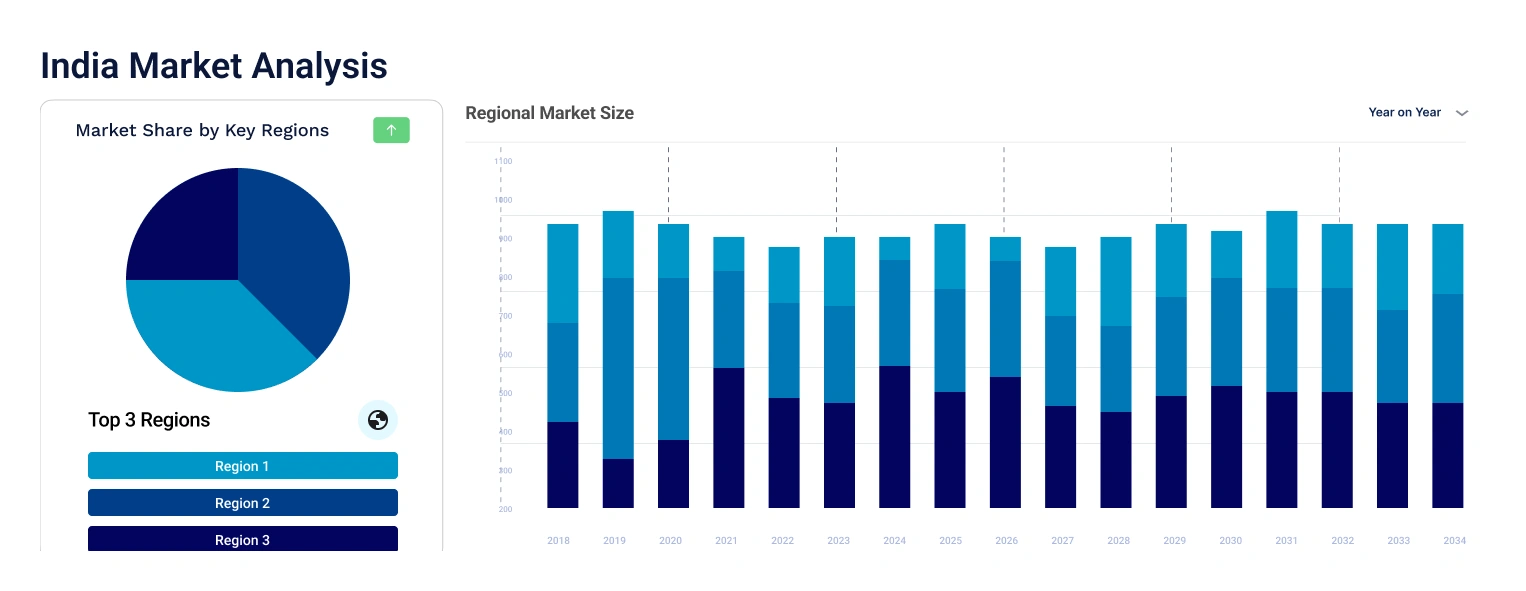
Maharashtra emerges as the dominant region with its position as the country’s electronics hub
Maharashtra captures the largest share of the Indian market, supported by strong electronics and IT sectors, advanced manufacturing infrastructure, and proximity to major ports. The state hosts numerous domestic and international PCB manufacturers, enabling high-volume production and efficient supply chains. Skilled workforce and industrial clusters in Mumbai and Pune enhance technology adoption.
Tamil Nadu is emerging as the fastest-growing regional printed circuit board (PCB) market in India, driven by its automotive and consumer electronics clusters, particularly around Chennai. Government incentives and state-level policies encourage local manufacturing of multilayer and high-performance PCBs. Expansion by global firms, along with OEM partnerships, is strengthening domestic production capacity.
Key India printed circuit board (PCB) market players are investing in high-density interconnect (HDI), multilayer, and flexible PCB technologies to meet the demands of sectors like automotive, telecom, and consumer electronics. Export-oriented growth is gaining momentum, with firms enhancing production efficiency through automation and advanced assembly lines. Government initiatives like the Production Linked Incentive (PLI) scheme and Make in India program are incentivizing local manufacturing, encouraging both foreign and domestic players to scale operations.
Collaboration with global electronics firms is also expanding local capabilities, enabling technology transfer and advanced product development. India printed circuit board (PCB) companies are increasingly emphasizing sustainable materials, quality certifications, and R&D investment to differentiate themselves.
Epitome Components Ltd. established in 1994 and headquartered in Maharashtra, stands as a prominent PCB manufacturer in India, boasting advanced infrastructure and a substantial production capacity of 100,000 sqm/month. With a large and contented customer base both domestically and internationally, Epitome has forged a joint venture with Trackwise Designs Ltd., focusing on producing RF Antenna PCBs vital for cellular networks, radar systems, space industry, and other sophisticated applications.
Shogini Technoarts Pvt. Ltd, established in 1982 and headquartered in Maharashtra, offers extensive solutions by producing top-notch printed circuit boards in a variety of types. These include single and double-sided, multilayer, metal-clad, and flex boards, each tailored for diverse applications.
India Circuit Ltd, established in 2007 and headquartered in Chandigarh, demonstrates its commitment to excellence through a diverse product line. This includes single-side PCB, double-side PCB, metal core PCB, and aluminium PCB, reflecting their expertise and focus on delivering top-tier quality products.
Hi-Q Electronics Pvt. Ltd. established in 1983 and headquartered in Karnataka, stands as a premier manufacturer of intricate PCBs in India. Their clientele spans across Aerospace, Space, and high-tech sectors both domestically and internationally. Specializing in PCBs, Electronics Manufacturing, Defence and Aerospace solutions, Prototypes, Multilayer Boards, HDI, Flex Rigid, as well as Blind Buried technologies, they demonstrate a commitment to excellence in their field.
*Please note that this is only a partial list; the complete list of key players is available in the full report. Additionally, the list of key players can be customized to better suit your needs.*
Other key players in the market are Genus Electrotech Ltd, Ascent Circuits Pvt Ltd, Fine-Line Circuits Limited, and S.B Electronics, among others.
Explore the latest trends shaping the India printed circuit board (PCB) market 2026-2035 with our in-depth report. Gain strategic insights, future forecasts, and key market developments that can help you stay competitive. Download a free sample report or contact our team for customized consultation on India printed circuit board (PCB) market trends 2026.
China Printed Circuit Board Market
Automotive PCB Market
PCB Laminate Market
5G PCB Market
Indian Printed Circuit Board (PCB) Companies
PCB Opportunities in 5G Telecom India
Indian Automotive PCB Market Trends


Upto 15% Off
USD
$3999 $3599
$2499 $2249
$4999 $4249
$5999 $5099


*While we strive to always give you current and accurate information, the numbers depicted on the website are indicative and may differ from the actual numbers in the main report. At Expert Market Research, we aim to bring you the latest insights and trends in the market. Using our analyses and forecasts, stakeholders can understand the market dynamics, navigate challenges, and capitalize on opportunities to make data-driven strategic decisions.*
Get in touch with us for a customized solution tailored to your unique requirements and save upto 35%!
In 2025, the India printed circuit board (PCB) market reached an approximate value of USD 5.35 Billion.
The market is projected to grow at a CAGR of 18.10% between 2026 and 2035.
The market is expected to reach USD 28.24 Billion in 2035.
Key strategies driving the market include investing in advanced HDI, flexible, and multi-layer PCB technologies, forming joint ventures and strategic partnerships, and aligning with government initiatives to reduce import dependence and support Make in India and high-tech electronics growth.
The printed circuit board (PCB) market is categorised according to its product type, which includes rigid 1–2-sided, standard multilayer, flexible circuits, HDI/microvia/build-up, rigid-flex and others.
The key players in the market include Epitome Components Ltd., Shogini Technoarts Pvt. Ltd., India Circuit Ltd, Hi-Q Electronics Pvt. Ltd, Genus Electrotech Ltd, Ascent Circuits Pvt Ltd, Fine-Line Circuits Limited, and S.B Electronics, among others.
Based on type, it is divided into rigid PCBs and flexible PCBs.
The major market areas include Maharashtra, Tamil Nadu, Karnataka, Gujarat, and Others.
Based on the application, the printed circuit board (PCB) market is divided into consumer electronics, communication, industrial electronics, computers, military and aerospace, automotive and medical instrumentation.
The key challenges are high dependence on imported raw materials, intense competition from low-cost international suppliers, rising production costs, rapid technological changes requiring continuous innovation, and infrastructure and skilled labor gaps in emerging PCB manufacturing regions.
Explore our key highlights of the report and gain a concise overview of key findings, trends, and actionable insights that will empower your strategic decisions.
| REPORT FEATURES | DETAILS |
| Base Year | 2025 |
| Historical Period | 2019-2025 |
| Forecast Period | 2026-2035 |
| Scope of the Report |
Historical and Forecast Trends, Industry Drivers and Constraints, Historical and Forecast Market Analysis by Segment:
|
| Breakup by Manufacturing Type |
|
| Breakup by Product Type |
|
| Breakup by Number of Layers |
|
| Breakup by Type |
|
| Breakup by Laminate Type |
|
| Breakup by Application |
|
| Breakup by Region |
|
| Market Dynamics |
|
| Competitive Landscape |
|
| Companies Covered |
|
| Report Price and Purchase Option | Explore our purchase options that are best suited to your resources and industry needs. |
| Delivery Format | Delivered as an attached PDF and Excel through email, with an option of receiving an editable PPT, according to the purchase option. |
Single User License
One User
USD 3,999
USD 3,599
tax inclusive*
Datasheet
One User
USD 2,499
USD 2,249
tax inclusive*
Five User License
Five User
USD 4,999
USD 4,249
tax inclusive*
Corporate License
Unlimited Users
USD 5,999
USD 5,099
tax inclusive*
*Please note that the prices mentioned below are starting prices for each bundle type. Kindly contact our team for further details.*
Flash Bundle
Small Business Bundle
Growth Bundle
Enterprise Bundle
*Please note that the prices mentioned below are starting prices for each bundle type. Kindly contact our team for further details.*
Flash Bundle
Number of Reports: 3
20%
tax inclusive*
Small Business Bundle
Number of Reports: 5
25%
tax inclusive*
Growth Bundle
Number of Reports: 8
30%
tax inclusive*
Enterprise Bundle
Number of Reports: 10
35%
tax inclusive*
How To Order

Select License Type
Choose the right license for your needs and access rights.

Click on ‘Buy Now’
Add the report to your cart with one click and proceed to register.

Select Mode of Payment
Choose a payment option for a secure checkout. You will be redirected accordingly.
Gain insights to stay ahead and seize opportunities.

Get insights & trends for a competitive edge.

Track prices with detailed trend reports.

Analyse trade data for supply chain insights.

Leverage cost reports for smart savings

Enhance supply chain with partnerships.

Connect For More Information
Our expert team of analysts will offer full support and resolve any queries regarding the report, before and after the purchase.
Our expert team of analysts will offer full support and resolve any queries regarding the report, before and after the purchase.
We employ meticulous research methods, blending advanced analytics and expert insights to deliver accurate, actionable industry intelligence, staying ahead of competitors.
Our skilled analysts offer unparalleled competitive advantage with detailed insights on current and emerging markets, ensuring your strategic edge.
We offer an in-depth yet simplified presentation of industry insights and analysis to meet your specific requirements effectively.





Share