

Consumer Insights
Uncover trends and behaviors shaping consumer choices today
Procurement Insights
Optimize your sourcing strategy with key market data
Industry Stats
Stay ahead with the latest trends and market analysis.

The India construction market attained a value of USD 746.49 Billion in 2025. The market is expected to grow at a CAGR of 8.60% during the forecast period of 2026-2035. By 2035, the market is expected to reach USD 1703.42 Billion.
The Indian government has launched ambitious programs like the National Infrastructure Pipeline, Bharatmala, and Gati Shakti to build roads, highways, ports, airports, and urban transit. These projects not only demand huge volumes of materials like steel, cement, and aggregates, but also drive demand for construction equipment, logistics, and contracting capacity. Public-sector investment also raises private sector confidence, unlocking more financing, joint ventures, and PPP (public private partnerships).
The growing adoption of digital tools is transforming the India construction market dynamics. Some of these include Building Information Modeling (BIM) for design/planning; drones, IoT, AI for site monitoring, project tracking and predictive maintenance. Modular/prefabricated construction methods are being adopted to speed up timelines and lower costs. In July 2025, Tata Steel signed an MoU with Australia’s InQuik to introduce modular bridge tech in India, for faster, cost-efficient, climate resilient bridge construction. Digital tools also help labor management, source tracking, and safety compliance.
Base Year
Historical Period
Forecast Period
The domestic TMT bar production recorded a y-o-y growth of 3.8MT, reaching 51MT in 2023.
The sale of construction equipment recorded a y-o-y growth of 26% in FY2023-24.
India is expected to have the world’s 2nd largest network of urban metro railways by 2026.
Compound Annual Growth Rate
8.6%
Value in USD Billion
2026-2035
*this image is indicative*
The swiftly growing urban population is boosting the India construction market trends. As per the World Bank, India’s towns and cities will be home to 600 million people by 2036. This fuels demand for residential housing, particularly affordable and mid-income housing and associated infrastructure like roads, water, sewage, metro/urban transit. Schemes like Pradhan Mantri Awas Yojana (PMAY) are trying to fill the gap, pushing developers to scale up, making housing projects more critical.
With climate change and environmental impacts in focus, regulators, consumers, and investors are pushing for ecofriendly construction in India. Green materials, such as fly ash, recycled aggregates, energy-efficient designs, solar and renewable energy integration, and standards/certifications are becoming more mainstream. In June 2025, NTPC handed over its first ash-based “Ecohouse” in Bilaspur using ~80% fly ash materials, interlocking ash blocks needing no sand, cement or steel. Sustainability also means stricter emission norms for construction equipment, leading to Stage V/CEVV regulation, hybrid and electric machines.
Digitization is helping manage complex projects like real-time tracking, document workflows, safety monitoring, labor productivity tracking, adding to the India construction industry value. Tools help with transparency, compliance, and cost control. Project delays often come from miscoordination, or lack of visibility as digital tools help mitigate such risk. In June 2025, Autodesk has launched a customized BIM suite, “BIM Package for Viksit Bharat”, tailored for India’s infrastructure, embedding local codes, design standards. Also, digital financial tools, procurement platforms, supply chain tracking are gaining adoption to streamline operations.
Construction equipment manufacturers are facing tighter emissions standards like CEV V / Stage V, which drive up costs but push for cleaner, more efficient engines and components. Compliance pressures are not limited to equipment, as environmental impact assessments, land acquisition laws, building codes, and urban zoning are becoming more rigorous. Developers and contractors must navigate these regulations to avoid delays and penalties. Such regulatory tightening can become a competitive advantage in the India construction industry.
Urban planning is no longer just about housing in India as mixed use developments combining residential, retail, offices, green spaces, transit hubs are growing. Smart cities push sustainable, integrated infrastructure, like IoT, sensors, efficient mobility. Renewal of old urban cores, retrofitting, metro rail expansion, mass transit projects are largescale drivers. Urban renewal also includes upgrading utilities, waste management, digital infrastructure. In September 2025, Thiruvananthapuram’s Rajaji Nagar colony, under the Smart City Mission, is being redeveloped with new residential units, better roads, parking, civic amenities, and green spaces.
The EMR’s report titled “India Construction Market Report and Forecast 2026-2035” offers a detailed analysis of the market based on the following segments:
Market Breakup by End-Use
Key Insight: The infrastructure segment is a leading segment, driven by massive public investments under schemes like PM Gati Shakti, Bharatmala, and Smart Cities Mission. Key developments include highways, metro rail, airports, bridges, and urban mobility. For instance, the Delhi–Mumbai Expressway, expanding metro networks in cities like Pune and Indore, and bullet train corridors reflect this momentum. The government’s National Infrastructure Pipeline (NIP) has earmarked ₹111 lakh crore through FY25. Additionally, initiatives like the Digital India and Make in India programs are further propelling infrastructure growth with smart utilities, urban roads, and transit-oriented development across the country.
Market Breakup by Region
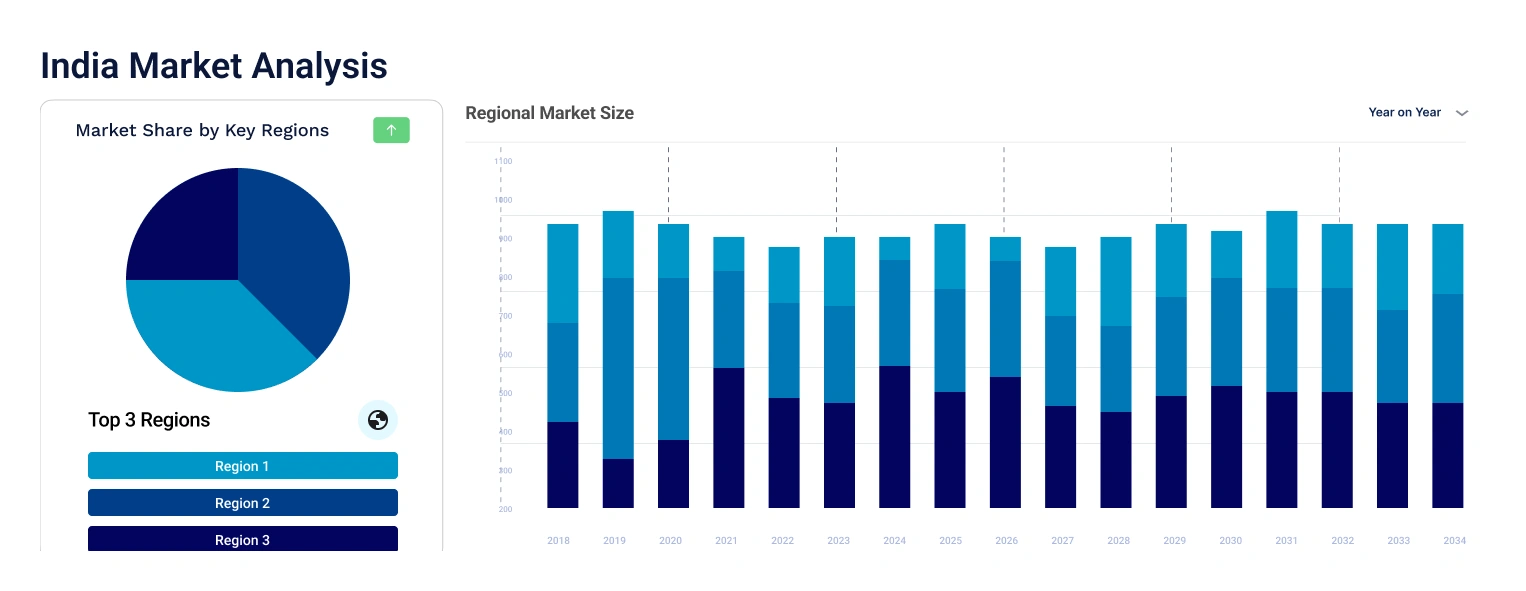
Key Insight: The South India construction market dominates, driven by rapid urbanization, industrial growth, and IT sector expansion. Cities like Bengaluru, Chennai, Hyderabad, and Kochi witness extensive residential, commercial, and infrastructure projects. In March 2025, DRA launched Inara, a luxury villa project in Chennai’s Navalur area, investing ₹100 crores for 118 premium villas. The region’s proactive state governments and growing middle class support continuous housing development, making South India a construction hotspot with strong investments in smart cities, renewable energy infrastructure, and affordable housing.
Residential & Commercial Sector to Boost Construction in India
The residential segment is adding to the construction market share in India, driven by urbanization, population growth, and rising middle-class aspirations. Affordable housing under Pradhan Mantri Awas Yojana (PMAY) has triggered large-scale development, especially in Tier 2 and 3 cities. Major developers like Godrej Properties, DLF, and Prestige Group are expanding integrated townships and gated communities. Co-living and senior living formats are also gaining traction. In August 2025, Experion’s VLIV launched India’s first women-only rental co-living in Greater Noida, providing 730 beds with safety and comfort. In addition, housing remains a key driver of employment and allied industries.
The commercial segment is steadily expanding in the India construction market, driven by demand across medical, retail, sports, and hospitality sectors. Healthcare infrastructure is seeing significant growth, with hospital chains like Apollo, Max, and Aster expanding multi-specialty units nationwide. In retail, developers like Phoenix Mills and Prestige are launching large malls in metro and Tier-2 cities. Sports infrastructure is rising through projects like the Narendra Modi Stadium in Ahmedabad and Khelo India-funded arenas. The hospitality segment is also growing, with hotels, convention centers, and co-working spaces being developed. These diverse sub-segments are reshaping urban commercial spaces and enhancing local economies.
Surging Construction Demand in West & North India
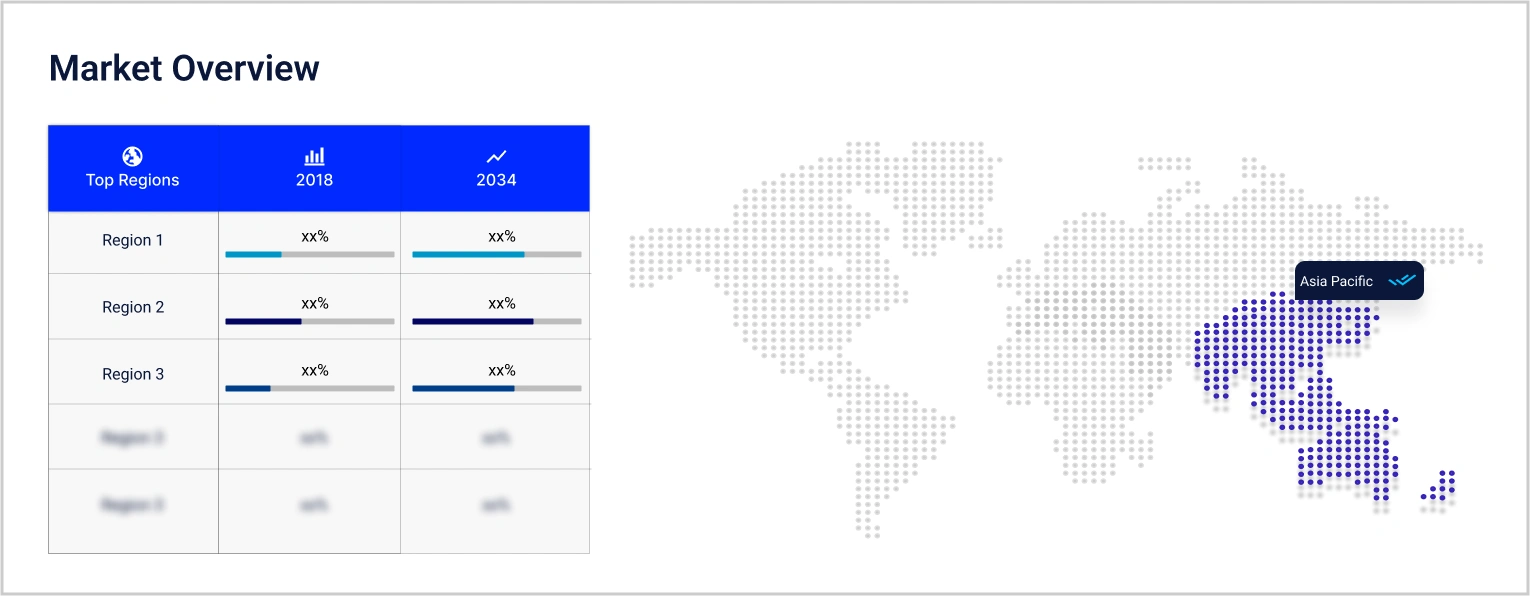
West India construction market, including Maharashtra, Gujarat, and Rajasthan, holds immense share. Mumbai’s commercial and residential boom, alongside Pune’s IT hubs, drives growth. Infrastructure projects like Mumbai Metro, Delhi-Mumbai Industrial Corridor, and Gujarat’s Dholera Smart City demonstrate major development. The region also leads in port-led industrial infrastructure, such as the Jawaharlal Nehru Port Trust expansion. Residential developments cater to both luxury and affordable housing markets, while retail malls like Phoenix Marketcity flourish. Gujarat’s renewable energy parks and smart city initiatives further enhance construction activities across the region.
North India construction market revenue is expanding, led by Delhi NCR, Punjab, Haryana, and Uttar Pradesh. The National Capital Region witnesses extensive residential townships, commercial complexes, and infrastructure upgrades. In June 2025, County Group launched Jade County in Ghaziabad’s Wave City, planning to invest ₹1,800 crore in over 1,000 premium homes. Uttar Pradesh’s infrastructure push with expressways and smart city projects also drive construction. Industrial corridors such as the Eastern Dedicated Freight Corridor enhance logistics infrastructure. Government focus on connectivity and affordable housing under schemes like PMAY keeps the segment growth robust.
Key players in the India construction market are deploying a mix of strategic initiatives to stay competitive and meet the country’s rapidly evolving infrastructure and urban development needs. One major strategy is technology integration, especially through Building Information Modeling (BIM), drones, AI, and IoT, enabling better planning, real-time tracking, and project execution. Sustainability and green construction are also gaining focus, with companies adopting eco-friendly materials like fly ash, recycled aggregates, and integrating solar and renewable energy systems into buildings. Upskilling and partnerships are being pursued to address labor shortages and enhance productivity through training and certification
Firms are increasingly shifting toward modular and prefabricated construction to reduce costs, speed up timelines, and minimize waste. To align with stricter emission norms, equipment manufacturers are introducing Stage V/CEV-V compliant and electric machines. Many players are embracing asset-light models, relying more on leasing/renting machinery rather than owning. Another key strategy is localization and “Make in India”, with OEMs ramping up domestic production to reduce costs and meet local standards. Together, these strategies aim to boost efficiency, resilience, and sustainability in India’s dynamic construction sector.
Founded in 1938 and headquartered in Mumbai, Larsen & Toubro is a leading engineering and construction conglomerate in India. The company excels in EPC projects, heavy civil works, and defense manufacturing. It pioneered the use of digital twin and AI-based project monitoring tools across infrastructure and smart city developments.
Established in 1929 with headquarters in Navi Mumbai, Reliance Infrastructure operates across power, roads, metro rail, and defense sectors. The company innovates in infrastructure asset management and was the first to build a fully automated Mumbai Metro Line 1. It is also actively involved in solar and electric mobility initiatives.
Founded in 1982 and based in Gurugram, Punj Lloyd specializes in EPC services across energy, infrastructure, and defense sectors. Known for complex pipeline and refinery projects, the company expanded to over 60 countries. It brought modular construction and precision engineering to Indian defense manufacturing before entering financial restructuring.
Formed in 1865 and headquartered in Mumbai, Shapoorji Pallonji is one of India’s oldest construction firms. It is renowned for iconic projects like the Reserve Bank of India and the Palace of the Sultan of Oman. The company champions green construction and affordable housing under its Joyville brand.
*Please note that this is only a partial list; the complete list of key players is available in the full report. Additionally, the list of key players can be customized to better suit your needs.*
Other players in the India construction market are GMR Infrastructure Limited, Tata Projects, Jaiprakash Associates Limited (Jaypee Group), Gammon India Limited., KEC International Limited, and Welspun Group, among others.
Discover how the construction landscape is evolving with our India construction market trends 2026 report. Gain exclusive insights into regional growth, project pipelines, sustainability innovations, and major player strategies. Download your free sample report today to stay ahead in one of India’s fastest-growing sectors. Make informed decisions backed by data-driven expertise.
Germany Commercial Construction Market
United Kingdom Construction Market
North America Construction Market
South Korea Construction Market
Residential Construction Market
Australia Construction Market
Modular Construction Market
Europe Construction Market
BIM in Construction Market
3D Reconstruction Market


Upto 15% Off
USD
$2499 $2249
$3999 $3599
$4999 $4249
$5999 $5099


*While we strive to always give you current and accurate information, the numbers depicted on the website are indicative and may differ from the actual numbers in the main report. At Expert Market Research, we aim to bring you the latest insights and trends in the market. Using our analyses and forecasts, stakeholders can understand the market dynamics, navigate challenges, and capitalize on opportunities to make data-driven strategic decisions.*
Get in touch with us for a customized solution tailored to your unique requirements and save upto 35%!
In 2025, the market reached an approximate value of USD 746.49 Billion.
The market is projected to grow at a CAGR of 8.60% between 2026 and 2035.
The market is assessed to witness a healthy growth in the forecast period to reach around USD 1703.42 Billion in 2035.
TMT is a crucial reinforcement material for India’s construction sector.
Yes, airport expansion one of the key trends facilitating the market growth.
The major end uses of construction include commercial, residential, industrial, and infrastructure.
The different regions in the market include North India, East and Central India, West India, and South India.
The key players in the market report include Larsen & Toubro Limited, Reliance Infrastructure Ltd., Punj Lloyd Limited, Shapoorji Pallonji Co. Pvt. Ltd, GMR Infrastructure Limited, Tata Projects, Jaiprakash Associates Limited (Jaypee Group), Gammon India Limited., KEC International Limited, and Welspun Group, among others.
South India is the most dominant segment in the market, driven by rapid urbanization, industrial growth, and IT sector expansion.
Key strategies driving the market include strategic government initiatives alongside affordable housing schemes like PMAY. Regulatory reforms including RERA and GST enhance transparency and investment. Technological adoption and growing focus on sustainability and green buildings also fuel growth.
Explore our key highlights of the report and gain a concise overview of key findings, trends, and actionable insights that will empower your strategic decisions.
| REPORT FEATURES | DETAILS |
| Base Year | 2025 |
| Historical Period | 2019-2025 |
| Forecast Period | 2026-2035 |
| Scope of the Report |
Historical and Forecast Trends, Industry Drivers and Constraints, Historical and Forecast Market Analysis by Segment:
|
| Breakup by End-Use |
|
| Breakup by Region |
|
| Market Dynamics |
|
| Competitive Landscape |
|
| Companies Covered |
|
Datasheet
One User
USD 2,499
USD 2,249
tax inclusive*
Single User License
One User
USD 3,999
USD 3,599
tax inclusive*
Five User License
Five User
USD 4,999
USD 4,249
tax inclusive*
Corporate License
Unlimited Users
USD 5,999
USD 5,099
tax inclusive*
*Please note that the prices mentioned below are starting prices for each bundle type. Kindly contact our team for further details.*
Flash Bundle
Small Business Bundle
Growth Bundle
Enterprise Bundle
*Please note that the prices mentioned below are starting prices for each bundle type. Kindly contact our team for further details.*
Flash Bundle
Number of Reports: 3
20%
tax inclusive*
Small Business Bundle
Number of Reports: 5
25%
tax inclusive*
Growth Bundle
Number of Reports: 8
30%
tax inclusive*
Enterprise Bundle
Number of Reports: 10
35%
tax inclusive*
How To Order

Select License Type
Choose the right license for your needs and access rights.

Click on ‘Buy Now’
Add the report to your cart with one click and proceed to register.

Select Mode of Payment
Choose a payment option for a secure checkout. You will be redirected accordingly.
Gain insights to stay ahead and seize opportunities.

Get insights & trends for a competitive edge.

Track prices with detailed trend reports.

Analyse trade data for supply chain insights.

Leverage cost reports for smart savings

Enhance supply chain with partnerships.

Connect For More Information
Our expert team of analysts will offer full support and resolve any queries regarding the report, before and after the purchase.
Our expert team of analysts will offer full support and resolve any queries regarding the report, before and after the purchase.
We employ meticulous research methods, blending advanced analytics and expert insights to deliver accurate, actionable industry intelligence, staying ahead of competitors.
Our skilled analysts offer unparalleled competitive advantage with detailed insights on current and emerging markets, ensuring your strategic edge.
We offer an in-depth yet simplified presentation of industry insights and analysis to meet your specific requirements effectively.





Share