

Consumer Insights
Uncover trends and behaviors shaping consumer choices today
Procurement Insights
Optimize your sourcing strategy with key market data
Industry Stats
Stay ahead with the latest trends and market analysis.

The India spices market size was valued at INR 94927.56 Crores in 2025. Rising traction of GI-tagged spices like Byadgi chilli and Lakadong turmeric is unlocking niche export potential, attracting investments in sorting, dehydration, and traceability solutions for premium-grade spice processing units. As a result, the market is expected to grow at a CAGR of 9.20% during the forecast period of 2026-2035 to reach a value of INR 228885.72 Crores by 2035.
The market is transforming fast into a high-tech, export-driven space that is attracting serious B2B interest. Recently, India exported over 793,000 tons of spices and spice products, valued at USD 4.45 billion. With the government’s “Spice Parks” initiative and the “One District, One Product” scheme, regions like Guntur and Erode are witnessing technology-enabled processing and branding upgrades.
Moreover, the aggressive push for organic and GI-tagged (Geographical Indication) spices has added to the overall India spices market value. States like Kerala and Sikkim are leading organic cultivation efforts. As of 2025, MoFPI has approved 1608 projects nationwide under the relevant PMKSY component schemes, including 41 Mega Food Parks, 394 Cold Chain projects, 75 Agro-processing Clusters projects, 536 Food Processing Units, 61 Creation of Backward & Forward Linkages, and 44 Operation Greens projects. This shows the government’s intent to create global-grade spice infrastructure. As consumer awareness spikes, both global buyers and domestic chains are looking for traceable, quality-controlled spice sourcing.
Furthermore, the demand for organic and sustainable products is rapidly growing globally, positively influencing the India spices market growth, and the trend continues to expand with the increasing consumer awareness of health, environment, and sustainability. The global inclination towards organic spices free from chemicals and pesticides, and innovative packaging choices have significantly propelled the development of the market.
Base Year
Historical Period
Forecast Period
Compound Annual Growth Rate
9.2%
Value in INR Crores
2026-2035
*this image is indicative*
B2B buyers are increasingly seeking precision in spice grinding and standardisation. The spice industry in India is responding with AI-powered quality control and cold grinding technology. For instance, Synthite Industries deployed automated extraction units for spice oleoresins in Kerala, enabling better consistency. The Indian Institute of Spices Research (IISR) has collaborated with processors to implement sensor-based grading systems for turmeric and black pepper. This technological shift ensures cleaner, safer spices which adds value for international bulk buyers and food manufacturers.
With adulteration concerns rising, companies are investing in blockchain traceability and QR-based packaging. The GI-tagged Byadgi chilli from Karnataka and Alleppey Green Cardamom are now being traced from farm to packet via digital ledgers. This trend in the India spices market is driven by export regulations in the European Union and United States, which now demand source verification. The Spices Board of India implemented blockchain-driven spice traceability platform developed in partnership with UNDP's Accelerator Lab India. This project intends to improve traceability and encourage the use of the e-Spice Bazaar for trade by integrating blockchain technology into the web portal.
As the health-conscious wave spreads among consumers, B2B retailers and food processors prefer “free-from” labels with no preservatives and no colours, shaping the India spices market dynamics. Sikkim’s fully organic spice exports witnessed a significant rise in 2023. Companies like Organic Tattva and 24 Mantra have been scaling up B2B partnerships with hotels and ready-to-eat brands. Exporters are now targeting niche markets like baby food and sports nutrition with organic spice infusions.
Blended spices tailored for institutions has become a lucrative vertical, boosting the growth of the India spices market. B2B clients like QSRs and airline caterers are demanding custom masala mixes. Leading market players like Everest and MDH offer dedicated institutional packs with recipes standardised per cuisine, including North Indian curry blends, meat-based masalas, or Indo-Chinese fusion. The FSSAI’s push for standardized formulations is aiding this trend.
Exporters and large-scale buyers are increasingly shifting toward nitrogen-flushed, multi-layered spice packets. The Ministry of Food Processing Industries reported that INR 6,198.78 crore has been disbursed as grants, much of which went into spice handling hubs and cold chain projects. Firms like Jayanti Herbs and Spices are investing in vacuum-sealed packs for European shipments. With global demand for longer shelf-life spices climbing, packaging technology is becoming as important as spice quality.
Read more about this report - REQUEST FREE SAMPLE COPY IN PDF
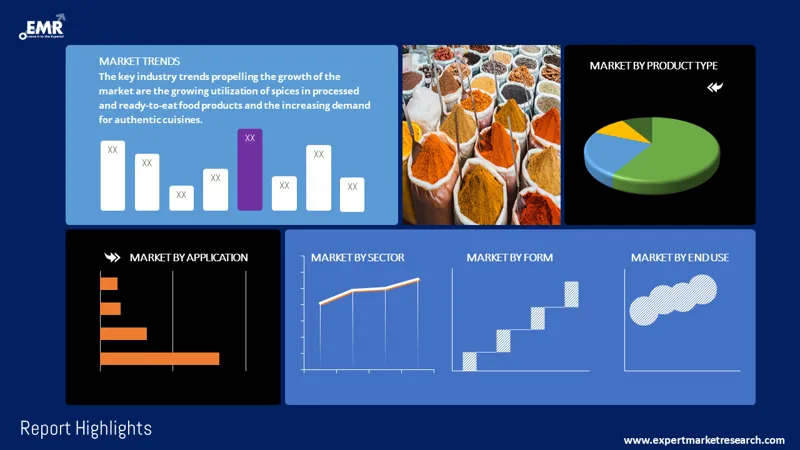
The EMR’s report titled “India Spices Market Report and Forecast 2026-2035” offers a detailed analysis of the market based on the following segments:
Market Breakup by Product Type
Key Insight: Pure spices are anticipated to dominate the Indian market during the forecast period owing to their unprocessed and unadulterated nature. The dominance of pure spices suggests a growing preference among consumers for traditional, unaltered flavours that cater to culinary authenticity and health-conscious choices. Following the rising demand for pure spices, companies are also increasingly implementing innovative packaging solutions and clean labels to gain a competitive edge in the market. Players like Synthite and VKL Seasoning have created APIs (active spice ingredients) from turmeric and black pepper. This is enabling a shift from basic exports to pharma-grade derivatives and essential oils, broadening the utility of pure spices beyond the kitchen.
Market Breakup by Form
Key Insight: Packets continue to dominate in spices market share in India due to their compatibility with automated packing, inventory logistics, and cost-effectiveness. Brands like MDH and Pushp Spices have integrated digital holograms and QR scan verifications in packet labels, adding trust for institutional and export buyers wary of adulteration. This makes pre-packed spices the most secure niche for food processors and global importers.
Market Breakup by Sector
Key Insight: With a considerable share in the Indian market, the organised sector has been growing rapidly owing to the rising investment in modern infrastructure in order to meet stringent quality standards. The organised spices category retains its dominance in the market owing to shifting customer preferences, creative branding, adoption of secure packing techniques, and expanding retail chains.
Market Breakup by Application
Key Insight: Spices in meat and poultry significantly accelerate the overall India spices market value. The growing use of enzymatic spice pre-blends, which tenderise meat and retain moisture has been trending continuously in the market. B2B meat brands like Licious and Zappfresh have collaborated with spice processors to integrate these blends directly into their supply chain. This minimises preparation time and standardises taste, which is a major operational win.
Market Breakup by End Use
Key Insight: The dominance of the retail category in the industry is boosted by hybrid selling which includes physical, digital, and subscription-based point-of-sales. With B2B marketplaces and kirana platforms offering real-time inventory and restocking, brands are integrating AI to predict regional demand spikes, thereby stabilising the India spices demand forecast. This allows bulk fulfilment without overproduction. Moreover, the integration of visual recognition tools in retail stores is helping B2B sales representatives track competitor shelf activity and optimise placement.
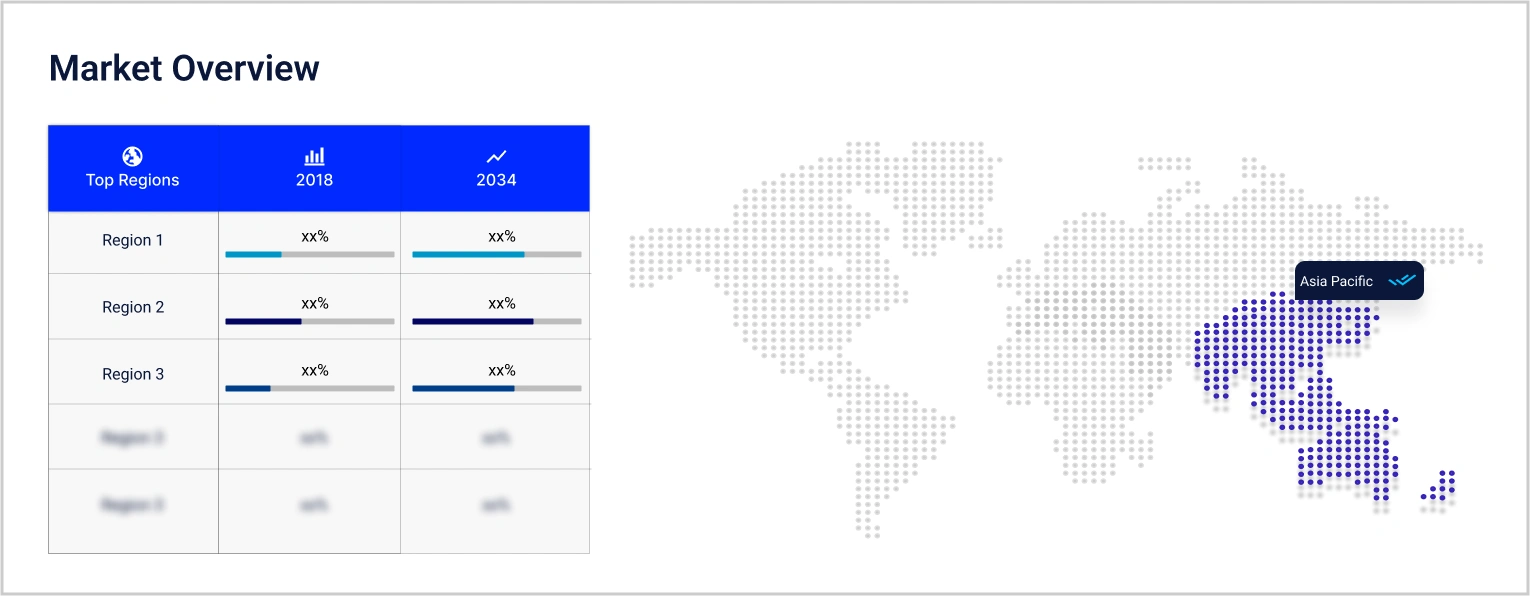
Market Breakup by Region
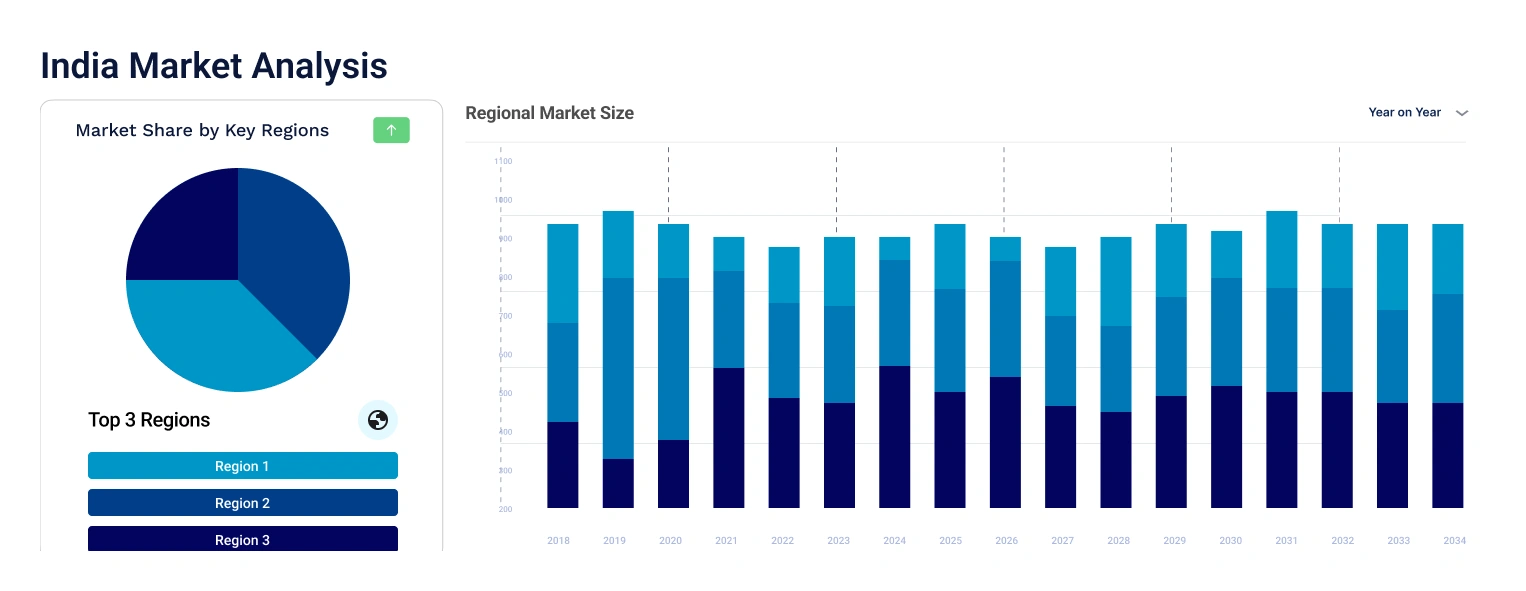
Key Insight: The South Indian market dominance is sustained by the region’s export-grade infrastructure and backward linkages with farmers. Spice processors here are now exploring augmented reality (AR) for B2B sales, offering virtual spice sampling to overseas clients. Furthermore, traditional knowledge and expertise passed down through generations enable South Indian farmers to produce high-quality spices suitable for a wide range of culinary preferences and purposes. The region's spices are prized not just for their particular flavour and perfume, but also for their therapeutic powers, which add to their attraction.
Read more about this report - REQUEST FREE SAMPLE COPY IN PDF
By Product Type, Pure Spices Account for the Dominant Share of the Market
Pure spices have dominated the Indian market with red chillies, turmeric, and cumin are particularly in demand. A recent report indicated that turmeric alone accounted for 62% in 2023. These pure spices are processed with AI-based drying chambers and infrared moisture monitoring, like those adopted by firms in Tamil Nadu and Andhra. Small farmers are getting linked to exporters via FPOs (Farmer Producer Organisations), improving price realisation.
Blended spices are anticipated to register the fastest CAGR over the forecast period, boosting the overall spice consumption in India. The rise of cloud kitchens and ready-meal startups are fuelling the demand. Brands like Catch are launching region-specific blends like Rajasthani Laal Maas Masala and Goan Xacuti, aimed directly at institutional kitchens and gourmet brands. These blends are being made in automated lines, removing manual variability, which is a critical factor for QSRs. Additionally, e-commerce aggregators like BigBasket B2B are sourcing these blends in bulk packs of 1-5 kg for restaurants and caterers, instead of the usual retail SKUs.
By Form, Packets Secure the Leading Position in the Market
Pre-packed spices in sachets and pouches continue to be the dominant choice across all retail channels. The market observes a rising demand for smart packaging, which include humidity-controlled liners, resealable zippers, and RFID tags. These are being added by brands like Eastern Condiments. This ensures longer shelf life and logistical efficiency for restaurants and exporters alike. Institutional buyers prefer these for ease of inventory tracking and portion control.
Sprinkler-based spice bottles, especially for table use, are witnessing rising adoption among hotel chains and quick-service cafes, accelerating the spices demand in India. Firms like Orika and Smith & Jones are offering combo-packs in this format for B2B HoReCa orders. Their precise flow control caps and dual-mode lids help minimise spillage and wastage. With growing demand for clean, mess-free table condiments in urban cafes and corporate pantries, this form is expected to grow at a rapid pace. Even institutions are switching from bulk packs to portion-controlled sprinkler dispensers to ensure hygiene.
By Sector, the Organised Segment Occupy the Bigger Share of the Market
Organised players are commanding the majority of the market share. Their competitive edge lies in advanced processing infrastructure, traceability protocols, and compliance with global safety norms. Major brands like Everest and Catch are supplying directly to airline caterers, hospital kitchens, and global QSRs. They operate centralised units with ETO (ethylene oxide) sterilisation and ISO-certified cold storage. In addition, their products often come with e-barcodes and digital trace systems, which are vital for B2B audits.
Unorganised spice sellers, especially regional masala makers, are gaining ground in the India spices industry. Local units in Rajasthan and Kerala are now collaborating with FPOs and using semi-automatic grinding machines and solar dryers. With help from NABARD’s spice cluster programmes, they are also accessing common testing labs and warehousing hubs. Many are even creating white-label products for e-commerce B2B retailers. Their agility, regional flavour knowledge, and low pricing are attracting mid-sized foodservice operators who seek unique blends.
By Application, Meat and Poultry Products Secure a Sizeable Share of the Indian Market
Spice use in meat and poultry has surged, with masalas tailored for kebabs, curries, and marinades. Brands like Everest and Aachi have launched marination-friendly spice mixes with anti-caking agents and heat stability, which are crucial for ready-to-cook meat brands. The growing meat export industry is demanding spices that work across chilled and frozen formats as well. Moreover, companies are also reformulating their meat masalas, ensuring better adherence to Europe and United States export requirements.
Snack companies like Haldiram’s and ITC are increasingly sourcing custom spice blends for bhujia, wafers, and even baked items, boosting the Indian spice consumption. For instance, vendors like VKL and Foodgrid are now offering low-oil, high-flavour dry masala coatings that withstand shelf storage. Encapsulated spice oils are trending in this application category, which is created by using a technology that enhances aroma release during cooking or heating. These solutions are scaling fast in B2B supply chains catering to frozen momos, baked samosas, and ready-meal kits.
By End Use, Retail Accounted for the Major Market Share
Retail channels make up for the majority of the total spice market share. Modern retail chains like Reliance Smart and More are partnering with spice processors to create private-label spice lines. These in-house brands, often custom-developed, have higher margin control and local targeting flexibility. Some of the retail chains are integrating in-store QR-code feedback systems for spices, offering traceability right from farm to shelf. This feedback loop helps processors tweak products based on real-time consumer input, especially in tier-1 cities.
The food service sector is actively redefining spice demand in India. Cloud kitchens, food trucks, and institutional canteens are shifting toward spice kits that include premixes, marinades, and oil-infused bases. B2B spice firms are now offering subscription-based refill models to hotels and QSRs for standard masala blends. Even five-star hotel chains are co-developing proprietary blends for their signature dishes. The growing demand in this category is largely influenced by seasonality, cuisine trends, and urbanisation.
By Region, South India Holds the Leading Position in the Market
States like Tamil Nadu and Kerala are the key motivators for South India’s dominance in the market. Kerala’s Puttady and Thodupuzha industrial spice parks offer freeze-drying, ETO sterilisation, and cryo-grinding in one place. For instance, Karnataka’s Byadgi region witnessed a considerable export surge in GI-tagged chillies. B2B buyers are increasingly placing forward contracts with South-based processors due to predictable climate, processing excellence, and GI-marked sourcing. Export-oriented spice MSMEs here are also receiving grants under the PMFME scheme, boosting competitiveness.
As per the India spices market report, Uttar Pradesh and Rajasthan are emerging spice hubs, especially for dried coriander, cumin, and regional blends like “Kachri Masala,” accelerating North India’s position in the market. FPOs supported by NABARD in districts like Barabanki and Bikaner are producing spice powders that meet ISO standards. Further, North India is also home to new spice cluster projects under the Ministry of Agriculture’s MIDH scheme. These initiatives are connecting micro-processors with cold storage and logistics providers, enabling cross-state supply.
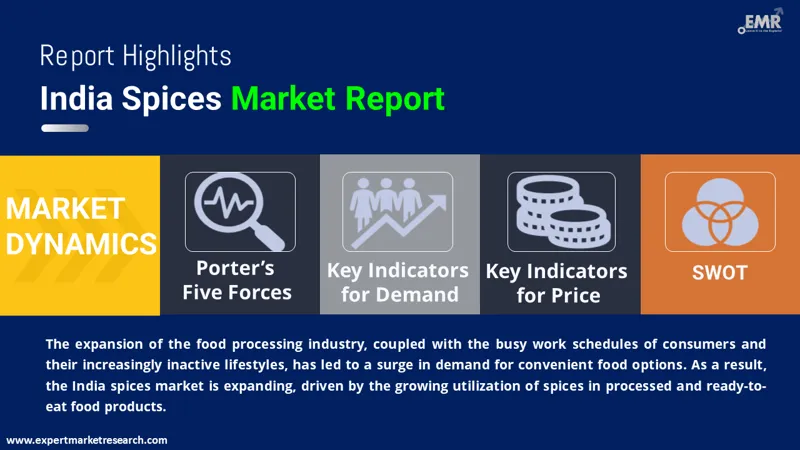
Read more about this report - REQUEST FREE SAMPLE COPY IN PDF
The India spices market players are investing in sterilisation units, GI-tag registrations, and AI-enabled packaging to meet both domestic and global standards. Spice processors are now integrating food trend analytics to develop specific B2B SKUs. Most of the India spice companies find opportunities in direct-to-institution models, and institutional white-labelling for kitchen automation chains. Firms are also exploring carbon-neutral processing and renewable energy-driven drying units to develop in eco-conscious overseas markets. Exporters are aligning with India’s agricultural-export policy, targeting non-traditional markets like Eastern Europe, West Africa, and Southeast Asia. Brands are forming co-innovation labs with hotel chains and QSRs to co-develop signature spice blends. Firms are also piloting IoT-based spice dispensers in commercial kitchens, enabling precise and automated dosing, reducing waste and boosting consistency.
Everest Food Products Pvt. Ltd. is the largest spice-selling brand in India, which was established in 1965, and currently offers more than 45 masala varieties in both pure and blended forms. The company sells its products not only in Indian market but many nations around the world, including the United States, the United Kingdom, Africa, the United Arab Emirates, Singapore, and Australia.
Badshah Masala Private Limited, a leading producer of spices, was founded in 1958. Its collection includes a wide range of spices and products including asafoetida, kesari milk masala, premix tea, whole spices, seasoning spices, blended spices, and papad. The brand has a significant presence in both domestic and international markets. Its products are available across various retail channels, including supermarkets, hypermarkets, speciality stores, and online platforms, catering to a diverse consumer base.
MTR Foods Pvt Ltd, with its headquarters in Karnataka, stands out as an Indian heritage brand that has been providing ethnic and high-quality Indian food for more than 90 years. A well-known household name, the brand is associated with culinary expertise that has been presented in contemporary, user-friendly ways. Their extensive portfolio of masalas, spices, ready-to-cook, and ready-to-eat products covers all meal occasions.
Established in 1919 and headquartered in New Delhi, MDH supplies bulk blends to airlines, hotels, and rail catering services. With its modern plant in Nagaur, MDH uses solar drying and AI-powered sieving to ensure consistency. It recently introduced traceable GI-tagged masalas for export buyers in Europe and the Middle East.
*Please note that this is only a partial list; the complete list of key players is available in the full report. Additionally, the list of key players can be customized to better suit your needs.*
Other key players in the market are DS Group (Catch), Eastern Condiments Pvt. Ltd., Aachi Masala Foods (P) Ltd, Patanjali Ayurved Limited, Sakthi Masala Private Limited, ITC Limited, Ushodaya Enterprises Pvt. Ltd. (Priya), Tata Consumer Products Limited, Zoff Foods Private Limited, Goldiee Group, Ashok Masale, and LIFESTYLE FOODS PVT LTD., among others.
Explore the latest trends shaping the India spices market 2026-2035 with our in-depth report. Gain strategic insights, future forecasts, and key market developments that can help you stay competitive. Download a free sample report or contact our team for customized consultation on India spices market trends 2026.
Spices and Seasonings Market
Organic Spices Market


Upto 15% Off
USD
$2499 $2249
$3999 $3599
$4999 $4249
$5999 $5099


*While we strive to always give you current and accurate information, the numbers depicted on the website are indicative and may differ from the actual numbers in the main report. At Expert Market Research, we aim to bring you the latest insights and trends in the market. Using our analyses and forecasts, stakeholders can understand the market dynamics, navigate challenges, and capitalize on opportunities to make data-driven strategic decisions.*
Get in touch with us for a customized solution tailored to your unique requirements and save upto 35%!
In 2025, the India spices market reached an approximate value of INR 94927.56 Crores.
The market is projected to grow at a CAGR of 9.20% between 2026 and 2035.
The market is estimated to witness a healthy growth in the forecast period of 2026-2035 to reach a value of INR 228885.72 Crores by 2035.
Key strategies driving the market include building regional hubs, digitizing farmer networks, introducing subscription models for foodservice, and leveraging AR for virtual sampling.
The growing utilisation of spices in processed and ready-to-eat food products and the increasing demand for authentic cuisines are the key trends propelling the growth of the market.
India is the largest producer of spices in the world. India is also the world's largest exporter and consumer of spices.
The use of cinnamon in cooking goes back much further in history than any other spice. As a result, it has earned the title ‘world's oldest spice’.
Kozhikode was known as the ‘City of Spices’ during classical antiquity and the Middle Ages due to its significance as the main commercial hub for trading Eastern spices.
The major players in the Indian market for spices are Everest Food Products Pvt. Ltd., Mahashian Di Hatti Pvt. Ltd., Badshah Masala Private Limited, DS Group (Catch), Eastern Condiments Pvt. Ltd., Aachi Masala Foods (P) Ltd, MTR Foods Pvt Ltd, Patanjali Ayurved Limited, Sakthi Masala Private Limited, ITC Limited, Ushodaya Enterprises Pvt. Ltd. (Priya), Tata Consumer Products Limited, Zoff Foods Private Limited, Goldiee Group, Ashok Masale, and LIFESTYLE FOODS PVT LTD., among others.
The key challenges are regulatory compliance across states, inconsistent raw spice quality, adulteration risks, and lack of cold chain in Tier-2 regions.
Explore our key highlights of the report and gain a concise overview of key findings, trends, and actionable insights that will empower your strategic decisions.
| REPORT FEATURES | DETAILS |
| Base Year | 2025 |
| Historical Period | 2019-2025 |
| Forecast Period | 2026-2035 |
| Scope of the Report |
Historical and Forecast Trends, Industry Drivers and Constraints, Historical and Forecast Market Analysis by Segment:
|
| Breakup by Product Type |
|
| Breakup by Form |
|
| Breakup by Sector |
|
| Breakup by Application |
|
| Breakup by End Use |
|
| Breakup by Region |
|
| Market Dynamics |
|
| Competitive Landscape |
|
| Companies Covered |
|
Datasheet
One User
USD 2,499
USD 2,249
tax inclusive*
Single User License
One User
USD 3,999
USD 3,599
tax inclusive*
Five User License
Five User
USD 4,999
USD 4,249
tax inclusive*
Corporate License
Unlimited Users
USD 5,999
USD 5,099
tax inclusive*
*Please note that the prices mentioned below are starting prices for each bundle type. Kindly contact our team for further details.*
Flash Bundle
Small Business Bundle
Growth Bundle
Enterprise Bundle
*Please note that the prices mentioned below are starting prices for each bundle type. Kindly contact our team for further details.*
Flash Bundle
Number of Reports: 3
20%
tax inclusive*
Small Business Bundle
Number of Reports: 5
25%
tax inclusive*
Growth Bundle
Number of Reports: 8
30%
tax inclusive*
Enterprise Bundle
Number of Reports: 10
35%
tax inclusive*
How To Order

Select License Type
Choose the right license for your needs and access rights.

Click on ‘Buy Now’
Add the report to your cart with one click and proceed to register.

Select Mode of Payment
Choose a payment option for a secure checkout. You will be redirected accordingly.
Gain insights to stay ahead and seize opportunities.

Get insights & trends for a competitive edge.

Track prices with detailed trend reports.

Analyse trade data for supply chain insights.

Leverage cost reports for smart savings

Enhance supply chain with partnerships.

Connect For More Information
Our expert team of analysts will offer full support and resolve any queries regarding the report, before and after the purchase.
Our expert team of analysts will offer full support and resolve any queries regarding the report, before and after the purchase.
We employ meticulous research methods, blending advanced analytics and expert insights to deliver accurate, actionable industry intelligence, staying ahead of competitors.
Our skilled analysts offer unparalleled competitive advantage with detailed insights on current and emerging markets, ensuring your strategic edge.
We offer an in-depth yet simplified presentation of industry insights and analysis to meet your specific requirements effectively.





Share