

Consumer Insights
Uncover trends and behaviors shaping consumer choices today
Procurement Insights
Optimize your sourcing strategy with key market data
Industry Stats
Stay ahead with the latest trends and market analysis.

The India mayonnaise market was valued at USD 521.95 Million in 2025 and is expected to grow at a CAGR of 7.60% during the forecast period of 2026-2035. Rising demand from cloud kitchens and quick-service restaurants (QSRs) across Tier 1 and Tier 2 Indian cities is steadily amplifying bulk orders for mayonnaise variants, particularly eggless and flavoured blends, aiding the market to reach a value of USD 1085.80 Million by 2035.
Growing urbanisation, changing consumer palates and increased snacking trends are fuelling demand in the market. According to industry reports, the Indian processed food sector, of which condiments are a major part, is expected to hit USD 535 billion by 2025. Mayonnaise, in particular, is carving a stronger hold on grocery shelves and QSR menus alike, driven by both premiumisation and localisation of flavour profiles.
Government initiatives like the “PM Formalisation of Micro Food Processing Enterprises” (PMFME) scheme are empowering small and mid-sized manufacturers to enter value-added condiments like mayonnaise. Meanwhile, a recent FSSAI mandate standardising emulsified sauces has further bolstered confidence among B2B buyers in HoReCa and retail supply chains, boosting further growth in the India mayonnaise market. A shift toward clean-label, eggless, and flavoured variants is attracting innovation at the formulation level, with companies experimenting with avocado oil, desi masalas, and functional ingredients like protein blends.
In addition, the market is also witnessing backend technological upgrades. Cold-chain advancements and AI-driven inventory systems are now being embedded in distribution models to reduce spoilage and improve shelf management. Major players and new-age D2C brands like Veeba are working with cloud kitchens and e-commerce delivery aggregators to build specialised SKUs tailored for regional cuisines, especially in metro cities, shaping the India mayonnaise market dynamics.
Base Year
Historical Period
Forecast Period
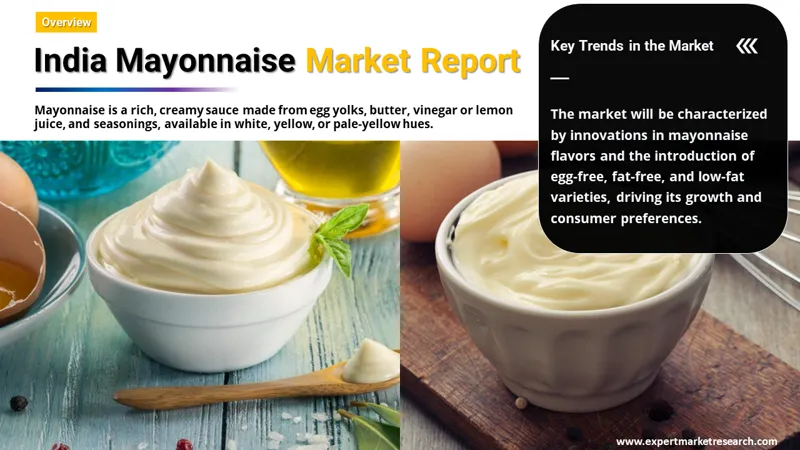
Mayonnaise, a creamy sauce usually made from egg yolks, butter, vinegar or lemon juice, and seasonings, is popularly used in fast food items like burgers, pasta, tacos, and sandwiches, among others.
The growth of India mayonnaise market can be attributed to the inflating per capita incomes and the subsequent changing lifestyles of the population. As a result, the demand for convenience food products is accelerating the market growth in the region. In addition to this, owing to busy lifestyles due to dual working households, the demand for quick and affordable meals, which require minimum cooking, is providing impetus to the market growth of mayonnaise.
Mayonnaise is widely used in both raw and cooked forms, such as salad dressings, in pasta or macaroni, on cooked vegetables, as side dips, and as a spread in sandwiches, among many more food options. Increasing urbanisation, awareness of world cuisines, and the growing penetration of international brands in the country are expected to increase the India mayonnaise market value.
Compound Annual Growth Rate
7.6%
Value in USD Million
2026-2035
*this image is indicative*
| India Mayonnaise Market Report Summary | Description | Value |
| Base Year | USD Million | 2025 |
| Historical Period | USD Million | 2019-2025 |
| Forecast Period | USD Million | 2026-2035 |
| Market Size 2025 | USD Million | 521.95 |
| Market Size 2035 | USD Million | 1085.80 |
| CAGR 2019-2025 | Percentage | XX% |
| CAGR 2026-2035 | Percentage | 7.60% |
| CAGR 2026-2035 - Market by Region | East India | 25.6% |
| CAGR 2026-2035 - Market by Type | Eggless | 28.3% |
| CAGR 2026-2035 - Market by End Use | Online | 29.4% |
| Market Share by Region 2025 | North India | 34.2% |
Read more about this report - REQUEST FREE SAMPLE COPY IN PDF
Indian mayonnaise producers are increasingly blending Western flavours with Indian tastes. Firms like Dr. Oetker and Veeba are introducing variants like peri-peri, schezwan, and tandoori mayo, tailored for Indian QSRs and snack brands. The FSSAI’s support for such flavoured emulsified products, combined with growing consumption in tier-2 and tier-3 cities, has sparked innovation in formulation and sourcing. This trend in the India mayonnaise market allows B2B buyers, especially foodservice and cloud kitchens, to create custom menus with a localised edge. Regional palate preferences are being mapped using real-time feedback and AI-led R&D activities, pushing customised flavour R&D into mainstream condiment strategies.
With a growing vegetarian population and rising awareness about animal-free diets, eggless mayo has grown popular, boosting the overall industry dynamics. The plant-based dairy sector, as per the India mayonnaise market analysis, is predicted to grow with a CAGR of 20.7% over the forecast period. Urban restaurants and retail chains are choosing eggless SKUs not only for ethical considerations but due to longer shelf life and lower temperature sensitivity. This aligns well with India’s 30%+ vegetarian population, especially in Tamil Nadu, Gujarat and Rajasthan. Companies like Urban Platter and Wingreens are leveraging soy protein, chickpea emulsions to cater to this rising plant-based wave in commercial kitchens.
Cold-chain logistics and smart warehousing have grown essential for preserving mayonnaise quality across long supply routes. Companies in the India mayonnaise market are integrating IoT-based temperature monitoring systems and AI for demand prediction. This shift has been accelerated by the National Logistics Policy 2022, which supports digitisation across supply networks. B2B buyers, particularly in HoReCa and institutional catering, now demand predictive delivery windows and real-time inventory data to manage perishables like mayo. FMCG players are responding by co-developing smart inventory dashboards and blockchain-verified sourcing methods, ensuring freshness and traceability of mayonnaise across distribution channels in India.
Consumers and chefs alike are becoming increasingly interested in cleaner, functional ingredients, be it probiotics, fortified oils or low-fat bases. FSSAI’s 2024 draft on labelling transparency is prompting manufacturers to enhance their ingredient lists, reshaping the India mayonnaise market trends and dynamics. This is especially critical in schools, hospitals, and wellness chains where institutional buyers are demanding low-calorie, allergen-free alternatives. Functional SKUs with flaxseed oil, MCTs, and no added sugar are emerging, particularly from niche brands targeting premium retail and nutrition chains.
Post-pandemic, the country has seen a major shift toward cloud kitchens and food aggregators. As per industry reports, the cloud kitchen market is expected to reach USD 3 billion in 2025, with condiments being a major cost control and branding factor. Mayonnaise, as a high-margin, high-frequency item, is key to menu innovation. Brands like Del Monte and Veeba have launched bulk SKUs and even mayo-dispensing machines tailored for institutional catering, boosting the mayonnaise demand in India. This B2B strategy focuses on low-cost, high-yield emulsions with consistent texture and custom spice levels.
Read more about this report - REQUEST FREE SAMPLE COPY IN PDF
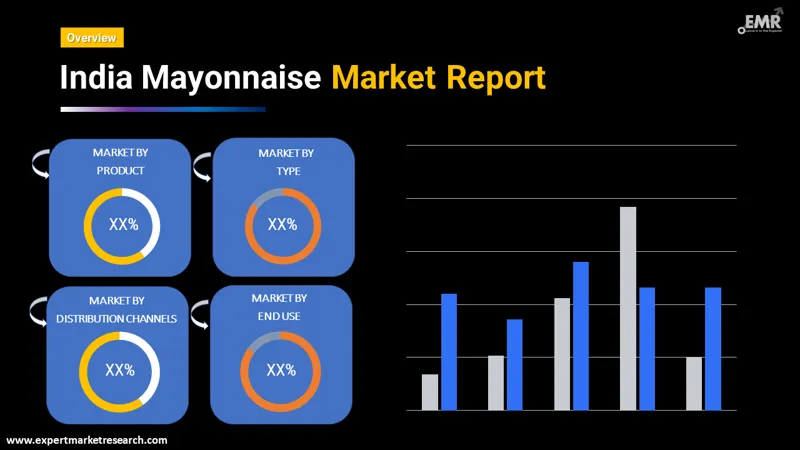
The EMR’s report titled “India Mayonnaise Market Report and Forecast 2026-2035” offers a detailed analysis of the market based on the following segments:
Market Breakup by Type
Key Insight: Key factors driving the demand for mayonnaise variants in India include cultural dietary preferences, texture adaptability, and kitchen scalability. Eggless mayonnaise serves broader consumer bases with cost-effective formulations, while conventional types gain traction via gourmet and Western food influences. Brands are diversifying their product lines by offering fusion blends and healthier emulsifiers across both categories.
Market Breakup by Product
Key Insight: Each product category considered in the market report, responds to a unique set of kitchen demands. Flavoured variants help B2B buyers save time and costs on customisation while unflavoured options deliver base utility and flavour neutrality, boosting the mayonnaise consumption in India. Product development is increasingly becoming a two-way process between manufacturers and institutional clients, ensuring B2B adaptability, compliance ease, and menu-level customisation. The focus is now shifting toward modular formats and reduced-waste designs to fit into high-volume food operations.
Market Breakup by End Use
Key Insight: The end-use categories include retail and institution. Retail dominates the market with format innovation and consumer-brand co-creation, while institutions drive the need for bulk, consistent, and safe product lines, accelerating the demand in the India mayonnaise market. B2B suppliers now rely on data-driven SKU planning, rapid prototyping, and tight supply timelines to meet distinct use cases. The convergence of taste innovation and operational efficiency is making the end-use categorisation a strategic lever.
Market Breakup by Distribution Channel
Key Insight: Each distribution channel has a distinct appeal for B2B players. Hypermarkets focus on premium bulk and brand exposure, while convenience stores thrive on trial-size adaptability and impulse sales. Independent retailers look for cost-effective, shelf-stable SKUs. Artisanal bakers form a niche B2B market that values co-branded condiments. Online platforms offer data insights and curated consumer sets, stabilising the overall India mayonnaise market revenue growth.
Market Breakup by Region
Key Insight: Regionally, the Indian mayo market is diversifying rapidly. North India remains the commercial stronghold, while South is the new hub of culinary experimentation. West India adds scale with FMCG hubs like Mumbai, and East India is indicating new potential for market penetration due to infrastructure and digital expansion. B2B players must approach these regions with adaptive product SKUs, language-specific branding, and logistics tailored to each zone’s culinary trends and climate concerns.
| CAGR 2026-2035 - Market by | Type |
| Eggless | 28.3% |
| Conventional | XX% |
| CAGR 2026-2035 - Market by | End Use |
| Online | 29.4% |
| Supermarket and Hypermarket | 23.2% |
| Convenience Store | XX% |
| Others | XX% |
| CAGR 2026-2035 - Market by | Region |
| East India | 25.6% |
| North India | 23.1% |
| South India | XX% |
| West India | XX% |
By Type, the Eggless Category Accounts for the Major Share of the Market, Bolstered by the Expanding Vegetarian Consumer Base
Eggless mayonnaise dominates the market, catering to a largely vegetarian consumer base and cultural preferences in northern and western regions. Major QSRs and institutional foodservice providers now rely on eggless variants due to broader acceptance, lower regulatory risks, and consistent texture in bulk preparations. Brands like Urban Platter have expanded this category through cost-effective, soy-based and chickpea formulations. The use of technology is scaling flavour consistency. AI-assisted viscosity controls and sensory mapping are being applied to ensure batch uniformity in institutional kitchens.
Conventional mayonnaise is experiencing rapid growth in the India mayonnaise market, especially in metro cities where Western eating habits are gaining ground. Hotels, fine-dining chains, and gourmet food suppliers are importing and reformulating classic egg-based variants. Companies like Kraft Heinz is targeting this space with its premium, chef-grade mayonnaise that adheres to international standards. These variants offer depth in flavour and creaminess, critical for gourmet burgers, wraps and premium dips. Demand is shifting towards artisanal formats as well, such as aioli blends and truffle-infused mayo, catering to upscale restaurant menus and boutique catering services.
Flavoured Mayo Variants Register the Majority of the Market Revenue Owing to Customisability and Localised Appeal
Flavoured products dominate the India mayonnaise market value owing to its customisability and localised appeal. B2B clients, especially food trucks, QSRs, and mid-tier restaurants, find immense value in offering region-specific variants like mint chutney mayo or schezwan mayo. Companies like Dr. Oetker have successfully created B2B combo packs tailored for Indian snack menus. Some of the players are now co-developing flavours like south Indian-style curry mayo or garlic tamarind variants. These collaborations use real-time sensory feedback and demand analytics to reduce inventory loss and improve menu alignment. Flavoured mayonnaise helps brands differentiate their offerings while offering cost-effective solutions to drive repeat footfalls.
Unflavoured mayo is gaining momentum in terms of mayonnaise market share in India, especially in backend industrial kitchens and catering hubs. Its utility as a base ingredient allows chefs to tweak recipes with minimal wastage. Institutional buyers prefer neutral variants to maintain control over spice and tangy levels, especially in bulk meals or prep kitchens. This product category is growing also due to pre-packaged sandwich and salad manufacturers who need customisation at the production line.
By End Use, the Retail Category Secures a Considerable Share of the Market Due to Modern Grocery Formats
The retail end use has emerged dominant in the India mayonnaise market, due to expanding modern grocery formats and premiumisation of pantry staples. Supermarkets now house multi-brand flavoured mayo shelves, while private-label products have also gained traction. Brands like Andrew James and Heinz are innovating with single-serve sachets, squeeze bottles, and even combo condiment packs with ketchup or mustard. Importantly, retail chains are co-branding mayo offerings with QSRs to amplify shelf visibility. According to industry reports, India's organised food retail sector is growing at 14-15% in 2025, directly boosting household adoption of international condiments like mayo. This offers B2B suppliers consistent retail partnerships and private-label contract opportunities.
Institutional demand for mayonnaise in India is scaling rapidly, led by hotels, cafes, schools, and inflight caterers. Post-pandemic rebound in hospitality and corporate catering has resulted in bulk mayo orders. Customised mayonnaise SKUs like reduced oil content or temperature-stable formats are being developed specifically for institutional kitchens. Companies like Del Monte are offering foodservice-sized mayo tubs designed for minimal spillage and easy stacking. Institutions demand consistent taste and safer emulsifiers, and vendors are meeting this via automation and HACCP-certified production lines.
By Distribution Channel, Supermarkets and Hypermarkets Hold the Major Share of the Market
Supermarkets and hypermarkets command the highest share in the market, offering visibility and brand comparison. Leading retail chains like Big Bazaar, Reliance Smart, and DMart have dedicated condiment aisles, where mayonnaise is a fast-growing staple. B2B opportunities here involve white-label manufacturing, in-store sampling tie-ups, and shelf analytics partnerships. These formats also enable refrigerated mayo storage. New-age players are leveraging these retail outlets’ offered visibility to launch premium, perishable mayo lines with probiotic oils or low-fat content, propelling the India mayonnaise market development.
Convenience stores are booming in tier-2 cities and metro transit hubs. These stores are mainly fuelled by impulse-driven, small-format packaging. Smaller SKUs in pouches and squeezy packaging formats dominate this channel. Mayo producers are innovating with tamper-proof packaging, and even ambient storage variants with stabilised pH levels. Players like Wingreens have launched trial-size flavoured mayonnaise suited for on-the-go snacking.
By Region, North India Secures the Leading Position of the Market, Powered by Dense Concentration of QSRs
North India’s dominance in the market is supported by a dense concentration of QSRs, sandwich chains, and a strong preference for Western fast food. States like Delhi, Punjab, and Haryana have high per capita condiment consumption and a thriving café culture. Additionally, North Indian cuisine’s fondness for rich gravies and sauces has seamlessly extended into mayo-based fusions. Manufacturers use region-specific preferences, like tandoori and mint mayo, to create loyalty in both retail and foodservice categories, stimulating the India mayonnaise market opportunities.
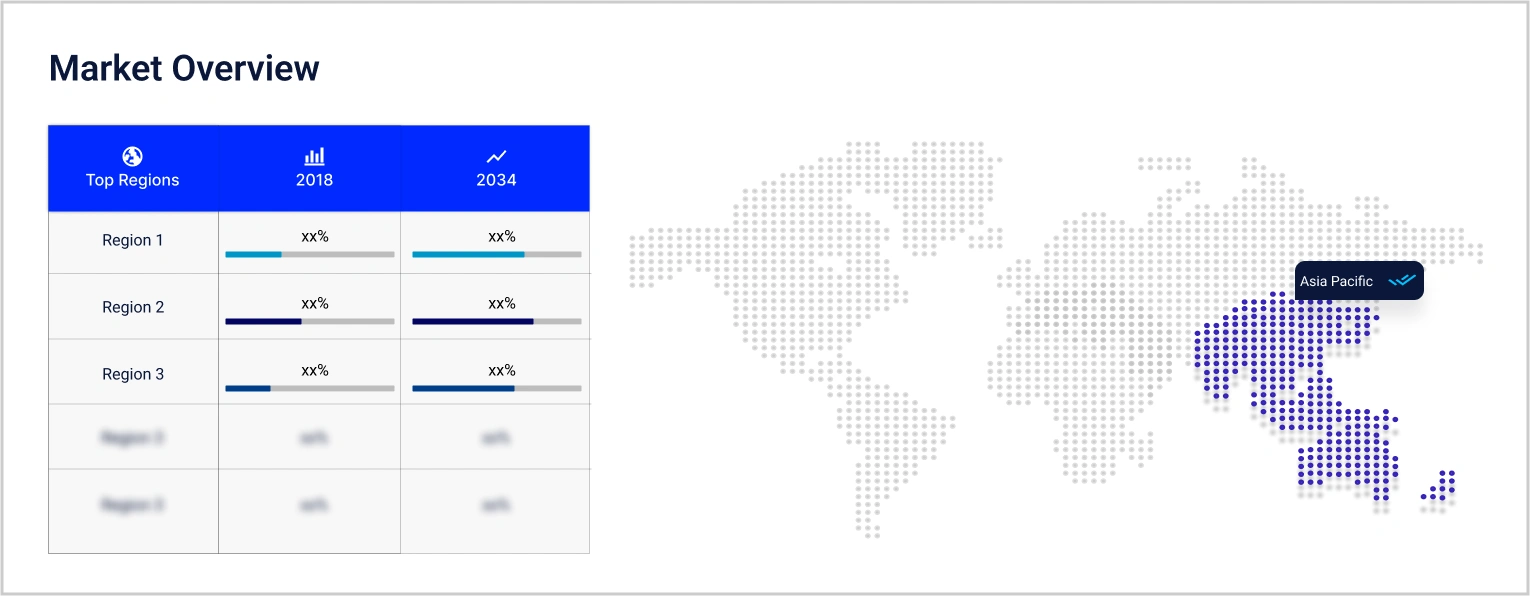
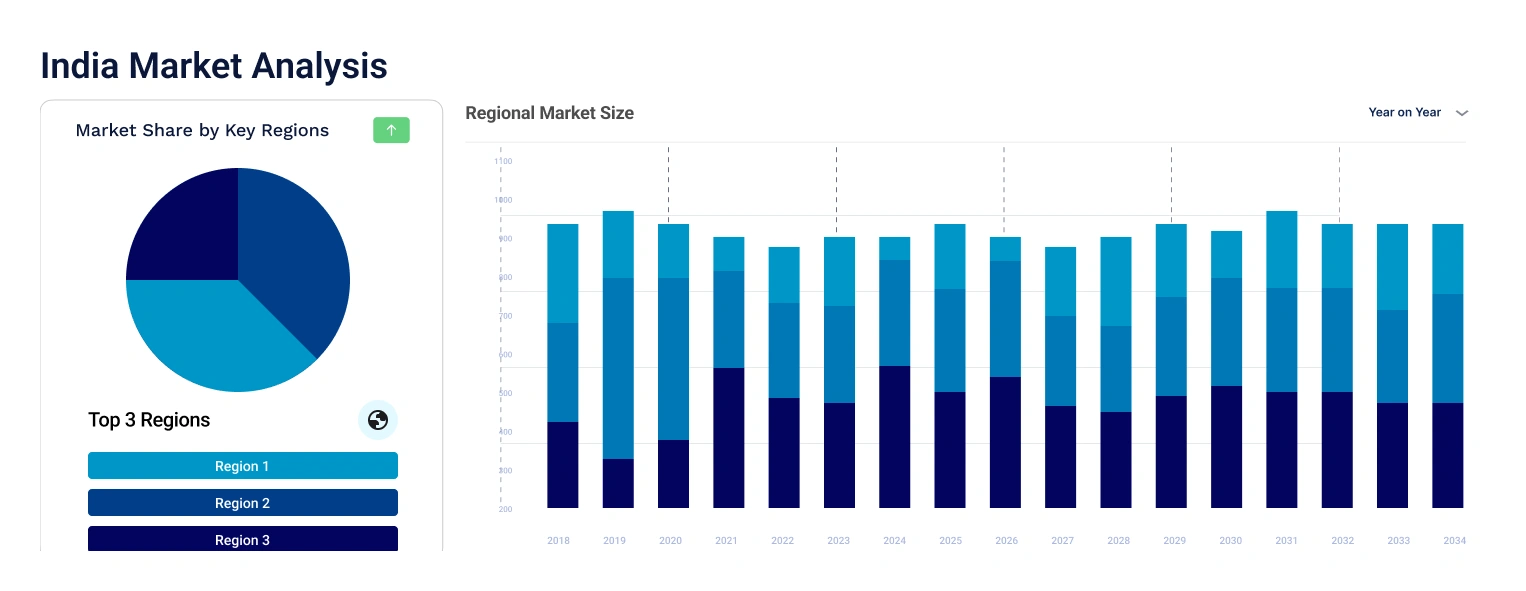
| 2025 Market Share by | Region |
| North India | 34.2% |
| South India | XX% |
| East India | XX% |
| West India | XX% |
South India is witnessing the fastest expansion, driven by rapid urbanisation and growing demand from IT corridor food courts, cafés, and start-up kitchens. Cities like Bengaluru and Chennai are proving grounds for experimental cloud kitchens, which often demand differentiated mayo-based sauces with regional flavours like curry leaf or coconut-chilli blends. The rise of bakery cafés and sandwich bars is pushing demand for flavoured and vegan mayonnaise. Infrastructure improvements like the Chennai-Bengaluru industrial corridor are helping cold-chain players with better India mayonnaise market penetration.
The India mayonnaise market players are now focusing on co-creation with B2B clients, offering private-label solutions, menu-specific R&D support, and even AI-led flavour feedback loops. Key growth opportunities lie in institutional catering, flavour fusion experiments, and regional taste localisations. Tech-driven cold-chain logistics, HACCP certification, and customised packaging solutions are becoming key differentiators.
For India mayonnaise companies, opportunities are expanding in curated bundles for QSR chains, innovation-ready cloud kitchens, and institutional partnerships with hospitality schools and wellness cafes. Custom flavours, plant-based innovation, cold-chain digitisation, cloud kitchen tie-ups, and clean-label transparency are some of the key trends observed in the market.
Established in 2015 and headquartered in Pittsburgh, United States, Kraft Heinz offers premium Western-style mayonnaise. The brand is preferred by gourmet chefs for its authentic texture and consistency. Its India strategy involves premium institutional sales and metro-market retail, especially in the egg-based subsegment.
Founded in 1891, based in Bielefeld, Germany, this company markets FunFoods in India. With a major plant in Rajasthan, it focuses on flavoured mayo variants and institutional packs, supplying to major QSR chains and catering services with regionalised innovation.
Established in 2013 and headquartered in Gurugram, Veeba is an Indian disruptor. It collaborates with fast-food chains to develop flavoured and eggless variants, including vegan-friendly mayo. The brand focuses heavily on B2B with a strong presence in school and airline catering.
A joint venture between Bharti Enterprises and Del Monte Pacific, FieldFresh was started. The company supplies bulk mayo SKUs with smart dispensers to hotels and food chains. They focus on institutional grade emulsions and clean-label ingredient sourcing.
*Please note that this is only a partial list; the complete list of key players is available in the full report. Additionally, the list of key players can be customized to better suit your needs.*
Other key players in the market are Cremica Food Industries Ltd., Wingreens Farms Private Limited, among others.
Explore the latest trends shaping the India mayonnaise market 2026-2035 with our in-depth report. Gain strategic insights, future forecasts, and key market developments that can help you stay competitive. Download a free sample report or contact our team for customised consultation on India mayonnaise market trends 2026.
United Kingdom B2B Mayonnaise Market
West Africa Mayonnaise Market
Europe B2B Mayonnaise Market
Europe Mayonnaise Market
Argentina Mayonnaise Market
Mexico Mayonnaise Market
Mayonnaise Market


Upto 15% Off
USD
$3999 $3599
$2499 $2249
$4999 $4249
$5999 $5099


*While we strive to always give you current and accurate information, the numbers depicted on the website are indicative and may differ from the actual numbers in the main report. At Expert Market Research, we aim to bring you the latest insights and trends in the market. Using our analyses and forecasts, stakeholders can understand the market dynamics, navigate challenges, and capitalize on opportunities to make data-driven strategic decisions.*
Get in touch with us for a customized solution tailored to your unique requirements and save upto 35%!
The market is projected to grow at a CAGR of 7.60% between 2026 and 2035.
Key strategies driving the market include diversifying flavour bases, co-developing with chefs, upgrading cold-chains, adopting AI in production, and offering institutional pack formats tailored for QSR, health-conscious, and bulk-service clients.
Key trends aiding the market expansion include the increasing demand for vegan and low-fat mayonnaise options and the increasing investments on product marketing by manufacturers.
North India, East India, West India, and South India are the significant Indian markets for mayonnaise.
The different types of mayonnaise are eggless and conventional.
The various products of mayonnaise are flavoured and unflavoured.
The major end uses of mayonnaise include retail and institutional.
The significant distribution channels of mayonnaise in India are supermarket and hypermarket, convenience stores, and online, among others.
Key players in the market are The Kraft Heinz Company, Dr. August Oetker Nahrungsmittel KG, Veeba Foods, DEL MONTE (FieldFresh Foods Private Limited), Cremica Food Industries Ltd., Wingreens Farms Private Limited, and others.
The thriving food industry, increasing demand for processed foods, and the availability of diverse options are the major factors supporting the India mayonnaise market.
The key challenges in the India mayonnaise market are maintaining shelf-stability, coping with rising input costs, adapting to regional flavour complexity, and meeting regulatory compliance.
In 2025, the India mayonnaise market reached an approximate value of USD 521.95 Million.
Explore our key highlights of the report and gain a concise overview of key findings, trends, and actionable insights that will empower your strategic decisions.
| REPORT FEATURES | DETAILS |
| Base Year | 2025 |
| Historical Period | 2019-2025 |
| Forecast Period | 2026-2035 |
| Scope of the Report |
Historical and Forecast Trends, Industry Drivers and Constraints, Historical and Forecast Market Analysis by Segment:
|
| Breakup by Type |
|
| Breakup by Product |
|
| Breakup by End Use |
|
| Breakup by Distribution Channels |
|
| Breakup by Region |
|
| Market Dynamics |
|
| Competitive Landscape |
|
| Companies Covered |
|
| Report Price and Purchase Option | Explore our purchase options that are best suited to your resources and industry needs. |
| Delivery Format | Delivered as an attached PDF and Excel through email, with an option of receiving an editable PPT, according to the purchase option. |
Single User License
One User
USD 3,999
USD 3,599
tax inclusive*
Datasheet
One User
USD 2,499
USD 2,249
tax inclusive*
Five User License
Five User
USD 4,999
USD 4,249
tax inclusive*
Corporate License
Unlimited Users
USD 5,999
USD 5,099
tax inclusive*
*Please note that the prices mentioned below are starting prices for each bundle type. Kindly contact our team for further details.*
Flash Bundle
Small Business Bundle
Growth Bundle
Enterprise Bundle
*Please note that the prices mentioned below are starting prices for each bundle type. Kindly contact our team for further details.*
Flash Bundle
Number of Reports: 3
20%
tax inclusive*
Small Business Bundle
Number of Reports: 5
25%
tax inclusive*
Growth Bundle
Number of Reports: 8
30%
tax inclusive*
Enterprise Bundle
Number of Reports: 10
35%
tax inclusive*
How To Order

Select License Type
Choose the right license for your needs and access rights.

Click on ‘Buy Now’
Add the report to your cart with one click and proceed to register.

Select Mode of Payment
Choose a payment option for a secure checkout. You will be redirected accordingly.
Gain insights to stay ahead and seize opportunities.

Get insights & trends for a competitive edge.

Track prices with detailed trend reports.

Analyse trade data for supply chain insights.

Leverage cost reports for smart savings

Enhance supply chain with partnerships.

Connect For More Information
Our expert team of analysts will offer full support and resolve any queries regarding the report, before and after the purchase.
Our expert team of analysts will offer full support and resolve any queries regarding the report, before and after the purchase.
We employ meticulous research methods, blending advanced analytics and expert insights to deliver accurate, actionable industry intelligence, staying ahead of competitors.
Our skilled analysts offer unparalleled competitive advantage with detailed insights on current and emerging markets, ensuring your strategic edge.
We offer an in-depth yet simplified presentation of industry insights and analysis to meet your specific requirements effectively.





Share