

Consumer Insights
Uncover trends and behaviors shaping consumer choices today
Procurement Insights
Optimize your sourcing strategy with key market data
Industry Stats
Stay ahead with the latest trends and market analysis.

The global ice cream market size attained a value of USD 86.82 Billion in 2025. The industry is expected to grow at a CAGR of 4.30% during the forecast period of 2026-2035. By 2035, the market is expected to reach USD 132.27 Billion.
The ice cream industry is experiencing massive growth with consumers craving bold and unconventional flavours. Constant rollout of limited-edition exotic and savoury combos keeps interest high, and drives repeat purchases. In July 2025, Kroger introduced four exclusive seasonal pints, each blending creative flavours for the summer. Innovation in global taste profiles differentiates products and appeals to adventurous consumers hungry for unique experiences. Retail freebies and social media buzz also amplify visibility, making flavour creativity a primary growth engine across formats and regions.
Ecommerce platforms and direct-to-consumer (D2C) delivery are influencing the ice cream market outlook by making premium and personalized frozen desserts more accessible. Advances in cold-chain logistics, insulated packaging, and quick-commerce apps have enabled frozen products to reach doorsteps efficiently. In April 2025, Kwality Wall’s launched The Dairy Factory, a line of slow-churned, ultra-creamy ice creams available in various flavours on quick commerce platforms. Boutique brands offer online storefronts with nationwide delivery of curated bundles or subscriptions. As consumers seek convenience, choice, and exclusivity, ecommerce is becoming a vital driver of growth and brand differentiation in the industry.
Base Year
Historical Period
Forecast Period
In the USA, ice cream makers churned out around 1.38 billion gallons of ice cream in 2022, with families positioned as the primary customers for ice cream retailers.
The world consumes around 15 billion litres of ice cream annually.
In 2022, the European Union produced 3.2 billion litres of ice cream, an increase of 5% over 2021.
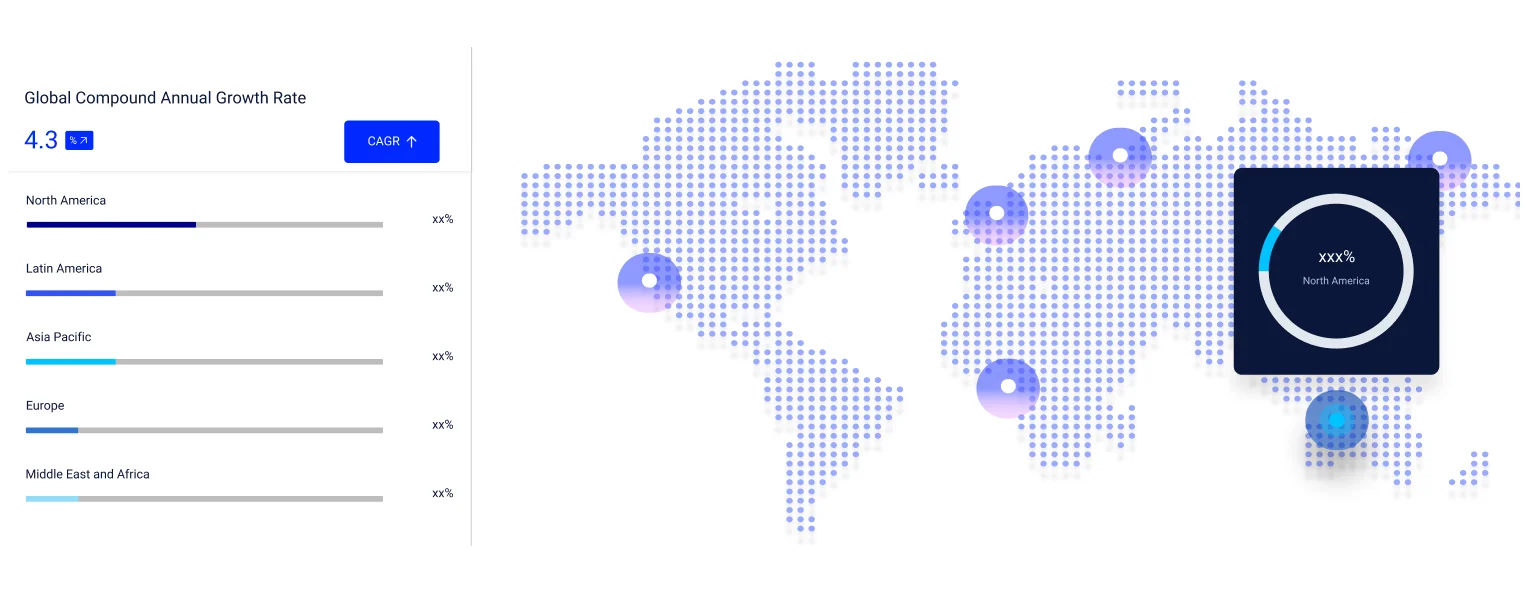
Compound Annual Growth Rate
4.3%
Value in USD Billion
2026-2035
*this image is indicative*
The influx of non‑dairy alternatives, driven by veganism and lactose intolerance is propelling the ice cream market revenue. As veganism rises and awareness of lactose intolerance grows, consumers are actively seeking dairy-free options that offer the same indulgent experience. Brands are responding with innovative plant-based products using oat, almond, coconut, and pea protein bases for ensuring creamy textures and appealing flavours. In April 2025, Oppo Brothers debuts new vegan ice cream sticks, offering indulgent, plant-based treats for health-conscious and dairy-free consumers, adding to the market growth.
Eco-conscious consumers are demanding compostable packaging, fair‑trade, organic, upcycled ingredients, and reduced plastic for ice creams. In June 2025, Italian gelato brand GROM, through Unilever's innovation, launched fully compostable paper-based spoons and cups using Qwarzo coatings. Of late, there has been a strong push for fair-trade and organic ingredients, ensuring ethical sourcing of key components, such as cocoa, vanilla, and dairy. Some brands are even incorporating upcycled ingredients, such as surplus fruits or spent coffee grounds, to reduce food waste.
AI-driven formulations, precision freezing, 3D printing, and smart manufacturing are complimenting the ice cream market forecast for enhancing the texture, flavour consistency, and efficiency. Automated lines support limited-edition and personalized flavours. Vending robots and claw-machine-style freezer models offer experiential purchasing via automation. In January 2025, Guangzhou-based SUNZEE launched an AI-powered smart vending machine to offer touch-screen flavour selection, remote monitoring, and automatic cleaning, ideal for malls, hospitals, and schools. These technologies reduce costs and open new retail channels.
New freezing and packaging are helping to extend shelf life, reduce waste, and enhance the distribution reach of ice creams. In August 2024, Unilever introduced AI-powered ice cream freezers equipped with image recognition technology for ensuring that popular products are always available. Real-time cold‑chain monitoring improves quality, while innovations support emerging markets with less robust infrastructure. This reliability further enables online retail growth and global reach.
The ice cream market is evolving as consumers increasingly seek personalized and immersive experiences. The rise of liquid-nitrogen DIY labs allows consumers to actively participate in creating their ice cream, adding a theatrical element that boosts engagement. Novel formats, such as fish-shaped taiyaki cones offer unique and culturally inspired serving options, turning ice cream into an experiential treat. In March 2025, Taiyaki NYC partnered with The Dough Club to bring together Taiyaki's iconic fish-shaped waffle cones and The Dough Club's artisanal donuts. These trends are driving the market toward more interactive, customized offerings that foster stronger consumer connections and brand loyalty.
Read more about this report - REQUEST FREE SAMPLE COPY IN PDF
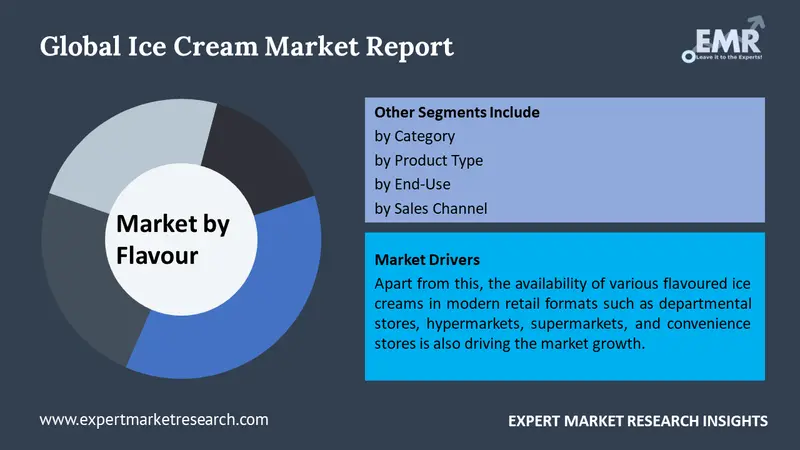
The EMR’s report titled “Ice Cream Market Report and Forecast 2026-2035” offers a detailed analysis of the market based on the following segments:
Market Breakup by Flavour
Key Insight: Chocolate remains the most dominant segment in the ice cream market, driven by its universal appeal and versatility. This ice cream features in various formats, such as bars, cones, sundaes, and tubs with premium brands offering indulgent chocolate-based products. Innovations including chocolate-dipped ice cream bars and combinations with brownie or fudge increase consumer interest. In July 2024, Ramar Foods introduced Magnolia’s Chocolate-Dipped Tropical Ice Cream Bars, featuring tropical flavours enrobed in premium dark chocolate. Seasonal variants, such as dark chocolate orange and chocolate chili also keep the category fresh.
Market Breakup by Category
Key Insight: The demand for impulse ice cream, which refers to single-serve treats, such as cones, sticks, and cups, is driven by convenience, affordability, and on-the-go snacking habits. The segment’s growth is fuelled by busy lifestyles as people crave quick, affordable treats while shopping or traveling. Major manufacturers are responding with creative flavour innovations, health-focused launches like low-sugar and dairy-free bars, and eco-friendly packaging. For instance, in January 2025, Häagen Dazs introduced two new stick bars, a Salted Caramel Macadamia bar and a New York Strawberry Cheesecake bar to bring artisanal flavours into the grab-and-go format and targeting fans of indulgent, on-the-spot treats.
Market Breakup by Product Type
Key Insight: The cup segment is driving the ice cream market share due to its convenience, hygiene, and versatility across price points. Single-serve cups are especially popular in impulse sales, while multi-serve options are common for take-home. Brands offer a range from budget cups to premium dessert-in-a-cup experiences as they are ideal for controlled portion sizes and easy storage. In December 2024, Mr Whippy introduced two new 120 mL cup flavours, including Vanilla Bean and Chocolate across Metro Petroleum's 300 outlets in Australia. Rising popularity in schools, kiosks, and airline services makes cups the most widely distributed format globally.
Market Breakup by End-Use
Key Insight: Retail is a significant segment in the ice cream market, accounting for the majority of volume and revenue via supermarkets, convenience stores, and e-commerce platforms. Retailers offer both impulse and take-home options, from value packs to premium pints. In May 2025, Baskin Robbins India redefined indulgence with its latest retail range for offering premium, snackable ice cream treats tailored for modern consumers seeking convenience, flavour, and fun. Seasonal promotions, freezer visibility, and new product launches drive high footfall and impulse sales. The expansion of online grocery delivery also fuels this segment’s growth, making it the primary point of access for everyday consumers.
Market Breakup by Sales Channel
Key Insight: Supermarkets and hypermarkets lead the ice cream market by offering wide product variety, competitive pricing, and large-scale distribution. These outlets stock everything from economy tubs to premium brands. In June 2025, Gallivant Mawa Ice Cream, a premium Indian-inspired frozen dessert, launched in 98 Walmart stores across Houston, San Antonio, and South Texas. Their frozen sections are a key battleground for brands to secure eye-level freezer space, ensuring visibility and impulse buys. The growing trend of online grocery shopping integrated with supermarkets further strengthens their market hold.
Market Breakup by Region
Key Insight: North America is fostering the ice cream market development, driven by high consumer demand for premium, innovative, and diverse flavours. The United States and Canada host major players, who frequently launch new products for catering to indulgent consumers. The region is known for strong retail channels including supermarkets, convenience stores, and food service outlets. In July 2025, American grocery chain Trader Joe's brought back its popular seasonal Wildberry Cheesecake Ice Cream blended with blueberries, elderberry juice concentrate, and purees of raspberry, strawberry, and blackberry. Seasonal launches and limited-edition flavours also boost sales, making North America a dynamic market.
Fruit & Vanilla Ice Cream to Witness Popularity
Fruit-flavoured ice cream market is driven largely by consumer demand for refreshing, natural, and sometimes healthier options. Varieties like strawberry, mango, raspberry, and tropical fruits, such as coconut and passionfruit are immensely popular worldwide. In January 2025, Rowntree’s launched a new Mango Ice Lolly by combining mango and passionfruit flavours swirled together to resemble a ripe mango This segment benefits from trends favouring clean labels and real fruit ingredients, appealing to health-conscious consumers. Fruit ice creams also attract consumers seeking vibrant, fresh flavours, adding to the segment expansion.
Vanilla is the most classic segment in the ice cream industry due to its timeless appeal and versatility. This flavour is considered the foundation of ice cream as it is prized for its smooth, creamy taste and subtle sweetness to pair well with almost any dessert or topping. Vanilla’s wide acceptance across cultures and age groups makes it a universal favourite. Moreover, vanilla’s association with quality, especially when made from real vanilla beans, elevates it as a premium choice, reinforcing its iconic status in households and ice cream parlours. This enduring popularity keeps vanilla at the forefront, bridging tradition with innovation.
Surging Demand for Take-Home & Artisanal Ice Cream
The take-home ice cream market value is growing as it is sold in tubs or multi-pack formats and caters to families and home consumption, especially during weekends and special occasions. In April 2025, Cream Stone launched its premium “TUBZ” in India for making its boutique flavours available as family and mini tubs. Consumers appreciate value for money and variety in this category, often choosing brands or private-label offerings. With more consumers opting for in-home treats, this segment continues to grow but doesn’t match the volume and frequency of impulse purchases.
The demand for artisanal ice cream thrives in quality and innovation. This category focuses on handcrafted, small-batch production, often using premium, local, or organic ingredients. Artisanal ice cream appeals to niche markets, including foodies and health-conscious consumers seeking unique or seasonal experiences. The segment is also gaining momentum through direct-to-consumer models and boutique parlours, contributing to premiumization within the broader market.
Thriving Preference for Ice Cream Sticks and Cones
The stick segment is contributing to the ice cream industry revenue due to their portability, fun factor, and wide appeal among all age groups. From classic treats to health-conscious options, this format supports both indulgent and functional trends. In February 2025, Magnum introduced its premium “Utopia” stick bars, available in Double Cherry and Double Hazelnut. The ease of packaging, minimal mess, and familiar handheld format make sticks an evergreen favourite in many global markets.
The appeal of ice cream cones, lies in the combination of crunchy texture and creamy ice cream, often with a chocolate surprise at the tip. Brands, including Cornetto and Drumstick have built strong legacies around cones. Recent innovations include layered and filled cones, such as Baskin-Robbins’ triple-chocolate cone, offering added value. Their appeal is strongest in impulse purchases and retail kiosks. Cones further remain a nostalgic treat and a consistent performer in the ice cream novelty segment.
Food Service to Boost Ice Cream Uptake
The food service segment of the ice cream industry plays a crucial role in brand building and premium positioning. This includes ice cream sold at parlours, restaurants, QSR chains, and events. Major QSRs including McDonald’s and Hungry Jack’s continuously innovate with limited-time desserts that drive excitement and brand loyalty. In March 2025, McDonald's India brought back its popular Mango Mania series, featuring the MangoBurst McSwirl and the MangoBurst McFlurry with Oreo, both available in South and West India. Food service also supports innovation, trial, and consumer engagement, making it a vital segment.
Convenience Stores & Ice Cream Parlours to Bolster Ice Cream Purchases
Convenience stores serve a growing segment of the ice cream industry focused on impulse and on-the-go consumption. Brands rely on convenience stores for quick single-serve ice cream purchases. In March 2025, Mini Melts partnered with Royal Farms to expand convenience store presence, offering premium beaded ice cream at nearly 300 locations. This segment has witnessed innovation with portable packaging and smaller formats tailored for immediate consumption, driving steady growth.
Ice cream parlours offer premium, experiential consumption with artisanal and freshly scooped options. Brands, including such as Naturals and Jeni’s Splendid Ice Creams are building loyal followings through in-store experiences, unique flavours, and customization. Parlours focus on indulgence, social outings, and special occasions. Parlours are also influencing trends and new flavour introductions that later reach mass retail. Their role in brand building and direct consumer engagement makes them vital in the market.
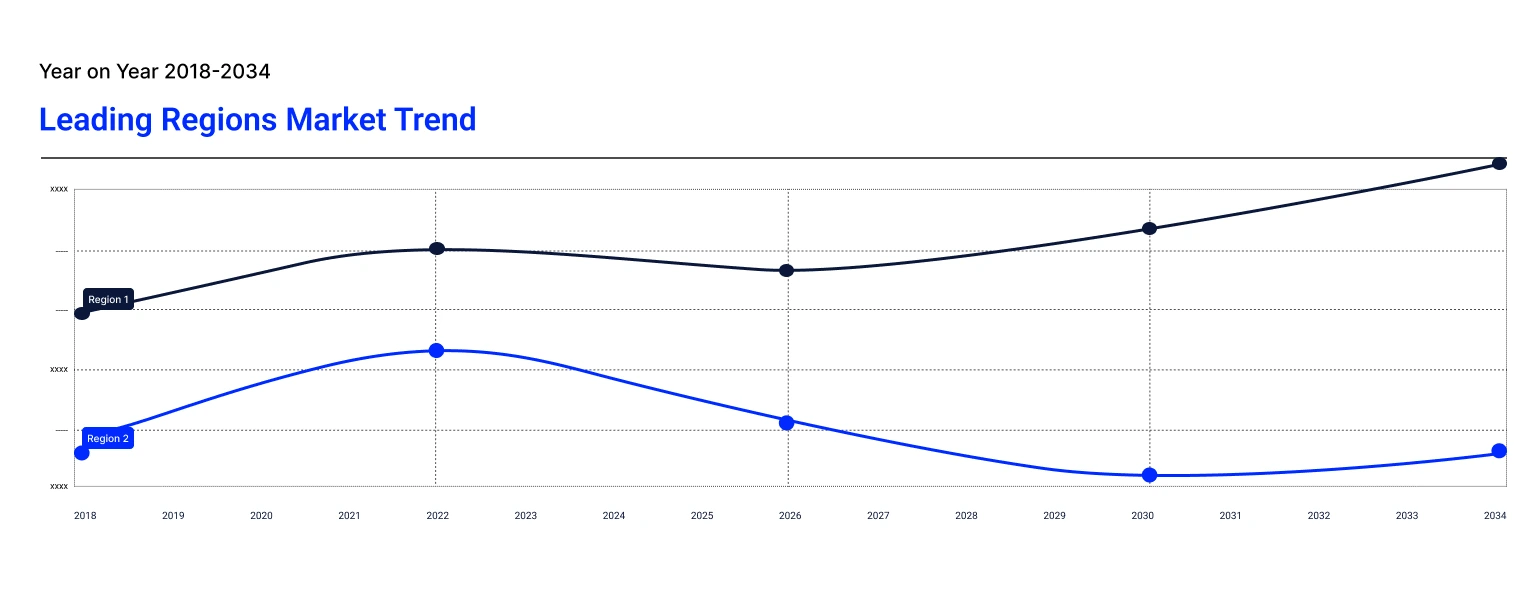
Europe & Asia Pacific to Record Substantial Ice Cream Consumption
Europe ice cream market is characterized by a preference for quality, organic, and artisanal products. Italy and France are renowned for gelato and gourmet ice cream varieties. In February 2023, Valsoia launched an Italian-style vegan gelato line, made from cashew, oat, rice, and soy bases, in FSC-certified packaging. The market sees significant innovation in plant-based and low-calorie options, responding to growing health awareness. Distribution channels span supermarkets, specialty stores, and ice cream parlours, with a growing emphasis on sustainability and ethical sourcing. Seasonal and regional flavours are popular in local markets.
Asia Pacific is the fastest-growing ice cream market, fuelled by rising disposable incomes, urbanization, and changing consumer lifestyles in China, India, and Japan. The market features a mix of traditional flavours, such as mango, green tea, and red bean and Western-style innovations. Convenience stores and street vendors play a crucial role in distribution, alongside supermarkets. Brands are increasingly tailoring products to local tastes and exploring affordable, single-serve formats. Despite rapid expansion, the region’s overall ice cream consumption per capita is still developing.
Key players in the ice cream market are deploying strategies that centre around innovation, partnerships, and targeted expansion to capture evolving consumer demand. Companies are increasingly focusing on flavour innovation for launching unique and indulgent offerings, such as plant-based and protein-enriched varieties. This caters to both health-conscious and experience-seeking consumers. Strategic collaborations are also on the rise with brands leveraging co-branding to merge loyal customer bases and increase visibility. Such partnerships also allow cross-category product innovation, e.g., biscuit-flavoured ice creams or digital influencer-led products.
Geographic and channel expansion is another key move. Many players are penetrating Tier 2 and Tier 3 cities in India and other emerging markets, supported by cold chain infrastructure improvements. Meanwhile, tie-ups with quick-commerce platforms ensure faster delivery and broader reach. Sustainability also plays a growing role, with eco-friendly packaging and responsible sourcing gaining consumer trust. Lastly, digital marketing and influencer campaigns are crucial to engage Gen Z and millennial audiences, driving brand loyalty and viral growth in a highly competitive landscape.
Founded in 1929 and headquartered in London, Unilever is a global leader in consumer goods. With its ice cream brands showcasing innovation in sustainable packaging and plant-based offerings. Unilever also leads in responsible sourcing and low-emission cold-chain technologies, strengthening its global market influence.
Established in 1928 and headquartered in Minneapolis, the United States, General Mills owns popular ice cream brand Häagen-Dazs. The company emphasizes rich flavour profiles and premium ingredients and has pioneered recyclable packaging and expanded into non-dairy options. General Mills also leverages strong digital engagement and global distribution to grow its ice cream segment.
Ashby’s Ice Cream, founded in 1984 and headquartered in Michigan, the United States, is known for crafting premium, small-batch ice creams. Renowned for bold, unique flavours, such as Michigan Pot Hole and Coconut Almond Fudge, the company focuses on quality ingredients and creative recipes, earning a loyal following across independent parlours in the United States.
Founded in 1909 and headquartered in Tillamook, the United States, Tillamook County Creamery Association is a farmer-owned cooperative celebrated for its high-quality dairy products. Tillamook emphasizes sustainable farming practices, and community investment, positioning itself as a trusted name in premium, ethically made ice cream.
*Please note that this is only a partial list; the complete list of key players is available in the full report. Additionally, the list of key players can be customized to better suit your needs.*
Other players in the ice cream market are Gujarat Cooperative Milk Marketing Federation Limited (Amul), Turkey Hill Dairy, HP Hood, LLC, Wells Enterprises, Inc., Dairy Farmers of America, Inc., Nestlé S.A., Lotte Confectionary Co, Ltd, The Kroger Company, Meiji Holdings Co, Ltd, and Danone S.A., among others.
Unlock powerful insights into the ice cream market trends 2026 with our expert-curated report. Whether you're a manufacturer, retailer, or investor, this report delivers the competitive edge you need. Learn about emerging flavours, formats, and regional opportunities shaping the future. Download a free sample report today to make data-driven decisions and stay ahead in the rapidly evolving ice cream industry.
United Kingdom Ice Cream Market
United States Ice Cream Market


Upto 15% Off
USD
$2999 $2699
$4839 $4355
$5999 $5099
$7259 $6170


*While we strive to always give you current and accurate information, the numbers depicted on the website are indicative and may differ from the actual numbers in the main report. At Expert Market Research, we aim to bring you the latest insights and trends in the market. Using our analyses and forecasts, stakeholders can understand the market dynamics, navigate challenges, and capitalize on opportunities to make data-driven strategic decisions.*
Get in touch with us for a customized solution tailored to your unique requirements and save upto 35%!
In 2025, the market reached an approximate value of USD 86.82 Billion.
The market is projected to grow at a CAGR of 4.30% between 2026 and 2035.
The market is estimated to witness healthy growth during 2026-2035 to reach around USD 132.27 Billion by 2035.
Commercially-produced vegan ice creams are produced from plant-based ingredients, such as soy, almond, coconut, or rice milk.
Key strategies driving the market include continuous flavour innovation, expanding into health-conscious and plant-based options, forming strategic brand collaborations, enhancing cold-chain logistics for wider distribution, leveraging digital marketing and influencer partnerships, and focusing on sustainable packaging and ethical sourcing to meet evolving consumer preferences and boost market growth.
The key trends propelling the market growth include rising demand for healthier ice creams, the wide availability of ice creams, and the expansion of the food service sector are driving the market growth.
The major regions in the market are North America, Latin America, the Middle East and Africa, Europe, and the Asia Pacific.
Based on sales channels, the market can be segmented into supermarkets and hypermarkets, convenience stores, ice cream parlours, hotels and restaurants, and online, among others.
The key players in the market report include Unilever plc, General Mills, Inc., Ashby's Ice Cream, Tillamook County Creamery Association, Gujarat Cooperative Milk Marketing Federation Limited (Amul), Turkey Hill Dairy, HP Hood, LLC, Wells Enterprises, Inc., Dairy Farmers of America, Inc., Nestlé S.A., Lotte Confectionary Co, Ltd, The Kroger Company, Meiji Holdings Co, Ltd, and Danone S.A., among others.
Chocolate remains the most dominant segment in the market, driven by its universal appeal and versatility.
Explore our key highlights of the report and gain a concise overview of key findings, trends, and actionable insights that will empower your strategic decisions.
| REPORT FEATURES | DETAILS |
| Base Year | 2025 |
| Historical Period | 2019-2025 |
| Forecast Period | 2026-2035 |
| Scope of the Report |
Historical and Forecast Trends, Industry Drivers and Constraints, Historical and Forecast Market Analysis by Segment:
|
| Breakup by Flavour |
|
| Breakup by Category |
|
| Breakup by Product Type |
|
| Breakup by End-Use |
|
| Breakup by Sales Channel |
|
| Breakup by Region |
|
| Market Dynamics |
|
| Competitive Landscape |
|
| Companies Covered |
|
Datasheet
One User
USD 2,999
USD 2,699
tax inclusive*
Single User License
One User
USD 4,839
USD 4,355
tax inclusive*
Five User License
Five User
USD 5,999
USD 5,099
tax inclusive*
Corporate License
Unlimited Users
USD 7,259
USD 6,170
tax inclusive*
*Please note that the prices mentioned below are starting prices for each bundle type. Kindly contact our team for further details.*
Flash Bundle
Small Business Bundle
Growth Bundle
Enterprise Bundle
*Please note that the prices mentioned below are starting prices for each bundle type. Kindly contact our team for further details.*
Flash Bundle
Number of Reports: 3
20%
tax inclusive*
Small Business Bundle
Number of Reports: 5
25%
tax inclusive*
Growth Bundle
Number of Reports: 8
30%
tax inclusive*
Enterprise Bundle
Number of Reports: 10
35%
tax inclusive*
How To Order

Select License Type
Choose the right license for your needs and access rights.

Click on ‘Buy Now’
Add the report to your cart with one click and proceed to register.

Select Mode of Payment
Choose a payment option for a secure checkout. You will be redirected accordingly.
Gain insights to stay ahead and seize opportunities.

Get insights & trends for a competitive edge.

Track prices with detailed trend reports.

Analyse trade data for supply chain insights.

Leverage cost reports for smart savings

Enhance supply chain with partnerships.

Connect For More Information
Our expert team of analysts will offer full support and resolve any queries regarding the report, before and after the purchase.
Our expert team of analysts will offer full support and resolve any queries regarding the report, before and after the purchase.
We employ meticulous research methods, blending advanced analytics and expert insights to deliver accurate, actionable industry intelligence, staying ahead of competitors.
Our skilled analysts offer unparalleled competitive advantage with detailed insights on current and emerging markets, ensuring your strategic edge.
We offer an in-depth yet simplified presentation of industry insights and analysis to meet your specific requirements effectively.





Share