

Consumer Insights
Uncover trends and behaviors shaping consumer choices today
Procurement Insights
Optimize your sourcing strategy with key market data
Industry Stats
Stay ahead with the latest trends and market analysis.

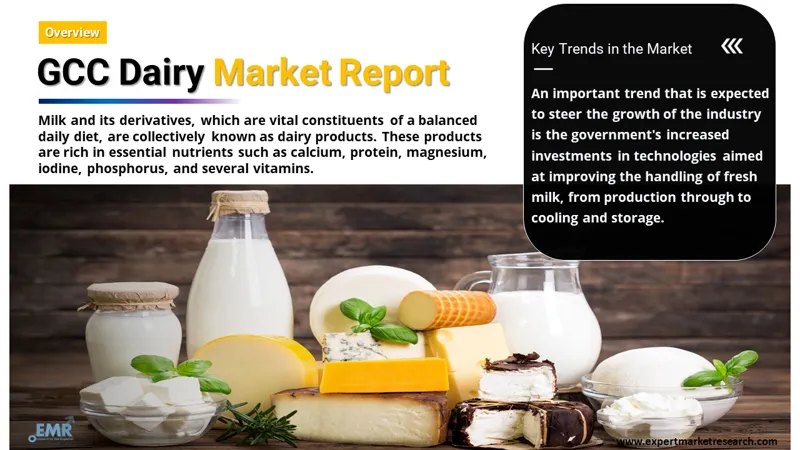
The GCC dairy market was valued at USD 11.64 Billion in 2025. Rising institutional demand from airlines, HORECA chains, and hospital catering services is significantly boosting bulk dairy procurement, prompting suppliers to scale up operations with quality assurance and cold chain integration. As a result, the market is expected to grow at a CAGR of 5.30% during the forecast period of 2026-2035 to reach a value of USD 19.51 Billion by 2035.
GCC dairy market growth is also accelerated by health-conscious consumers and a policy-backed ecosystem. Local governments are increasingly aiming for food self-sufficiency, especially in the dairy sector. Saudi Arabia’s Vision 2030, for instance, includes considerable investments in modernising livestock farming and building climate-resilient dairy infrastructure. Notably, Saudi Arabia’s agricultural GDP reached approximately SAR 114 billion in 2024.
Moreover, the GCC dairy industry is benefiting from robust infrastructural upgrades. UAE’s AgriTech initiatives are introducing vertical farming techniques even in dairy fodder cultivation. According to the UAE Ministry of Climate Change and Environment (MOCCAE), pilot hydroponic systems for cattle feed have reduced water consumption by nearly 60%, significantly reducing production costs. The market growth is also boosted by increased public-private partnerships. For instance, in January 2025, Almarai, the region’s dairy giant, launched a USD 1.8 billion expansion plan to tap into emerging dairy demand across Oman and Kuwait.
Rising regional consumption and strategic dairy diplomacy are further shaping the GCC dairy market dynamics as a resilient, high-opportunity space for B2B stakeholders. Governments have begun relaxing import duties for dairy technology, encouraging international players to collaborate with local firms.
Base Year
Historical Period
Forecast Period
Greek and probiotic yogurt consumption is growing rapidly in the GCC countries, driven by its perceived health benefits and the availability of a wide range of flavours.
As per industry reports, Qatar witnessed the highest milk and dairy production growth rate in the GCC at 25.7% CAGR, while Saudi Arabia was the region's leading producer, accounting for 71.4% of total output in 2021.
The GCC region's overall self-sufficiency ratio for milk and dairy products stood at 62.6% in 2021, the highest among all food categories. Saudi Arabia had the highest self-sufficiency ratio at 81.0%, followed by Qatar (77.9%), Oman (46.6%), and the UAE (35.5%).
Compound Annual Growth Rate
5.3%
Value in USD Billion
2026-2035
*this image is indicative*
| GCC Dairy Market Report Summary | Description | Value |
| Base Year | USD Billion | 2025 |
| Historical Period | USD Billion | 2019-2025 |
| Forecast Period | USD Billion | 2026-2035 |
| Market Size 2025 | USD Billion | 11.64 |
| Market Size 2035 | USD Billion | 19.51 |
| CAGR 2019-2025 | Percentage | XX% |
| CAGR 2026-2035 | Percentage | 5.30% |
| CAGR 2026-2035 - Market by Country | Oman | 6.1% |
| CAGR 2026-2035 - Market by Country | Qatar | 5.8% |
| CAGR 2026-2035 - Market by Type | Ice-cream | 6.0% |
| Market Share by Country 2025 | United Arab Emirates | 26.4% |
Read more about this report - REQUEST FREE SAMPLE COPY IN PDF
The GCC governments are actively funding the dairy industry to enhance local food production. In October 2023, Saudi Arabia’s Agricultural Development Fund launched a dairy subsidy programme, providing over USD 400 million to local farms. This push is reducing import dependency while boosting production volume, thereby propelling the GCC dairy market development. Such investments not only encourage homegrown dairy brands but also attract international technology providers. As a result, B2B suppliers dealing in milking equipment, smart feed systems, and cold chain logistics are increasingly tapping into these long-term public projects.
Functional dairy including probiotic yoghurt and fortified milk are accelerating the demand in the GCC dairy market. Brands like Nadec and Al Rawabi have introduced vitamin D-enriched milk and cholesterol-friendly yoghurt. The GCC health ministries are now encouraging dairy firms to adopt WHO guidelines for functional food labelling. These changes are drawing pharma-nutrition firms into co-developing products, creating a new opportunity for cross-sector collaboration. B2B players in biotechnology and clinical testing find fresh opportunities in providing technology for health-oriented dairy innovation.
Digital traceability in dairy logistics is becoming a key priority for companies in the GCC dairy industry. Firms like Almarai and Baladna have rolled out blockchain-based milk tracking to enhance transparency and export-readiness. Supported by Bahrain’s 2024 Smart Agri Policy, dairy farms are integrating AI for feed monitoring and real-time yield analytics. These technologies are improving herd health and reducing spoilage. Companies offering SaaS platforms, IoT sensors, and blockchain infrastructure are becoming vital suppliers.
The regional governments are increasingly investing in refrigerated logistics, crucial for maintaining dairy quality in extreme temperatures, contributing to the GCC dairy market value. For example, GCC Standardization Organization (GSO) announced thermal packaging regulations for dairy transit. These upgrades reduce spoilage rates and further opens new opportunities for logistics and packaging firms to provide temperature-monitoring solutions. Companies offering RFID-enabled cold chain technology and sustainable refrigerants are experiencing higher B2B engagement across the region.
While traditional dairy remains dominant in the GCC dairy market, plant-based options are growing fast in terms of popularity, especially in cosmopolitan areas. UAE’s Ministry of Health formulated standards and guidelines for plant-based milk production, giving rise to oat and almond milk brands like Koita and Freakin’ Healthy. Startups are collaborating with regional dairy players to co-manufacture lactose-free and vegan dairy using existing infrastructure. This trend allows dairy processors to diversify without full operational overhaul.
Read more about this report - REQUEST FREE SAMPLE COPY IN PDF
The EMR’s report titled “GCC Dairy Market Report and Forecast 2026-2035” offers a detailed analysis of the market based on the following segments:
Market Breakup by Product
Key Insight: UHT milk dominates the GCC dairy market owing to its operational cost efficiency. With energy-optimised filling systems and government support for shelf-stable dairy in schools, UHT milk has reduced regional milk wastage to a considerable extent. This product category is attracting interest from automation technology firms for aseptic packaging, and logistics companies that specialise in ambient temperature transit. The combination of functional benefits, public distribution, and industrial scale makes UHT the most strategically significant product for B2B stakeholders in the region.
Market Breakup by Region
Key Insight: Saudi Arabia, with its huge population and high per capita dairy consumption, boasts a significant dairy market share in the GCC. The regional market further benefits from the government's emphasis on encouraging local dairy production to improve self-sufficiency and food security. Being the largest economy in the GCC region, the market experiences heavy demand for dairy products with subsidies on cattle feed, zero-interest farm loans, and refrigerated transport upgrades. Domestic players are further focusing on technology integration, including robotic milking, GPS cattle tracking, and AI-based feed analysis.
| CAGR 2026-2035 - Market by | Type |
| Ice-cream | 6.0% |
| UHT Milk | 5.7% |
| Fluid Milk | 5.5% |
| Cream | 5.0% |
| Butter | 4.8% |
| Others | 4.2% |
| CAGR 2026-2035 - Market by | Country |
| Oman | 6.1% |
| Qatar | 5.8% |
| United Arab Emirates | 5.5% |
| Saudi Arabia | XX% |
| Kuwait | XX% |
| Bahrain | XX% |
By Type, UHT Milk Accounts for the Dominant Share of the Market
UHT milk remains the largest revenue generator in the market, driven by its shelf stability and widespread preference among bulk buyers like hotels and institutions. Companies like Almarai and Al Safi Danone are scaling up UHT production using aseptic filling lines imported from Germany, optimising both safety and scalability. Schools and airlines are key institutional consumers, often placing monthly volume contracts. UHT’s logistical ease makes it an ideal option among foodservice distributors, which is attracting packaging technology firms and automation partners to invest in this product category.
| 2025 Market Share by | Country |
| United Arab Emirates | 26.4% |
| Oman | XX% |
| Qatar | XX% |
| Saudi Arabia | XX% |
Flavoured milk experiences rapid growth in the GCC dairy market. Youth-centric marketing and increasing demand for on-the-go nutrition are fuelling the product’s growth. Companies like Lacnor and Al Ain Dairy are launching sugar-free, protein-packed variants targeting fitness-enthusiasts and millennials. More importantly, Baladna’s chocolate protein milk has grown widely popular for its low-sugar, high-calcium profile. The rapid surge in this particular category is attracting flavouring and nutraceutical ingredient suppliers to enter into long-term partnerships with dairy firms.


By Region, Saudi Arabia Registers the Leading Position in the Market
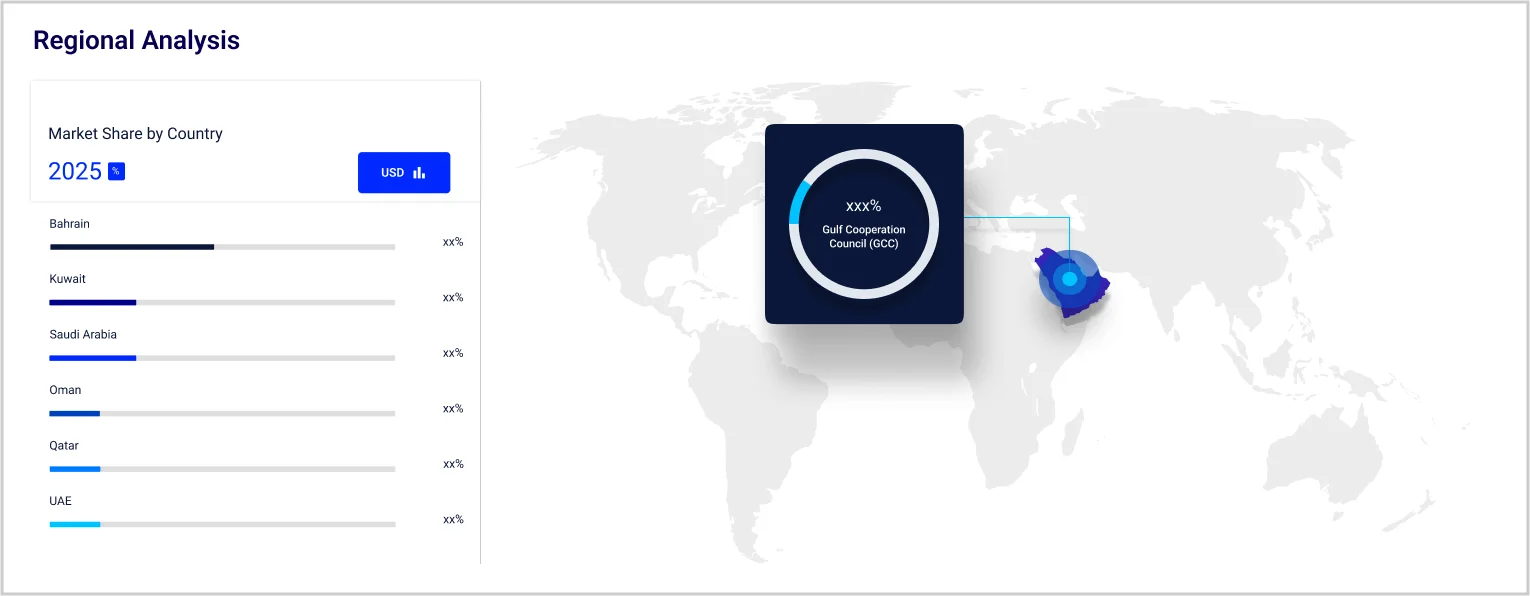
Saudi Arabia occupies the major share of the GCC dairy market revenue. The country’s dairy industry is heavily supported by government-led food security policies. As part of Vision 2030, the nation has achieved 129% of dairy self-sufficiency. Meanwhile, Almarai alone produces 1.5 billion litres of milk annually, making it the largest vertically integrated dairy player in the region. These developments offer massive opportunities for B2B suppliers dealing in feed processing, livestock health, and sustainable packaging, stimulating the GCC dairy market revenue growth.
The UAE market is growing at a rapid speed, driven by high consumer spending and tech-driven farming. Brands like Al Ain and Koita are expanding their product offerings with the launch of clean-label, organic dairy products. The growing expatriate population is also driving product diversification. Moreover, UAE has become a hub for dairy automation, bio-packaging, and digital marketing agencies specialising in F&B outreach.
Key GCC dairy market players like Almarai, Nadec, Al Rawabi, and Baladna are evolving into innovation hubs. Their areas of focus include energy-efficient dairy farms, digital supply chains, and R&D for health-forward products. Strategic collaborations with European dairy technology firms are emerging. One key example includes Nadec’s deal with Tetra Pak for smart packaging solutions. GCC dairy companies are also carving out niches, especially in vegan dairy and traceability technology. Players are aiming for export expansion to Africa and Southeast Asia. Private equity is increasingly funding mid-tier brands with niche focus, including organic, ethnic flavours, and high-protein variants. Opportunities lie in automation, AI-driven livestock health, and co-branding for clean-label dairy products. Functional dairy demand, digital supply chains, flavoured milk innovation, cold-chain upgrades, and plant-based dairy integration are further reshaping the market into a high-value, tech-driven and health-focused sector.
Almarai Company, founded in 1977 and headquartered in Riyadh, Saudi Arabia, is a prominent player in the dairy market. They offer a wide range of dairy products such as milk, cheese, yogurt, along with juices and bakery items.
National Agricultural Development Company (NADEC), established in the early 1980s and based in Riyadh, Saudi Arabia, is a key player in the dairy industry. Their product range includes dairy products, red meat, vegetables, and fruits.
Al Rawabi Dairy Company, founded in 1989 and headquartered in Dubai, United Arab Emirates, is a significant dairy producer in the region. The company offers a variety of dairy items to consumers, contributing to the availability of fresh and quality dairy products in the UAE.
Nestlé S.A, established in 1866, is a global food and beverage conglomerate headquartered in Switzerland, Europe. Its portfolio includes dairy products, coffee, water, baby food, breakfast cereals, confectionery, and pet foods.
*Please note that this is only a partial list; the complete list of key players is available in the full report. Additionally, the list of key players can be customized to better suit your needs.*
Other key players in the market are Saudia Dairy & Foodstuff Company (SADAFCO), Nestlé S.A., Fonterra Co-operative Group Limited, Arla Foods amba, and Lactalis Group, among others.
Explore the latest trends shaping the GCC dairy market 2026-2035 with our in-depth report. Gain strategic insights, future forecasts, and key market developments that can help you stay competitive. Download a free sample report or contact our team for customized consultation on GCC dairy market trends 2026.
Middle East and Africa Dairy Protein Market
United States Dairy Packaging Market
Middle East and Africa Dairy Market
Saudi Arabia Dairy Products Market
Dairy Processing Equipment Market
North America Dairy Market
United States Dairy Market
Latin America Dairy Market
Asia Pacific Dairy Market
Europe Dairy Market


Upto 15% Off
USD
$2499 $2249
$3999 $3599
$4999 $4249
$5999 $5099


*While we strive to always give you current and accurate information, the numbers depicted on the website are indicative and may differ from the actual numbers in the main report. At Expert Market Research, we aim to bring you the latest insights and trends in the market. Using our analyses and forecasts, stakeholders can understand the market dynamics, navigate challenges, and capitalize on opportunities to make data-driven strategic decisions.*
Get in touch with us for a customized solution tailored to your unique requirements and save upto 35%!
In 2025, the GCC dairy market reached an approximate value of USD 11.64 Billion.
The market is projected to grow at a CAGR of 5.30% between 2026 and 2035.
The market is estimated to witness a healthy growth in the forecast period of 2026-2035 to USD 19.51 Billion by 2035.
Key strategies driving the market include partnering with tech firms, launching functional dairy lines, localizing cold chain networks, integrating IoT in farming, and diversifying into plant-based variants.
The key challenges are high feed import costs, extreme weather impact on livestock health, and navigating inconsistent cross-border regulations within GCC.
Saudi Arabia, the United Arab Emirates, Kuwait, Oman, Qatar, and Bahrain are the leading regions in the market, with Saudi Arabia accounting for a significant market share in terms of production.
Based on product, the market is divided into fluid milk, UHT milk, flavoured milk, cream, butter, anhydrous milk fat (AMF), skimmed milk powder, whole milk powder, whey protein (powder and concentrate), lactose, casein, cheese, yoghurt, and ice-cream, among others.
Key players in the market are Almarai Company, National Agricultural Development Company (NADEC), Al Rawabi Dairy Company, Al Ain Dairy, Saudia Dairy & Foodstuff Company (SADAFCO), Nestlé S.A., Fonterra Co-operative Group Limited, Arla Foods amba, and Lactalis Group, among others.
Explore our key highlights of the report and gain a concise overview of key findings, trends, and actionable insights that will empower your strategic decisions.
| REPORT FEATURES | DETAILS |
| Base Year | 2025 |
| Historical Period | 2019-2025 |
| Forecast Period | 2026-2035 |
| Scope of the Report |
Historical and Forecast Trends, Industry Drivers and Constraints, Historical and Forecast Market Analysis by Segment:
|
| Breakup by Product |
|
| Breakup by Region |
|
| Market Dynamics |
|
| Competitive Landscape |
|
| Companies Covered |
|
| Report Price and Purchase Option | Explore our purchase options that are best suited to your resources and industry needs. |
| Delivery Format | Delivered as an attached PDF and Excel through email, with an option of receiving an editable PPT, according to the purchase option. |
Datasheet
One User
USD 2,499
USD 2,249
tax inclusive*
Single User License
One User
USD 3,999
USD 3,599
tax inclusive*
Five User License
Five User
USD 4,999
USD 4,249
tax inclusive*
Corporate License
Unlimited Users
USD 5,999
USD 5,099
tax inclusive*
*Please note that the prices mentioned below are starting prices for each bundle type. Kindly contact our team for further details.*
Flash Bundle
Small Business Bundle
Growth Bundle
Enterprise Bundle
*Please note that the prices mentioned below are starting prices for each bundle type. Kindly contact our team for further details.*
Flash Bundle
Number of Reports: 3
20%
tax inclusive*
Small Business Bundle
Number of Reports: 5
25%
tax inclusive*
Growth Bundle
Number of Reports: 8
30%
tax inclusive*
Enterprise Bundle
Number of Reports: 10
35%
tax inclusive*
How To Order

Select License Type
Choose the right license for your needs and access rights.

Click on ‘Buy Now’
Add the report to your cart with one click and proceed to register.

Select Mode of Payment
Choose a payment option for a secure checkout. You will be redirected accordingly.
Gain insights to stay ahead and seize opportunities.

Get insights & trends for a competitive edge.

Track prices with detailed trend reports.

Analyse trade data for supply chain insights.

Leverage cost reports for smart savings

Enhance supply chain with partnerships.

Connect For More Information
Our expert team of analysts will offer full support and resolve any queries regarding the report, before and after the purchase.
Our expert team of analysts will offer full support and resolve any queries regarding the report, before and after the purchase.
We employ meticulous research methods, blending advanced analytics and expert insights to deliver accurate, actionable industry intelligence, staying ahead of competitors.
Our skilled analysts offer unparalleled competitive advantage with detailed insights on current and emerging markets, ensuring your strategic edge.
We offer an in-depth yet simplified presentation of industry insights and analysis to meet your specific requirements effectively.





Share