

Consumer Insights
Uncover trends and behaviors shaping consumer choices today
Procurement Insights
Optimize your sourcing strategy with key market data
Industry Stats
Stay ahead with the latest trends and market analysis.

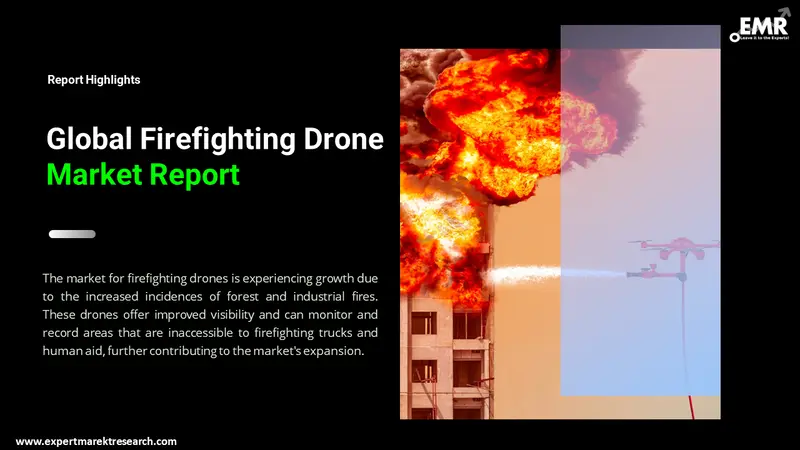
The global firefighting drone market attained a value of USD 1.36 Billion in 2025 and is projected to expand at a CAGR of 9.90% through 2035. The market is further expected to achieve USD 3.50 Billion by 2035. Increasing deployment of early-warning sensor networks is boosting demand for drones that can verify alerts quickly, map ignition zones, and support automated response workflows without waiting for ground crews to reach remote fire sites.
The market is entering a sharper innovation cycle as manufacturers shift away from simple aerial imaging to deploy more real suppression capabilities. A notable development in the market surfaced in July 2022, when Draganfly launched a heavy-lift drone designed to carry suppressant payloads for early-stage fire control. This system gained attention because municipal agencies are actively seeking unmanned tools that reduce crew risk and respond quicker during wildfires. According to the firefighting drone market analysis, over half a million hectares burned across Europe in 2023, showing how climate-driven fire incidents are pushing procurement teams to evaluate aerial suppression platforms much more aggressively.
Manufacturers also focus on long-endurance designs, autonomous navigation, and precision-drop mechanisms. Many agencies want drones that integrate with ground command systems, so operators can coordinate drops, map hotspots, and track thermal changes in real time. In October 2025, United States startup Seneca secured funding to scale AI-driven autonomous drones to combat rising wildfire threats, directly pointing towards the firefighting drone market growth. Players are investing in AI-enabled plume analysis that predicts fire spread, helping crews position assets with better timing.
Base Year
Historical Period
Forecast Period
Compound Annual Growth Rate
9.9%
Value in USD Billion
2026-2035
*this image is indicative*
Rising wildfire frequency and severity is pushing agencies toward aerial robotics that keep crews unharmed. The United States Forest Service routinely deploys UAS for hotspot checks, ignition support, and mapping during major fire incidents. In July 2025, the Kelowna Fire Department partnered with FireSwarm Solutions Inc. for an Integrated Training Exercise on Knox Mountain, showcasing advanced drone technology. These firefighting drone market trends signal stable budget lines for unmanned assets. Vendors offering thermal payloads, long-endurance platforms, and compliant data pipelines are best placed to convert this policy momentum into recurring procurement contracts over the coming years.
Urban high-rise risk is another big important trend noticed in the market. China has showcased drills in Shenzhen where tethered heavy-lift drones spray foam into upper floors of 500-foot towers. Other than this, EHang’s EH216-F eVTOL is purpose-built to support high-rise incidents within three-kilometer station radiuses, launching directly from fire stations, accelerating the firefighting drone market value. In September 2025, Dubai Civil Defense used Shaheen firefighting drones to combat an Al Barsha tower blaze, marking their first real-world test in high-rise incidents. These projects show city governments are willing to fund vertically focused drone fleets when traditional ladders simply cannot reach.
Growth in autonomy and swarm coordination is reshaping product roadmaps. Startups like FireSwarm are developing software that allows multiple large uncrewed aircraft to fly automatically around wildfires. In Texas, a DARPA-backed program is retrofitting Black Hawk helicopters with AI flight control to perform unmanned water drops in extreme conditions, widening the firefighting drone market expansion. In May 2025, ZenaTech, Inc., a tech firm announced that its subsidiary ZenaDrone is experimenting with a new proprietary specialized camera that enhances indoor applications like inventory and security management, leveraging IQ Nano drone swarms for commercial and United States defense uses. Academic research on UAV swarms for evacuation support and fire line mapping reinforces this trend’s emergence.
Closer integration with early-warning systems is another emerging trend in the firefighting drone market. Drone-as-first-responder programs in the United States cities dispatch unmanned aircraft from stations the moment alarms trigger, giving commanders live thermal views, minutes before trucks arrive. In October 2025, Flock Safety launched the Alpha, an American-made, NDAA-compliant DFR drone made specifically for emergency response and public safety missions. Vendors that design platforms to plug into dispatch software, sensor networks, and cross-agency data hubs are more favored for networked fire operations.
Tightening airspace rules and safety expectations are also shaping demand patterns in the market. Agencies are formalizing UAS pilot roles and training pipelines, turning ad-hoc experiments into institutional programs. For instance, in January 2025, DJI announced that the company is removing its automatic no-fly restrictions over sensitive areas, replacing them with warnings, amid growing concerns about drone safety and regulation. This trend favors certified firefighting drone suppliers that offer geofencing, redundant control links, and clear maintenance regimes, creating new firefighting drone market opportunities.
Read more about this report - REQUEST FREE SAMPLE COPY IN PDF
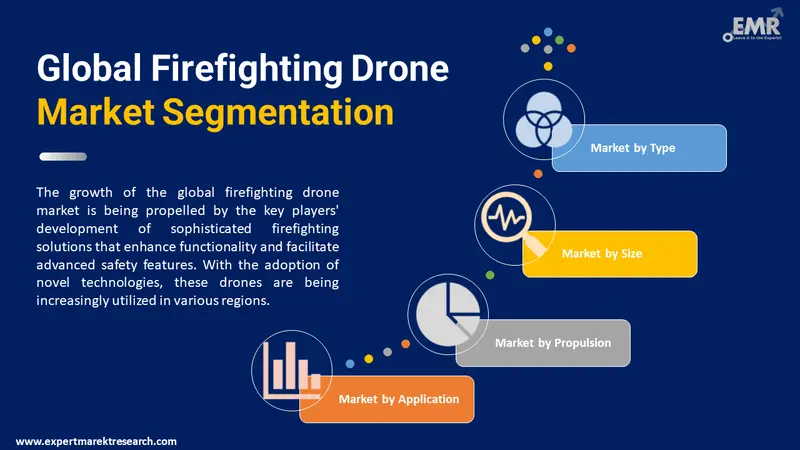
The EMR’s report titled “Global Firefighting Drone Market Report and Forecast 2026-2035” offers a detailed analysis of the market based on the following segments:
Market Breakup by Type
Key Insight: Fixed-wing and multi-rotor systems both address distinct firefighting needs and are evolving along different technical paths. Fixed-wing platforms prioritize endurance and bulk suppressant delivery across wildland fronts, while multi-rotor systems focus on vertical access, rooftop interventions, and precision micro-drops, accelerating the firefighting drone market expansion. Developers are balancing payload, autonomy, and certification constraints to meet agency procurement rules.
Market Breakup by Size
Key Insight: Macro drones anchor majority of the demand in the firefighting drone market, powered by supply bulk retardant, long endurance, and certified mission profiles. These are ideal for wildland suppression and sustained mapping. Micro drones serve as rapid verifiers and tactical tools for initial attack, rooftop reconnaissance, and confined-space assessments. Manufacturers are aligning product roadmaps to offer interoperable control systems so that combined fleets can be coordinated from a single command node.
Market Breakup by Propulsion
Key Insight: As per the firefighting drone market report, electric motors continue to dominate urban and tactical roles for their low noise, simple maintenance, and compatibility with tether systems. Solar propulsion is expanding its market share with persistent surveillance in remote and high-insolation regions, enabling long-duration patrols with lower operating cost. Piston engines remain relevant where raw power and heavy lift are essential, offering extended range and rapid fill capability at the expense of higher maintenance and emissions.
Market Breakup by Application
Key Insight: While monitoring application prioritize sensor fidelity and low-latency data links, the search and rescue category needs agile platforms with thermal detection and payload delivery, assessment demands high-resolution mapping and geotagging. On the other hand, firefighting requires certified heavy-lift and precise metering systems, boosting growth in the firefighting drone market. Agencies are assembling combined fleets to match mission phases, relying on interoperable command systems.
Market Breakup by Region
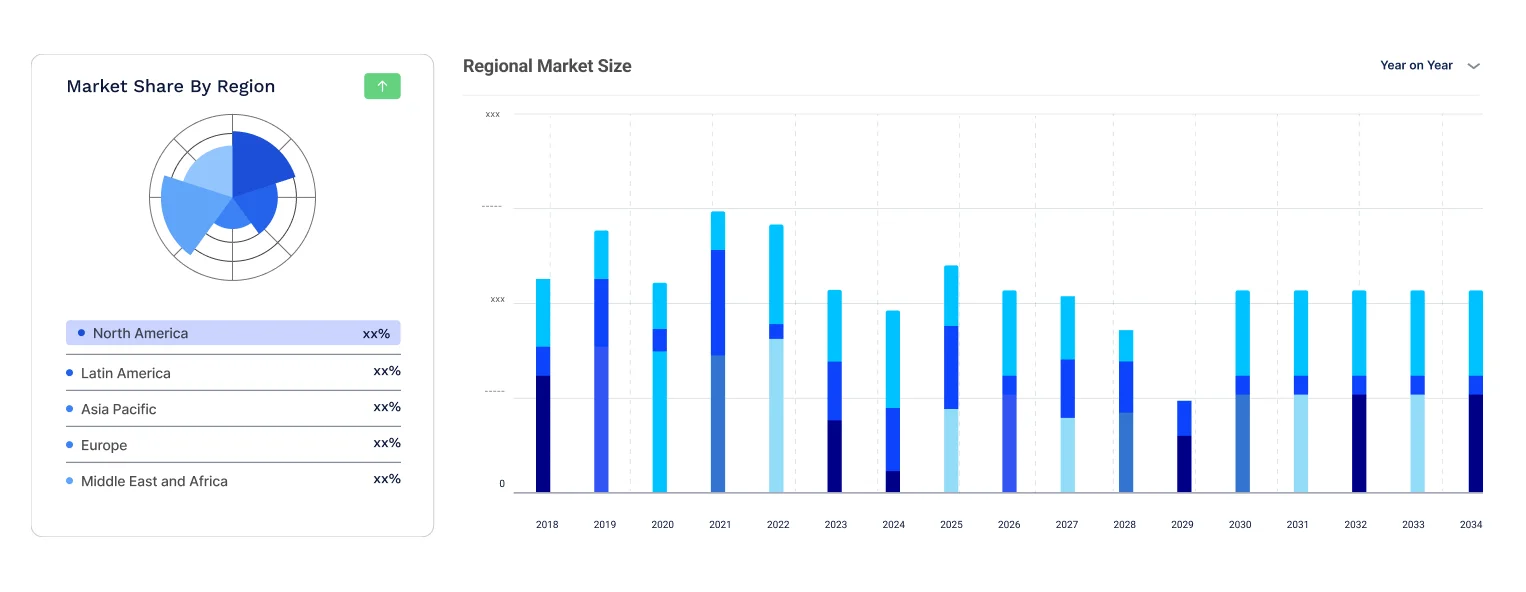
Key Insight: While North America prefers certified heavy-lift fleets and integrated maintenance networks, Europe emphazises regulation, low-water operations and certified data pipelines. Asia Pacific is scaling production and testing hybrid propulsion, on the other hand the firefighting drone market in Latin America is piloting low-cost micro fleets for early detection and the Middle East and Africa prioritize solar-augmented endurance for sparse territories.
Read more about this report - REQUEST FREE SAMPLE COPY IN PDF
By type, fixed-wing platforms dominate the market due to endurance, payload and wide-area coverage
Fixed-wing platforms have become dominant across many large-area firefighting missions because they offer longer endurance and higher payload efficiency than rotary alternatives. Their strength lies in covering vast wildfire perimeters, carrying significant suppressant loads, and performing coordinated raster scans for thermal mapping. Governments and forest services favour fixed-wing drones for persistent overwatch and long transit ranges between bases and incidents. In September 2025, Skydio announced the launch of their R10 indoor drone and the F10 fixed-wing drone that will support missions where confined spaces or long-distance response are required.
Multi-rotor systems significantly boost the firefighting drone market revenue because they deliver vertical access and precision drops. Operators prefer multi-rotor systems for urban high-rise incidents, rooftop delivery of foam canisters, and confined-space suppression where fixed wings cannot operate. In December 2023, JOUAV unveiled its all-new generation of a multi-rotor drone, the PH-20, designed to meet the diverse demands of modern industries. Advances in distributed propulsion, redundant control channels, and modular payload bays also allow these systems to carry targeted suppressant modules while keeping flight times acceptable through hot-swappable battery systems.
By size, macro drones account for the dominant market share because of large payloads, certified airframes, long-range
Macro drones are commanding the largest share of current firefighting deployments because they combine payload capacity, certified airframes, and range required for suppression and mapping missions. These platforms carry hundreds of litres of retardant or several modular suppressant canisters, and host advanced sensor suites including high-resolution thermal imagers, LiDAR, and long-range radios.
Micro drones experience accelerated growth in the firefighting drone market because their low unit cost, rapid deployment ability, and simplicity suit first-response and community-level surveillance. These small platforms are used to verify alarms, scan property perimeters, and support search tasks in confined areas where larger aircraft cannot reach. Companies are focusing to develop plug-and-play thermal modules, encrypted mesh links, and drone-portable charging stations to propel this category’s growth.
By propulsion, electric motor propulsion registers the largest share of the market owing to their efficiency, certification, and tether compatibility
Electric motor propulsion continues to be the dominant choice across firefighting drones market scope because it offers predictable thrust, low maintenance, and simpler certification pathways compared with combustion engines. Modern brushless systems deliver high power-to-weight ratios supporting precise hover, agile manoeuvring, and rapid response in urban incidents. For example, EH216-F is a purpose-built firefighting passenger eVTOL multicopter aircraft. The overall aircraft structure is fully sealed, is waterproofed, moisture-resistant. OEMs are enhancing motor cooling, integrating redundant power electronics, and pairing high-discharge battery packs to extend hover times. Electric platforms also simplify tethered-power coupling for sustained operations.
Solar-powered systems represent the fastest-growing propulsion category because they extend endurance for persistent overwatch missions and reduce refuelling logistics in remote zones. Modern designs pair efficient photovoltaic arrays with low-draw avionics to sustain slow loitering patrols over fire-prone landscapes. Hybrid solar-electric concepts are enabling day-long surveillance, while portable ground charging units allow overnight recharge.
By application, scene monitoring accounts for the largest share of the market owing to detection, mapping and real-time intel priorities
Scene monitoring remains the dominant application as rapid situational awareness is the first requirement when incidents ignite. Drones equipped with high-resolution thermal cameras, multispectral sensors, and automated mapping tools deliver instant heat maps, ember-spot detection, and smoke plume tracking that commanders rely on during initial attack, driving the firefighting drone market revenue growth.
Direct firefighting applications are emerging as the fastest-growing category as heavy-lift and precision-drop technologies mature, and regulators adapt certification frameworks. Drones are now carrying foam canisters, gel modules, and precise retardant release systems that let crews target spot fires and protect critical infrastructure without immediate human exposure.

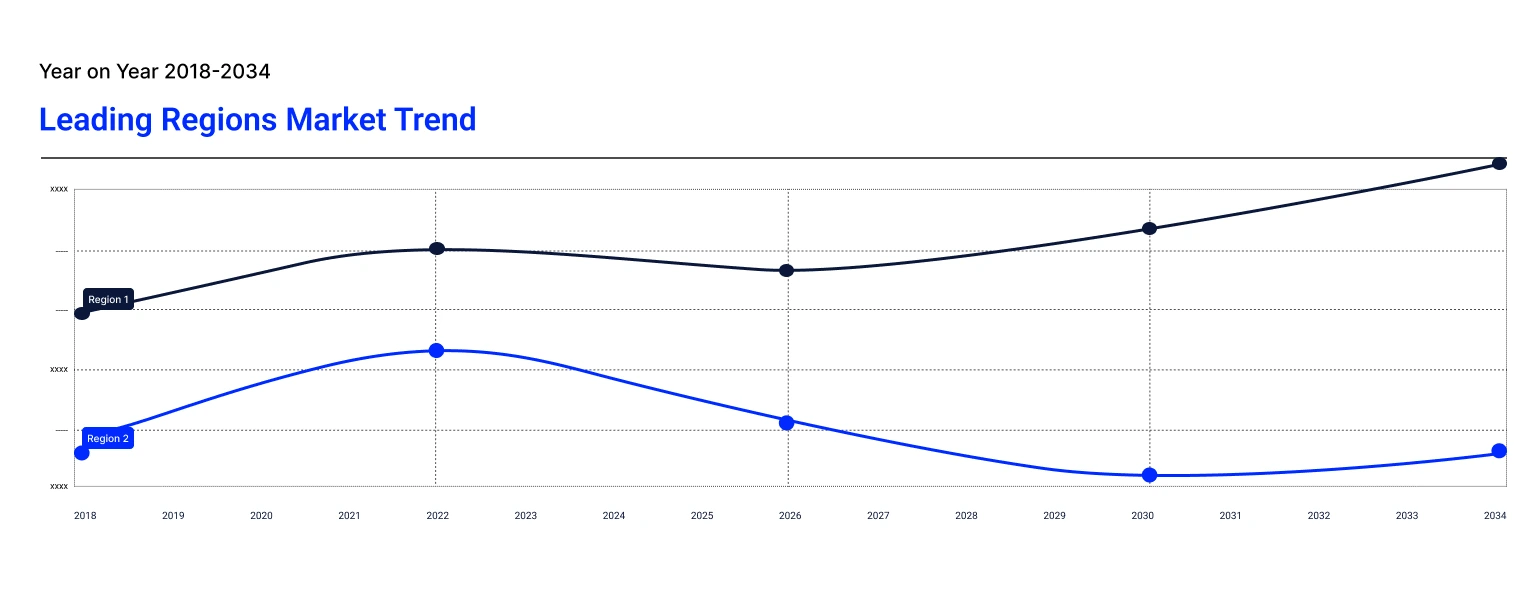
North America, powered by investment, airworthiness frameworks and budgets, secures the leading position in the market
The market in North America continuously sustains its dominant position due to major federal and state investments in wildfire technology, established airworthiness frameworks, and large budgets for emergency services. Agencies across western states are procuring combined drone fleets for perimeter mapping, ignition detection, and tactical suppression. The market benefits from mature service ecosystems including certified maintenance partners, aerial training academies, and integrated command software suppliers.
The firefighting drone market in Asia Pacific is growing at an accelerated pace as governments in the region are investing in aerial resilience to counter expanding wildfire seasons and urban fire risks. Large drone manufacturers and converters in China, India, and Southeast Asia are scaling production to supply domestic agencies and export markets. Regional pilots are testing heavy-lift tethers, hybrid propulsion for longer endurance, and rapid-deploy staging hubs near high-risk corridors.
Leading firefighting drone market players are focusing on suppression-capable platforms, endurance, autonomy, tethered overwatch, and integrated data systems. Manufacturers are building heavy-lift bays, precision metering valves, and hybrid propulsion to extend duration times and enable targeted retardant delivery. Tethered systems are being favored in municipal procurements as these offer continuous thermal surveillance and persistent scene oversight.
Service models are shifting from single-unit sales to fleet-as-a-service offerings that bundle training, refill logistics, and certified maintenance. Clear opportunities exist in retrofitting manned assets with unmanned suppression kits, creating regional refill and training hubs, and supplying interoperable command nodes that integrate with dispatch software. Firefighting drone companies able to prove drop accuracy, provide aviation-grade reliability, and navigate certification pathways are best placed to secure multi-year contracts over the forecast period.
Lockheed Martin Corporation, established in 1995 and is headquartered in Maryland, United States, is translating its aerospace autonomy and avionics strengths into firefighting solutions with an integrated firefighting-intelligence approach that links satellites, manned aircraft, and unmanned systems.
Founded in 1971 and is headquartered in Virginia, United States, AeroVironment Inc. is adapting battlefield-proven small UAS tech into persistent reconnaissance and rapid mapping for fire agencies. Platforms like Puma and Raven are being fitted with thermal and LiDAR payloads to deliver high-resolution maps and hotspot verification.
Elistair Inc., founded in 2014 and headquartered in France, specializes in tethered drone stations that deliver continuous power and secure data links for hours of persistent surveillance. It's Safe-T and Ligh-T tether stations are being integrated into fire service operations to provide uninterrupted thermal imaging, comms resilience, and fiber-optic telemetry options.
SZ DJI Technology, founded in 2006 and headquartered in Shenzhen, China, is adapting its enterprise flight platforms and sensor suites for public safety with Matrice models offering thermal, high-zoom, RTK and payload integrations for fire services. DJI is enabling rapid deployment kits, certified mapping workflows, and automated inspection missions for post-fire assessment and search tasks.
*Please note that this is only a partial list; the complete list of key players is available in the full report. Additionally, the list of key players can be customized to better suit your needs.*
Other key players in the market include BSS Holland B.V., Yuneec International Co., Ltd., Aerialtronics DV B.V., MMC-UAV, Flyability SA, Draganfly inc., Guangzhou EHang Intelligent Technology Co. Ltd., Skydio, Inc., L3Harris Technologies, Inc., Parrot Drones SAS, among others.
Unlock the latest insights with our firefighting drone market trends 2026 report. Discover regional growth patterns, consumer preferences, and key industry players. Stay ahead of competition with trusted data and expert analysis. Download your free sample report today and drive informed decisions in the market.


Upto 15% Off
USD
$2499 $2249
$3999 $3599
$4999 $4249
$5999 $5099


*While we strive to always give you current and accurate information, the numbers depicted on the website are indicative and may differ from the actual numbers in the main report. At Expert Market Research, we aim to bring you the latest insights and trends in the market. Using our analyses and forecasts, stakeholders can understand the market dynamics, navigate challenges, and capitalize on opportunities to make data-driven strategic decisions.*
Get in touch with us for a customized solution tailored to your unique requirements and save upto 35%!
In 2025, the market reached an approximate value of USD 1.36 Billion.
The market is projected to grow at a CAGR of 9.90% between 2026 and 2035.
The market for firefighting drones is estimated to witness a healthy growth in the forecast period of 2026-2035 to reach USD 3.50 Billion by 2035.
Companies are partnering with AI firms, certifying suppression kits, building tethered and hybrid platforms, deploying regional training hubs, and offering subscription-based fleet services to scale operations.
The key firefighting drone market trends are continued advancements by key players in the market, increasing cases of forest and industrial fire, and rising investments by various governments.
The significant applications of firefighting drones include scene monitoring, search and rescue, post fire or disaster assessment, and firefighting.
The various propulsions in the market are electric motor, solar powered, and piston engine.
The major objective of firefighting drones is to improve firefighting capabilities in a safe and efficient manner that reduces risk of harm to people and surroundings.
The major regions in the market are North America, Europe, the Asia Pacific, Latin America, and the Middle East and Africa.
The key players in the market include Lockheed Martin Corporation, AeroVironment, Inc., Elistair Inc., SZ DJI Technology Co., Ltd, BSS Holland B.V., Yuneec International Co., Ltd., Aerialtronics DV B.V., MMC-UAV, Flyability SA, Draganfly Inc., Guangzhou EHang Intelligent Technology Co. Ltd., Skydio, Inc., L3Harris Technologies, Inc., Parrot Drones SAS, among others.
High certification hurdles, limited endurance, payload-weight tradeoffs, operator training shortfalls, and airspace conflicts are constraining procurement cycles, increasing cost-per-sortie, and limiting broad operational adoption by fire agencies across many regions.
Explore our key highlights of the report and gain a concise overview of key findings, trends, and actionable insights that will empower your strategic decisions.
| REPORT FEATURES | DETAILS |
| Base Year | 2025 |
| Historical Period | 2019-2025 |
| Forecast Period | 2026-2035 |
| Scope of the Report |
Historical and Forecast Trends, Industry Drivers and Constraints, Historical and Forecast Market Analysis by Segment:
|
| Breakup by Type |
|
| Breakup by Size |
|
| Breakup by Propulsion |
|
| Breakup by Application |
|
| Breakup by Region |
|
| Market Dynamics |
|
| Competitive Landscape |
|
| Companies Covered |
|
Datasheet
One User
USD 2,499
USD 2,249
tax inclusive*
Single User License
One User
USD 3,999
USD 3,599
tax inclusive*
Five User License
Five User
USD 4,999
USD 4,249
tax inclusive*
Corporate License
Unlimited Users
USD 5,999
USD 5,099
tax inclusive*
*Please note that the prices mentioned below are starting prices for each bundle type. Kindly contact our team for further details.*
Flash Bundle
Small Business Bundle
Growth Bundle
Enterprise Bundle
*Please note that the prices mentioned below are starting prices for each bundle type. Kindly contact our team for further details.*
Flash Bundle
Number of Reports: 3
20%
tax inclusive*
Small Business Bundle
Number of Reports: 5
25%
tax inclusive*
Growth Bundle
Number of Reports: 8
30%
tax inclusive*
Enterprise Bundle
Number of Reports: 10
35%
tax inclusive*
How To Order

Select License Type
Choose the right license for your needs and access rights.

Click on ‘Buy Now’
Add the report to your cart with one click and proceed to register.

Select Mode of Payment
Choose a payment option for a secure checkout. You will be redirected accordingly.
Gain insights to stay ahead and seize opportunities.

Get insights & trends for a competitive edge.

Track prices with detailed trend reports.

Analyse trade data for supply chain insights.

Leverage cost reports for smart savings

Enhance supply chain with partnerships.

Connect For More Information
Our expert team of analysts will offer full support and resolve any queries regarding the report, before and after the purchase.
Our expert team of analysts will offer full support and resolve any queries regarding the report, before and after the purchase.
We employ meticulous research methods, blending advanced analytics and expert insights to deliver accurate, actionable industry intelligence, staying ahead of competitors.
Our skilled analysts offer unparalleled competitive advantage with detailed insights on current and emerging markets, ensuring your strategic edge.
We offer an in-depth yet simplified presentation of industry insights and analysis to meet your specific requirements effectively.





Share