

Consumer Insights
Uncover trends and behaviors shaping consumer choices today
Procurement Insights
Optimize your sourcing strategy with key market data
Industry Stats
Stay ahead with the latest trends and market analysis.

The Europe composites market attained a value of USD 19.34 Billion in 2025. The market is expected to grow at a CAGR of 5.10% during the forecast period of 2026-2035. By 2035, the market is expected to reach USD 31.80 Billion.
Europe’s transition to electric and hydrogen-powered mobility is creating new opportunities for composites. As per latest data from EV Volumes, more than 2.96 million electric vehicles (EVs), were registered in Europe across 2024. Lightweight, durable materials are essential for maximizing energy efficiency in EVs, hydrogen trucks, and aircraft. Composites are used in battery enclosures, pressure vessels, and structural components that support next-generation mobility. As OEMs invest in sustainable transport infrastructure, the need for fire-resistant, impact-resistant, and corrosion-proof composites is growing.
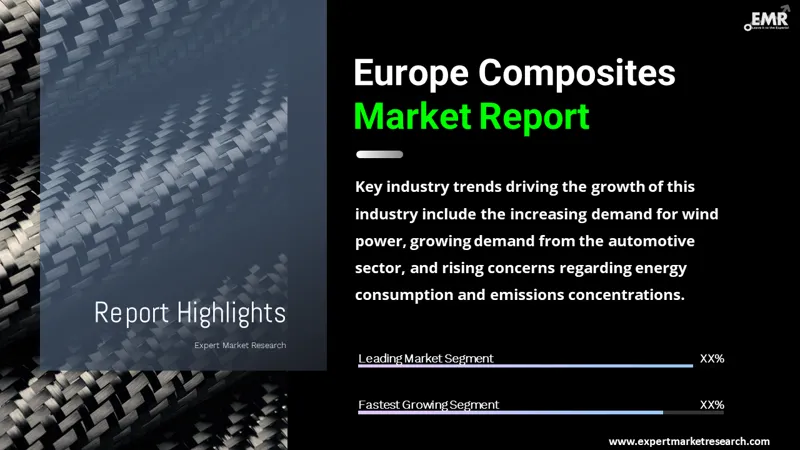
One of the major Europe composites market trends is the growing demand for lightweight materials across industries. Automotive, aerospace, and construction are increasingly using composites, such as carbon fiber and glass fiber to reduce structural weight without compromising strength. With strict European Union regulations on carbon emissions and energy consumption, lightweight composites offer a sustainable solution. As industries prioritize weight reduction to meet performance and sustainability goals, this trend is fueling innovation and adoption of advanced composite technologies across the region.
Base Year
Historical Period
Forecast Period
Compound Annual Growth Rate
5.1%
Value in USD Billion
2026-2035
*this image is indicative*
Sustainability is a powerful force reshaping the composites industry in Europe. Companies and policymakers are promoting circular economy practices, encouraging the development of recyclable and bio-based composites. In September 2023, EuCIA launched the European Composites Waste & Recycling Survey to assess industry practices, improve recycling rates, and support circular economy goals. This sustainability focus not only aligns with EU Green Deal objectives but also drives innovation.
Thermoplastic composites are gaining momentum due to their recyclability, faster processing times, and strong mechanical properties. These materials are increasingly several applications for components requiring high strength and reduced production cycles. Europe-based manufacturers are investing in research & development to launch novel thermoplastic solutions that offer better performance and environmental benefits. In June 2025, The United Kingdom-based Advanced Manufacturing Research Centre (AMRC) announced the installation of a dual-mode thermoplastic processing line at its Factory of the Future facility.
Strict regulations regarding emissions, waste management, and product lifecycle sustainability are major drivers for the Europe composites market. Policies under the EU Green Deal, REACH regulations, and carbon neutrality targets are pushing manufacturers to adopt greener materials and cleaner processes. This has led to increased investment in low-emission resins, recycled fibers, and closed-loop manufacturing systems. Regulations are also accelerating the replacement of traditional metals and plastics with composite alternatives.
Digital technologies are transforming composite manufacturing processes across Europe. The integration of Industry 4.0 tools like IoT, AI, and digital twins is helping companies enhance process efficiency, quality control, and supply chain transparency. These innovations allow for faster prototyping, reduced downtime, and improved product consistency. As European manufacturers embrace smart factories and data-driven production, the composites industry is becoming more agile and responsive to market needs.
Growing environmental awareness for sustainable alternatives are fueling the bio-based and natural fiber composites demand in Europe. European research institutions and startups are leading efforts to develop viable bio-composites for automotive interiors, sporting goods, and consumer products. In April 2025, Huntsman unveiled two bio-based I-BOND® resins, PB BIO 1025 and OSB BIO 1025 at LIGNA 2025 in Germany, to reduce the carbon footprint of composite wood products by up to 30%. The trend aligns with EU goals for reducing reliance on fossil-based resources and promoting eco-friendly material innovation.
Read more about this report - REQUEST FREE SAMPLE COPY IN PDF
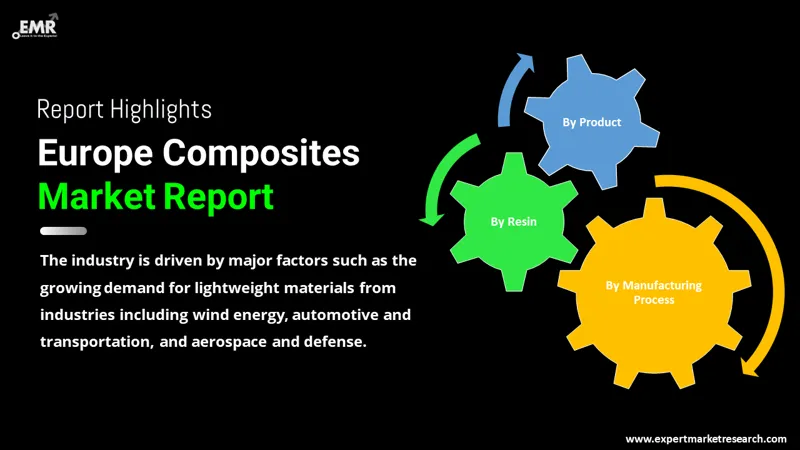
The EMR’s report titled “Europe Composites Market Report and Forecast 2026-2035” offers a detailed analysis of the market based on the following segments:
Market Breakup by Product
Key Insight: The carbon fiber segment is driven by its exceptional strength-to-weight ratio, stiffness, and fatigue resistance. Leading European aerospace manufacturers heavily on carbon fiber composites to reduce aircraft weight and improve fuel efficiency. In November 2022, Toray Carbon Fibers Europe invested EUR 100 million to build a new carbon fiber production line in France by 2025. The automotive sector, especially electric vehicles, uses carbon fiber to extend battery range through lightweight components.
Market Breakup by Resin
Key Insight: Thermosetting lead the Europe composites market due to their superior mechanical strength, thermal stability, and durability. These composites use resins like epoxy, polyester, and vinyl ester, which irreversibly cure, providing structural rigidity and chemical resistance. Companies are offering advanced thermosetting solutions, adding to the segment growth. In December 2023, SKZ and partners launched a project to develop bio-based, free-flowing thermoset molding compounds for high-performance, economically viable applications.
Market Breakup by Manufacturing Process
Key Insight: The layup process, including both manual and automated methods, is the most widely used composite manufacturing process in Europe. It is especially dominant in aerospace and marine industries due to its flexibility in creating complex, high-performance parts. Aerospace manufacturers like Airbus use automated layup for aircraft fuselage and wing structures using carbon fiber prepregs. In the marine sector, manual layup is used for boat hulls. The process allows precise fiber placement, optimizing strength-to-weight ratios.
Market Breakup by End Use
Key Insight: The automotive and transportation segment dominates the Europe composites industry, driven by the push for lightweight, fuel-efficient, and electric vehicles. Composites like carbon fiber and glass fiber are used in body panels, structural reinforcements, and battery enclosures. With the rise of electric and hydrogen vehicles, the demand for lightweight and crash-resistant components continues to grow. As per the European Hydrogen Observatory, the total number of hydrogen fuel cell electric vehicles registrations across Europe was estimated at 1,026 units in 2023.
Market Breakup by Country
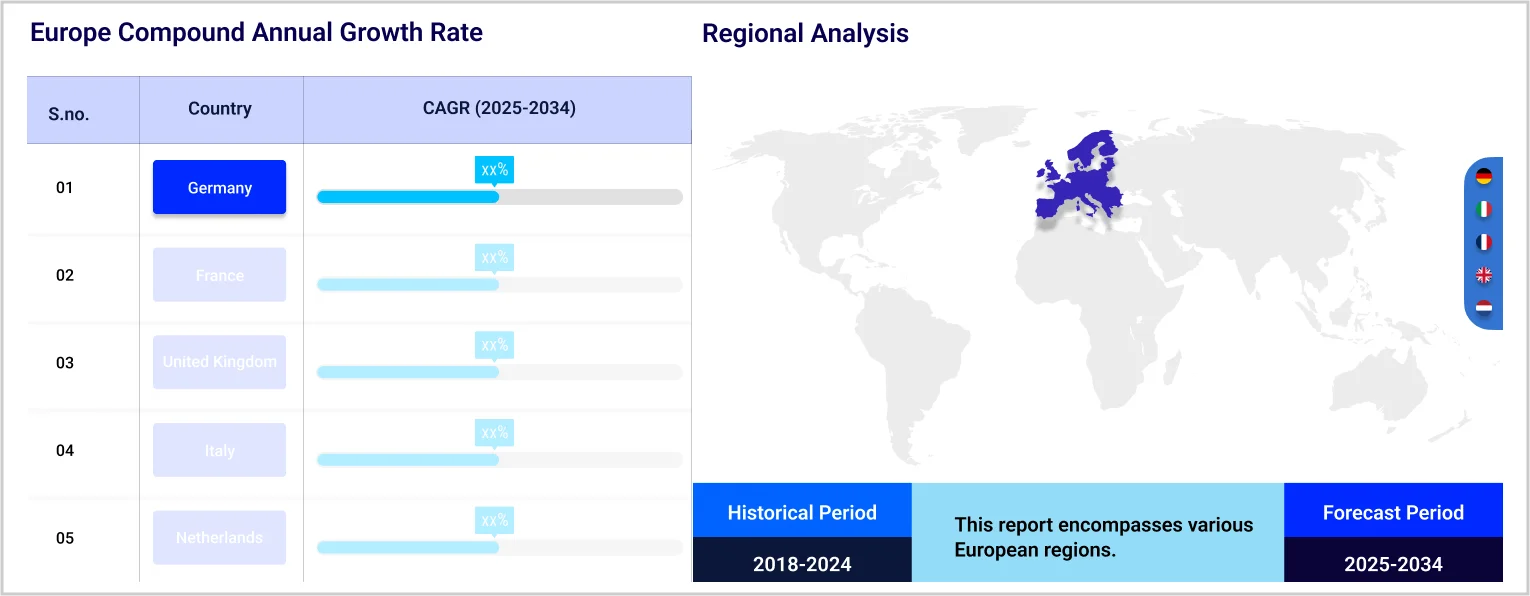
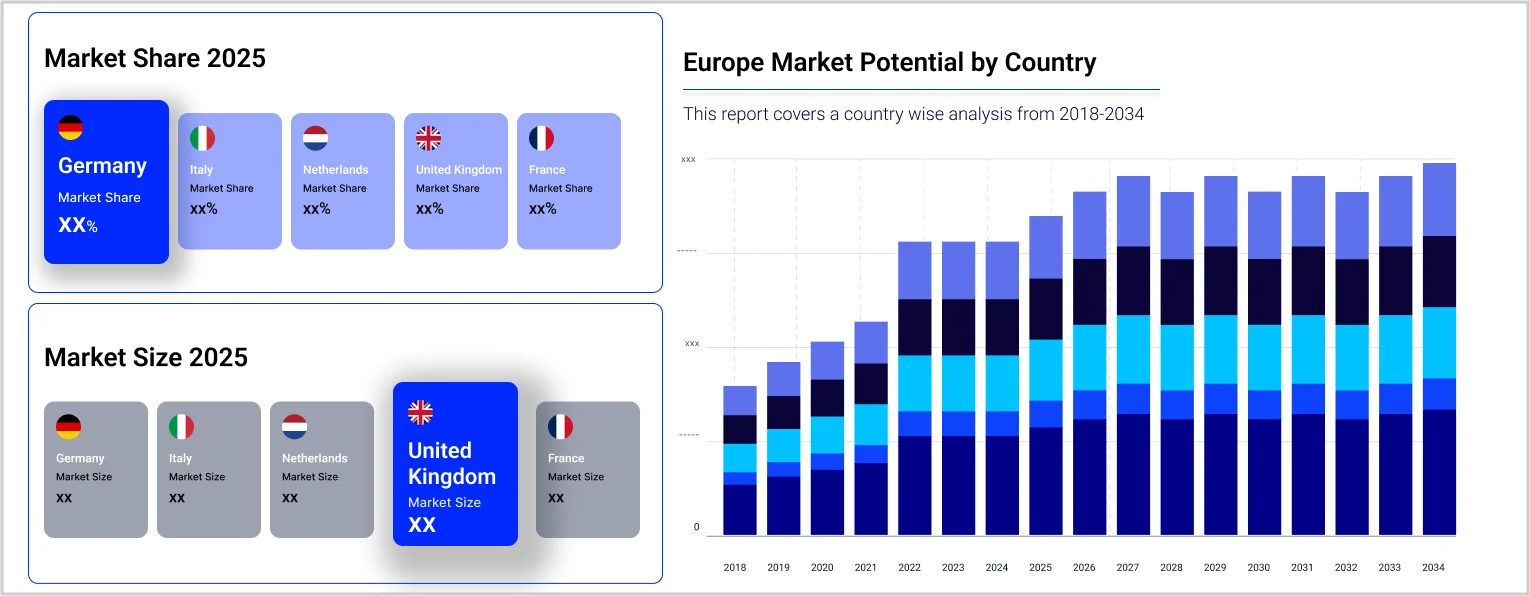
Key Insight: Germany leads the market due to its strong automotive, aerospace, and industrial base. Major manufacturers like BMW, Audi, and Airbus utilize advanced composites for lightweighting, fuel efficiency, and performance. The country is home to global leaders, such as SGL Carbon and Covestro, with extensive research & development and production capabilities. Germany also invests heavily in Industry 4.0, driving innovation in automated composite manufacturing. With high demand across sectors and robust infrastructure, Germany remains the most influential and technologically advanced composites hub in Europe.
Read more about this report - REQUEST FREE SAMPLE COPY IN PDF
Surging Usage of Glass Fiber Composites
Glass fiber composites market in Europe is growing due to their cost-effectiveness, versatility, and corrosion resistance. In February 2023, German research institutes led by the Textile and Fiber Research Denkendorf developed a novel UV-pultrusion process for glass fiber–reinforced polymer (GFRP) link rods. Widely used in wind energy for turbine blades, construction, marine, and automotive industries, glass fiber offers a balance between performance and affordability. The expanding offshore wind sector in Europe heavily depends on glass fiber composites for large, durable blades.
Thermoplastic Composites to Witness Demand in Europe
Thermoplastic composites are rapidly gaining traction in Europe due to their recyclability, faster processing, and lightweight properties. These materials soften when heated, allowing reshaping and recycling, aligning with Europe’s circular economy goals. For example, Teijin and Hexcel have launched thermoplastic prepregs tailored for electric vehicle parts and aerospace interiors. With the growing demand for sustainable, cost-effective materials, thermoplastics are expected to capture a larger market share in the coming years across Europe.
Resin Transfer Molding & Compression Molding Process to Attain Popularity in Europe
Resin transfer molding (RTM) is gaining traction in the Europe composites market, particularly in the automotive and aerospace sectors. European automotive suppliers use RTM to produce lightweight, high-strength body panels and structural parts. RTM is ideal for medium to high-volume production and offers consistent quality, reduced emissions, and compatibility with automated systems. Companies like BMW and Lamborghini have adopted RTM techniques for producing carbon fiber-reinforced parts.
Compression molding is a key process in Europe for producing high-strength composite parts in large volumes. In May 2023, Swiss-based CrossTEQ introduced an innovative thermoplastic compression molding process designed to efficiently recycle industrial plastic waste. As the automotive sector focuses on lightweighting and mass production, compression moulding offers an efficient solution for high-performance parts with excellent dimensional accuracy and mechanical properties.
Rising Composite Application in Aerospace and Defense & Wind Energy in Europe
Aerospace and defense represent a major segment of the Europe composites industry due to the need for high-strength, lightweight materials. Carbon fiber-reinforced composites are widely used in aircraft fuselages, wings, and interior components to enhance fuel efficiency and reduce maintenance. Airbus, a key European aerospace player, heavily relies on composites in its A350 and A220 models. Defense applications include drones, missile components, and lightweight armor.
The wind energy sector is a rapidly growing user of composites, especially for manufacturing large, durable turbine blades. Europe, a global leader in offshore wind, drives composite innovation for longer, lighter, and more efficient blades. In December 2024, Italy-based Northern Light Composites unveiled a fully recyclable vertical wind turbine blade made from rComposite®, a patented recyclable composite material. EU climate targets and energy transition policies are accelerating wind farm installations, ensuring a consistent rise in composite consumption for nacelles, hubs, and structural components.
Thriving Composites Prominence in United Kingdom & France
The United Kingdom is a significant player in the Europe composites market, particularly in aerospace, automotive, and defense. The country hosts the headquarters of Rolls-Royce and BAE Systems, both of which rely on carbon fiber composites for jet engines and military applications. Automotive firms use high-performance composites in vehicle design, adding to the market growth. In June 2024, 1016 Industries introduced a carbon fiber widebody kit for the Rolls-Royce Cullinan Black Badge.
France holds a prominent position, supported by its strong aerospace and energy sectors. Airbus, headquartered in Toulouse, is a major consumer of carbon fiber composites for aircraft manufacturing. France is also advancing wind energy, with composites used in turbines and structural components. Companies like Arkema and Safran lead in composite materials and applications. The French government supports green and circular economy initiatives, promoting bio-based and recyclable composites. Ongoing investments in research and sustainable materials keep France among the market leaders.
The key players in the Europe composites market are working on innovation, sustainability, and strategic partnerships. Companies are heavily investing in research and development to create advanced composites with improved strength-to-weight ratios and enhanced thermal and chemical resistance. The shift toward bio-based and recyclable composite materials is driven by EU regulations promoting environmental sustainability and circular economy goals. To strengthen their market position, players are forming strategic alliances, mergers, and acquisitions to expand their product portfolios and geographic reach.
Collaborations with automotive, aerospace, and construction sectors are helping to co-develop customized solutions and tap into growing demand for lightweight materials that improve fuel efficiency and structural performance. Moreover, automation and digitalization of manufacturing processes, such as the use of Industry 4.0 technologies, are being adopted to increase efficiency and reduce production costs. Companies are further investing in capacity expansion and localization of production to reduce reliance on imports.
Founded in 1992 and headquartered in Wiesbaden, Germany, SGL Carbon SE specializes in carbon-based materials and composites. The company is known for its innovation in graphite solutions and lightweight carbon fiber technologies, particularly in automotive and aerospace sectors and has pioneered sustainable production methods.
Hexcel Corporation, established in 1948 and based in Stamford, the United States, is a global leader in advanced composites that supplies major aerospace and industrial companies. The firm has developed cutting-edge prepreg and honeycomb technologies, supporting lighter, more fuel-efficient aircraft designs.
Founded in 1918 and headquartered in Tokyo, Japan, Teijin Limited operates across various high-performance material sectors. The company plays a vital role in next-generation mobility solutions, offering lightweight, high-strength materials for automotive, aerospace, and renewable energy industries.
Solvay SA, established in 1863 with headquarters in Brussels, Belgium, is a prominent chemical and advanced materials company that supports aerospace, automotive, and energy applications. Solvay’s achievements include developing sustainable composite solutions and enhancing the performance of high-temperature, lightweight structural components.
*Please note that this is only a partial list; the complete list of key players is available in the full report. Additionally, the list of key players can be customized to better suit your needs.*
Other players in the Europe composites market are Gurit Holding AG, and FMC Composites, among others.
Discover the latest Europe Composites Market trends 2026 with our comprehensive report, offering detailed market forecasts, key drivers, and competitive insights. Download your free sample now to unlock valuable data and stay ahead in the fast-evolving composites industry. Empower your business strategies with trusted market intelligence today!
Thermoplastic Composites Market
Advanced Polymer Composites Market
Natural Fiber Composites Market
Australia Automotive Composites Market
United States Automotive Composites Market
Germany Automotive Composites Market
Europe Construction and Infrastructure Composites Trends
Europe Aerospace Composites Sustainability
Europe Automotive Transport Composites Insights


Upto 15% Off
USD
$3999 $3599
$2499 $2249
$4999 $4249
$5999 $5099


*While we strive to always give you current and accurate information, the numbers depicted on the website are indicative and may differ from the actual numbers in the main report. At Expert Market Research, we aim to bring you the latest insights and trends in the market. Using our analyses and forecasts, stakeholders can understand the market dynamics, navigate challenges, and capitalize on opportunities to make data-driven strategic decisions.*
Get in touch with us for a customized solution tailored to your unique requirements and save upto 35%!
In 2025, the market reached an approximate value of USD 19.34 Billion.
The market is projected to grow at a CAGR of 5.10% between 2026 and 2035.
The key strategies driving the market include investments in sustainable and recyclable materials, innovation in lightweight and high-performance composites, and adoption of automation in manufacturing. Strategic partnerships, mergers, and regional expansion also play crucial roles, enabling companies to meet growing demand across automotive, aerospace, and renewable energy sectors.
Factors such as the rising demand for wind power, the increasing demand for composites in the automotive sector, and growing concerns about greenhouse gas emissions are key trends driving the growth of the market.
The major countries in the market for composites in Europe include the United Kingdom, France, Italy, and Germany, among others.
The various products in the market include carbon fibre and glass fibre, among others.
The different resins considered in the market report are thermosetting and thermoplastic.
Layup process, filament winding process, injection moulding process, pultrusion process, compression moulding process, and resin transfer moulding process, among others, are the major methods of manufacturing process in the market.
The significant end uses of composites are automotive and transportation, aerospace and defence, wind energy, electrical and electronics, construction and infrastructure, pipes and tanks, and marine, among others.
The key players in the market report include SGL Carbon SE, Hexcel Corporation, Teijin Limited, Solvay SA, Gurit Holding AG, and FMC Composites, among others.
The automotive and transportation segment dominates the market, driven by the push for lightweight, fuel-efficient, and electric vehicles.
Explore our key highlights of the report and gain a concise overview of key findings, trends, and actionable insights that will empower your strategic decisions.
| REPORT FEATURES | DETAILS |
| Base Year | 2025 |
| Historical Period | 2019-2025 |
| Forecast Period | 2026-2035 |
| Scope of the Report |
Historical and Forecast Trends, Industry Drivers and Constraints, Historical and Forecast Market Analysis by Segment:
|
| Breakup by Product |
|
| Breakup by Resin |
|
| Breakup by Method of Manufacturing Process |
|
| Breakup by Method of End Use |
|
| Breakup by Region |
|
| Market Dynamics |
|
| Competitive Landscape |
|
| Companies Covered |
|
| Report Price and Purchase Option | Explore our purchase options that are best suited to your resources and industry needs. |
| Delivery Format | Delivered as an attached PDF and Excel through email, with an option of receiving an editable PPT, according to the purchase option. |
Single User License
One User
USD 3,999
USD 3,599
tax inclusive*
Datasheet
One User
USD 2,499
USD 2,249
tax inclusive*
Five User License
Five User
USD 4,999
USD 4,249
tax inclusive*
Corporate License
Unlimited Users
USD 5,999
USD 5,099
tax inclusive*
*Please note that the prices mentioned below are starting prices for each bundle type. Kindly contact our team for further details.*
Flash Bundle
Small Business Bundle
Growth Bundle
Enterprise Bundle
*Please note that the prices mentioned below are starting prices for each bundle type. Kindly contact our team for further details.*
Flash Bundle
Number of Reports: 3
20%
tax inclusive*
Small Business Bundle
Number of Reports: 5
25%
tax inclusive*
Growth Bundle
Number of Reports: 8
30%
tax inclusive*
Enterprise Bundle
Number of Reports: 10
35%
tax inclusive*
How To Order

Select License Type
Choose the right license for your needs and access rights.

Click on ‘Buy Now’
Add the report to your cart with one click and proceed to register.

Select Mode of Payment
Choose a payment option for a secure checkout. You will be redirected accordingly.
Gain insights to stay ahead and seize opportunities.

Get insights & trends for a competitive edge.

Track prices with detailed trend reports.

Analyse trade data for supply chain insights.

Leverage cost reports for smart savings

Enhance supply chain with partnerships.

Connect For More Information
Our expert team of analysts will offer full support and resolve any queries regarding the report, before and after the purchase.
Our expert team of analysts will offer full support and resolve any queries regarding the report, before and after the purchase.
We employ meticulous research methods, blending advanced analytics and expert insights to deliver accurate, actionable industry intelligence, staying ahead of competitors.
Our skilled analysts offer unparalleled competitive advantage with detailed insights on current and emerging markets, ensuring your strategic edge.
We offer an in-depth yet simplified presentation of industry insights and analysis to meet your specific requirements effectively.





Share