

Consumer Insights
Uncover trends and behaviors shaping consumer choices today
Procurement Insights
Optimize your sourcing strategy with key market data
Industry Stats
Stay ahead with the latest trends and market analysis.

The global debt collection software market was valued at USD 4638.66 Million in 2025. The market is expected to grow at a CAGR of 10.50% during the forecast period of 2026-2035 to reach a value of USD 12589.70 Million by 2035. Expanding adoption of predictive analytics and real-time payment integrations is becoming a major growth catalyst for the market, as institutions seek sharper insights to minimize charge-offs and enhance repayment performance.
The market is gaining pace as financial institutions shift towards automation to minimize defaults and improve recovery efficiency. One significant driving factor here is the sharp rise in digital delinquency management programs. For example, Total United States household debt increased by USD 185 billion, or 1%, to USD 18.39 trillion in the second quarter of 2025, according to the Federal Reserve Bank of New York's Quarterly Report on Household Debt and Credit. With such volumes, financial firms are pressured to adopt scalable platforms capable of handling millions of overdue accounts simultaneously, boosting demand in the debt collection software market. Automated debt recovery software not only addresses compliance but also shortens recovery cycles, a priority for banks managing larger loan portfolios under tighter regulatory oversight.
The momentum is further boosted by government-backed modernization efforts. For instance, in November 2024, the United States Consumer Financial Protection Bureau (CFPB) enforced stronger digital communication guidelines, compelling agencies to integrate AI-enabled solutions for fair collection practices. Similarly, Europe’s implementation of the EU’s Digital Finance Strategy emphasizes AI-driven tools for creditor transparency and efficiency. According to the debt collection software market analysis, advanced collection software reduces operational costs by 90% and handles up to 70% of customer interaction tasks on its own, underlining its adoption across lending ecosystems. These factors position this software not merely as a compliance tool and as a strategic enabler of sustainable growth for B2B lenders and recovery agencies.
Base Year
Historical Period
Forecast Period
Compound Annual Growth Rate
10.5%
Value in USD Million
2026-2035
*this image is indicative*
The deployment of AI-powered predictive recovery systems is one of the most innovative trends in the debt collection software market. These platforms assess repayment likelihood based on historical borrower data, behavioral patterns, and macroeconomic indicators. For example, TransUnion launched an AI-driven recovery model in March 2024 that improved collection rates to a significant extent for mid-sized lenders. Governments are also encouraging this transformation. For example, Singapore’s MAS committed up to SGD 100 million to support quantum and artificial intelligence capabilities in the financial sector, in July 2024, supporting firms experimenting with debt resolution algorithms.
Debt collection platforms are increasingly embedding RegTech frameworks to comply with evolving consumer protection laws. With CFPB mandating fair communication standards, lenders are compelled to adopt solutions offering auditable digital trials. For instance, United Kingdom’s Financial Conduct Authority reported that nearly 7.4 million individuals fell behind on bills in April 2024, prompting stricter compliance checks for lenders. Innovative software providers now offer automated compliance dashboards that update in real-time, reducing the risk of penalties, boosting growth in the debt collection software industry. These integrations not only streamline operations but also increase trust between financial firms and regulators, positioning compliance as a competitive advantage rather than a burden.
The surge in Buy Now Pay Later (BNPL) adoption globally has created new challenges for recovery ecosystems. Debt collection software now integrates embedded payment gateways and real-time repayment options, enabling seamless borrower settlements. Firms like Klarna and Afterpay, for example, have integrated AI-enabled debt management modules to address growing delinquency rates in short-term financing, reshaping the debt collection software market dynamics. Data from the Reserve Bank of Australia has revealed that Australians made AUD 16 billion worth of BNPL purchases in 2021-2022., with rising defaults pushing firms towards advanced software.
The shift towards cloud-hosted debt collection platforms is reshaping the scalability of recovery operations. Cloud adoption allows cross-border lenders to unify fragmented recovery units while maintaining centralized oversight. For instance, United States-based FIS launched a cloud-native version of its treasury management platform aimed at addressing the requirements of corporate finance departments in April 2025, targeting multinational banks with distributed operations, further stimulating this debt collection software market growth. In the Asia Pacific region, initiatives like India’s Digital India program, are also promoting cloud adoption in financial services.
A key breakthrough lies in the rise of Voice AI-enabled multilingual debt engagement systems. Collectors are using natural language processing (NLP) to engage borrowers in their native languages across regions. According to the debt collection software market analysis, nearly 8% of EU households experienced debt arrears in 2023, creating strong demand for tailored communication. Governments are also promoting inclusive financial practices, indirectly pushing firms to adopt multilingual technology.
Read more about this report - REQUEST FREE SAMPLE COPY IN PDF
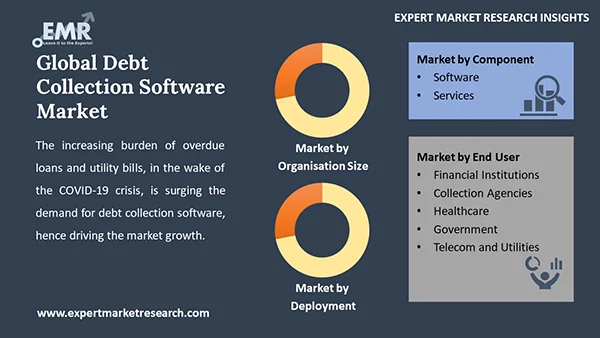
The EMR’s report titled “Global Debt Collection Software Market Report and Forecast 2026-2035” offers a detailed analysis of the market based on the following segments:
Market Breakup by Component
Key Insight: Across component categorization, software leads the market by automating large-scale debt recovery with AI-driven workflows and compliance dashboards, ensuring efficiency for enterprises. Meanwhile, services witness rapid growth as firms increasingly outsource compliance-heavy processes, training, and consulting to specialized providers.
Market Breakup by Deployment
Key Insight: By deployment, on-premise continues to dominate the debt collection software market value as financial institutions prioritize robust security, data sovereignty, and strict compliance frameworks. At the same time, cloud adoption is accelerating rapidly, favored for its scalability, cost-efficiency, and seamless integration with digital channels. Both these models are shaping a hybrid adoption landscape, where organizations balance security-driven control with flexible, agile cloud capabilities to modernize debt collection practices and enhance overall operational resilience.
Market Breakup by Organization Size
Key Insight: In terms of organization size, large enterprises dominate as compliance-heavy operations demand advanced, customizable platforms. Meanwhile, SMEs are scaling faster by adopting cost-efficient SaaS models, enabling them to modernize recovery workflows, improve repayment efficiency, and compete effectively despite limited resources and regulatory challenges.
Market Breakup by End User
Key Insight: As per the debt collection software market report, financial institutions dominate the market with vast loan portfolios requiring advanced automation and compliance tools. Collection agencies are expanding their market shares rapidly as businesses outsource recovery to specialized providers. Meanwhile, healthcare, government, telecom, and utilities adopt debt collection software to tackle sector-specific challenges, streamline repayment processes, and enhance customer engagement while meeting evolving regulatory expectations across their respective industries.
Market Breakup by Region
Key Insight: Regional debt collection software market trends reveal that North America leads the market through high compliance standards and mature banks, whereas Asia Pacific grows rapidly with fintech and digital-first adoption. Europe focuses on regulatory conformity, Latin America concentrates on price and SaaS take-up, and the Middle East & Africa focus on secure, flexible platforms to transform recovery. All these markets reflect unique patterns of adoption driven by financial sophistication, regulation, and technological preparedness.
By component, software clocks in the highest share of the market owing to automated recovery integration
Software owns the global market space as banks, fintechs, and agencies avail themselves of automated systems to deal with rising volumes of borrowers. These components minimize human reliance and error rates. For instance, AI-enabled dashboards allow financial institutions to generate personalized repayment plans, reducing default rates considerably. Global lenders are investing heavily in platform licenses, driven by compliance and performance optimization.
Services are recording the fastest growth in the debt collection software market share as businesses increasingly outsource debt recovery expertise. Managed services, consulting, and training enable firms to remain compliant while leveraging the latest debt management technologies without investing in-house. Agencies in North America and Europe are actively seeking third-party service providers due to mounting regulatory complexities. For example, financial service providers in Germany have increased outsourcing partnerships with RegTech consultants for debt compliance automation.
By deployment, on-premise deployment holds the largest share of the market due to security priorities
On-premise deployment continues to hold the dominant share of the industry, largely driven by the banking and financial services sector’s emphasis on data sovereignty and strict compliance. Institutions handling sensitive consumer data, such as credit histories and repayment records often prefer on-premise solutions to retain control and meet jurisdiction-specific security requirements. For instance, several European banks prioritize on-premise models to comply with the EU’s stringent GDPR rules on financial data, boosting the debt collection software market revenue.
Cloud-based debt collection software is being favored for its scalability, cost-efficiency, and integration capabilities. Financial institutions with diverse borrower bases are shifting toward cloud deployments to unify cross-border recovery systems. Cloud development also facilitates AI-driven analytics and real-time integrations with payment gateways, making it appealing for fintechs and digital lenders. For instance, APAC markets are witnessing rapid adoption as regulatory frameworks, like India’s Digital India initiative, which encourage cloud migration in banking services.
By organization size, large enterprises account for the largest share of the market due to compliance-driven adoption
Large enterprises significantly drive the debt collection software market growth owing to their expansive borrower base, stricter regulatory oversight, and higher demand for automation. These companies handle millions of loan accounts geographically, and manual recovery becomes inefficient and expensive. Large organizations' debt collection software is usually coupled with analytics, predictive scoring, and multilingual engagement tools to enhance payment results. The capacity to customize repayment strategy at scale provides large businesses with a compliance and efficiency edge.
Small and medium enterprises (SMEs) are increasingly boosting debt collection software demand, driven by the availability of cost-efficient, subscription-based SaaS platforms. Unlike large enterprises, SMEs often lack dedicated compliance or recovery departments, making cloud-based tools vital for managing overdue accounts effectively. Vendors are offering affordable, plug-and-play solutions designed for SMEs, allowing seamless integration with existing accounting and CRM platforms. These tools help smaller lenders, retailers, and micro-financing firms to accelerate recovery without large upfront investment.
By end user, financial institutions occupies the largest share of the market due to automated lending workflows
Financial institutions lead the market as they face the highest volume of loan defaults, ranging from mortgages to credit card repayments. With customer bases in the millions, banks and credit unions prioritize software that integrates predictive analytics, AI scoring, and digital communication compliance. These features enable them to streamline recovery workflows while reducing operational costs. Financial institutions also benefit from built-in payment gateways and advanced regulatory dashboards, ensuring smoother interactions with regulators. Given their role in national lending ecosystems, financial institutions remain the primary motivators of boosting debt collection software market expansion.
Collection agencies are growing rapidly popular as businesses across industries increasingly outsource debt recovery tasks. Agencies need sophisticated software to handle multiple customers at a time while being compliant with different jurisdictional regulations. Advanced debt collection software enables agencies to centralize communication with borrowers, tailor repayment solutions, and expand operations without extra labor expenses. The need for outsourcing by SMEs and healthcare providers is driving further growth.
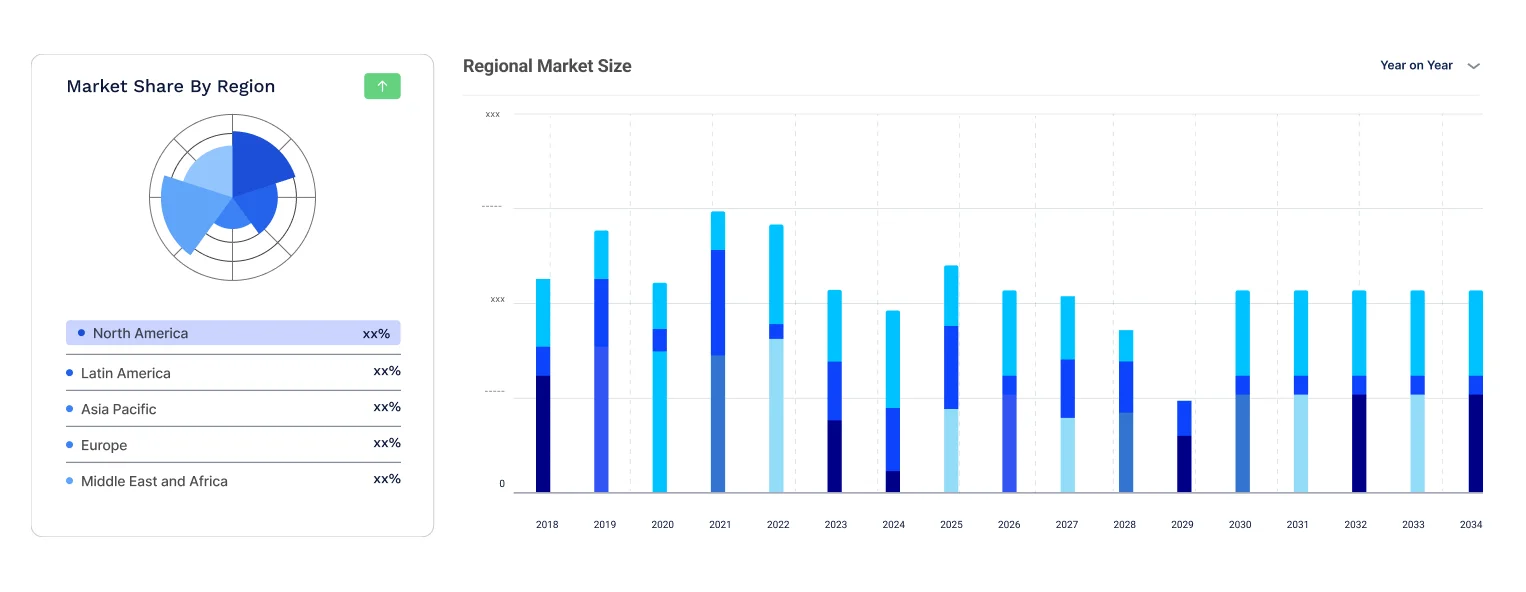
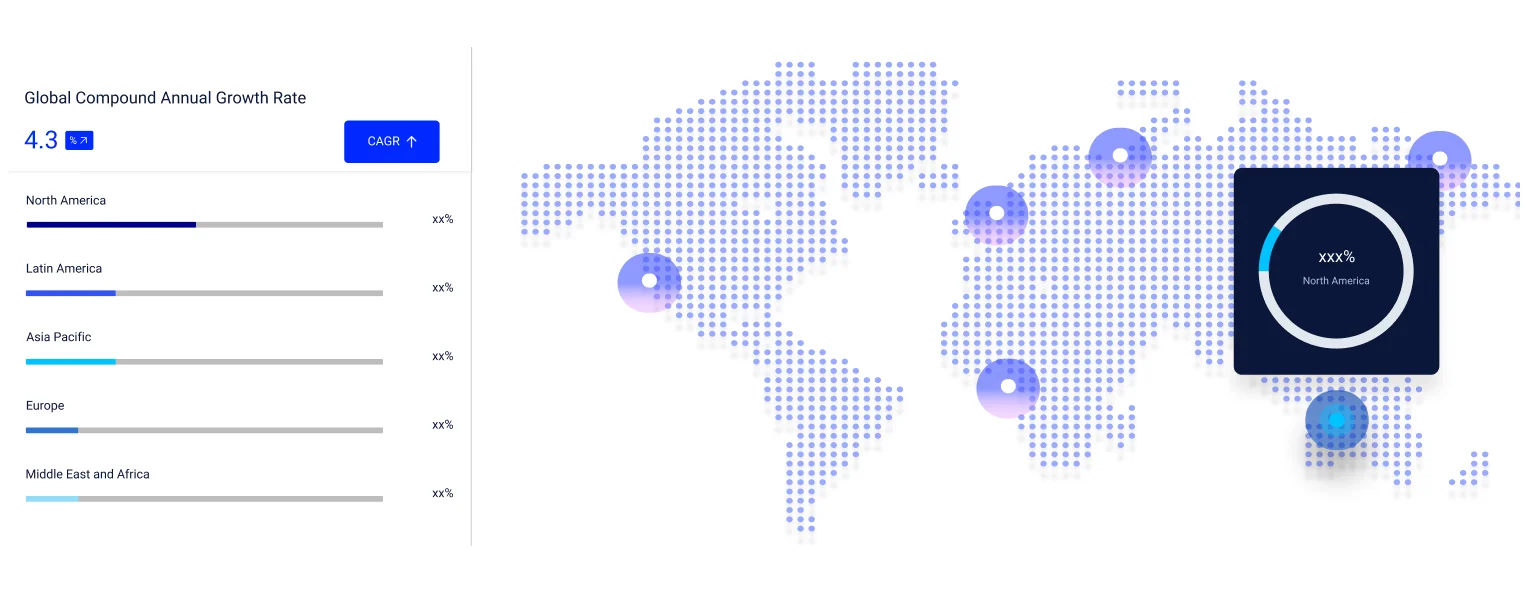
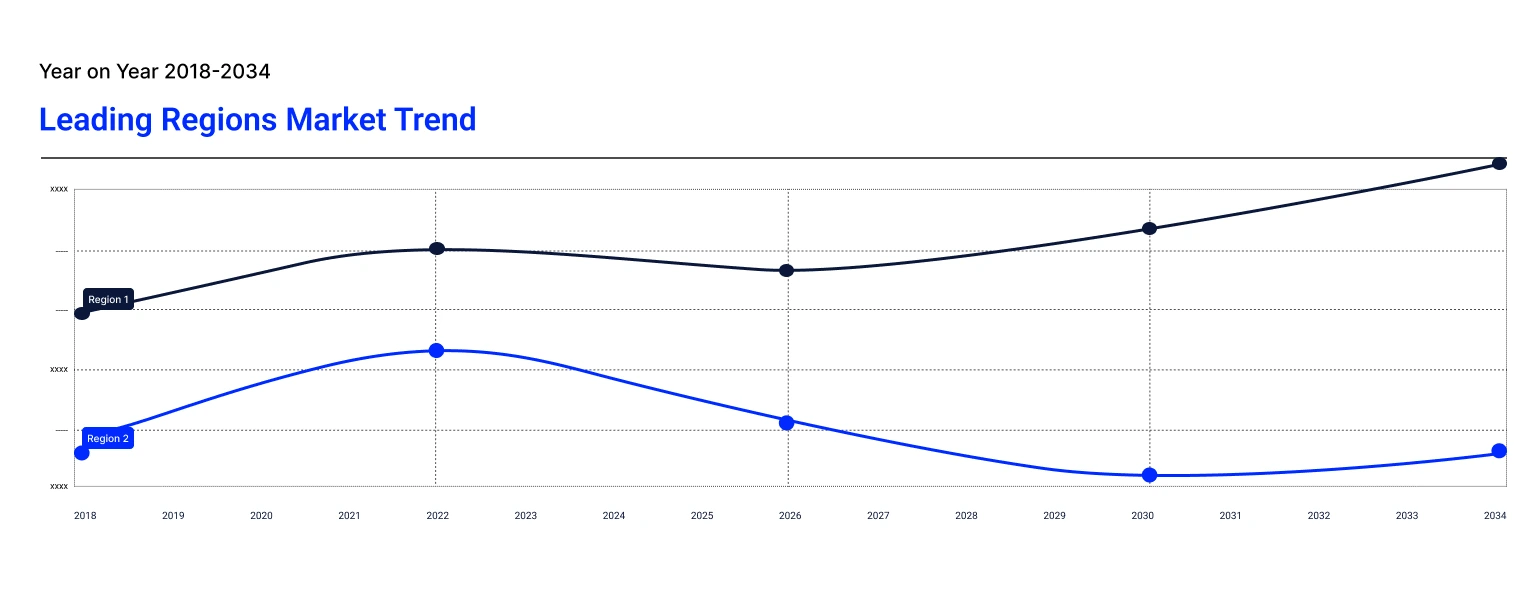
North America leads with top market share through sophisticated compliance frameworks
North America leads the global market, powered by its developed financial environment and robust regulatory frameworks. Banks and other financial organizations in the United States and Canada are dependent on sophisticated automation and artificial intelligence-based recovery models to manage high volumes of consumer and commercial debt. The region is also aided by swift adoption of cloud-based technology, bringing scalability for varied portfolios. Strong cooperation among software vendors, credit bureaus, and financial regulators also continues to drive market innovation.
The debt collection software market in the Asia Pacific region is aided by swift digitalization and growing fintech ecosystems in nations such as India, China, and Southeast Asia. Supportive policies from regional governments are accelerating the shift toward digital financial services, boosting adoption among banks and microfinance players. At the same time, multilingual AI-driven voicebots and mobile-first recovery workflows are gaining traction, allowing institutions to engage borrowers from diverse backgrounds more efficiently.
Competition is intensifying as lenders, agencies, and fintechs demand faster recoveries, lower costs, and airtight compliance. Debt collection software market players differentiate through AI-driven segmentation, voice analytics, agent-assist copilots, and privacy-preserving modeling that satisfies cross-border rules. Open-banking connectivity and instant-payments orchestration are becoming key focus areas, enabling frictionless repayment links inside emails, SMS, and apps. Vendors see opportunities in BNPL portfolios, telecom receivables, healthcare self-pay, and government arrears, where configurable workflows beat legacy tools.
Partnerships with credit bureaus and payment networks unlock richer consented data, while debt-resolution marketplaces broaden reach. Product roadmaps center on explainable AI, compliant messaging across WhatsApp and RCS, and granular audit trails. Midsize banks and credit unions, especially in North America and Europe, value rapid SaaS deployment and prebuilt policy templates. Meanwhile, enterprises favor hybrid architectures, zero-trust security, and sovereign hosting. The competitive edge is expected to go to debt collection software companies that prove measurable liquidation uplift, shorten days-sales-outstanding, and embed insights for collectors and supervisors.
Chetu Inc., established in 2000 and headquartered in the United States, builds custom, API-rich debt collection modules tailored to lenders, agencies, and fintech processors. The company integrates predictive scoring, speech analytics, and omnichannel outreach into existing CRMs and core banking stacks. It delivers compliant payment links, dispute workflows, and collector desktops with real-time KPIs.
Experian Information Solutions, Inc., established in 1999 and headquartered in New Jersey, United States, brings bureau-grade data, decisioning, and identity graphs to collections. Its platforms power segmentation, propensity-to-pay scores, and compliant outreach across email, SMS, and messaging apps. Experian links repayment offers with instant account verification and risk-based payment routing.
Fair Isaac Corporation, established in 1956 and headquartered in Bozeman, Montana, United States, delivers decisioning platforms that orchestrate compliant, personalized collections across channels. FICO’s optimization, scorecards, and strategy design tools simulate treatments and allocate resources for maximum liquidation with minimal risk.
Nucleus Software Exports Ltd., established in 1986 and headquartered in Noida, India, offers FinnOne-based collections blending workflow automation, mobile field apps, and analytical segmentation. The platform supports digital dunning, promise-to-pay tracking, repossession orchestration, and hardship programs, serving banks, NBFCs, and microfinance institutions.
*Please note that this is only a partial list; the complete list of key players is available in the full report. Additionally, the list of key players can be customized to better suit your needs.*
Another prominent player in the market is TransUnion LLC, among others.
Explore the latest trends shaping the debt collection software market 2026-2035 with our in-depth report. Gain strategic insights, future forecasts, and key market developments that can help you stay competitive. Download a free sample report or contact our team for customized consultation on debt collection software market trends 2026.


Upto 15% Off
USD
$2499 $2249
$3999 $3599
$4999 $4249
$5999 $5099


*While we strive to always give you current and accurate information, the numbers depicted on the website are indicative and may differ from the actual numbers in the main report. At Expert Market Research, we aim to bring you the latest insights and trends in the market. Using our analyses and forecasts, stakeholders can understand the market dynamics, navigate challenges, and capitalize on opportunities to make data-driven strategic decisions.*
Get in touch with us for a customized solution tailored to your unique requirements and save upto 35%!
In 2025, the debt collection software market reached an approximate value of USD 4638.66 Million.
The market is projected to grow at a CAGR of 10.50% between 2026 and 2035.
The market is estimated to witness a healthy growth in the forecast period of 2026-2035 to reach more than USD 12589.70 Million by 2035.
Prioritizing explainable AI, embedding instant-payment rails, standardizing APIs, piloting privacy-preserving modeling, co-creating playbooks with regulators, upskilling collectors with copilots, expanding BNPL and healthcare, and quantifying uplift with randomized control tests.
The increasing demand for self-service payment models, the growing adoption of debt collection software for improvements in the cash flow and optimisation of collection, the automation of debt collection processes, and the integration of artificial intelligence (AI) in debt collection software are expected to aid the market growth.
The major regions in the industry are North America, Latin America, the Middle East and Africa, Europe, and the Asia Pacific.
The major components of debt collection software are software and service.
On-premise and cloud are the significant deployment segments of debt collection software.
The various organisation sizes in the market are small and medium enterprises and large enterprises.
The different end users of debt collection software are financial institutions, collection agencies, healthcare, government, and telecom and utilities.
The key players in the market include Chetu Inc., Experian Information Solutions, Inc., Fair Isaac Corporation, Nucleus Software Exports Ltd., and TransUnion LLC, among others.
Fragmented regulations, data-sharing constraints, legacy integrations, rising fraud, consumer-communication limits, model bias scrutiny, and scarce analysts hinder scalable deployments, inflate costs, and prolong implementations, hindering the growth of the debt collection software market.
Explore our key highlights of the report and gain a concise overview of key findings, trends, and actionable insights that will empower your strategic decisions.
| REPORT FEATURES | DETAILS |
| Base Year | 2025 |
| Historical Period | 2019-2025 |
| Forecast Period | 2026-2035 |
| Scope of the Report |
Historical and Forecast Trends, Industry Drivers and Constraints, Historical and Forecast Market Analysis by Segment:
|
| Breakup by Component |
|
| Breakup by Deployment |
|
| Breakup by Organisation Size |
|
| Breakup by End User |
|
| Breakup by Region |
|
| Market Dynamics |
|
| Competitive Landscape |
|
| Companies Covered |
|
| Report Price and Purchase Option | Explore our purchase options that are best suited to your resources and industry needs. |
| Delivery Format | Delivered as an attached PDF and Excel through email, with an option of receiving an editable PPT, according to the purchase option. |
Datasheet
One User
USD 2,499
USD 2,249
tax inclusive*
Single User License
One User
USD 3,999
USD 3,599
tax inclusive*
Five User License
Five User
USD 4,999
USD 4,249
tax inclusive*
Corporate License
Unlimited Users
USD 5,999
USD 5,099
tax inclusive*
*Please note that the prices mentioned below are starting prices for each bundle type. Kindly contact our team for further details.*
Flash Bundle
Small Business Bundle
Growth Bundle
Enterprise Bundle
*Please note that the prices mentioned below are starting prices for each bundle type. Kindly contact our team for further details.*
Flash Bundle
Number of Reports: 3
20%
tax inclusive*
Small Business Bundle
Number of Reports: 5
25%
tax inclusive*
Growth Bundle
Number of Reports: 8
30%
tax inclusive*
Enterprise Bundle
Number of Reports: 10
35%
tax inclusive*
How To Order

Select License Type
Choose the right license for your needs and access rights.

Click on ‘Buy Now’
Add the report to your cart with one click and proceed to register.

Select Mode of Payment
Choose a payment option for a secure checkout. You will be redirected accordingly.
Gain insights to stay ahead and seize opportunities.

Get insights & trends for a competitive edge.

Track prices with detailed trend reports.

Analyse trade data for supply chain insights.

Leverage cost reports for smart savings

Enhance supply chain with partnerships.

Connect For More Information
Our expert team of analysts will offer full support and resolve any queries regarding the report, before and after the purchase.
Our expert team of analysts will offer full support and resolve any queries regarding the report, before and after the purchase.
We employ meticulous research methods, blending advanced analytics and expert insights to deliver accurate, actionable industry intelligence, staying ahead of competitors.
Our skilled analysts offer unparalleled competitive advantage with detailed insights on current and emerging markets, ensuring your strategic edge.
We offer an in-depth yet simplified presentation of industry insights and analysis to meet your specific requirements effectively.





Share