

Consumer Insights
Uncover trends and behaviors shaping consumer choices today
Procurement Insights
Optimize your sourcing strategy with key market data
Industry Stats
Stay ahead with the latest trends and market analysis.

The China online grocery market size was USD 233.70 Billion in 2025 and is expected to grow at a CAGR of 26.70% during the forecast period of 2026-2035. Surging demand from Tier III and IV cities, supported by government-backed rural digitisation programmes, is driving app-based grocery penetration and reshaping delivery economics for e-grocery firms beyond first-tier metro cities, aiding the market to attain a value of USD 2491.29 Billion by 2035.
Factors like digitised consumer habits and state-supported infrastructure along with the e-commerce and retail sector are also accelerating the market growth. As per the China online grocery market analysis, the country was the largest e-commerce market in 2021 with sales of over 1.5 trillion. The e-commerce industry is also being aided by the supportive policies of the Chinese government, which have been especially effective in the rural areas. Although the e-commerce industry is dominated by apparel and footwear, online grocery indicates fast-paced growth.
Platforms like Pinduoduo and JD.com are deepening their roots in Tier-2 and Tier-3 cities, capitalising on 80% smartphone penetration and improved cold chain logistics. According to the National Bureau of Statistics, the rural online retail sales of agricultural products alone surged by 20.1% YoY in 2023, which further indicates the China online grocery market growth.
In addition, green lanes for agri-delivery and government-funded smart warehousing have shortened lead times, allowing for faster, fresher groceries to reach doorsteps, boosting the demand in the market. Hence, the Chinese industry can be characterised by technology, policy, and user behaviour that favours B2B strategists who are looking to tap into scalable, digital-first supply chains.
Base Year
Historical Period
Forecast Period
The online grocery market in China has experienced significant growth, with digital grocery sales reaching USD 66.43 billion by the end of 2020, accounting for 14.6% of total grocery sales.
The market growth has been driven by factors such as the convenience of delivery, efficient searching for items, avoiding crowds, ease of reading product reviews, and a wide selection of products.
Companies like Alibaba, JD.com, Pinduoduo, and Meituan, as well as startups like Missfresh and Dingdong, have been instrumental in providing diverse platforms for online grocery shopping in China.
Compound Annual Growth Rate
26.7%
Value in USD Billion
2026-2035
*this image is indicative*
The 2022 "Digital Rural Development" plan by the Ministry of Agriculture launched several smart farming pilot zones. These digitally connected farms are linked directly to e-commerce platforms via data-sharing systems, boosting growth in the China online grocery market. Platforms like Alibaba’s Hema Fresh now source their products directly from sensor-monitored farms in Hebei and Guangxi. This model reduces costs and improves traceability which appeals to B2B buyers demanding consistent quality and verified sourcing.
Platforms like Freshippo, JD Daojia, and Meituan Maicai have made the “next hour” delivery mainstream in Tier 1 cities, contributing to the China online grocery market value. Instant delivery in urban zones has gained rapid momentum due to their convenience and speed. Platforms like Meituan have also invested in AI route optimisation and cold-storage fulfilment centres. These micro-fulfilment hubs reduce perishable wastage to a considerable extent, making logistics sustainable and scalable.
Livestreaming commerce is reshaping how groceries are marketed and sold in China, bridging the gap between rural producers and urban buyers. Platforms like Kuaishou and Douyin are enabling farmers to livestream harvests, cooking demonstrations, and Q&A sessions, creating trust and urgency in purchases. Pinduoduo’s “Duo Duo Orchard” initiative, for instance, connects farmers to millions of viewers, boosting direct sales during peak seasons. This trend has compelled B2B buyers like organic grocers and restaurant chains to use these streams to assess quality before placing bulk orders.
AI-driven dynamic pricing tools are further transforming profit margins, reshaping the China online grocery market dynamics. For example, JD.com’s in-house AI recalibrates prices hourly based on demand surges, seasonality, and logistics costs. The company has experienced a 92% increase in net income attributed to shareholders, with its stock increasing by 4%. For B2B buyers handling bulk procurement, predictive insights reduce overstocking and optimise working capital flows, especially when they are navigating perishable categories.
The country’s central and provincial governments are positioning cold chain logistics as a national priority, accelerating the China online grocery market development. In 2023, the Ministry of Transport announced several investments into cold chain logistics development, focusing on agriculture-centric provinces like Yunnan, Shandong, and Sichuan. As a result, according to reports, fresh produce spoilage dropped by 22% year-on-year in 2024. For B2B wholesalers, distributors, and chain stores, this trend has become a norm as it offers extended shelf life, reliable inventory turnover, and cross-regional sourcing opportunities.
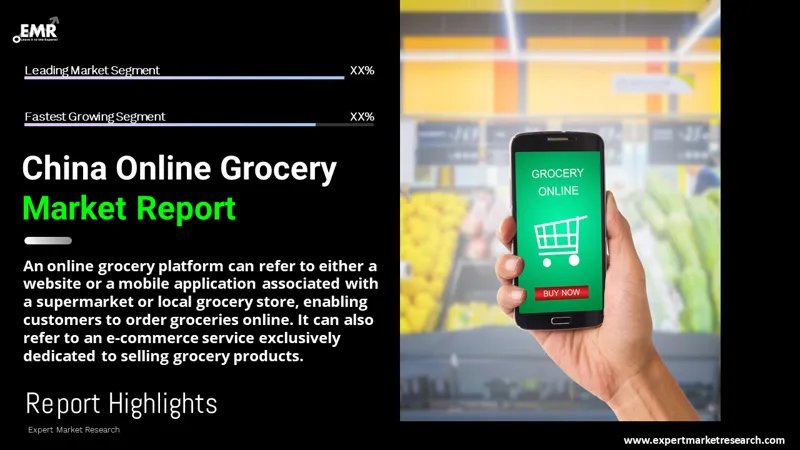
Read more about this report - REQUEST FREE SAMPLE COPY IN PDF
The EMR’s report titled “China Online Grocery Market Report and Forecast 2026-2035” offers a detailed analysis of the market based on the following segments:
Market Breakup by Type of Category
Key Insight: Grocery and staples largely dominate the China online grocery market. E-commerce platforms are collaborating with local co-operatives in Hebei and Henan for direct farm gate procurement of grains and oils. These tie-ups allow better profit margins. The long shelf life of items like flour and rice suits both household subscriptions and bulk B2B orders. These products are easy to store, require minimal handling, and remain unaffected by short-term demand fluctuations.
Market Breakup by Platform
Key Insight: The China online grocery industry is primarily driven by app-based platforms. These are mobile applications developed by supermarkets, grocery stores, and e-commerce companies that enable consumers to purchase groceries using their smartphones or tablets. For instance, Meituan, a leading on-demand delivery platform in China, has a dedicated grocery delivery app that allows users to order a variety of fresh and packaged food items. The rise in smartphone penetration and the growing preference for mobile shopping have contributed to the increasing adoption of app-based online grocery platforms in China.
Market Breakup by Payment Method
Key Insight: Online payment methods significantly contribute to the China online grocery market revenue, with digital wallets like WeChat Pay and Alipay being the most popular options. These digital wallets are widely used by Chinese consumers. When shopping on Alibaba's Tmall Supermarket or JD.com's JD Super, customers can easily make payments using their preferred digital wallet, ensuring a seamless and secure transaction process. The convenience and security offered by online payment methods have contributed to their widespread adoption, making them the preferred choice for online grocery purchases in China.
Market Breakup by Cities
Key Insight: Shanghai is a major hub for online grocery in China. Platforms like Alibaba's Tmall Supermarket and JD.com's JD Super are catering to the rising demand for convenient grocery shopping. Shanghai's grocery market is expected to continue its positive trajectory due to the city's high population density and tech-savvy consumers.
By Type of Category, Grocery and Staples Dominate the Market Revenue
The grocery and staples category commands the dominant share in the market revenue due to habitual consumption and stock-ability. Brands like Hema and Dingdong Maicai report that majority of their cart value comes from staples like rice, oil, and dried noodles. Bulk bundling models, auto-refill subscriptions, and family packs are heavily promoted to B2B institutional clients like schools, restaurants, and canteens. According to the China Chain Store & Franchise Association, grocery staples accounted for a substantial percentage in online grocery transactions.
Fruits and vegetables have emerged to be the fastest-growing category, strengthening demand in the China online grocery market. The category is largely driven by health-conscious consumers and AI-powered freshness guarantees. Sales have surged owing to same-day delivery models and IoT-driven quality checks. Alibaba’s direct farm-to-platform sourcing initiative covers several provinces, reducing post-harvest loss. For B2B retailers, especially those running premium food chains or boutique stores, this vertical offers grocery freshness as a unique selling proposition.
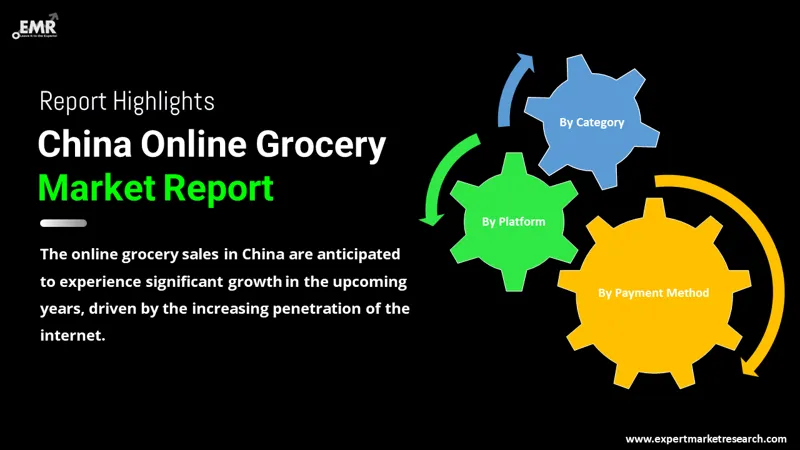
Read more about this report - REQUEST FREE SAMPLE COPY IN PDF
By Platform, Mobile Application Account for the Major Share of the Market
Mobile apps hold a substantial share of the market. Apps like Hema and Pinduoduo offer AI-curated bundles, price tracking, and localised inventory. B2B buyers including cafes, dorms, mid-sized hotels, now use B2B interfaces in these apps to schedule repeat orders, apply tax invoices, and negotiate pricing. Further, mobile platforms are integrated with mini programmes on WeChat, allowing push notifications, flash deals, and last-mile tracking.
As per the China online grocery market report, websites are also gaining traction for enterprise orders. Platforms like JD B2B and FreshGo revamped their desktop experiences to support multi-location orders, bulk invoicing, and ERP integration. These web-based platforms provide customers with the convenience of shopping for a wide range of grocery items, including packaged foods, fresh produce, beverages, and household products, from the comfort of their homes or offices. Additionally, this is appealing to hotels and commercial kitchens who require detailed SKUs and better control over order documentation.
By Payment Method, Online Transactions Remain the Dominant Segment of the Market
Online payments have accelerated the market value with deep integration with fintech giants like Alipay and WeChat Pay. Over 78% of online grocery transactions are processed via digital wallets, reflecting the demand for frictionless payment experience. B2B clients, particularly restaurants and small retailers, benefit from e-invoicing, automated reconciliation, and volume-based payment features embedded within these platforms. E-commerce operators offer tiered cashback for repeat purchases, further promoting digital payment as the default mode. Even regional cooperatives are onboarding QR-code systems to streamline transactions with wholesalers.
While digital payment leads in the China online grocery market shares, cash on delivery (COD) is experiencing a resurgence, especially in lower-tier cities and rural provinces. The growth of this payment mode is fuelled by elderly shoppers, first-time online buyers, and migrant workers unfamiliar with digital wallets. For B2B transactions, COD is gaining ground in hyperlocal supply chains, such as small-scale canteens and community grocers, who prefer payment upon verification. Platforms like Missfresh and Dingdong Maicai now offer hybrid models, accepting COD on wholesale fruit and vegetable orders with invoice documentation.
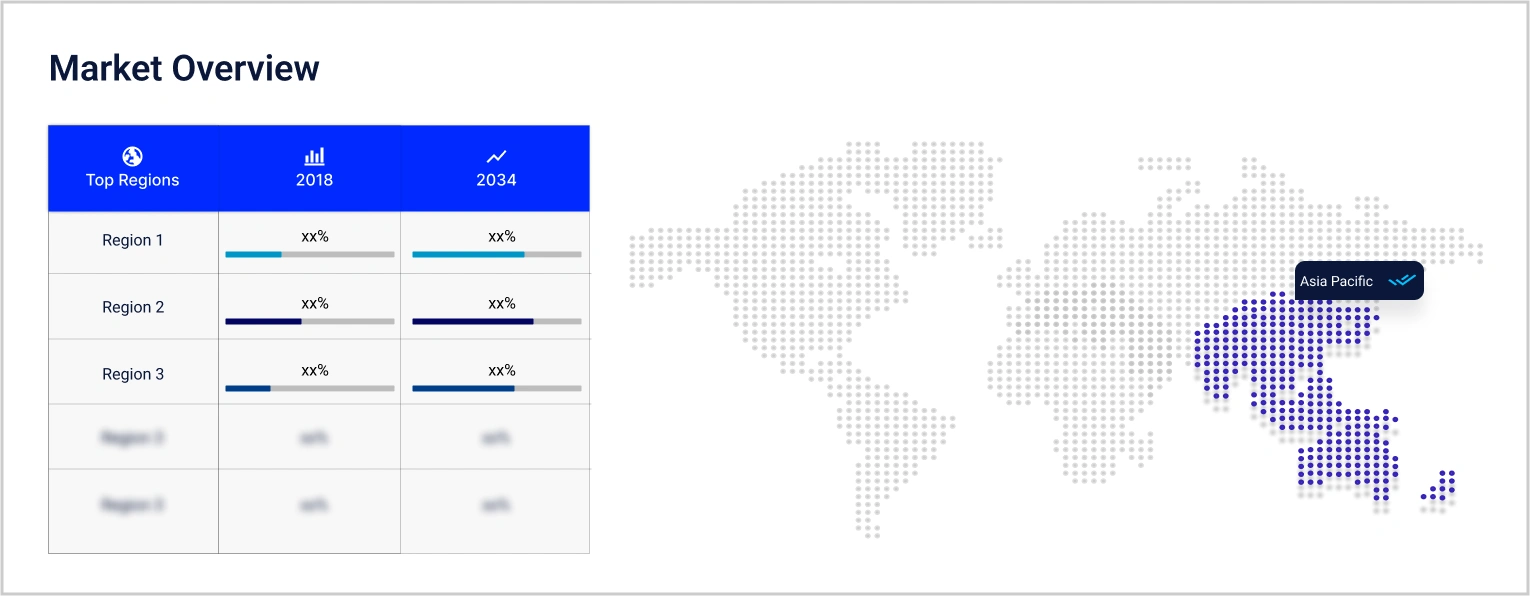
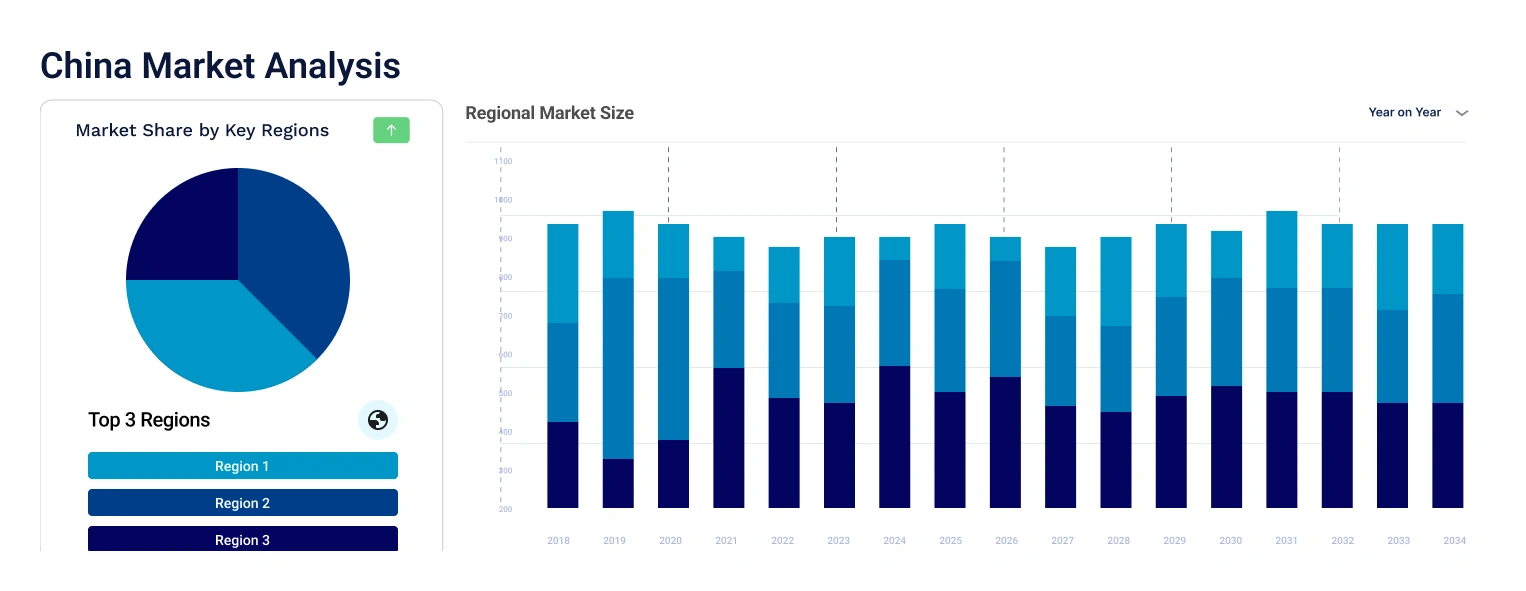
Shanghai Registers the Biggest Share of the Market
Shanghai accounts for the largest share in the market, owing to a dense population, advanced cold chain infrastructure, and high digital penetration. The municipal government offers tax incentives for sustainable delivery initiatives, spurring electric fleet adoption. The urban structure of this city encourages shorter delivery times, route maximisation, and centralised warehouse facilities.
Beijing is emerging as a prominent player in the online grocery industry in China. Major players like Alibaba and JD.com have a strong presence in Beijing, leveraging the city's high purchasing power. Furthermore, Alibaba has a strong e-commerce and retail presence, which has translated into further growth in the market. Platforms like Taobao and Tmall, both owned by Alibaba, have a significant foothold in Zhejiang's online grocery sector.
Leading China online grocery market players include Alibaba, JD.com, and Pinduoduo. These companies are leveraging proprietary logistics networks and AI to gain an edge in the competitive market. Niche players like MissFresh are targeting hyperlocal delivery in Tier-3 towns. Cross-platform partnerships are also booming in this space.
Furthermore, China online grocery companies can find opportunities in supplying enterprise-grade staples, SaaS solutions for inventory tracking, or cross-border agricultural imports. White-label B2B grocery marketplaces are also emerging, allowing hotels and dormitories to buy directly from overseas farms. In addition, market players are improving the shopping experience and leveraging technology to enhance customer engagement, with a focus on omni-channel retailing and the integration of online and offline channels.
Founded in 1999, is headquartered in Hangzhou, China. The company is a global leader in e-commerce, operating platforms such as Taobao and Tmall. In addition to e-commerce, Alibaba offers cloud computing services, digital media and entertainment, and logistics solutions.
Established in 1998 and based in Beijing, China, is a prominent e-commerce company known for its online retail platform. JD.com offers a wide range of products and services to consumers, including electronics, fashion, home goods, and more. The company also provides logistics services, cloud computing solutions, and other technology-related services.
Founded in 2010 and headquartered in Beijing, China, is a leading provider of on-demand delivery services, hotel and travel booking, restaurant reviews and reservations, and various other local services. Company’s focus on local services has made it a key player in China's tech and service industry.
With its establishment in 1994 and headquarters in Washington, United States has become a global giant in e-commerce. Amazon's marketplace offers electronics to household goods, and its Prime membership includes benefits like fast shipping. Beyond e-commerce, Amazon is a major player in cloud computing with Amazon Web Services (AWS).
*Please note that this is only a partial list; the complete list of key players is available in the full report. Additionally, the list of key players can be customized to better suit your needs.*
Another key player in the market report includes Miss Fresh, among others.
Explore the latest trends shaping the China online grocery market 2026-2035 with our in-depth report. Gain strategic insights, future forecasts, and key market developments that can help you stay competitive. Download a free sample report or contact our team for customised consultation on China online grocery market trends 2026.
Australia Online Grocery Delivery Market
India Online Grocery Market
Online Grocery Market


Upto 15% Off
USD
$2499 $2249
$3999 $3599
$4999 $4249
$5999 $5099


*While we strive to always give you current and accurate information, the numbers depicted on the website are indicative and may differ from the actual numbers in the main report. At Expert Market Research, we aim to bring you the latest insights and trends in the market. Using our analyses and forecasts, stakeholders can understand the market dynamics, navigate challenges, and capitalize on opportunities to make data-driven strategic decisions.*
Get in touch with us for a customized solution tailored to your unique requirements and save upto 35%!
In 2025, the China online grocery market reached an approximate value of USD 233.70 Billion.
The market is projected to grow at a CAGR of 26.70% between 2026 and 2035.
Key strategies driving the market include investing in AI-driven stock forecasts, partnering with local farms, developing multi-platform access points, localizing warehousing, and leveraging livestream selling for B2B procurement.
The key challenges are high logistics costs, regulatory inconsistencies, and cold chain gaps in rural zones.
The market is mainly concentrated in Shanghai, Zhejiang, Guangdong, Jiangsu, and Beijing, among others.
The leading type of categories in the market are grocery and staples and fruits and vegetables, among others.
The market segmentations based on platform include website and mobile application.
The leading payment methods in the market are online and cash on delivery.
The key players in the China online grocery market include Alibaba Group Holding Ltd., JD.com Inc., Meituan, Miss Fresh, and Amazon.com Inc., among others.
Explore our key highlights of the report and gain a concise overview of key findings, trends, and actionable insights that will empower your strategic decisions.
| REPORT FEATURES | DETAILS |
| Base Year | 2025 |
| Historical Period | 2019-2025 |
| Forecast Period | 2026-2035 |
| Scope of the Report |
Historical and Forecast Trends, Industry Drivers and Constraints, Historical and Forecast Market Analysis by Segment:
|
| Breakup by Type of Category |
|
| Breakup by Platform |
|
| Breakup by Payment Method |
|
| Breakup by Region |
|
| Market Dynamics |
|
| Competitive Landscape |
|
| Companies Covered |
|
| Report Price and Purchase Option | Explore our purchase options that are best suited to your resources and industry needs. |
| Delivery Format | Delivered as an attached PDF and Excel through email, with an option of receiving an editable PPT, according to the purchase option. |
Datasheet
One User
USD 2,499
USD 2,249
tax inclusive*
Single User License
One User
USD 3,999
USD 3,599
tax inclusive*
Five User License
Five User
USD 4,999
USD 4,249
tax inclusive*
Corporate License
Unlimited Users
USD 5,999
USD 5,099
tax inclusive*
*Please note that the prices mentioned below are starting prices for each bundle type. Kindly contact our team for further details.*
Flash Bundle
Small Business Bundle
Growth Bundle
Enterprise Bundle
*Please note that the prices mentioned below are starting prices for each bundle type. Kindly contact our team for further details.*
Flash Bundle
Number of Reports: 3
20%
tax inclusive*
Small Business Bundle
Number of Reports: 5
25%
tax inclusive*
Growth Bundle
Number of Reports: 8
30%
tax inclusive*
Enterprise Bundle
Number of Reports: 10
35%
tax inclusive*
How To Order

Select License Type
Choose the right license for your needs and access rights.

Click on ‘Buy Now’
Add the report to your cart with one click and proceed to register.

Select Mode of Payment
Choose a payment option for a secure checkout. You will be redirected accordingly.
Gain insights to stay ahead and seize opportunities.

Get insights & trends for a competitive edge.

Track prices with detailed trend reports.

Analyse trade data for supply chain insights.

Leverage cost reports for smart savings

Enhance supply chain with partnerships.

Connect For More Information
Our expert team of analysts will offer full support and resolve any queries regarding the report, before and after the purchase.
Our expert team of analysts will offer full support and resolve any queries regarding the report, before and after the purchase.
We employ meticulous research methods, blending advanced analytics and expert insights to deliver accurate, actionable industry intelligence, staying ahead of competitors.
Our skilled analysts offer unparalleled competitive advantage with detailed insights on current and emerging markets, ensuring your strategic edge.
We offer an in-depth yet simplified presentation of industry insights and analysis to meet your specific requirements effectively.





Share