

Consumer Insights
Uncover trends and behaviors shaping consumer choices today
Procurement Insights
Optimize your sourcing strategy with key market data
Industry Stats
Stay ahead with the latest trends and market analysis.

The global calcium carbonate market attained a value of USD 22.28 Billion in 2025 and is projected to expand at a CAGR of 4.30% through 2035. The market is set to achieve USD 33.94 Billion by 2035. Rising demand for sustainable filler materials in bioplastics, coatings, and packaging, supported by tightening carbon regulations and circular economy initiatives, is propelling investments in low-emission, high-purity calcium carbonate production technologies.
Amid growing emphasis on circular manufacturing and carbon reduction across the industrial minerals sector, companies are investing heavily in low-emission production technologies. In In May 2022, Imerys Group, a global leader in mineral-based specialties, inaugurated its state-of-the-art minerals pilot plant in facility in London, dedicated to producing low-carbon precipitated calcium carbonate (PCC) using carbon capture and mineralization (CCM) technology. The project aims to recycle CO₂ emissions from nearby industrial plants into high-purity calcium carbonate, reducing carbon intensity to a considerable extent. The development signifies a decisive step toward integrating sustainability and innovation into mineral processing.
Manufacturers across the paper, plastics, and paints sectors are transitioning from conventional ground calcium carbonate (GCC) to advanced surface-modified PCC to achieve improved dispersion, brightness, and durability. This trend in the calcium carbonate market is also driven by regulatory restrictions on non-sustainable fillers and growing investments in bio-based packaging materials. Firms such as Omya AG and Minerals Technologies Inc. are developing high-performance grades tailored for lightweight plastics and eco-paper applications, emphasizing low energy consumption during production.
Base Year
Historical Period
Forecast Period
Compound Annual Growth Rate
4.3%
Value in USD Billion
2026-2035
*this image is indicative*
| Global Calcium Carbonate Market Report Summary | Description | Value |
| Base Year | USD Billion | 2025 |
| Historical Period | USD Billion | 2019-2025 |
| Forecast Period | USD Billion | 2026-2035 |
| Market Size 2025 | USD Billion | 22.28 |
| Market Size 2035 | USD Billion | 33.94 |
| CAGR 2019-2025 | Percentage | XX% |
| CAGR 2026-2035 | Percentage | 4.30% |
| CAGR 2026-2035 - Market by Region | Asia Pacific | 4.8% |
| CAGR 2026-2035 - Market by Country | India | 4.9% |
| CAGR 2026-2035 - Market by Country | Canada | 4.7% |
| CAGR 2026-2035 - Market by Type | Precipitated Calcium Carbonate (PCC) | 5.0% |
| CAGR 2026-2035 - Market by Application | Filler and Pigment | 5.3% |
| Market Share by Country 2025 | Brazil | 2.5% |
Producers are accelerating investments in precipitated calcium carbonate (PCC) plants that integrate carbon capture and utilization (CCU) and mineralization, turning industrial CO₂ into high-purity carbonate product streams. For example, in May 2025, the Indian Department of Science and Technology (DST) unveiled five Carbon Capture and Utilization (CCU) testbeds, forming a first-of-its-kind research and innovation cluster to combat industrial carbon emissions. In response, companies like Imerys and several specialty mineral players are publicly committing to lower emissions and piloting CCM-based PCC routes to supply brand owners seeking verified carbon reductions, driving growth in the calcium carbonate market.
Calcium carbonate is rapidly moving beyond commodity filler status as manufacturers demand surface-modified, nano-sized or platelet PCC grades to improve stiffness, brightness and barrier properties in polyolefins and bioplastics. Suppliers like Omya and Minerals Technologies are commercializing treated grades that enable higher filler loading without sacrificing mechanical performance, cutting resin costs and lowering polymer carbon footprint per part, accelerating demand in the calcium carbonate market. For example, in December 2022, Omya introduced Omyaloop, a recycled calcium carbonate product family designed for circular-economy plastics (PE/PP). This technical upgrading is driving R&D-led partnerships between filler makers and compounders to co-develop tailor-made masterbatches for automotive and packaging customers.
Plastic-filler demand is expanding as the automotive and packaging industries push lightweighting and cost reduction. Calcium carbonate fillers are being optimized to deliver rigidity at high loadings, replacing pricier engineering polymers in non-structural components. For example, Minerals Technologies Inc. offers ultra-fine precipitated calcium carbonate grades like Ultra-Pflex, Thixo-Carb, Calofort, that can be tailored for automotive plastics and sealants. Calcium carbonate market research shows the plastic fillers sector is growing strongly, and calcium carbonate is a key beneficiary given its cost and property tradeoffs. This is prompting investments in micronization, surface treatment, and compounding partnerships that enable filler-led substitution across volumes. Suppliers that can guarantee tight particle distribution and consistent whiteness are winning large contracts.
Paper, coatings and packaging value chains are tightening purity and sustainability specifications. End-users are requesting low-chloride, low-metal impurity and traceable feedstock calcium carbonate, especially for food-contact and high-grade paper. In response, producers are scaling advanced wash, dewatering and analytical QA lines and offering batch-level traceability. For example, Alpha Calcit Füllstoff GmbH offers its CALCILIT® ECO G product line, which is ECVP-certified, made from 100% pre-consumer recycled white marble calcium carbonate and designed for coatings, paper and high-purity applications. Regional ecolabels and packaging directives are increasing demand for certified, low-impact fillers, redefining the calcium carbonate market dynamics.
Asia Pacific continues to add GCC and PCC capacity, providing cost advantages and export flow, while Europe is investing in value-added and low-carbon PCC. For instance, Omya AG announced in April 2023 a major investment in Asia-Pacific by constructing seven on-site plants in China in its Guangxi, Guangdong, Shandong, Fujian provinces and in Sumatra of Indonesia. This calcium carbonate market development indicates that global traders and converters are juggling low-cost bulk supply from APAC and premium, certified supply from Europe/North America. Countries with public CCU roadmaps and decarbonization incentives are attracting investment into green carbonate assets.

Read more about this report - REQUEST FREE SAMPLE COPY IN PDF
The EMR’s report titled “Global Calcium Carbonate Market Report and Forecast 2026-2035” offers a detailed analysis of the market based on the following segments:
Market Breakup by Type
Key Insight: GCC currently holds the dominant share in the calcium carbonate market, propelled by volume for cost-sensitive bulk users, with minimal processing and large quarry footprints. Coated and uncoated GCC variants add modest functional gains through surface treatments. PCC is the technical growth engine, enabling tailored particle morphology and surface chemistry for high-value paper, plastics and pharma applications. Suppliers are therefore investing in energy efficiency for GCC, precision precipitation, treatment, and CCU integration for PCC.
Market Breakup by Application
Key Insight: According to the calcium carbonate market report, fillers and pigments rely on optical and rheological properties for paper and coatings. Thermoplastics demand engineered grades for loadings and stiffness, dietary and pharma uses require ultra-clean, pharma-grade PCC, construction uses bulk GCC for mortar and cement replacement, other uses like desulphurization and soil neutralization focus on chemical reactivity and charge neutrality. Suppliers are therefore offering tiered portfolios with commodity GCC for tonnage buyers, coated and treated GCC for moderate performance lifts, and high-performance PCC for demanding, regulated or lightweighting applications.
Market Breakup by End Use
Key Insight: Driving factors of each end use considered in the calcium carbonate market report differ. For example, paper needs optical and surface performance, plastics seek lightweighting and cost reduction via engineered fillers, paints and coatings target opacity and rheology, construction focuses on bulk and alkalinity, pharmaceuticals require purity and certification, agriculture and soil neutralization demand chemical reactivity. As a result, suppliers are focusing to offer bulk mined GCC for construction and basic paper, surface-modified grades for paints and adhesives and engineered PCC and nano-grades for specialty plastics and pharmaceutical industry.
Market Breakup by Region
Key Insight: Asia Pacific dominates the market. The region supplies volume and competitive pricing through integrated quarry and grinding assets. Europe acts as the innovation and regulatory premium center for low-carbon, high-purity carbonate. The calcium carbonate market in North America is balancing domestic mineral resources with investments in PCC for coatings and plastics while Latin America supplies feedstock and regional demand and MEA shows niche growth tied to petrochemical integration.
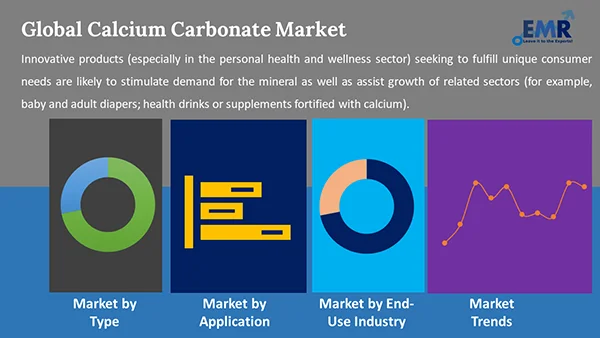
Read more about this report - REQUEST FREE SAMPLE COPY IN PDF
By type, ground calcium carbonate dominates the market due to low cost and volume
Ground calcium carbonate remains the market’s growth engine because of abundant mineral deposits, simple milling processes and competitive cost per ton. GCC’s role as a bulk filler in construction, paper and basic plastics keeps it attractive for high-volume, low-specification uses where cost and bulk density matter most. Producers in China, India and Southeast Asia are expanding local GCC capacity and optimizing grinding energy use to preserve margins amid price pressure, boosting the calcium carbonate market value.
PCC is the fastest-growing calcium carbonate type because it enables engineered particle shapes, controlled surface chemistry and ultrafine particle size, properties critical to high-end paper, specialty plastics and pharma. PCC’s controlled precipitation gives manufacturers exacting control over brightness, absorption and rheology, enabling higher performance at lower dosages in coatings and filler-rich plastics. Capital investments are shifting to PCC plants that incorporate wastewater recycling, CO₂ utilization and automated quality control to meet premium demands. For example, Minerals Technologies Inc. (MTI) announced in December 2021 the construction of a new satellite PCC plant at a major paper mill in India, designed with CO₂ recovery, closed-loop water systems, and advanced process automation.
By application, filler and pigment dominates the market because of broad industrial use
Filler and pigment use remains the dominant application because calcium carbonate improves opacity, brightness and rheology in paper, paints, and coatings at attractive cost points. For example, Omya offers Omya Smartfill in PET to facilitate the production of highly filled calcium carbonate masterbatch for use in PET processing. High-brightness PCC grades are crucial for coated paper and specialty printing papers where optical properties drive product value, broadening the scope of calcium carbonate market expansion. In paints, well-graded carbonate improves opacity and extends resin, while in plastics it acts as a low-cost pigment to tune stiffness and reduce raw material costs.
Calcium carbonate’s role as an additive in thermoplastics is expanding rapidly as compounders push for higher filler loadings to reduce resin costs and the polymer carbon footprint. Engineered PCC and surface-treated GCC grades enable filler loading while retaining impact and tensile properties, this is enabling substitution in interiors, housings and non-structural automotive components, accelerating the calcium carbonate market opportunities. R&D focuses on coupling agents, platelet morphologies and dispersion technologies to keep surface energy compatible with polyolefins.
By end use, paper clocks in the largest revenue share owing to high brightness and bulk demand
Paper remains the largest end-use due to longstanding reliance on PCC and GCC for brightness, opacity and printability. In coated and magazine paper grades, fine PCC provides controlled porosity and surface smoothness enabling high-resolution printing at faster press speeds. The paper industry is also pushing lighter basis weights while preserving bulk and stiffness, which drives higher-performance calcium carbonate demand. Suppliers are collaborating directly with paper mills to tune calcination, particle morphology and retention aids for optimal retention and drainage.
Plastics is the fastest-growing end-use because filled thermoplastics are widely adopted across packaging, consumer appliances and automotive interiors. Calcium carbonate enables cost downsizing, stiffness control and improved thermal conductivity in polyolefins and engineering polymers. Recent advances in surface-treated PCC and nano-grades are unlocking higher filler loadings without losing impact strength, permitting substitution for more expensive polymers, boosting growth in the calcium carbonate market revenue. This is augmented by circular economy driving factors, replacing part of polymer mass with mineral filler lowers carbon intensity per part.
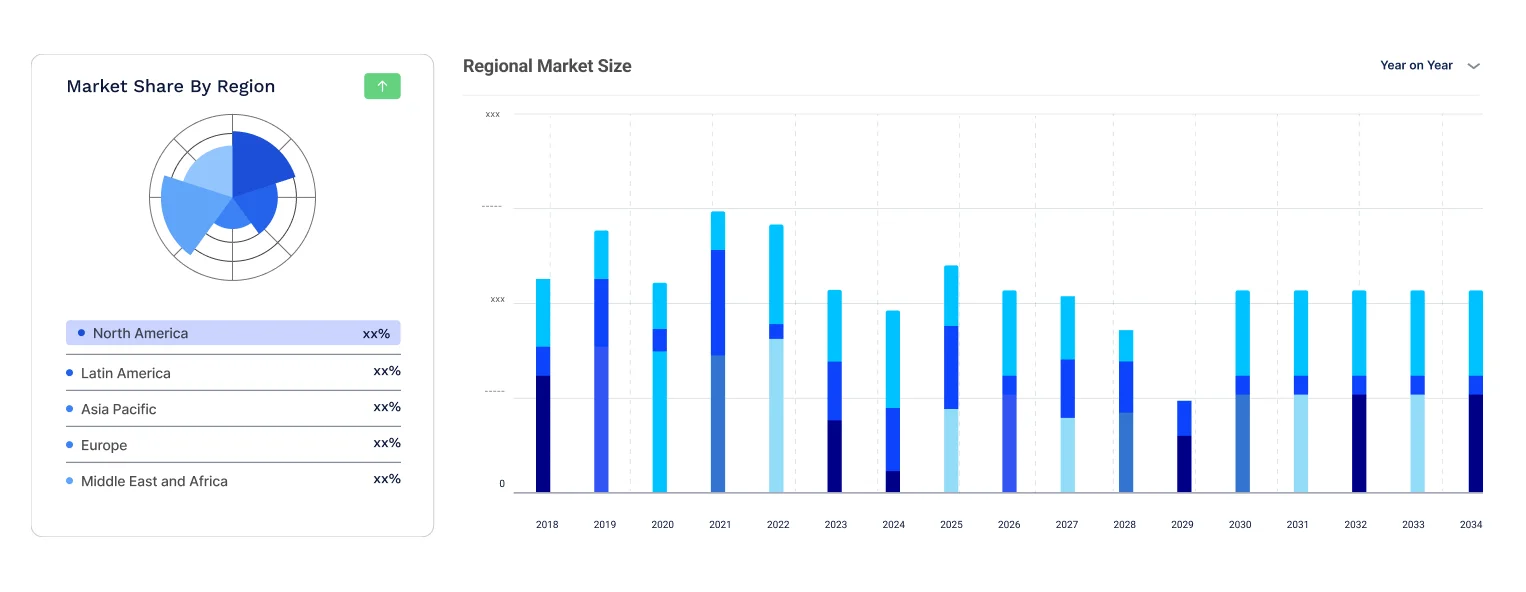
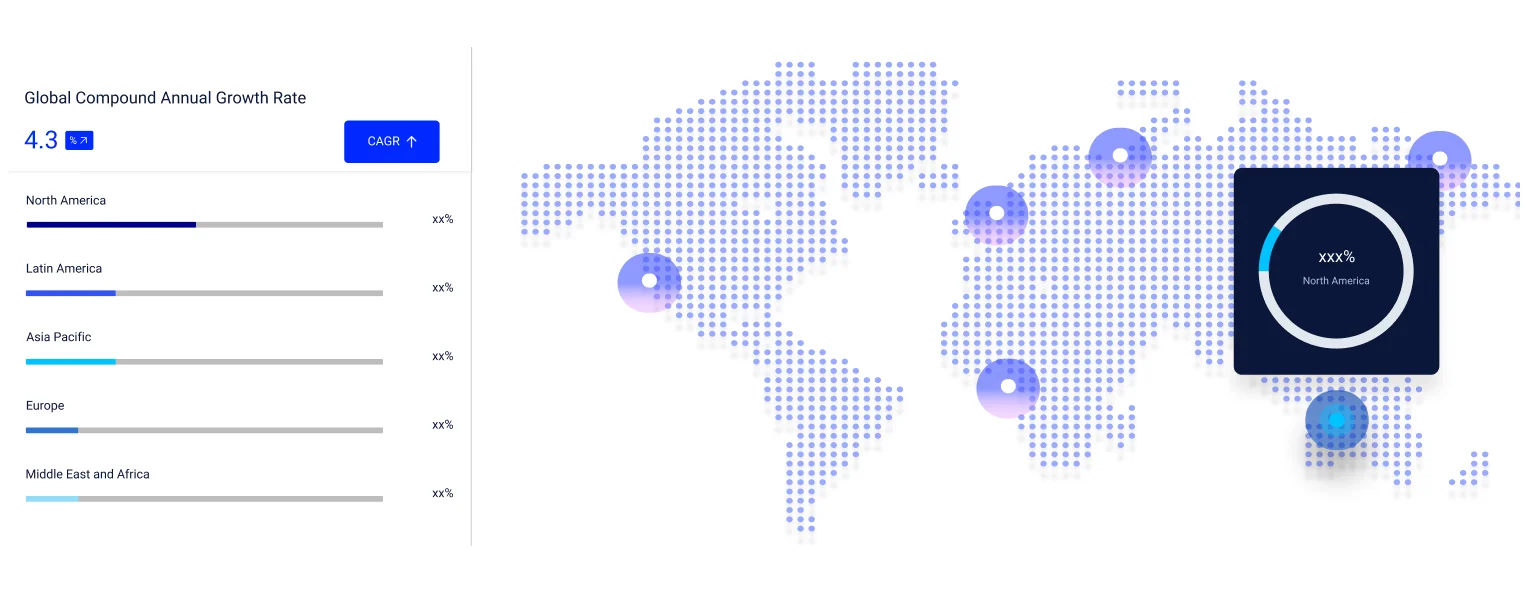
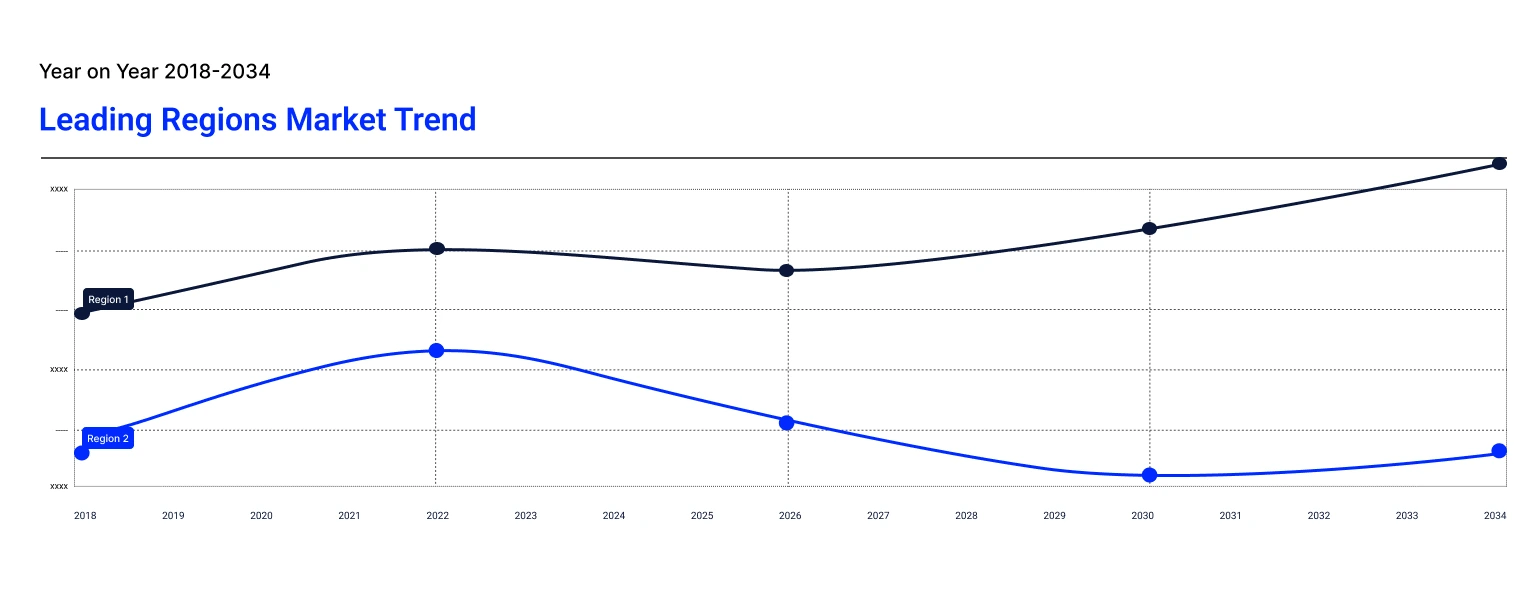
By region, Asia Pacific leads the market owing to capacity growth and low cost
Asia Pacific is the production and consumption hub for calcium carbonate thanks to large mineral deposits, extensive manufacturing in paper, plastics and building materials, and aggressive capacity additions. Local integration of quarrying, grinding, and downstream PCC lines yields cost advantages that supply domestic converters and export markets. Rapid growth in plastics and packaging manufacturing, especially in China, India and Southeast Asia, is absorbing bulk GCC while catalyzing new PCC plants targeted at higher-value paper and specialty plastics.
The European calcium carbonate market is growing at an accelerated pace on a value basis because regulatory pressure, circular economy targets, and CCU funding are steering investments into low-carbon and specialty carbonate production. European governments and blocs are clarifying CCU accounting and offering incentives that make green PCC and advanced surface-modified grades commercially attractive. For instance, in May 2023, Omya announced plans to consolidate its calcium carbonate production in Europe adjusting to current and future customer demand in paper. The region’s paper, automotive and advanced packaging sectors are willing to pay premiums for traceable, low-emissions fillers, prompting local investments in CCM-linked carbonate plants and AI-driven quality control systems.
| CAGR 2026-2035 - Market by | Country |
| India | 4.9% |
| Canada | 4.7% |
| China | 4.6% |
| Saudi Arabia | 4.5% |
| UK | 4.1% |
| USA | XX% |
| Germany | XX% |
| France | 4.0% |
| Italy | XX% |
| Japan | XX% |
| Brazil | XX% |
| Mexico | XX% |
| Australia | 3.8% |
Key calcium carbonate market players are developing eco-efficient products, improve production sustainability, and cater to industry-specific customization. Companies are focusing on green PCC technologies, surface-modified fillers, and digitalized process control to meet growing demand from paper, plastics, and construction sectors. Strategic collaborations, local capacity expansions, and CO₂ utilization projects are reshaping the market, creating space for innovative product differentiation and region-specific advantages.
In addition, calcium carbonate companies are investing in automation, precision milling, and renewable-powered plants to lower energy costs and carbon intensity. This shift toward sustainability and technology integration is positioning suppliers as vital partners for industries striving to achieve circular economy goals and long-term material efficiency.
Omya AG, established in 1884 and headquartered in Switzerland, leads with precision surface-modified calcium carbonate grades that enhance polymer performance and sustainability. It is investing in bio-based coating solutions and smart mineral composites for packaging and bioplastics to align with circular economy goals.
Minerals Technologies Inc, founded in 1992 and headquartered in New York, United States, focuses on high-performance precipitated calcium carbonate (PCC) with on-site satellite plants that reduce transport emissions. Its latest innovations integrate CO₂ recovery and automated quality systems, supporting premium paper and polymer applications.
Huber Engineered Materials (HEM), founded in 1883 and based in Atlanta, United States, emphasizes engineered surface treatments and nano-calcium carbonates to enhance coating opacity and polymer dispersion. It recently introduced Hydrocolloidal PCC technologies for specialty plastics and sustainable paints, reducing volatile organic compounds (VOCs).
Yuncheng Chemical Industrial Co., Ltd., established in 1950 and headquartered in Shandong, China, specializes in micronized and ultra-white GCC for plastics and coatings. The company is expanding automation in its particle grading and purification lines and partnering with local packaging firms for lightweight filler integration.
*Please note that this is only a partial list; the complete list of key players is available in the full report. Additionally, the list of key players can be customized to better suit your needs.*
Other key players in the calcium carbonate market include Glc Minerals, LLC, Graymont Limited, AGSCO Corp, GCCP Resources Limited, Greer Limestone Company, Gulshan Polyols Ltd., Lowa Limestone Company, Imerys S.A., J.M. Huber Corporation, Holcim Ltd, Midwest Calcium Carbonates, LLC, Mississippi Lime Company, Parchem Fine & Specialty Chemicals, and United States Lime & Minerals, Inc., among others.
Unlock the latest insights with our calcium carbonate market trends 2026 report. Discover regional growth patterns, consumer preferences, and key industry players. Stay ahead of competition with trusted data and expert analysis. Download your free sample report today and drive informed decisions in the market.
Cash in Transit Services Market
Database Management System (DBMS) Market
Freeze-Dried Fruits and Vegetables Market


Upto 15% Off
USD
$2499 $2249
$3999 $3599
$4999 $4249
$5999 $5099


*While we strive to always give you current and accurate information, the numbers depicted on the website are indicative and may differ from the actual numbers in the main report. At Expert Market Research, we aim to bring you the latest insights and trends in the market. Using our analyses and forecasts, stakeholders can understand the market dynamics, navigate challenges, and capitalize on opportunities to make data-driven strategic decisions.*
Get in touch with us for a customized solution tailored to your unique requirements and save upto 35%!
In 2025, the market reached an approximate value of USD 22.28 Billion.
The market is projected to grow at a CAGR of 4.30% between 2026 and 2035.
The market is estimated to witness a healthy growth in the forecast period of 2026-2035, reaching a value of around USD 33.94 Billion by 2035.
Companies are investing in green processing, forming local partnerships, digitalizing operations, and co-developing tailor-made fillers to meet sectoral sustainability and performance goals for overall calcium carbonate market growth.
The key calcium carbonate market trends include increasing demand for hygiene related products, improvements in supply chain, and rising importance of soil neutralisation.
The major regions in the market are North America, Latin America, the Middle East and Africa, Europe, and the Asia Pacific.
Ground calcium carbonate (GCC) and precipitated calcium carbonate (PCC) are the primary types of calcium carbonate in the market.
The various applications of calcium carbonate in the market include raw substance for construction material, dietary supplement, additive for thermoplastics, filler and pigment, component of adhesives, desulphurisation of fuel gas, and neutralising agent in soil, among others.
The significant end uses of calcium carbonate include paper, paints and coatings, adhesives and sealants, construction, plastics, pharmaceuticals, automotive, and agriculture, among others.
The key players in the market include Omya AG, Minerals Technologies Inc., Huber Engineered Materials (HEM), Yuncheng Chemical Industrial Co., Ltd., Glc Minerals, LLC, Graymont Limited, AGSCO Corp, GCCP Resources Limited, Greer Limestone Company, Gulshan Polyols Ltd., Lowa Limestone Company, Imerys S.A., J.M. Huber Corporation, Holcim Ltd, Midwest Calcium Carbonates, LLC, Mississippi Lime Company, Parchem Fine & Specialty Chemicals, United States Lime & Minerals, Inc., and others.
Volatile raw material costs, tightening purity and carbon regulations, and the need for consistent particle uniformity across regions remain key hurdles for global suppliers.
Explore our key highlights of the report and gain a concise overview of key findings, trends, and actionable insights that will empower your strategic decisions.
| REPORT FEATURES | DETAILS |
| Base Year | 2025 |
| Historical Period | 2019-2025 |
| Forecast Period | 2026-2035 |
| Scope of the Report |
Historical and Forecast Trends, Industry Drivers and Constraints, Historical and Forecast Market Analysis by Segment:
|
| Breakup by Type |
|
| Breakup by Application |
|
| Breakup by End Use |
|
| Breakup by Region |
|
| Market Dynamics |
|
| Competitive Landscape |
|
| Companies Covered |
|
Datasheet
One User
USD 2,499
USD 2,249
tax inclusive*
Single User License
One User
USD 3,999
USD 3,599
tax inclusive*
Five User License
Five User
USD 4,999
USD 4,249
tax inclusive*
Corporate License
Unlimited Users
USD 5,999
USD 5,099
tax inclusive*
*Please note that the prices mentioned below are starting prices for each bundle type. Kindly contact our team for further details.*
Flash Bundle
Small Business Bundle
Growth Bundle
Enterprise Bundle
*Please note that the prices mentioned below are starting prices for each bundle type. Kindly contact our team for further details.*
Flash Bundle
Number of Reports: 3
20%
tax inclusive*
Small Business Bundle
Number of Reports: 5
25%
tax inclusive*
Growth Bundle
Number of Reports: 8
30%
tax inclusive*
Enterprise Bundle
Number of Reports: 10
35%
tax inclusive*
How To Order

Select License Type
Choose the right license for your needs and access rights.

Click on ‘Buy Now’
Add the report to your cart with one click and proceed to register.

Select Mode of Payment
Choose a payment option for a secure checkout. You will be redirected accordingly.
Gain insights to stay ahead and seize opportunities.

Get insights & trends for a competitive edge.

Track prices with detailed trend reports.

Analyse trade data for supply chain insights.

Leverage cost reports for smart savings

Enhance supply chain with partnerships.

Connect For More Information
Our expert team of analysts will offer full support and resolve any queries regarding the report, before and after the purchase.
Our expert team of analysts will offer full support and resolve any queries regarding the report, before and after the purchase.
We employ meticulous research methods, blending advanced analytics and expert insights to deliver accurate, actionable industry intelligence, staying ahead of competitors.
Our skilled analysts offer unparalleled competitive advantage with detailed insights on current and emerging markets, ensuring your strategic edge.
We offer an in-depth yet simplified presentation of industry insights and analysis to meet your specific requirements effectively.





Share