

Consumer Insights
Uncover trends and behaviors shaping consumer choices today
Procurement Insights
Optimize your sourcing strategy with key market data
Industry Stats
Stay ahead with the latest trends and market analysis.

The global biomaterials market was valued at USD 167.39 Billion in 2025, driven by the increasing prevalence of musculoskeletal disorders, osteoarthritis and other chronic skeletal conditions among others across the globe. The market is anticipated to grow at a CAGR of 14.20% during the forecast period of 2026-2035 to achieve a value of USD 631.53 Billion by 2035.
Base Year
Historical Period
Forecast Period
Compound Annual Growth Rate
14.2%
Value in USD Billion
2026-2035
*this image is indicative*
The global biomaterials market is expanding due to increasing demand for advanced biomaterials in orthopedic implants and implant-based biomaterials. Rising cases of musculoskeletal conditions, particularly chronic skeletal conditions, drive market demand, with osteoarthritis treatments and joint replacement surgery becoming more prevalent. Innovations in joint augmentations and healthcare biomaterials enhance patient outcomes. The biomaterials market growth is supported by improved research in degenerative diseases, ensuring enhanced safety and effectiveness. With a strong focus on innovation, the market is projected to witness significant CAGR growth in biomaterials, positioning it as a critical sector in modern healthcare.
Metallic biomaterials play a vital role in durable medical implants due to their biocompatibility, corrosion resistance, and integration with biological systems. Medical-grade metals are widely used for implant materials, supporting functional restoration and extending lifespan. Technological advancements in biomaterials continue to improve body-compatible metals, reinforcing their importance in biomedical engineering materials for safer and more effective medical applications.
The demand for implantable biomaterials is rising due to advancements in biocompatible materials that enhance tissue integration and improve medical implants. Orthopedic biomaterials are essential for chronic conditions treatment, particularly in age-related injuries requiring advanced biomaterials for healing. The development of durable medical implants is critical for ensuring long-term functionality, particularly in biomaterials for elderly population. Biomedical engineering solutions aim to enhance implant complications reduction, minimising risks and improving healing and tissue regeneration. Bioactive materials are driving innovation by promoting faster healing, positioning innovative healthcare materials as a key trend in the industry.
Biomaterials for tissue engineering are transforming medical applications, supported by nanotechnology in medicine for enhanced efficiency. Tissue replacement materials aid in bone and organ repair, expanding the scope of advanced biomaterials applications. Addressing immune rejection in tissue transplant, researchers are developing allograft and autograft alternatives to mitigate dependency on human donors. The donor shortage in tissue replacement is accelerating the adoption of nanotechnology-enabled biomaterials, significantly improving the efficacy of regenerative medicine biomaterials in restoring damaged tissues.
Polymeric biomaterials are gaining traction due to their adaptability in extracellular matrix mimicking materials and 3D printable biomaterials. Osteoconductive biomaterials support implant material innovations, enhancing cell growth scaffolds for improved healing. Medical-grade polymers, including PEEK filament for implants, are widely used, with manufacturers like Evonik biomaterials leading the sector. Improved bone-implant integration and advanced polymeric implants contribute to long-term success. Ongoing biomedical polymer research is refining implantable biomaterials, while tissue engineering scaffolds offer promising solutions for complex medical challenges.
The biomaterials market is moderately concentrated, with leading companies driving innovation through research and development. Large firms dominate due to extensive patent portfolios, strong distribution networks, and regulatory expertise. However, emerging players contribute to market expansion by introducing advanced biomaterials with specialised applications. Strategic partnerships, mergers, and acquisitions are common as companies aim to enhance technological capabilities and global reach. The increasing demand for biocompatible materials in medical implants fosters competition, encouraging manufacturers to develop next-generation solutions for orthopedic, dental, and cardiovascular applications. Regulatory compliance and product approvals remain critical factors shaping market entry and expansion strategies. Growing investments in biomedical polymer research are further enhancing market competitiveness.
Market concentration is influenced by raw material availability, stringent regulatory requirements, and production costs. Leading companies benefit from economies of scale, ensuring competitive pricing and sustained growth, while smaller firms focus on niche innovations.
The market is characterised by continuous technological advancements, with innovations in implantable biomaterials, polymeric biomaterials, and tissue engineering solutions. Increasing demand for nanotechnology-enabled biomaterials and 3D printable biomaterials is reshaping product development, improving patient outcomes.
With rising applications in regenerative medicine, drug delivery systems, and personalized healthcare, the biomaterials market is expanding. Ageing populations, increased healthcare investments, and ongoing biomedical polymer research drive long-term industry growth and diversification.
Natural biomaterials are gaining prominence due to their biocompatibility and ability to support tissue regeneration. Derived from sources like cellulose, gelatin, and hyaluronic acid, they are widely used in wound healing, tissue engineering, and drug delivery systems. Their biodegradable nature reduces long-term complications, making them ideal for regenerative medicine applications. Metallic biomaterials, including stainless steel, gold and cobalt-chromium alloys, remain essential for orthopaedic implants, dental prosthetics, and cardiovascular stents due to their high strength, durability, and corrosion resistance. Advances in medical-grade metals enhance integration with biological systems, improving bone-implant stability and long-term functionality in medical applications.
Ceramic biomaterials, such as calcium phosphate, aluminium oxide and glass are widely used in dental implants, joint replacements, and bone grafts due to their excellent osteoconductive properties. Their ability to bond naturally with bone structures enhances bone regeneration and implant longevity. Meanwhile, polymeric biomaterials are revolutionising healthcare applications through innovations in 3D printable biomaterials, biodegradable implants, and tissue engineering scaffolds. Materials like PEEK (polyether ether ketone) and polylactic acid (PLA) offer flexibility, biocompatibility, and resistance to mechanical stress, making them suitable for customised implants. Ongoing research in biomedical polymers is expanding the scope of implantable biomaterials, improving patient-specific treatment options and driving innovation in advanced medical solutions.
The biomaterials market plays a crucial role in diverse medical applications. In cardiovascular care, sensors, stents, pacemakers, and vascular grafts improve patient outcomes by enhancing heart function and blood circulation. Ophthalmology benefits from synthetic corneas, intraocular lenses, and ocular tissue replacements, aiding vision restoration. Dental applications, including tissue regeneration materials, dental implants, and grafts, support oral health and bone integration. Orthopaedic biomaterials, such as orthobiologics, viscosupplementation, and spine biomaterials, enhance joint function and bone repair. Additionally, wound healing biomaterials, including fracture healing devices and internal tissue sealants, accelerate tissue recovery and minimise complications.
Emerging applications in tissue engineering and plastic surgery utilise acellular dermal matrices, soft tissue fillers, and peripheral nerve repair materials for reconstructive procedures. Neurological and central nervous system biomaterials improve outcomes through neural stem cell encapsulation, hydrogel scaffolds for CNS repair, and cortical neural prosthetics, supporting nerve regeneration. Ongoing advancements in hydrogels, bioactive materials, and 3D-printed biomaterials further expand possibilities across medical fields, driving innovation and improving patient care. The biomaterials market continues to evolve, offering solutions that enhance longevity, reduce complications, and improve the quality of life across multiple healthcare sectors.
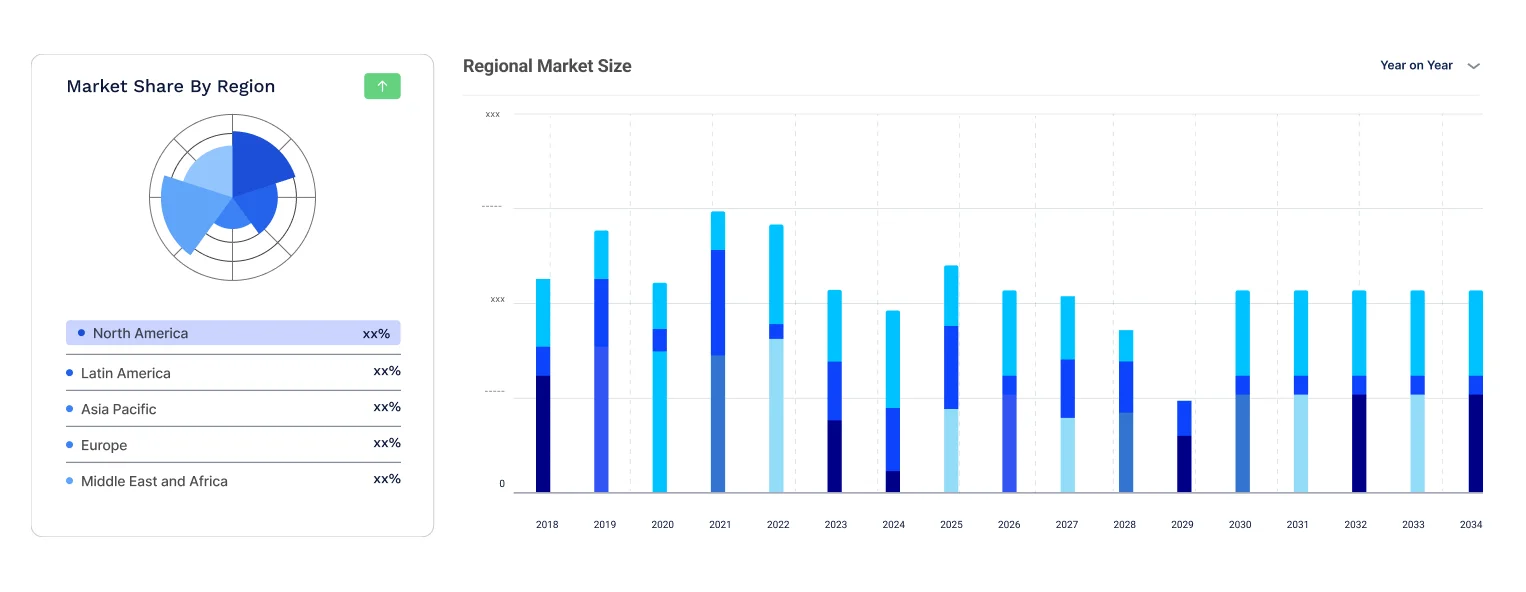
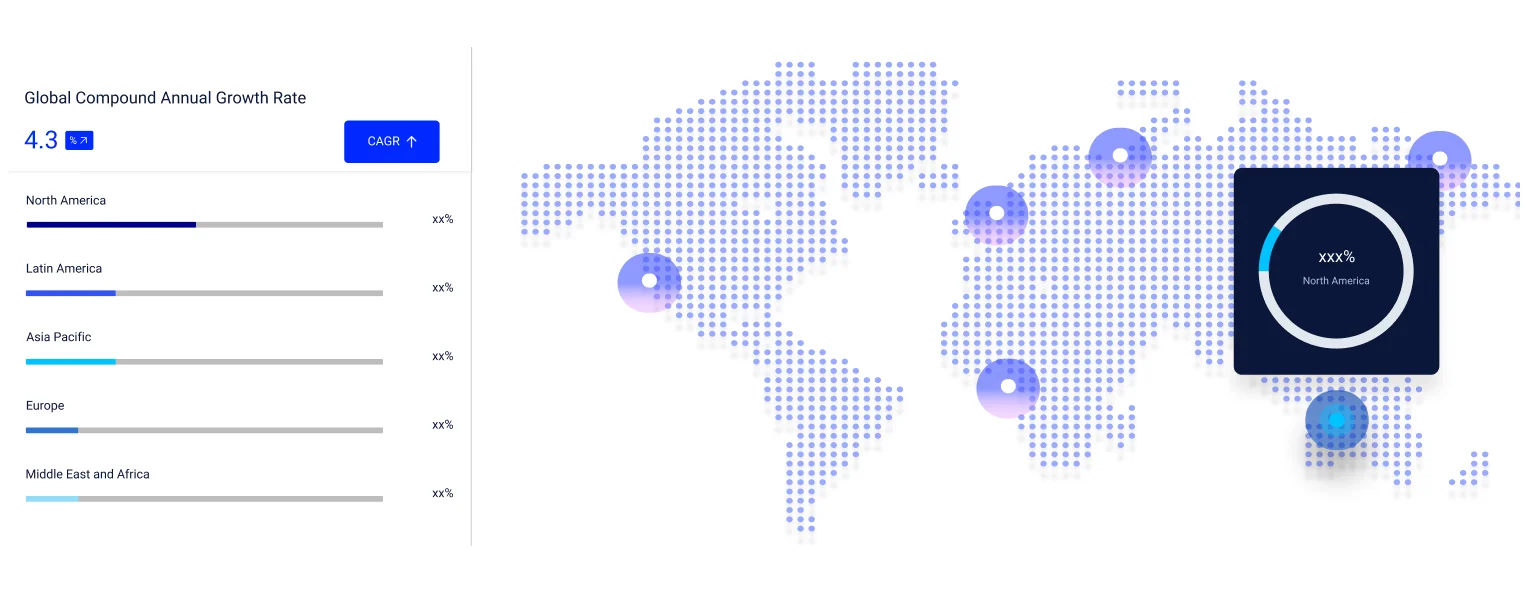
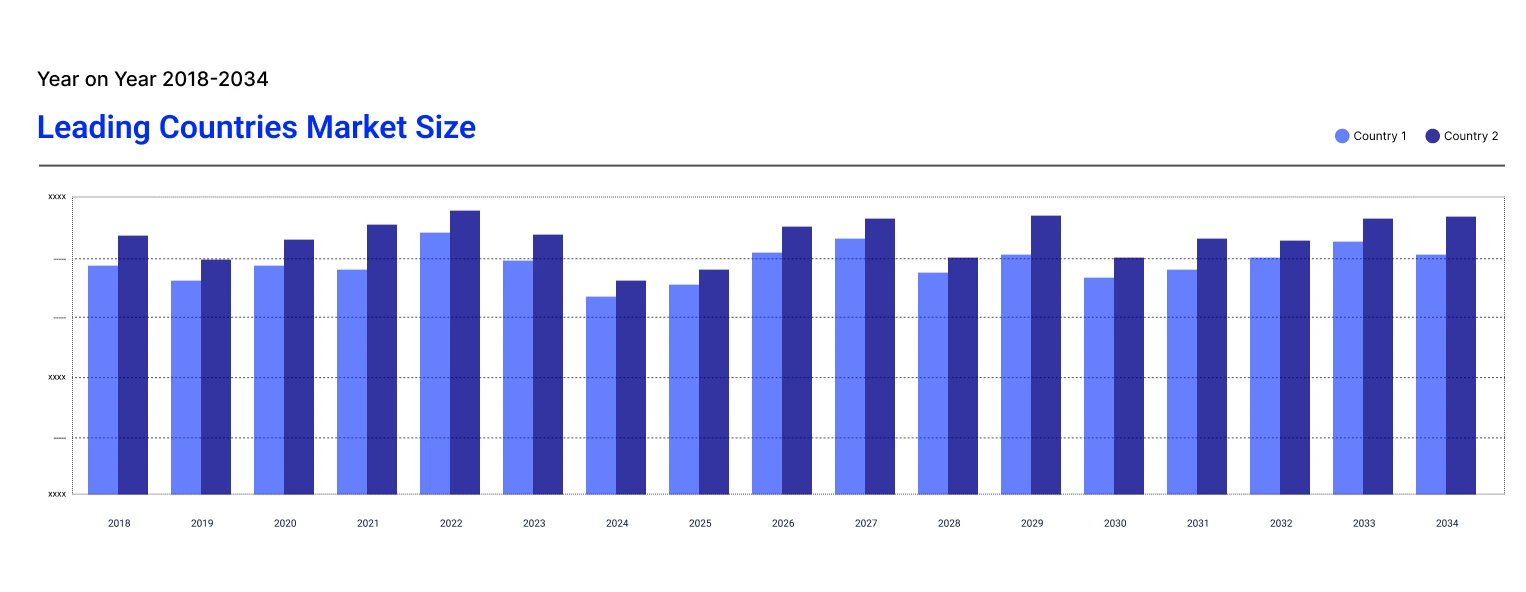
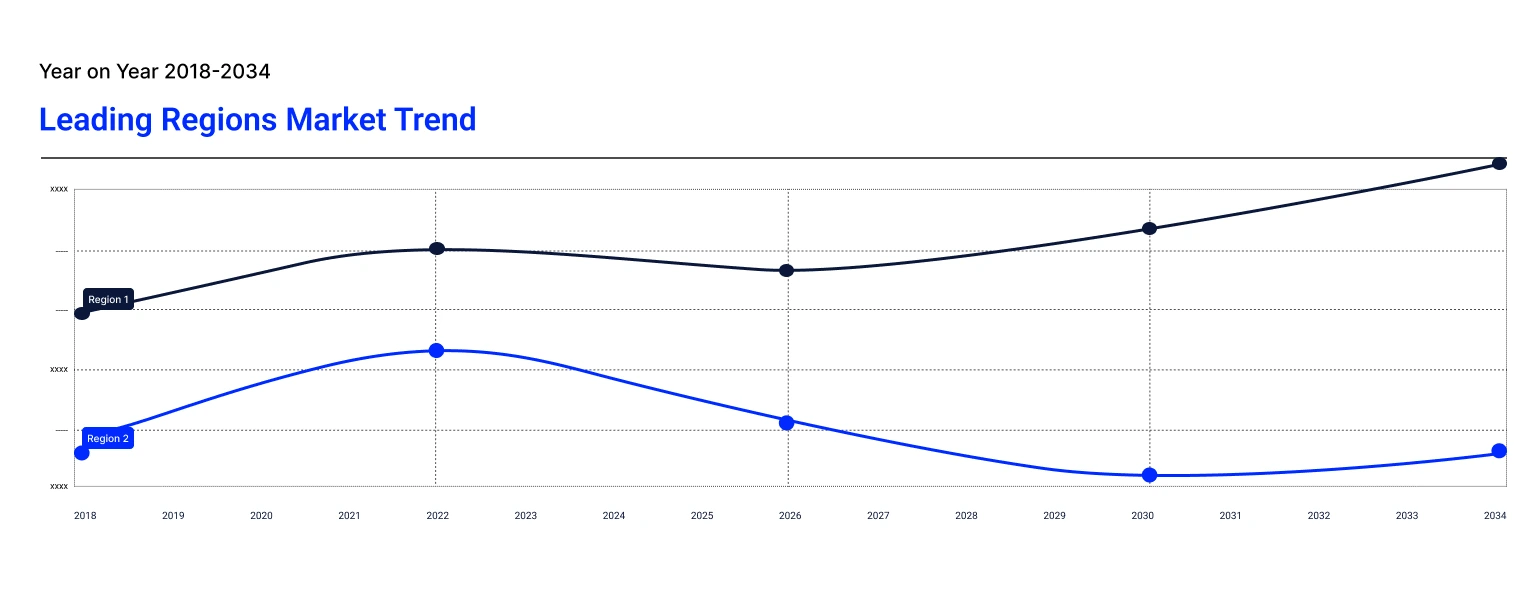
The global biomaterials market is expanding significantly due to rising healthcare investments, technological advancements, and increasing demand for implantable biomaterials in medical applications. Developed regions, such as North America and Europe, dominate due to well-established healthcare infrastructures, regulatory support, and high adoption rates of biocompatible materials. Meanwhile, the Asia-Pacific region is witnessing rapid growth, driven by increasing healthcare expenditure, ageing populations, and advancements in tissue engineering. The Middle East and Africa market is growing steadily, with government initiatives supporting medical implants, wound healing, and regenerative medicine applications. Innovation and research investments continue to shape regional market trends.
The United States biomaterials market leads globally due to extensive R&D investments, a high prevalence of chronic diseases, and an ageing population requiring advanced medical implants. The demand for orthopaedic, cardiovascular, and dental biomaterials is rising, driven by increasing joint replacement surgeries and heart-related procedures. Technological advancements in 3D printing, nanotechnology, and polymer-based biomaterials are expanding treatment options. Moreover, regulatory approvals from the FDA ensure the availability of high-quality biomaterials. The strong presence of key industry players, collaborations between biotechnology firms and medical institutions, and funding for biomedical research contribute to market growth.
The European biomaterials market is witnessing substantial growth due to government support, an ageing population, and increased demand for tissue engineering solutions. The rising adoption of biodegradable implants, polymer-based biomaterials, and regenerative medicine applications is driving expansion. Additionally, regulatory frameworks such as the European Medical Device Regulation (MDR) ensure the safety and quality of biomaterial products. Sustainable biomaterials and innovations in nanotechnology are shaping future developments.
Biomaterials market in the UK is driven by advancements in biomedical engineering and rising demand for dental, cardiovascular, and orthopaedic biomaterials. The country's strong healthcare system and research institutions support innovation in 3D printable biomaterials, bioactive materials, and personalised implants. For instance, in July 2024, a UK-based company developing a versatile biomaterial suitable for 3D printed implants and surgical devices secured EUR 3.4 million (USD 4.4 million) in Series A funding. This investment will support pre-clinical testing and facilitate the company’s efforts to obtain FDA clearance for expansion into the US market.
Germany biomaterials market is a leader in the European biomaterials market, known for its advanced healthcare infrastructure, medical device manufacturing, and biotechnology sector. The country invests heavily in biomedical polymer research, nanotechnology-enabled biomaterials, and sustainable implants. The demand for orthopaedic, cardiovascular, and dental biomaterials is increasing due to a growing elderly population.
The market for biomaterials in France is expanding due to the rising adoption of regenerative medicine, personalised healthcare, and tissue engineering solutions. French companies are investing in biodegradable implants, synthetic grafts, and osteoconductive biomaterials for orthopaedic and dental applications. The government’s support for biomedical research and partnerships between universities and biotech firms are accelerating innovation. Additionally, France is at the forefront of nanotechnology applications in medicine, contributing to developments in biocompatible polymers, hydrogels, and drug delivery systems. Strong regulatory frameworks and increasing demand for advanced biomaterials in plastic surgery and cardiovascular treatments further drive market growth.
The Asia-Pacific biomaterials market is experiencing rapid expansion due to increasing healthcare investments, a rising geriatric population, and a growing focus on medical-grade polymers and implantable biomaterials. Countries like Japan, China, and India are major contributors, with advancements in nanotechnology, 3D printing, and bioactive materials improving healthcare solutions. The rising prevalence of chronic diseases, musculoskeletal conditions, and cardiovascular disorders is increasing the demand for orthopaedic, dental, and cardiovascular biomaterials across the region. Government funding and strategic collaborations with global medical companies are further driving market growth.
Japan biomaterials market is highly advanced, supported by biomedical innovation and an ageing population. For instance, in July 2024, Tokyo-based Mochida Pharmaceutical received FDA 510(k) clearance for ReFeel, a nerve regeneration sheet made from sodium alginate and polyglycolic acid. Marking its first regulatory success in biomaterials, Mochida also planned a US launch and is also developing dMD-002 in Japan for cavernous nerve injury, reinforcing the nation’s role in regenerative medicine.
The biomaterials market in China is also expanding rapidly due to increasing healthcare spending, a growing ageing population, and rising demand for orthopaedic, cardiovascular, and wound healing biomaterials. China’s focus on domestic biomaterials production, implantable biomaterials, and tissue engineering is driving innovation. Investments in medical-grade polymers, ceramic biomaterials, and bioactive materials are increasing. Additionally, partnerships between research institutions and biotechnology companies are accelerating developments in biocompatible materials and regenerative medicine applications. Government initiatives promoting biomedical engineering and nanotechnology research further support market expansion.
The biomaterials market in the Middle East and Africa is growing due to rising healthcare investments, government initiatives, and an increasing focus on regenerative medicine and implantable biomaterials. The UAE, Saudi Arabia, and South Africa are key markets, with expanding healthcare infrastructures and increasing demand for orthopaedic, dental, and cardiovascular biomaterials. The adoption of biodegradable implants, nanotechnology-enabled biomaterials, and polymer-based scaffolds is rising. Research collaborations and partnerships with international medical firms are boosting biomedical polymer research and medical-grade metals applications. Growth in plastic surgery, wound healing, and tissue engineering is also contributing to market expansion.
The South Africa biomaterials market is growing due to increased demand for orthopaedic, dental, and cardiovascular biomaterials. The country’s healthcare sector is adopting biodegradable implants, polymer-based biomaterials, and bioactive scaffolds to improve patient outcomes. Government investments in biomedical research, regenerative medicine, and medical device manufacturing are supporting industry growth. Additionally, collaborations between universities, biotechnology firms, and global healthcare companies are driving innovation. The rising prevalence of chronic conditions, musculoskeletal disorders, and joint diseases is increasing the demand for advanced biomaterials, making South Africa a key market in the Middle East and Africa region.
The key features of the market report comprise patent analysis, grants analysis, funding and investment analysis, and strategic initiatives by the leading players. The major companies in the market are as follows:
Koninklijke DSM N.V. is a global leader in biomaterials and biomedical solutions, specialising in biocompatible polymers, regenerative medicine, and medical-grade materials. The company focuses on tissue engineering, drug delivery systems, and orthopaedic applications, offering sustainable, bio-based solutions.
Corbion N.V. is renowned for its biodegradable polymers and lactic acid-based biomaterials. The company provides advanced biomaterials for medical implants, tissue regeneration, and controlled drug delivery. Its polylactic acid (PLA)-based materials are widely used in orthopaedic, dental, and wound healing applications.
Zimmer Biomet is a leading manufacturer of orthopaedic biomaterials, implantable medical devices, and bone graft substitutes. The company specialises in joint replacement, spine biomaterials, and regenerative solutions.
Noble Biomaterials pioneers in antimicrobial and conductive biomaterials for wound care, infection control, and medical textiles. Its proprietary silver-based technologies, such as Ionic+®, enhance biocompatibility and infection resistance.
*Please note that this is only a partial list; the complete list of key players is available in the full report. Additionally, the list of key players can be customized to better suit your needs.*
Other key players in the market include BASF SE, Covestro AG, Celanese Corporation, Carpenter Technology Corporation, Evonik Industries AG, Victrex plc, CeramTec GmbH and Coorstek Inc.
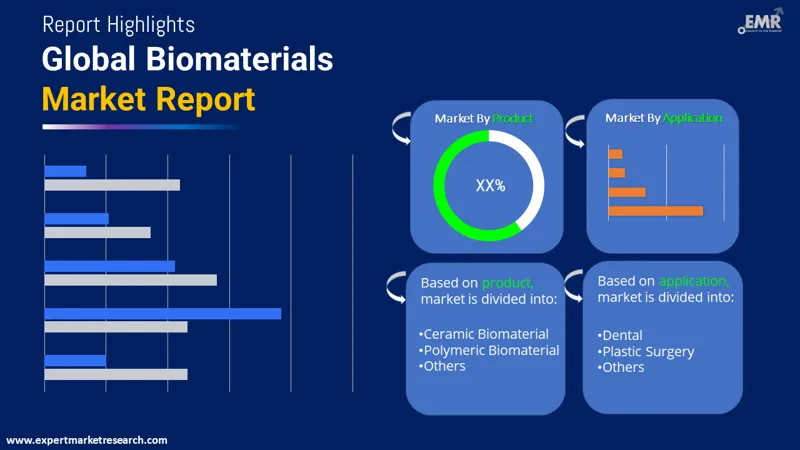
Read more about this report - REQUEST FREE SAMPLE COPY IN PDF
Biomaterials Market Report and Forecast 2026-2035 offers a detailed analysis of the market based on the following segments:
Market Breakup by Product Type
Market Breakup by Application
Market Breakup by Region


Upto 15% Off
USD
$3299 $2969
$5499 $4949
$6999 $5949
$8199 $6969


*While we strive to always give you current and accurate information, the numbers depicted on the website are indicative and may differ from the actual numbers in the main report. At Expert Market Research, we aim to bring you the latest insights and trends in the market. Using our analyses and forecasts, stakeholders can understand the market dynamics, navigate challenges, and capitalize on opportunities to make data-driven strategic decisions.*
Get in touch with us for a customized solution tailored to your unique requirements and save upto 35%!
The global biomaterials market was valued at USD 167.39 Billion in 2025. It is projected to achieve a value of USD 631.53 Billion by 2035, driven by the increasing research activities.
The market is anticipated to grow at a CAGR of 14.20% during the forecast period of 2026-2035.
The product type segment held the largest market share due to its widespread use in orthopaedic, cardiovascular, and dental implants, offering high durability and biocompatibility.
The key regional markets include North America, Europe, Asia Pacific, Latin America, and the Middle East & Africa, with North America leading due to advanced healthcare infrastructure.
Major product types include metallic (stainless steel, gold, cobalt-chrome), natural (hyaluronic acid, cellulose, gelatin), ceramics (calcium phosphate, aluminium oxide, glass), and polymers (polyethylene, polyester, nylon).
Biomaterials are widely used in orthopedics, cardiovascular, ophthalmology, dental, plastic surgery, wound healing, tissue engineering, and neurological applications, enhancing healing and implant integration.
Leading companies include Koninklijke DSM N.V., Corbion N.V., Zimmer Biomet, Noble Biomaterials Inc., Evonik Industries AG, Covestro AG, Celanese Corporation, Carpenter Technology Corporation, Victrex plc, CeramTec GmbH, Coorstek Inc., and BASF SE, among others.
The market growth is driven by technological advancements, increasing chronic diseases, rising demand for implantable biomaterials, a growing ageing population, and expanding regenerative medicine applications.
Explore our key highlights of the report and gain a concise overview of key findings, trends, and actionable insights that will empower your strategic decisions.
| REPORT FEATURES | DETAILS |
| Base Year | 2025 |
| Historical Period | 2019-2025 |
| Forecast Period | 2026-2035 |
| Scope of the Report |
Historical and Forecast Trends, Industry Drivers and Constraints, Historical and Forecast Market Analysis by Segment:
|
| Breakup by Product Type |
|
| Breakup by Application |
|
| Breakup by Region |
|
| Market Dynamics |
|
| Competitive Landscape |
|
| Companies Covered |
|
Datasheet
One User
USD 3,299
USD 2,969
tax inclusive*
Single User License
One User
USD 5,499
USD 4,949
tax inclusive*
Five User License
Five User
USD 6,999
USD 5,949
tax inclusive*
Corporate License
Unlimited Users
USD 8,199
USD 6,969
tax inclusive*
*Please note that the prices mentioned below are starting prices for each bundle type. Kindly contact our team for further details.*
Flash Bundle
Small Business Bundle
Growth Bundle
Enterprise Bundle
*Please note that the prices mentioned below are starting prices for each bundle type. Kindly contact our team for further details.*
Flash Bundle
Number of Reports: 3
20%
tax inclusive*
Small Business Bundle
Number of Reports: 5
25%
tax inclusive*
Growth Bundle
Number of Reports: 8
30%
tax inclusive*
Enterprise Bundle
Number of Reports: 10
35%
tax inclusive*
How To Order

Select License Type
Choose the right license for your needs and access rights.

Click on ‘Buy Now’
Add the report to your cart with one click and proceed to register.

Select Mode of Payment
Choose a payment option for a secure checkout. You will be redirected accordingly.
Gain insights to stay ahead and seize opportunities.

Get insights & trends for a competitive edge.

Track prices with detailed trend reports.

Analyse trade data for supply chain insights.

Leverage cost reports for smart savings

Enhance supply chain with partnerships.

Connect For More Information
Our expert team of analysts will offer full support and resolve any queries regarding the report, before and after the purchase.
Our expert team of analysts will offer full support and resolve any queries regarding the report, before and after the purchase.
We employ meticulous research methods, blending advanced analytics and expert insights to deliver accurate, actionable industry intelligence, staying ahead of competitors.
Our skilled analysts offer unparalleled competitive advantage with detailed insights on current and emerging markets, ensuring your strategic edge.
We offer an in-depth yet simplified presentation of industry insights and analysis to meet your specific requirements effectively.





Share