

Consumer Insights
Uncover trends and behaviors shaping consumer choices today
Procurement Insights
Optimize your sourcing strategy with key market data
Industry Stats
Stay ahead with the latest trends and market analysis.

The global BIM in construction market attained a value of USD 5.04 Billion in 2025 and is projected to expand at a CAGR of 15.00% through 2035. The market is further expected to achieve USD 20.39 Billion by 2035. Growing adoption of BIM for renovation and retrofit projects, especially aging public infrastructure, is emerging as a strong growth factor.
The construction sector is witnessing a noticeable shift away from traditional blueprint-based planning toward data-driven, model-centric execution. Companies like Autodesk offer Autodesk Construction Cloud BIM-Sequencer, a platform that lets contractors simulate workforce availability, material delivery timelines, and site-risk incidents before physical execution. In October 2023, BL Harbert developed an enterprise agreement with Autodesk and adopted BIM 360 and PlanGrid within Autodesk Construction Cloud to expand its portfolio. This BIM in construction market trend links live supply chain feeds and labor scheduling into the BIM model, so that cost overruns get flagged earlier.
The industry is also witnessing how Nemetschek and Hexagon are positioning themselves in the market. For example, Nemetschek developed Carbon Twin BIM models in November 2025. They calculate embodied carbon instantly, avoiding rework after compliance assessment. Hexagon, on the other hand, focuses on jobsite automation. The company’s BIM-to-robotics tool syncs BIM layout data directly to autonomous survey bots, speeding site mapping on large concrete pours, reshaping the BIM in construction market trends and dynamics. Both product strategies aim at improving project certainty in an environment where construction delays result in extreme costs.
Base Year
Historical Period
Forecast Period
Compound Annual Growth Rate
15%
Value in USD Billion
2026-2035
*this image is indicative*
Cloud-based BIM ecosystems are now a primary growth engine as large contractors replace disconnected point tools. Autodesk Construction Cloud’s 45-plus feature, released in May 2025, sharpen handover, estimating and model coordination workflows, which directly fits multi-site contractors running thin margins. Adani Group’s partnership with Autodesk to roll out Autodesk Construction Cloud and BIM advisory services across its infrastructure portfolio, announced in November 2025, shows how owners are standardizing on a single data environment for highways, airports and energy assets globally, redefining the trends in the BIM in construction market. For B2B buyers today, these rollouts reduce coordination risk, simplify vendor stacks and set a benchmark for enterprise-ready BIM in construction.
Government BIM and openBIM mandates are another powerful trigger, accelerating demand in the BIM in construction market. The United Kingdom now requires BIM Level 2 on public projects above EUR 5 million, while Dubai Municipality mandates BIM model submissions for new building permits aligned with ISO 19650 and IFC-based data exchange. These policies push contractors to upgrade from drawing-centric workflows to common data environments that authorities can audit. In September 2021, CYPE launched an update with which the company has consolidated its Open BIM workflow owing to the technical improvement of the BIMserver.center platform and the optimization of the interconnection between the different applications operating in it through the exchange of IFC files.
Sustainability-linked BIM workflows are turning into a distinct factor for purchasing decision rather than an added benefit. Nemetschek brands such as Vectorworks now bundle embodied carbon calculators directly into BIM authoring, letting designers compare material choices against project carbon budgets in real time. One Click LCA integrations automate life cycle assessments from BIM quantities to support EU taxonomy and local green building credits. In July 2025, Tarmac and CRH Ventures launched pilot project in partnership with Material Evolution of its ultra-low carbon cement, MevoCem, positively influencing the BIM in construction market growth patterns.
Digital twin platforms fed from construction BIM models now underpin predictive maintenance programs for airports, rail hubs and hospitals. Asset owners view these twins as insurance against downtime and regulatory non-compliance. In March 2024, Nemetschek Group partnered with Ovation Services in a USD 0.5 million deal to advance structural steel detailing and BIM services across India, driving the BIM in construction market opportunities. For design and build firms, positioning BIM as the pillar for future digital twins creates multi-decade service relationships with global clients.
Industrialized and modular construction is another underappreciated BIM growth engine. Large contractors moving toward offsite manufacturing rely on BIM models to drive CNC machinery, logistics and just-in-time delivery to sites. Global construction technology spend, which includes BIM-centric design and coordination software, is projected to grow rapidly, showing how capital is shifting into digital production lines, stimulating the BIM in construction market growth. For example, MOD is a Switzerland-based construction-tech company that offers AI-powered prefab checks for all construction projects. Governments promoting affordable housing and school building programs with strictly regulated delivery windows increasingly favor modular construction. That naturally rewards bidders whose BIM environments can prove repeatability, factory readiness and schedule reliability today.
Read more about this report - REQUEST FREE SAMPLE COPY IN PDF
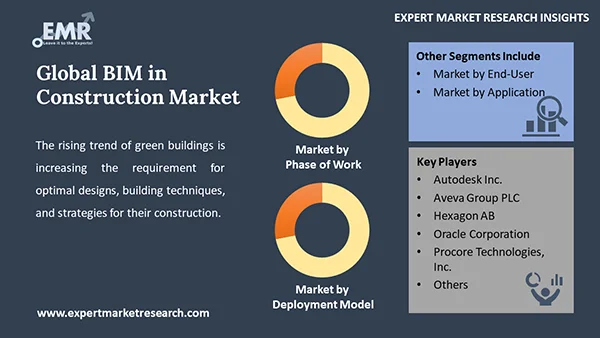
The EMR’s report titled “Global BIM in Construction Market Report and Forecast 2026-2035” offers a detailed analysis of the market based on the following segments:
Market Breakup by Phase of Work
Key Insight: Construction teams lean on detailed models, 4D views, and coordination spaces to keep subcontractors aligned and avoid clashes that damage margins, accelerating the BIM in construction market value. Operation teams demand for models that help them locate valves, replace air-handling units, or plan refurbishments without shutting down revenue-generating spaces. As owners tighten performance clauses and service-level expectations, both construction and operation phases treat BIM as shared evidence of what was built, what changed on-site, and what must stay traceable over decades of use and long-term asset accountability.
Market Breakup by End-User
Key Insight: As per the BIM in construction market report, demand patterns across the end users usually reflects who carries the most coordination and liability pressure on a project. Contractors focus on how reliably the model explains constructability, trade interfaces, and schedule impacts, because that affects their ability to keep sites productive and arguments limited. Engineers focus more on whether BIM captures performance logic, design assumptions, and safety factors in a transparent way.
Market Breakup by Application
Key Insight: Application-wise, the non-residential category leans on BIM to keep specialist trades synchronized around demanding services, security systems, and public access expectations, so that there is less demand for improvisation on site. Residential projects tend to run on slimmer budgets, yet they benefit from repeating layouts and building components that suit model-driven workflows. Developers who operate in both spaces often reuse core BIM standards while tuning detail levels, approval paths, and documentation sets, propelling the BIM in construction market expansion.
Market Breakup by Deployment Model
Key Insight: Deployment choices in BIM are less about pure technology preference and more about organizational history and tightened regulations. On-premise environments tend to cluster around clients and contractors with strict data-handling rules or entrenched desktop practices that nobody wants to disrupt mid-program, creating new opportunities for BIM in construction market growth. Cloud-centric teams often value flexible collaboration more than tight local control and are comfortable accepting managed services.
Market Breakup by Region
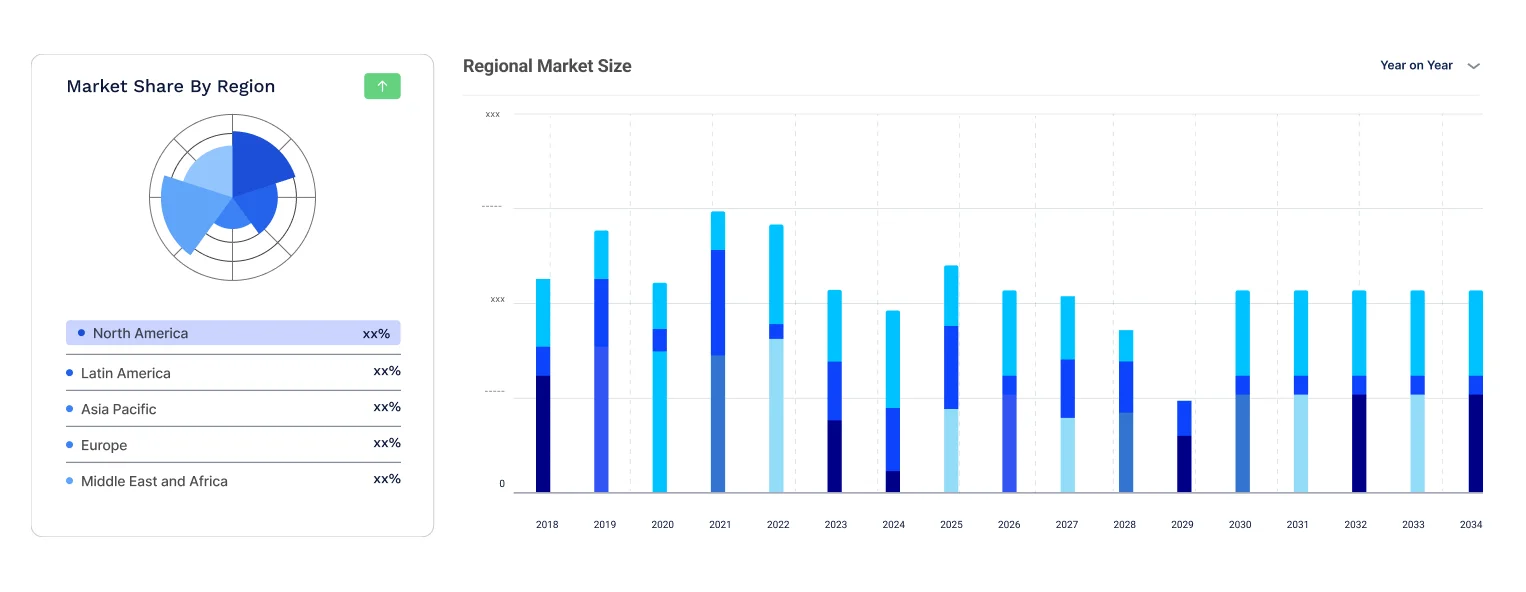
Key Insight: Regional BIM in construction adoption patterns mirror how capital projects are prioritized and governed. North America pairs strong owner expectations with mature contractor ecosystems, hence, BIM often poses as a non-negotiable factor. Europe leans on sustainability regulation and cross-border engineering alliances, which rely on shared model standards. Asia Pacific runs on growth pressure and government modernization campaigns, pulling BIM into megaproject delivery. Latin America tends to capitalize on international lenders and active global contractors. In the Middle East and Africa, flagship city and infrastructure programs boost BIM uptake over time.
Construction BIM leads the market owing to coordination-heavy site demands
Construction phase BIM holds the dominant position because this is where risk, cost, and reputation collide. Large firms lean on model-based clash detection, 4D sequencing, and constructability reviews to avoid field errors. BIM tools now plug into procurement, equipment telematics, and site logistics dashboards, so that superintendents can view design intent, deliveries, and workforce constraints in one view. In June 2025, Autodesk launched India-focused Building Information Modelling suite with customised design tools that align with Indian codes to boost construction.
Operation phase BIM is gaining shares in the BIM in construction market revenue because owners finally see how model data cuts downtime and service calls. Facilities teams use BIM-linked digital twins to track space utilization, system performance, and asset history. Service contractors prefer having a navigable model before reaching the site, which shortens investigation time and reduces repeat visits. Software vendors now package maintenance scheduling, sensor feeds, and work-order management around the original construction model.
By end user, contractors account for a substantial share of the market owing to execution-centric daily workflows
Contractors represent the dominant BIM end-user group. They use BIM to test build sequences, allocate crews, and forecast crane time long before anyone steps on site. Field teams pull coordinated models onto tablets to resolve clashes with mechanical or facade trades without a long email chain. Leading contractors also plug BIM into cost databases, so that quantity changes flow directly into updated estimates and change-order requests, thereby driving demand in the BIM in construction market.
Engineers currently represent the fastest-growing BIM end-user cluster because their models increasingly drive fabrication and commissioning tasks downstream. Structural and MEP engineers rely on BIM authoring tools to validate loads, clearances, and serviceability beforehand. Many firms now script design checks and parametric rules inside BIM, which tightens compliance against client standards without manually reviewing every sheet.
Non-residential projects clock in the largest market share, reflecting complex stakeholder requirements
Non-residential construction remains the dominant BIM application area because these projects combine complex systems, strict regulations, and demanding investors. Office towers, hospitals, airports, and data centers boast intricate MEP networks and tight uptime expectations, so owners expect digital rehearsals before approving work. BIM models support detailed phasing and tenant fit-out simulations. Corporate real estate teams also treat BIM as a long-term asset record, which later feeds refurbishment and tenant-improvement cycles, stimulating the BIM in construction market scope.
Residential BIM is growing rapidly popular. Housing developers finally see value beyond 3D visuals. Mid- to large-scale schemes now use models to coordinate repetitive unit types, facade variations, and building services shafts so crews can work with fewer interruptions. BIM-linked quantity takeoffs give developers early insight into material exposure, helping them lock prices and hedge risk before tendering trades.
On-premise BIM holds the largest share of the market, despite accelerating global cloud migration
On-premise deployments still account for a significant share of the BIM in construction market revenue because many large contractors and public agencies built their workflows around earlier desktop-era platforms. They keep servers in-house to satisfy data residency rules, union agreements, or strict security constraints on sensitive defence and infrastructure projects. IT teams prefer having direct control over update timing, backup methods, and integration scripts. Some organizations also run custom plugins and automations that are tightly coupled to legacy environments.
Cloud-based BIM clearly tends to be the fastest-growing deployment model because it avails collaboration across different time zones, joint ventures, and specialist consultants. In November 2024, Bentley launched an infrastructure cloud that offers a comprehensive solution for managing BIM data and facilitating efficient construction operations. Project teams open-share models through browsers, mark issues, and assign tasks effortlessly. This simplicity helps smaller firms join major project teams without investing heavily in local infrastructure.

North America retains its dominant position backed by regulatory incentives
North America currently holds a leading share in the BIM in construction industry because of regulatory expectations, client sophistication, and technology vendors. Major contractors and design firms headquartered in the United States and Canada usually operate across multiple states or provinces, which makes standardizing on BIM workflows more efficient than juggling different regional practices. Owners in sectors like healthcare, aviation, and technology campuses now expect rich models as part of their base tender requirements.
Asia Pacific witnesses rapid growth in the BIM in construction industry as a result of urbanization, megaproject pipelines, and digital-first policies. Countries like Singapore, Australia, and parts of India push structured BIM deliverables on public projects, while private developers seek speed and cost certainty on large residential and mixed-use schemes. International contractors entering the regional market bring established BIM playbooks, which accelerates expectations from local partners and authorities.
Global software vendors compete with regional BIM in construction market players in terms of niche workflow tools. Large platforms focus on integrated environments that connect design, site teams, cost control, and asset operations. Many players are adding AI engines for clash prediction, automated model checks, and schedule simulations. Others build links between BIM and robotics, prefab factories, or digital twins.
The real opportunity lies in creating smooth data flows. BIM in construction companies that help contractors prove carbon performance, track materials and manage field changes in real time are gaining serious traction. Partnerships with cloud hyperscalers, sensor firms and construction-tech startups are also growing in numbers.
Autodesk Inc., founded in 1982 and headquartered in San Francisco, United States, focuses on making BIM the coordination hub for complex projects. The company offers Revit and Autodesk Construction Cloud with features like model-based issue tracking, 4D simulation and quantity-linked cost workflows.
Aveva Group PLC, established in 1967 and headquartered in Cambridge, United Kingdom, has strong roots in process plant and heavy industrial projects. In the BIM in construction space it focuses on complex facilities such as power, chemicals and marine infrastructure. Aveva’s platforms connect 3D models with engineering data, commissioning steps, and operations information.
Hexagon AB, founded in 1975 and headquartered in Stockholm, Sweden, positions itself at the intersection of BIM, reality capture and jobsite automation. The company offers laser scanning, autonomous layout tools and construction management software that use BIM models as a reference, impacting the BIM in construction market trends. Its solutions send accurate layout points to robots and positioning systems on site.
Oracle Corporation, established in 1977 and headquartered in the United States, targets BIM in construction mainly from a project controls and owner perspective. Through Oracle Primavera Cloud and related tools, it connects BIM models with schedules, contracts, and risk registers. The company pushes model-based planning where 4D views and cost breakdowns sit inside a single project control environment.
*Please note that this is only a partial list; the complete list of key players is available in the full report. Additionally, the list of key players can be customized to better suit your needs.*
Other key players in the market include Procore Technologies, Inc., among others.
Unlock the latest insights with our BIM in construction market trends 2026 report. Discover regional growth patterns, consumer preferences, and key industry players. Stay ahead of competition with trusted data and expert analysis. Download your free sample report today and drive informed decisions in the market.
Modular Construction Market
Construction Market
3D Reconstruction Market
Europe Construction Market
North America Construction Market
United Kingdom Construction Market
Germany Commercial Construction Market
Residential Construction Market
Australia Construction Market
South Korea Construction Market


Upto 15% Off
USD
$2499 $2249
$3999 $3599
$4999 $4249
$5999 $5099


*While we strive to always give you current and accurate information, the numbers depicted on the website are indicative and may differ from the actual numbers in the main report. At Expert Market Research, we aim to bring you the latest insights and trends in the market. Using our analyses and forecasts, stakeholders can understand the market dynamics, navigate challenges, and capitalize on opportunities to make data-driven strategic decisions.*
Get in touch with us for a customized solution tailored to your unique requirements and save upto 35%!
In 2025, the market reached an approximate value of USD 5.04 Billion.
The market is projected to grow at a CAGR of 15.00% between 2026 and 2035.
The market is estimated to witness a healthy growth in the forecast period of 2026-2035 to reach about USD 20.39 Billion by 2035.
Stakeholders are standardizing data environments, deepening cloud adoption, investing in BIM upskilling, co-developing workflows with contractors, piloting AI-based checks and tying BIM outputs directly to procurement, risk, sustainability and long-term asset performance dashboards.
The industry is expected to be fuelled by the rising development of green buildings, the growing demand for automation in the construction industry, and the integration of artificial intelligence (AI) in BIM software.
The major regions in the industry are North America, Latin America, the Middle East and Africa, Europe, and the Asia Pacific.
The major phases of BIM in construction in the industry are construction and operation.
The various end-users of BIM in construction are engineers and contractors.
The significant applications in the market are residential and non-residential.
The different deployment models of BIM in construction are on-premise and cloud-based.
The key players in the market include Autodesk Inc., Aveva Group PLC, Hexagon AB, Oracle Corporation, and Procore Technologies, Inc., among others.
Companies face inconsistent BIM standards, fragmented legacy systems, change-resistant site cultures and tight project margins. Turning rich models into daily workflows without overloading teams or breaking existing contracts remains a difficult balancing act.
Explore our key highlights of the report and gain a concise overview of key findings, trends, and actionable insights that will empower your strategic decisions.
| REPORT FEATURES | DETAILS |
| Base Year | 2025 |
| Historical Period | 2019-2025 |
| Forecast Period | 2026-2035 |
| Scope of the Report |
Historical and Forecast Trends, Industry Drivers and Constraints, Historical and Forecast Market Analysis by Segment:
|
| Breakup by Phase of Work |
|
| Breakup by End-User |
|
| Breakup by Application |
|
| Breakup by Deployment Model |
|
| Breakup by Region |
|
| Market Dynamics |
|
| Competitive Landscape |
|
| Companies Covered |
|
| Report Price and Purchase Option | Explore our purchase options that are best suited to your resources and industry needs. |
| Delivery Format | Delivered as an attached PDF and Excel through email, with an option of receiving an editable PPT, according to the purchase option. |
Datasheet
One User
USD 2,499
USD 2,249
tax inclusive*
Single User License
One User
USD 3,999
USD 3,599
tax inclusive*
Five User License
Five User
USD 4,999
USD 4,249
tax inclusive*
Corporate License
Unlimited Users
USD 5,999
USD 5,099
tax inclusive*
*Please note that the prices mentioned below are starting prices for each bundle type. Kindly contact our team for further details.*
Flash Bundle
Small Business Bundle
Growth Bundle
Enterprise Bundle
*Please note that the prices mentioned below are starting prices for each bundle type. Kindly contact our team for further details.*
Flash Bundle
Number of Reports: 3
20%
tax inclusive*
Small Business Bundle
Number of Reports: 5
25%
tax inclusive*
Growth Bundle
Number of Reports: 8
30%
tax inclusive*
Enterprise Bundle
Number of Reports: 10
35%
tax inclusive*
How To Order

Select License Type
Choose the right license for your needs and access rights.

Click on ‘Buy Now’
Add the report to your cart with one click and proceed to register.

Select Mode of Payment
Choose a payment option for a secure checkout. You will be redirected accordingly.
Gain insights to stay ahead and seize opportunities.

Get insights & trends for a competitive edge.

Track prices with detailed trend reports.

Analyse trade data for supply chain insights.

Leverage cost reports for smart savings

Enhance supply chain with partnerships.

Connect For More Information
Our expert team of analysts will offer full support and resolve any queries regarding the report, before and after the purchase.
Our expert team of analysts will offer full support and resolve any queries regarding the report, before and after the purchase.
We employ meticulous research methods, blending advanced analytics and expert insights to deliver accurate, actionable industry intelligence, staying ahead of competitors.
Our skilled analysts offer unparalleled competitive advantage with detailed insights on current and emerging markets, ensuring your strategic edge.
We offer an in-depth yet simplified presentation of industry insights and analysis to meet your specific requirements effectively.





Share