

Consumer Insights
Uncover trends and behaviors shaping consumer choices today
Procurement Insights
Optimize your sourcing strategy with key market data
Industry Stats
Stay ahead with the latest trends and market analysis.

The Australia steel market size was valued at USD 13.24 Billion in 2025. The industry is expected to grow at a CAGR of 2.90% during the forecast period of 2026-2035 to reach a value of USD 17.62 Billion by 2035. The industry is moving into a transformative investment cycle, mainly due to the shift to low-carbon ironmaking where decarbonization has emerged as a core commercial strategy.
Market leaders are investing in radically different smelting methods and electrified ironmaking technologies to generate “green steel” feedstocks that can be sold at a premium. The Australia steel market development shows high demand for this type of steel to meet procurement requirements in construction, infrastructure and manufacturing. The transition is becoming evident through flagship projects. For instance, in December 2024 the NeoSmelt consortium, which included BlueScope Steel, BHP and Rio Tinto announced the Kwinana site as the location for their pilot electric-smelting facility aimed at producing low-carbon iron.
Moreover, the pace of change was even more evident when in June 2025, Green Steel of WA revealed their intention to build a 2.5 million-tonne hydrogen-based direct reduced iron (DRI) plant close to Geraldton, thus signifying the advent of green feedstocks ready for the export market as well as domestic supply. Such initiatives demonstrate that green-iron production is set to boost the expansion of the Australia steel market, thereby transforming trade flows, attracting international investors and enhancing long-term competitiveness.
Base Year
Historical Period
Forecast Period
Australia produces 5.5 million tons of steel annually.
Australia has the potential to capture 6.5% of the global market for steel and generate A$65 billion from annual exports.
Blast furnace is the predominant method of steel manufacturing in Australia.
Compound Annual Growth Rate
2.9%
Value in USD Billion
2026-2035
*this image is indicative*
| Australia Steel Market Report Summary | Description | Value |
| Base Year | USD Billion | 2025 |
| Historical Period | USD Billion | 2019-2025 |
| Forecast Period | USD Billion | 2026-2035 |
| Market Size 2025 | USD Billion | 13.24 |
| Market Size 2035 | USD Billion | 17.62 |
| CAGR 2019-2025 | Percentage | XX% |
| CAGR 2026-2035 | Percentage | 2.90% |
| CAGR 2026-2035 - Market by Region | Victoria | 3.4% |
| CAGR 2026-2035 - Market by Region | Australian Capital Territory | 2.9% |
| CAGR 2026-2035 - Market by Product | Flat Steel | 3.4% |
| CAGR 2026-2035 - Market by End Use | Construction | 3.7% |
| Market Share by Region | New South Wales | 34.6% |
Restarting plants and upgrading equipment are measures that are increasing the availability of locally made steel to meet the surging demand in the core sectors such as construction and mining. Moreover, restart initiatives safeguard Australia’s supply chain against global disruptions. Citing an instance, in January 2025, Whyalla Steelworks resumed steelmaking operations and restarted its rolling mill after a long period of shutdown, demonstrating the local capacity revival. Such capacity renewal both supports the local customers and improves the utilization of the existing steel infrastructures across Australia.
Australia steel market is rapidly implementing various hydrogen-related solutions that are believed to cut emissions and can help achieve DRI-based steel production in the future. To this end, successful electrolyser and hydrogen pilot studies are gaining acceptance of hydrogen as the most promising reductant and fuel for furnaces. For instance, in November 2024, CSIRO accomplished an electrolyser pilot at BlueScope’s Port Kembla steelworks, demonstrating operational durability for a long duration. Such results achieved here speed up investment decisions regarding low-carbon production pathways.
There is a rising trend in Australia steel market where industries are switching from blast furnaces to electric-arc furnaces to drastically cut emissions and to have option to use scrap or DRI as feedstock. The transition is facilitated by partnerships and joint-government funds. For instance, in May 2023, BlueScope and the New Zealand Government jointly funded the co-investment feasibility study for a new EAF, which marked a strategic step towards electrified steelmaking. The planning of next-generation furnace upgrades and investment timelines is being accelerated by such collaborations.
The changes in the financial structure of enterprises and the divestment of assets bring about changes in ownership throughout the Australia steel market value chain. This, in turn, leads to changes in the areas where the capital for the upgrades and sustainability investments comes from. The developments highlighted in the InfraBuild and GFG-linked restructuring, extensively reported in February 2025, are examples of significant financial adjustments that affect both steelmaking and downstream operations. These changes in ownership have the power to influence the flow of capital and thus, they decide which facilities will receive the modernisation investment and which will continue to be at risk, thereby supporting continuous business growth.
With the state-led revitalization of industrial zones near major steelmaking hubs in Australia steel market, downstream manufacturers are increasingly drawn to these regions, enabling faster and more local consumption of high-value steel products. Such clustering considerably lowers the logistics costs and at the same time, it is conducive to innovation around coated and fabricated steel. Citing a notable instance of industrial redeployment, in December 2024, NeoSmelt decided to locate its operations at Kwinana, which was facilitated by Western Australia’s industrial development initiatives for decarbonized metals. The concentration of the industry is a reliable source of domestic demand and a platform for the long-term resilience of the market.
The EMR’s report titled “Australia Steel Market Report and Forecast 2026-2035” offers a detailed analysis of the market based on the following segments:
Market Breakup by Product
Key Insight: Flat steel and long steel are the two main products of Australia steel market. The usage of flat steel in construction, automotive, and manufacturing has led to the products like coated and high-strength to be expanded by companies such as BlueScope while they are investing in low-carbon production. Rebar and structural sections that are a part of long steel are mostly used in infrastructure and mining projects and thus, the rolling mills and supply chains are being modernized by players like InfraBuild.
Market Breakup by Type
Key Insight: The Australia steel market scope consists of carbon steel, alloy steel, stainless steel, and tool steel and is mainly influenced by the demand for infrastructure, industrial fabrication, and low-carbon manufacturing. To meet the demand from mining, construction, and industrial sectors, producers are increasing alloy and stainless-steel production capacities, whereas for carbon and tool-steel, output is being supported by mill upgrades, modernized rolling mills, and fabrication investments. The purpose of these initiatives is to deepen feedstock availability, lift supply security, and broaden the competitiveness of the local steel industry across all segments.
Market Breakup by End Use
Key Insight: There is a variety of sectors that the Australia steel market caters to, which include construction, mechanical engineering, automotive, domestic appliances, metalware, agriculture, and others. BlueScope Steel Limited is effectively offering flat-steel goods that are made up of hot-rolled, cold-rolled, coated, and pre-painted steels (COLORBOND®, ZINCALUME®, TRUECORE®) and these are used in construction, domestic appliances which includes household or commercial kitchen appliances, and manufacturing. InfraBuild Trading Pty Limited is in the business of providing long-steel commodities, including rebar, tubular sections, and wire for infrastructure, agriculture, and heavy engineering. Together with smaller fabricators, these companies not only keep the steel supply stable across all segments but also contribute to the industrial growth and sustainability aspirations.
Market Breakup by Region
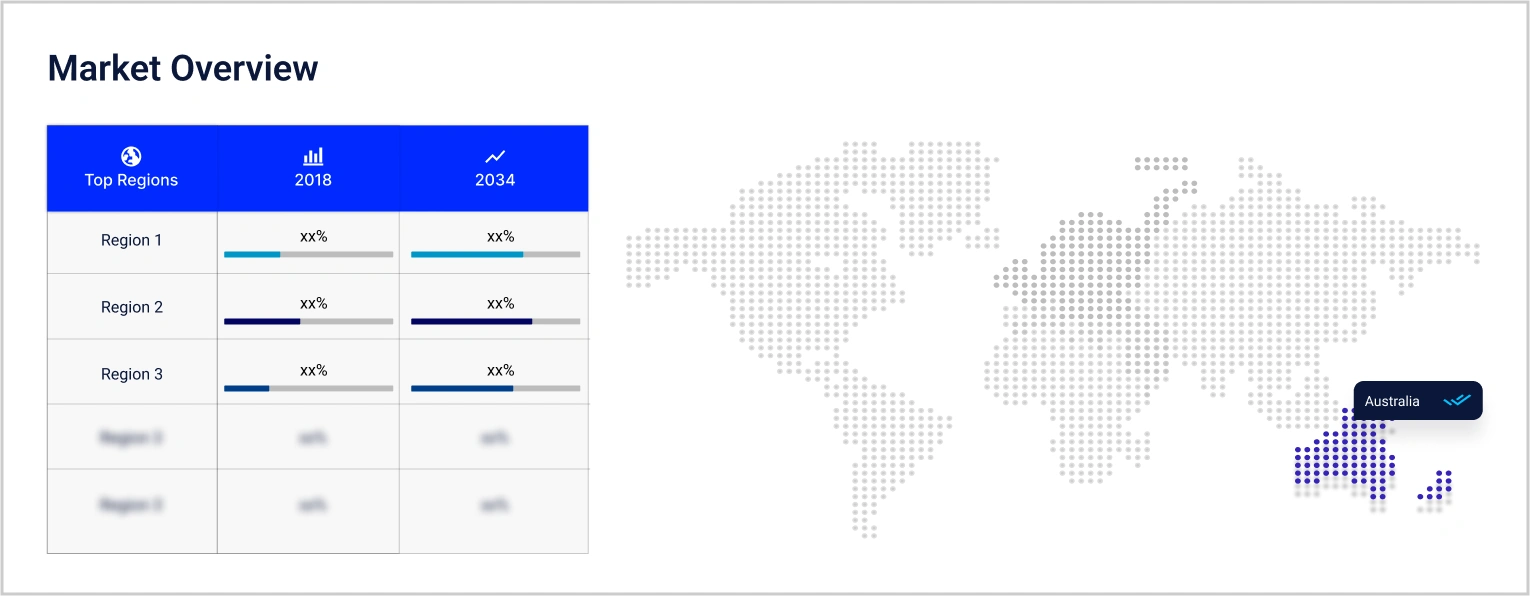
Key Insights: The steel market in Australia is segmented into New South Wales, Victoria, Queensland, Australian Capital Territory, Western Australia, and other regions with each of them having different demand drivers. The infrastructure, construction, and manufacturing activities in New South Wales and Victoria have led them to be the major consumers of steel. On the other hand, Queensland and Western Australia are the places where mining, heavy engineering, and industrial applications are the main focus, while the smaller regions are mostly using steel for urban and government projects. The companies like BlueScope Steel and InfraBuild Trading Pty Limited are the ones that are coordinating the production and distribution.
| CAGR 2026-2035 - Market by | Region |
| Victoria | 3.4% |
| Australian Capital Territory | 2.9% |
| New South Wales | XX% |
| Queensland | XX% |
| Western Australia | XX% |
| Others | XX% |
By product, flat-steel registers robust growth
The flat-steel remains central for building, construction, roofing, cladding and manufacturing, so producers are boosting capacity for coated and pre-painted flat-steel products while also investing in lower emission processes. For example, BlueScope Steel Limited is executing a major revamp of its blast-furnace facility. In January 2025, the company committed AUD 1.15 billion to reline its dormant furnace at Port Kembla, a move it describes as pivotal to enabling lower emission flat steel production. This modernisation supports the long-term supply of high-value flat-steel brands for domestic construction and export markets.
| CAGR 2026-2035 - Market by | Product |
| Flat Steel | 3.4% |
| Long Steel | XX% |
Demand for long steel products, such as rebar, structural sections, rods and mesh used in infrastructure and heavy construction, is prompting local players to expand capacity and adopt sustainable melting technology. InfraBuild Trading Pty Limited (part of the GFG group) recently announced it will install two new electric arc furnace (EAF) bowls at its Laverton facility, raising output by 25% to 1 million tonnes per annum. The expansion positions InfraBuild to meet rising domestic demand for long steel while lowering carbon intensity by using scrap based EAF technology.
By type, Carbon Steel gains significant traction
Carbon steel witnesses high demand in the Australia steel market. The Australian companies are expanding their carbon steel production capacity to satisfy the ever-growing demand for construction and infrastructure projects. To cite an instance, in April 2025, Greensteel Australia announced a major investment of AUD 1.6 billion for a new mill equipped with a direct reduced iron (DRI) unit, two electric arc furnaces, and rolling mills which will make possible large-scale production of structural carbon steel and rebar. This is a huge step towards lowering the country's carbon footprint and reducing imports and stabilising the supply of the domestic building and infrastructure projects.
On the other hand, stainless and high-performance steel producers are focused on developing corrosion-resistant and specialty steels required by industry, mining, and high-end manufacturing. They are heavily investing in upgrading their infrastructure and incorporating low-carbon technology, which is supporting the growth of the Australia steel market. For instance, in October 2024, Greensteel Australia entered a contract with Danieli Group to erect a 600,000-tonne-per-year hydrogen-powered rolling mill, a groundbreaking facility designed to make the process of producing premium steels as emission-free as possible. Local mills also become more competitive in producing alloy and stainless steels that adhere to more stringent technical and environmental standards.
By end-use, Construction sector contributes significant to the market revenue
The need for steel in construction has surged demand in the Australia steel market, attributed to the ongoing large infrastructure projects and public housing programs. Local manufacturers are boosting their production of structural components to meet the demand for steel frameworks, rebars, and structural beams. As an example, InfraBuild Trading Pty Limited, in September 2025, announced that it would increase the Laverton plant capacity by 25% to reach a target of one million tonnes per annum by 2026 to meet the rising demand for housing and transport infrastructure better. The company is extending its business here to strengthen the local supply side of the market, minimize the need for imports, and facilitate the smooth running of vast construction projects.
| CAGR 2026-2035 - Market by | End Use |
| Construction | 3.7% |
| Automotive | 3.2% |
| Mechanical Engineering | XX% |
| Domestic Appliances | XX% |
| Metalware | XX% |
| Others | XX% |
Meanwhile, the domestic or home appliances sector contributes substantially to the Australia steel market revenue, as steel manufacturers are working on new product ranges to fulfil the specific requirements. Companies are delivering premium, corrosion-resistant, coated steels that can be utilized for the appliance bodies, panels, and components. BlueScope Steel Limited is one such company that offers pre-painted and coated flat steels that best fit the needs of refrigerators, ovens, washing machines, and the rest of the household appliances.
By region, New South Wales (NSW) emerges as a lucrative market destination
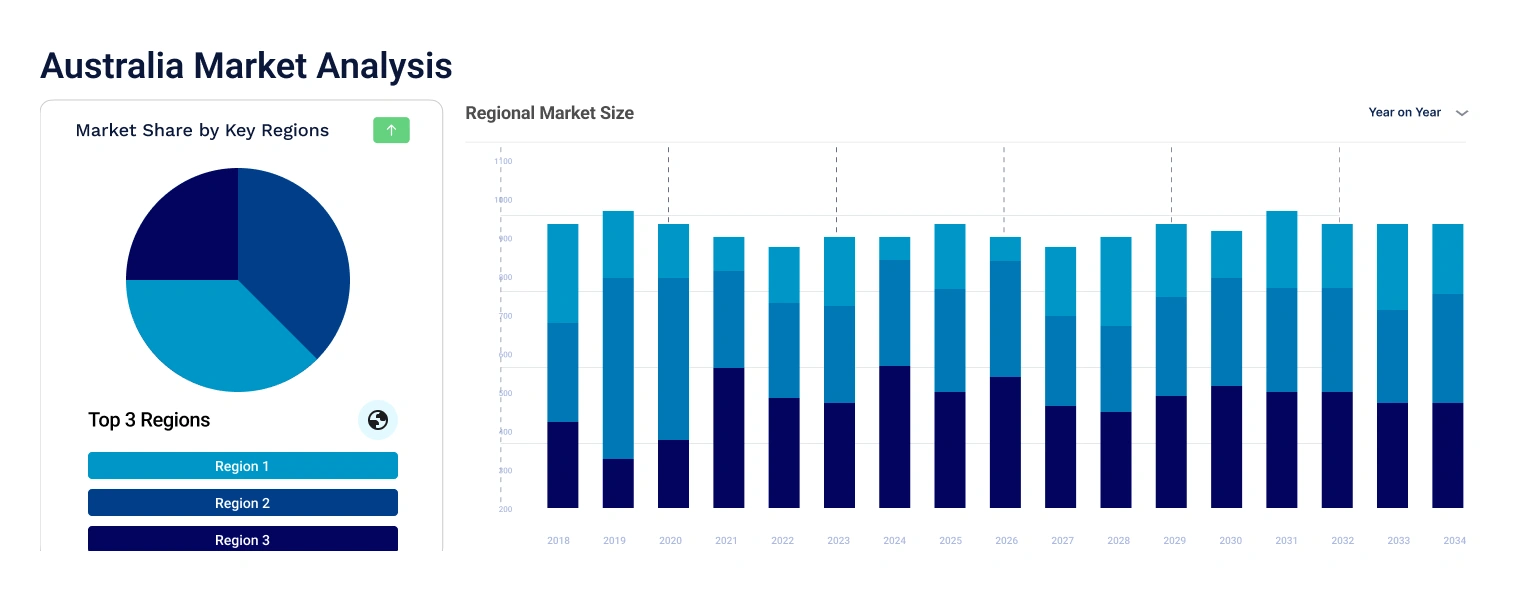
New South Wales remains a key location for steel production and the obtaining raw materials, resulting from the infrastructure, construction, and industrial projects. To secure their supply chains, companies are making massive investments in obtaining the essential inputs. As an example, in August 2024 JSW Steel Limited acquired a 66.67% share in M Res NSW for USD 120 million thereby gaining access to the Appin and Dendrobium coking coal mines. Such backward integration is a way of guaranteeing the continued supply of top-quality coking coal that would be used in steelmaking. This further supports the production efficiency and long-term growth in New South Wales.
| Market Share by | Region |
| New South Wales | 34.6% |
| Victoria | XX% |
| Queensland | XX% |
| Australian Capital Territory | XX% |
| Western Australia | XX% |
Western Australia steel market has turned into a low emissions steel hub, where producers are searching for green iron and maintenance of steelmaking using clean energy methods. For instance, in November 2025, Rio Tinto collaborated with Australian technology firm Calix to build the Zesty™ Zero Emissions Steel demonstration plant at Kwinana, Perth. The USD 35 million project between the two parties is a move to use electric heating and hydrogen reduction to obtain low-emission iron from the ores of the Pilbara region. These kinds of investments support industrial diversification goals in WA, while contributing to decarbonisation and thus build up the region's capacity to produce sustainable steel.
Major Australia steel market players and producers are mainly focusing on increasing their production capacity, upgrading their infrastructures, and employing new technology to meet the rising demand emanating from the construction, mining, and industrial sectors. Besides, companies like BlueScope Steel and InfraBuild Trading Pty Limited are modernizing their rolling mills, improving flat and long steel production, and implementing energy-efficient technologies to not only maintain the quality of the output and to ensure supply chain reliability but also to become more competitive in both domestic and export markets.
Furthermore, steel companies in Australia are mainly investing in sustainable steelmaking and low-carbon technologies, preparing them to comply with global decarbonisation trends. Collaborations, joint ventures, and research and development projects, such as green iron pilot plants and hydrogen-based steel processes, are opening new opportunities in the Australia steel market for companies to broaden product portfolios and to meet the increasing demand for specialty steels. These measures not only improve production efficiency but also make Australian steel manufacturers leaders in innovation and eco-friendly operations.
Vulcan Steel (Australia) Pty Limited was established in 1988 and has its main office in Brisbane. It is a company that mainly focuses on manufacturing top-notch steel products for applications in the construction and industrial sectors. The company has consistently broadened its distribution network and fabrication services to adequately meet the needs of the infrastructure and manufacturing sectors in Australia.
InfraBuild Trading Pty Limited is a company that was established in 2000 and is based in Melbourne. The firm is a major steel manufacturer and distributor of flat and long steel products. The company is committed to improving its production capabilities and expanding its supply chain to meet the industrial, construction, and infrastructure needs.
Master Steel is a leading player in the Australia steel market that was established in 1995, headquartered in Sydney. The firm is engaged in structural steel fabrication and provision of customised steel solutions. By utilising modern processing techniques and their local presence, the company supports clients in the construction, engineering, and industrial sectors throughout Australia.
BlueScope Steel Limited was established in 2002 and has its main office in Melbourne. The firm is a major player in the areas of flat steel, coated steel, and steel products that are specially made. To meet the requirements of the domestic and export markets, the company is constantly involved in upgrading its facilities and adopting new technology-driven solutions.
*Please note that this is only a partial list; the complete list of key players is available in the full report. Additionally, the list of key players can be customized to better suit your needs.*
Other players in the market include Steel Fabrication Services, among others.
Explore the latest trends shaping the Australia Steel Market 2026-2035 with our in-depth report. Gain strategic insights, future forecasts, and key market developments that can help you stay competitive. Download a free sample report or contact our team for customized consultation on Australia steel market trends 2026.
Weathering Steel Market
Stainless Steel Market
Structural Steel Market
Electrical Steel Market
South Korea Steel Market
Saudi Arabia Structural Steel Market
North America Stainless Steel Market
Europe Stainless Steel Market
Asia Pacific Stainless Steel Market


Upto 15% Off
USD
$3999 $3599
$2499 $2249
$4999 $4249
$5999 $5099


*While we strive to always give you current and accurate information, the numbers depicted on the website are indicative and may differ from the actual numbers in the main report. At Expert Market Research, we aim to bring you the latest insights and trends in the market. Using our analyses and forecasts, stakeholders can understand the market dynamics, navigate challenges, and capitalize on opportunities to make data-driven strategic decisions.*
Get in touch with us for a customized solution tailored to your unique requirements and save upto 35%!
In 2025, the Australia steel market reached an approximate value of USD 13.24 Billion.
The market is projected to grow at a CAGR of 2.90% between 2026 and 2035.
The market is assessed to witness a healthy growth in the forecast period to reach around USD 17.62 Billion in 2035.
The different products in the market include flat steel and long steel.
The different types of steel in the market include carbon steel, alloy steel, stainless steel, and tool steel.
The major end uses of steel in the market include construction, mechanical engineering, automotive, domestic appliances, metalware, and agricultural, among others.
The different regions covered in the EMR report include New South Wales, Victoria, Queensland, Australian Capital Territory, and Western Australia, among others.
The key players in the market include Vulcan Steel (Australia) Pty Limited, Master Steel, InfraBuild Trading Pty Limited, BlueScope Steel Limited, Steel Fabrication Services, and other regional and national companies.
Key strategies driving the market include adoption of low-emission and green steel technologies, investments in advanced manufacturing and modular infrastructure solutions, partnerships with global technology providers, expansion into high-value steel products, and strengthening supply chain resilience.
Major challenges that the Australian steel market encounters include fluctuating global demand, raw material price volatility, import competition, regulatory compliance on emissions, and the need for skilled workforce to support technological advancements.
Explore our key highlights of the report and gain a concise overview of key findings, trends, and actionable insights that will empower your strategic decisions.
| REPORT FEATURES | DETAILS |
| Base Year | 2025 |
| Historical Period | 2019-2025 |
| Forecast Period | 2026-2035 |
| Scope of the Report |
Historical and Forecast Trends, Industry Drivers and Constraints, Historical and Forecast Market Analysis by Segment:
|
| Breakup by Product |
|
| Breakup by Type |
|
| Breakup by End Use |
|
| Breakup by Region |
|
| Market Dynamics |
|
| Competitive Landscape |
|
| Companies Covered |
|
Single User License
One User
USD 3,999
USD 3,599
tax inclusive*
Datasheet
One User
USD 2,499
USD 2,249
tax inclusive*
Five User License
Five User
USD 4,999
USD 4,249
tax inclusive*
Corporate License
Unlimited Users
USD 5,999
USD 5,099
tax inclusive*
*Please note that the prices mentioned below are starting prices for each bundle type. Kindly contact our team for further details.*
Flash Bundle
Small Business Bundle
Growth Bundle
Enterprise Bundle
*Please note that the prices mentioned below are starting prices for each bundle type. Kindly contact our team for further details.*
Flash Bundle
Number of Reports: 3
20%
tax inclusive*
Small Business Bundle
Number of Reports: 5
25%
tax inclusive*
Growth Bundle
Number of Reports: 8
30%
tax inclusive*
Enterprise Bundle
Number of Reports: 10
35%
tax inclusive*
How To Order

Select License Type
Choose the right license for your needs and access rights.

Click on ‘Buy Now’
Add the report to your cart with one click and proceed to register.

Select Mode of Payment
Choose a payment option for a secure checkout. You will be redirected accordingly.
Gain insights to stay ahead and seize opportunities.

Get insights & trends for a competitive edge.

Track prices with detailed trend reports.

Analyse trade data for supply chain insights.

Leverage cost reports for smart savings

Enhance supply chain with partnerships.

Connect For More Information
Our expert team of analysts will offer full support and resolve any queries regarding the report, before and after the purchase.
Our expert team of analysts will offer full support and resolve any queries regarding the report, before and after the purchase.
We employ meticulous research methods, blending advanced analytics and expert insights to deliver accurate, actionable industry intelligence, staying ahead of competitors.
Our skilled analysts offer unparalleled competitive advantage with detailed insights on current and emerging markets, ensuring your strategic edge.
We offer an in-depth yet simplified presentation of industry insights and analysis to meet your specific requirements effectively.





Share