

Consumer Insights
Uncover trends and behaviors shaping consumer choices today
Procurement Insights
Optimize your sourcing strategy with key market data
Industry Stats
Stay ahead with the latest trends and market analysis.

The global air traffic management (ATM/CNS) system market attained a value of USD 17.86 Billion in 2025 and is projected to expand at a CAGR of 10.60% through 2035. The market is further expected to achieve USD 48.91 Billion by 2035. Surging investments in digital towers and satellite-based surveillance to reduce controller workload and manage expanding airspace volumes with higher automation and accuracy is bolstering the market growth.
Aviation authorities are prioritizing automation-driven systems that boost controller efficiency without compromising safety or compliance. In March 2025, Indra Sistemas introduced its next-generation ManagAir platform, combining cloud-native air traffic control software with digital tower capabilities that allow airports to manage traffic remotely and automate routine controller tasks. The launch reflects an important air traffic management (ATM/CNS) system market trend toward modular, intelligence-driven systems instead of legacy hardware-bound configurations. According to industry research, global air traffic is outpacing the pre-pandemic baseline by 2%, putting severe pressure on surveillance, communication, and navigation networks across the world. Airlines and airport operators now require scalable systems that maintain safety while supporting higher aircraft volume and unpredictable flight patterns.
The market is also shifting from radar-first to multi-sensor fusion, where GNSS, ADS-B, MLAT, and satellite surveillance converge into a unified operational picture. Players like Thales, L3Harris, Frequentis, and Raytheon Technologies are competing to deploy remote digital tower suites, AI-assisted sequencing tools, and cybersecurity-secured VHF/SATCOM networks because airport authorities want efficiency gains without compromising compliance, thereby boosting the overall air traffic management (ATM/CNS) system industry value. Investments are rising from the airports as well, especially where secondary and regional airports are upgrading CNS layers to support new route authorizations and reduce airspace bottlenecks.
Base Year
Historical Period
Forecast Period
Compound Annual Growth Rate
10.6%
Value in USD Billion
2026-2035
*this image is indicative*
Globally air travel has bounced back sharply, pushing airports beyond legacy controller-tower capacity. For example, operators at major airports recently raised alarms about outdated CNS systems causing glitch-prone flight delays. Governments and airport authorities are therefore committing to large-scale ATM/CNS upgrades. In September 2025, Adani Airports introduced aviio, OneApp, and Airport in a Box to enhance operations, connectivity, and passenger experiences across its airports in India. So, the demand in the air traffic management (ATM/CNS) system industry translates into multiyear projects for vendors supplying radar, satellite-based surveillance, digital communication stacks and automation platforms, creating steady, long-term procurement pipelines rather than one-off sales.
Traditional radar and tower-based air traffic control are giving way to remote and digital-tower architectures. Vendors and air navigation service providers are increasingly deploying cloud-native ATM platforms and virtual towers that can manage traffic remotely, lowering infra costs for small or regional airports while scaling oversight. In October 2025, The Saudi General Authority of Civil Aviation (GACA) approved the Kingdom’s first virtual air traffic control (ATC) tower at AlUla International Airport. This trend opens air traffic management (ATM/CNS) system market opportunities for software-centric players and creates demand for flexible CNS suites that support remote ops, modular upgrades, and mixed-sensor fusion.
Next-generation ATM/CNS systems are centered on multi-sensor fusion, where radar, ADS-B, GNSS, satellite surveillance, and MLAT technologies work together to deliver seamless, full airspace visibility. As airspace becomes denser with commercial, cargo and potential UAV traffic, fused sensing delivers better situational awareness and redundancy. In June 2025, Thales launched the best-in-class simultaneous civil and military secondary surveillance air traffic radar, the RSM NG / IFF. Vendors offering sensor-agnostic, interoperable CNS solutions gain advantage, since operators are looking for scalable systems that can evolve as technology improves or regulations tighten, accelerating the air traffic management (ATM/CNS) system market value.
Airports and ANSPs now want systems able to automate routine tasks such as flight sequencing, conflict resolution, separation assurance using AI/ML modules. This reduces controller workload, improves output and minimizes human error. In March 2025, India’s Delhi International Airport, led by GMR Airports, introduced the Unified Total Airside Management (UTAM) system, an AI-enabled platform designed to enhance the efficiency and safety of airside operations. For vendors, this air traffic management (ATM/CNS) system market trend means lucrative opportunities for software licensing, ongoing maintenance, and data-services contracts.
In India, following safety incidents tied to ATC glitches and old CNS infrastructure, airport authorities are upgrading navigation and communication systems with urgency. Regulatory pressure to meet international reliability and safety standards pushes airport operators and governments to invest in robust, certified ATM/CNS suites, bolstering air traffic management (ATM/CNS) system market opportunities for vendors with proven compliance credentials. In December 2021, Thales and Aeronav provided new CNS/ATM systems to the civil aviation authority of Haiti to update and optimize the country's air traffic management capabilities. This creates a favorable environment for long-term, high-value contracts covering not only equipment, but also certification, training and lifecycle support.
The EMR’s report titled “Global Air Traffic Management (ATM/CNS) System Market Report and Forecast 2026-2035” offers a detailed analysis of the market based on the following segments:
Market Breakup by Offering
Key Insight: Hardware continues to anchor majority of the deals because regulators and engineers need visible, certified assets in towers, radar sites and data centers. Yet the major market growth relies on the software stack, where vendors promise more capacity, smoother controller workload and better delay metrics without new concrete or masts. Open interfaces and modular apps have become selling points, contributing to the air traffic management (ATM/CNS) system market growth. The most competitive suppliers pair robust, maintainable hardware with flexible software roadmaps that can absorb new sensors, new procedures and new traffic patterns over many years, avoiding disruptive recertification.
Market Breakup by Application
Key Insight: Each ATM application is designed to solve a different operational pain point. Communications ensure uninterrupted pilot–controller interaction, so investments target availability, coverage and cyber-resilience. Navigation focuses on accurate guidance for en-route and terminal procedures, especially as performance-based navigation expands. Surveillance converts aircraft presence into trusted tracks, with secondary radar, ADS-B, while driving air traffic management (ATM/CNS) system market expansion. Automation orchestrates everything, turning raw data and pilot exchanges into safe, efficient traffic sequences.
Market Breakup by Operation
Key Insight: En-route systems are designed to be conservative and extremely reliable, because any disruption affects long-distance traffic across multiple regions. Approach operations handle the highest level of complexity within the smallest airspace zones, so they attract intense investment in tools that shape arrivals, departures and runway throughput, widening the air traffic management (ATM/CNS) system market scope. Tower operations are positioned at the interface between procedure and ground reality, integrating visual cues, surface movements and last-minute airline or ground-handling constraints.
Market Breakup by Airport Size
Key Insight: Large hubs demand the most sophisticated, fully integrated ATM/CNS ecosystems, because even small delays ripple through national networks. Medium airports look for scalable versions of the same capabilities, focusing on digital towers, basic automation and robust communications, accelerating the air traffic management (ATM/CNS) system market revenue growth. Small airports usually concentrate on safety essentials, flexible surveillance concepts and remote support from larger centers rather than full standalone suites.
Market Breakup by Sector
Key Insight: Commercial stakeholders seek punctuality, yield and passenger satisfaction, so they drive investments to add capacity, reduce vectoring and keep schedules intact during disruptions, accelerating the overall air traffic management (ATM/CNS) system market growth. Military and defense stakeholders prioritize sovereignty, survivability and information security, demanding systems that still function when parts of the spectrum or infrastructure are denied.
Market Breakup by Region
Key Insight: North America emphasizes incremental modernization of already dense infrastructure, while Europe leans heavily on harmonization agendas and environmental performance. Asia Pacific pushes capacity expansion, combining greenfield airports with complex retrofit projects. Latin America looks for cost-effective upgrades that stabilize safety and reliability in challenging geographies. The Middle East and Africa air traffic management (ATM/CNS) system market navigates hub-building ambitions, long-range overflight corridors and budget constraints in many states.
Hardware offering dominates the market due to mandatory infrastructure replacement cycles
Hardware continues to hold the dominant share in the market because every airspace upgrade begins with certified surveillance, communication and navigation equipment bolted into towers, racks and masts. ANSPs and airport operators sign long lifecycle contracts around radars, ADS-B receivers, VHF stations, data radios and ground navigation aids. These projects carry strict safety cases, inspection routines and redundancy requirements, which favor established OEMs and system integrators.
As per the air traffic management (ATM/CNS) system market report, software emerges as the fastest-growing offering because the industry is moving beyond simple signal capture and toward platforms that interpret data intelligently for real-time operational decision-making in control centers. In November 2025, Eve Air Mobility announced the first real-world deployment of its urban air traffic management software called Vector. Modern ATM platforms layer trajectory prediction, decision support and conflict detection modules on top of sensor data, turning raw tracks into prioritized controller tasks.
By application, communications account for the larger share in the market due to mandatory safety-critical voice links
Communication remains the dominant application across the air traffic management (ATM/CNS) system market dynamics because every controlled airspace still depends on clear, resilient voice and data links between pilots and controllers. VHF, HF, SATCOM and ground data networks play key roles in carrying instructions, clearances, and digital messages. Modern programs add IP-based networks, secure radios and controller-pilot data link services on top of legacy channels, but their operational role stays central. In February 2025, Nokia announced that Vietnam Air Traffic Management Corporation (VATM) will use Nokia’s networking solution to replace the legacy Synchronous Digital Hierarchy (SDH) transport system with IP/MPLS technology to improve security and reliability in the South region of Vietnam.
Automation is the fastest-growing application area in the air traffic management (ATM/CNS) system market scope because controllers cannot scale linearly by only depending on traffic growth. ANSPs want tools that handle routine separation checks, sequence arrivals and departures efficiently, and highlight only real conflicts or weather risks. Advanced decision-support systems ingest data from multiple sensors, flight plans and meteorological feeds, then recommend optimal actions instead of leaving everything to manual judgment.
En-route operations dominate the global industry due to wide-area safety and efficiency needs
En-route operations register the dominant share of the air traffic management (ATM/CNS) system market revenue as upper airspace infrastructure has to serve every long-haul and regional flight passing through a flight information region. In December 2025, Austro Control selected ADB SAFEGATE’s OneControl integrated air traffic control platform, developed in Graz, to modernize all controller working positions in the Vienna Airport ATC Tower by 2028. Route structure redesign, flexible use of airspace and performance-based navigation procedures all anchor around en-route operations.
Approach operations observe rapid growth in the air traffic management (ATM/CNS) system market as congestion, delays and safety margins are experienced mainly in the terminal maneuvering area around busy airports. Here, ANSPs invest in advanced arrival and departure managers, precision navigation procedures and high-resolution surveillance to support closer spacing without compromising safety. Digital towers and enhanced controller tools also start with approach environments, where visual references blend with instrument guidance.
Large airports account for the largest share of the market due to traffic volumes and complex operations
Large airports hold the dominant share of the market because most international and trunk routes converge into these hubs, compelling authorities to prioritize their ATM/CNS upgrades first. They run the densest schedules, most complex runway configurations and biggest combination of airline types, making advanced surveillance, automation and communication systems non-negotiable.
Medium-sized airports are also contributing to the air traffic management (ATM/CNS) system market value as governments and investors increasingly see them as pressure valves for saturated hubs. These airports handle traffic and have space to improve runway use, terminal flows and regional connectivity with targeted ATM/CNS upgrades. Vendors can deploy scaled-down digital towers, simplified automation suites and cost-effective surveillance combinations for this category.
Commercial sector clocks in substantial share of the market due to passenger growth and network expansion
The commercial sector dominates the air traffic management (ATM/CNS) system market revenue share. Airlines, cargo operators and airport companies drive most traffic volumes. Commercial networks rely on highly predictable capacity, so authorities invest heavily in surveillance, communications and automation that minimize delays while protecting safety margins. Digital towers, collaborative decision-making platforms and advanced flow-management tools are usually justified first in commercial contexts, where minutes saved translate directly into schedule reliability and aircraft utilization.
Military and defense users represent the fastest-growing sector because they need airspace control that works in contested, degraded or classified environments. Defense ministries invest in hardened communications, mobile and deployable radar units, and encrypted data links that can integrate with, yet remain distinct from, civilian ATM infrastructures.
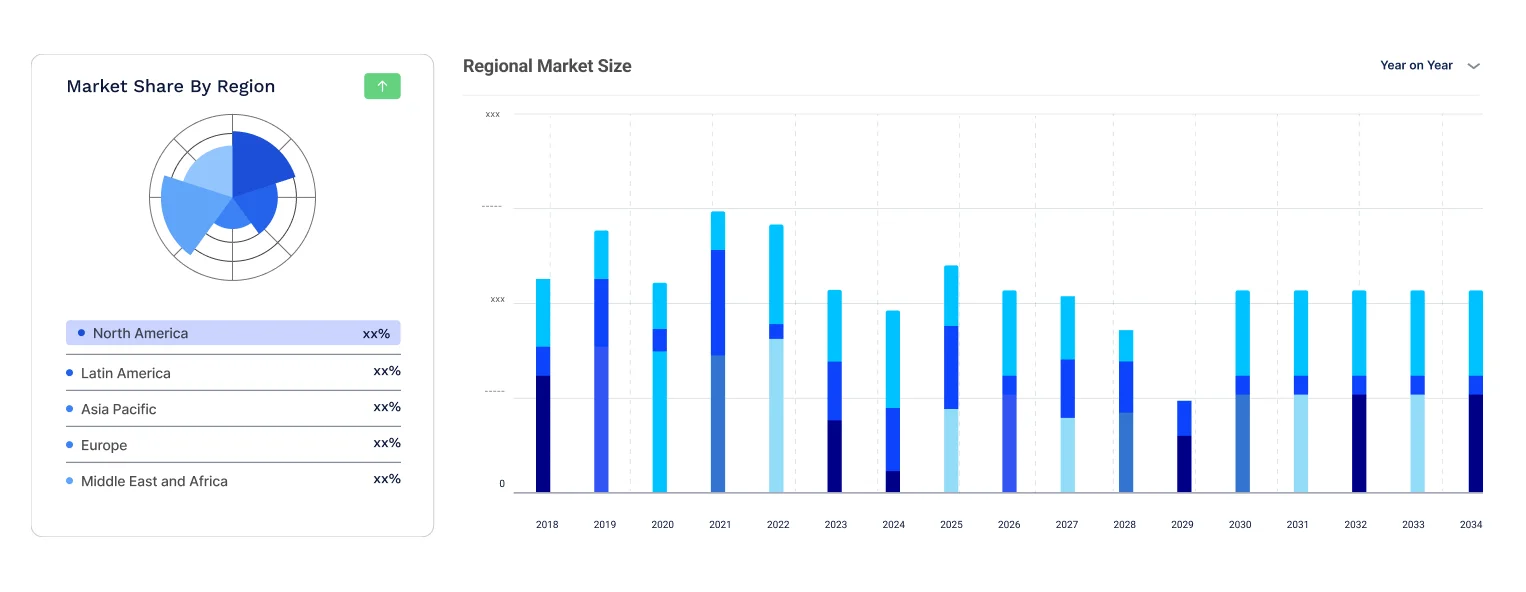

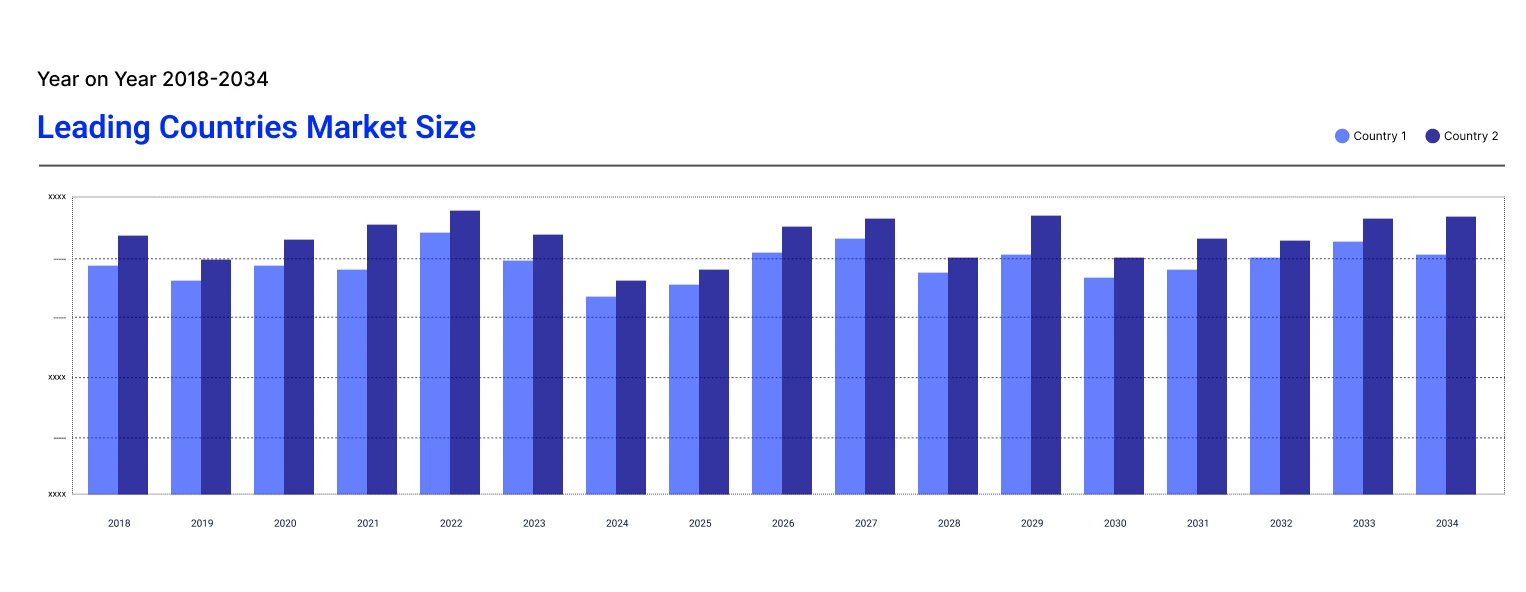
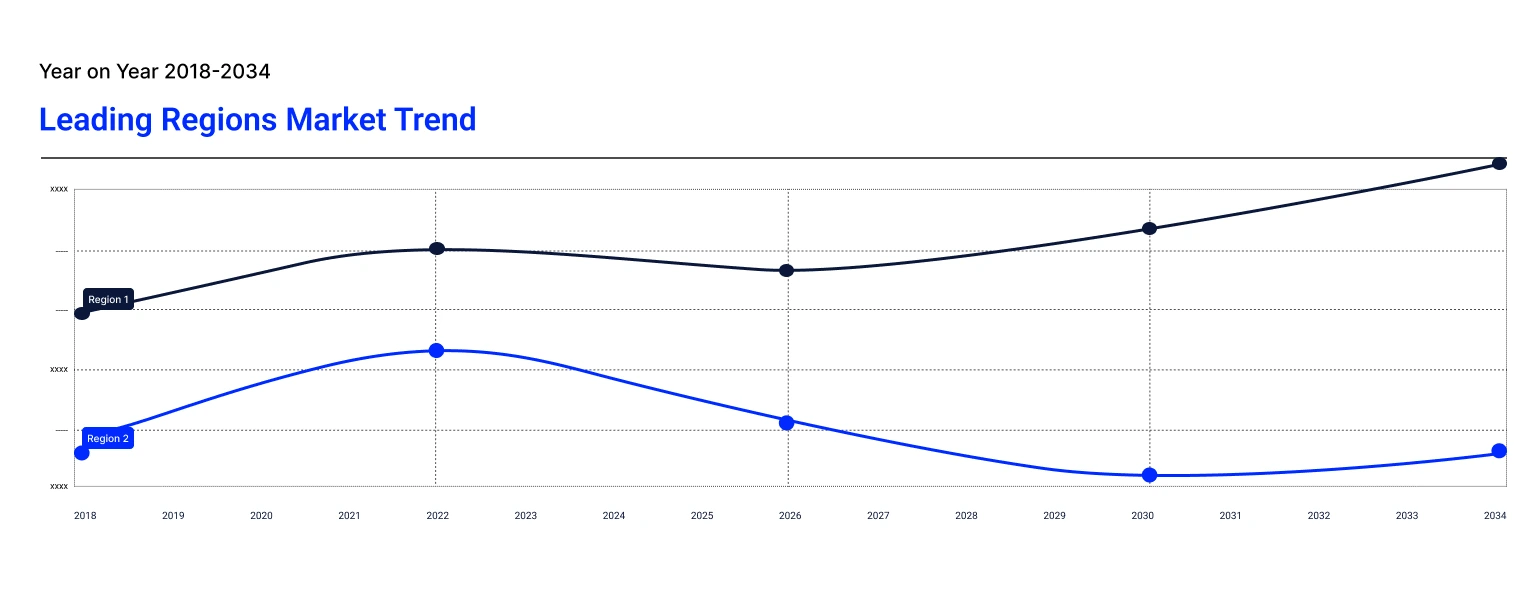
North America secures the leading position in the market due to sustained modernization funding
North America holds the dominant regional share because it combines some of the world’s busiest airspace with sustained, structured funding for ATM/CNS modernization. Programs around performance-based navigation, data-link, satellite-based surveillance and digital information exchange have been rolled out for years, giving vendors a pipeline of upgrades and replacements. The region also hosts many leading OEMs and software houses, reinforcing local ecosystems and export capability.
Growth of the Asia Pacific’s air traffic management (ATM/CNS) system market is powered by air traffic demand, fleet expansion and new airport construction. Emerging markets are commissioning greenfield airports with digital towers and modern CNS architectures from day one. Mature markets in the region, meanwhile, must retrofit aging infrastructure while keeping very dense traffic moving. This creates strong opportunity for vendors offering scalable, cost-sensitive solutions that can adapt to differing regulatory frameworks and terrain challenges.
The industry is becoming more software-driven and service-heavy. Most of the air traffic management (ATM/CNS) system market players are focusing on digital towers, cloud-ready automation platforms, and multi-sensor fusion that combines radar, ADS-B, satellite and GNSS feeds under one operational roof. There is also growing demand for cyber-secure communications and data-link services.
Opportunities are strongest where ANSPs and airports want to modernize without ripping out the existing systems at once. Air Traffic Management (ATM/CNS) system companies that offer modular upgrades, remote monitoring, and subscription-based decision-support tools can tap recurring revenue. Another attractive opportunity lies in regional and secondary airports, which are looking at remote tower centers and lighter CNS packages to safely add capacity. As UAV traffic and advanced air mobility slowly emerge, suppliers that design open architectures today are well-positioned over the coming years.
Established in the year 1987 and headquartered in the United States, Adacel Technologies Limited, focuses on advanced air traffic management and ATC simulation solutions. The company supplies operational ATM systems for oceanic and domestic airspace, alongside high-fidelity simulators that help ANSPs and training academies upskill controllers efficiently.
BAE Systems plc, founded in 1999 and headquartered in London, United Kingdom, serves the ATM/CNS market through secure communication networks, surveillance technologies and command-and-control solutions. Its focus is on highly resilient, cyber-hardened systems that can bridge civil and military airspace operations, catering to the air traffic management (ATM/CNS) system market.
Frequentis AG, established in 1947 and headquartered in Vienna, Austria, is a specialist in mission-critical communication and information systems for air traffic management. It delivers voice communication systems, tower automation platforms and remote digital tower solutions used by ANSPs across the world.
Established in 1948, with its head office located in Rome, Italy, Leonardo S.p.A. offers a broad ATM/CNS portfolio that spans primary and secondary radars, ADS-B systems, approach and en-route automation platforms, and integrated tower solutions. Leonardo often acts as a prime contractor on national airspace modernization programs, delivering turnkey systems from sensors to control centers.
*Please note that this is only a partial list; the complete list of key players is available in the full report. Additionally, the list of key players can be customized to better suit your needs.*
Other key players in the market include Harris Corporation, Indra Sistemas, S.A., Raytheon Technologies Corporation, Saab AB, Searidge Technologies, and Northrop Grumman Corporation, among others.
Unlock the latest insights with our air traffic management (ATM/CNS) system market trends 2026 report. Discover regional growth patterns, consumer preferences, and key industry players. Stay ahead of competition with trusted data and expert analysis. Download your free sample report today and drive informed decisions in the market.


Upto 15% Off
USD
$2999 $2699
$4839 $4355
$5999 $5099
$7259 $6170


*While we strive to always give you current and accurate information, the numbers depicted on the website are indicative and may differ from the actual numbers in the main report. At Expert Market Research, we aim to bring you the latest insights and trends in the market. Using our analyses and forecasts, stakeholders can understand the market dynamics, navigate challenges, and capitalize on opportunities to make data-driven strategic decisions.*
Get in touch with us for a customized solution tailored to your unique requirements and save upto 35%!
In 2025, the market reached an approximate value of USD 17.86 Billion.
The market is projected to grow at a CAGR of 10.60% between 2026 and 2035.
The global market size of air traffic management (ATM/CNS) systems is expected to reach a value of more than USD 48.91 Billion by 2035.
Key strategies driving the market include modularizing platforms, strengthening cybersecurity layers, co-developing concepts with ANSPs, offering outcome-based service contracts, and integrating analytics dashboards that translate traffic data into clear operational and financial performance metrics.
The key trends of the market are technological advancements, increasing investments, and improved safety measures.
The key players in the market include Adacel Technologies Limited, BAE Systems plc, Frequentis AG, Leonardo S.p.A., Harris Corporation, Indra Sistemas, S.A., Raytheon Technologies Corporation, Saab AB, Searidge Technologies, and Northrop Grumman Corporation, among others.
An air traffic management system is a set of hardware and software components that is used to manage air traffic, including arrivals, departure, communication, navigation, and surveillance.
The global air traffic management (ATM/CNS) system market is segmented based on offering, application, operation, airport size, sector, and region.
Air traffic management systems are important for safe, efficient, and speedy movement of aircrafts in the airspace and airports.
Integrating new digital systems with legacy infrastructure, managing rising cybersecurity risks, proving safety cases for automation, and aligning multi-country standards while keeping project costs and deployment timelines under control.
Explore our key highlights of the report and gain a concise overview of key findings, trends, and actionable insights that will empower your strategic decisions.
| REPORT FEATURES | DETAILS |
| Base Year | 2025 |
| Historical Period | 2019-2025 |
| Forecast Period | 2026-2035 |
| Scope of the Report |
Historical and Forecast Trends, Industry Drivers and Constraints, Historical and Forecast Market Analysis by Segment:
|
| Breakup by Offering |
|
| Breakup by Application |
|
| Breakup by Operation |
|
| Breakup by Airport Size |
|
| Breakup by Sector |
|
| Breakup by Region |
|
| SWOT Analysis |
|
| Competitive Landscape |
|
| Companies Covered |
|
Datasheet
One User
USD 2,999
USD 2,699
tax inclusive*
Single User License
One User
USD 4,839
USD 4,355
tax inclusive*
Five User License
Five User
USD 5,999
USD 5,099
tax inclusive*
Corporate License
Unlimited Users
USD 7,259
USD 6,170
tax inclusive*
*Please note that the prices mentioned below are starting prices for each bundle type. Kindly contact our team for further details.*
Flash Bundle
Small Business Bundle
Growth Bundle
Enterprise Bundle
*Please note that the prices mentioned below are starting prices for each bundle type. Kindly contact our team for further details.*
Flash Bundle
Number of Reports: 3
20%
tax inclusive*
Small Business Bundle
Number of Reports: 5
25%
tax inclusive*
Growth Bundle
Number of Reports: 8
30%
tax inclusive*
Enterprise Bundle
Number of Reports: 10
35%
tax inclusive*
How To Order

Select License Type
Choose the right license for your needs and access rights.

Click on ‘Buy Now’
Add the report to your cart with one click and proceed to register.

Select Mode of Payment
Choose a payment option for a secure checkout. You will be redirected accordingly.
Gain insights to stay ahead and seize opportunities.

Get insights & trends for a competitive edge.

Track prices with detailed trend reports.

Analyse trade data for supply chain insights.

Leverage cost reports for smart savings

Enhance supply chain with partnerships.

Connect For More Information
Our expert team of analysts will offer full support and resolve any queries regarding the report, before and after the purchase.
Our expert team of analysts will offer full support and resolve any queries regarding the report, before and after the purchase.
We employ meticulous research methods, blending advanced analytics and expert insights to deliver accurate, actionable industry intelligence, staying ahead of competitors.
Our skilled analysts offer unparalleled competitive advantage with detailed insights on current and emerging markets, ensuring your strategic edge.
We offer an in-depth yet simplified presentation of industry insights and analysis to meet your specific requirements effectively.





Share