

Consumer Insights
Uncover trends and behaviors shaping consumer choices today
Procurement Insights
Optimize your sourcing strategy with key market data
Industry Stats
Stay ahead with the latest trends and market analysis.

The global agricultural micronutrients market was valued at USD 7.33 Billion in 2025. The industry is expected to grow at a CAGR of 7.50% during the forecast period of 2026-2035. The market experienced an increasing number of farmers seeking efficient ways to boost crop productivity and food security to match the need for more food production. In turn, all these factors have resulted in the market attaining a valuation of USD 15.11 Billion by 2035.
Base Year
Historical Period
Forecast Period
Micronutrients that are used in agriculture enhance crop health and soil quality. For instance, particularly in India, applying zinc to crops cultivated on soils lacking in zinc boosts yields of rice, wheat, maize, and oats by more than 75% compared to applying fertilizer containing only nitrogen, phosphorus, and potassium. Hence, these nutrients can be used by cooperatives and agribusinesses to meet global food demands, boosting further growth in the agricultural micronutrients market.
Micronutrient treatments support ecologically responsible farming by reducing the usage of synthetic fertilizers. Solutions prepared from these agricultural nutrients are used by agricultural enterprises to improve soil health and promote long-term, sustainable crop growth.
In order to ensure optimal effectiveness, B2B businesses are offering customized micronutrient solutions for certain crops and soil types. Maximum nutrient uptake is ensured by tailoring, and farmers can reduce expenses and improve crop quality, increasing demand for agricultural products with added value.
Compound Annual Growth Rate
7.5%
Value in USD Billion
2026-2035
*this image is indicative*
| Global Agricultural Micronutrients Market Report Summary | Description | Value |
| Base Year | USD Billion | 2025 |
| Historical Period | USD Billion | 2019-2025 |
| Forecast Period | USD Billion | 2026-2035 |
| Market Size 2025 | USD Billion | 7.33 |
| Market Size 2035 | USD Billion | 15.11 |
| CAGR 2019-2025 | Percentage | XX% |
| CAGR 2026-2035 | Percentage | 7.50% |
| CAGR 2026-2035 - Market by Region | Asia Pacific | 9.5% |
| CAGR 2026-2035 - Market by Country | India | 10.8% |
| CAGR 2026-2035 - Market by Country | China | 9.1% |
| CAGR 2026-2035 - Market by Type | Zinc | 9.7% |
| CAGR 2026-2035 - Market by Form | Chelated Micronutrients | 9.4% |
| Market Share by Country 2025 | India | 3.6% |
The agricultural micronutrient market is expanding rapidly due to rising demand for more environmentally friendly farming practices, increased soil fertility, and higher crop yields. Key market drivers include the shift to precision agricultural techniques and the rising global population, which increases the need for food. The market is being revolutionized by trends such as the development of fertigation systems and bio-based micronutrient formulations. With an emphasis on novel solutions for both large-scale and small-scale farmers, industry leaders like BASF, Syngenta, and Haifa Group are expanding their product portfolio. With an emphasis on customized, regionally relevant micronutrient solutions and enhanced product distribution systems, the market's reach is growing.
Agricultural micronutrients are becoming increasingly common in organic farming as the demand for organic goods keeps growing. In order to increase soil fertility and encourage plant development without the use of synthetic fertilizers, farmers are adopting these solutions, thereby accelerating greater demand in the agricultural micronutrient market. The market is also expanding as businesses produce micronutrient goods that comply with organic standards as a result of customers' and retailers' growing emphasis on organic certification. Further, the industry is being driven by the production of high-value commodities such as fruits, vegetables, and specialty crops. To get good quality and yields, these crops require careful fertilizer management.
The key trends in the agricultural micronutrients market include rise of bio-based products, precision agriculture, personalized solutions, and combining micronutrients with crop protection, making it more sustainable, efficient, and productive.
The increasing use of organic and bio-based micronutrients over synthetic ones is a significant agricultural micronutrient market trend. This is due to the growing demand from governments and consumers worldwide for sustainable agricultural techniques. Companies like Nutrien and Yara International are creating natural products to improve soil quality without harming the environment. As the need for sustainable agriculture methods grows, bio-based micronutrients help increase crop yields and reduce the usage of chemical fertilizers.
Farmers are using techniques like fertigation in precision agriculture, which is thereby transforming the agricultural micronutrients market dynamics. The method uses irrigation systems to directly provide micronutrients to crops. In order to improve nutrient use efficiency and production, Agri-Tech Producers and ICL Specialty Fertilizers are incorporating micronutrient solutions into these systems. This particular trend reflects the growing need for farming practices that are more targeted and efficient.
Micronutrient solutions tailored to individual crops and soils are becoming more necessary. Fertilizer companies are offering customized micronutrient blends to meet the unique needs of various soils and crops, accelerating the agricultural micronutrients market revenues. For example, Haifa Group provides specialized fertilizer solutions for certain crops, promoting better plant health and nutrient uptake. This is increasingly becoming necessary for farmers to maximize yields with minimum waste.
In order to address both nutritional and pest control needs, crop protection solutions are increasingly being integrated with agricultural micronutrients. To increase plant resistance to pests and diseases, companies like FMC Corporation are adding micronutrients to their pesticide formulations, boosting further demand in the agricultural micronutrients market. This pattern shows how the industry is moving toward all-encompassing solutions, where micronutrients boost plant development and offer defense against environmental stressors, increasing the overall agricultural productivity.
To boost the agricultural micronutrients market growth, companies can develop micronutrient solutions tailored to the soil and crops of growing economies like Asia, Africa, and Latin America as farming practices become more sophisticated in these regions. This would help farmers to increase sustainability and productivity, which might lead to market expansion. Moreover, companies can integrate digital platforms and make use of intelligent farming technologies. This can help farmers optimize the use of micronutrients, improve crop health and resource efficiency, and offer a more customized approach to agriculture by providing real-time information and analytics regarding nutrient requirements.
Due to intensive farming practices and the depletion of essential elements, soil health is declining globally. Hence, concerns about micronutrient supplements are growing. This raises awareness of the need for agricultural micronutrient consumption to promote crop acceleration, soil fertility enhancement, and the sustainability of agricultural-production levels. Moreover, by promoting the use of micronutrient fertilizers through grants, subsidies, and supportive policies, the majority of governments are actively fostering sustainable agriculture. This is particularly prevalent in developing countries, where governments are working to improve agricultural efficiency, increase food security, and make it simpler for farmers to obtain high-quality micronutrient solutions.
Read more about this report - REQUEST FREE SAMPLE COPY IN PDF
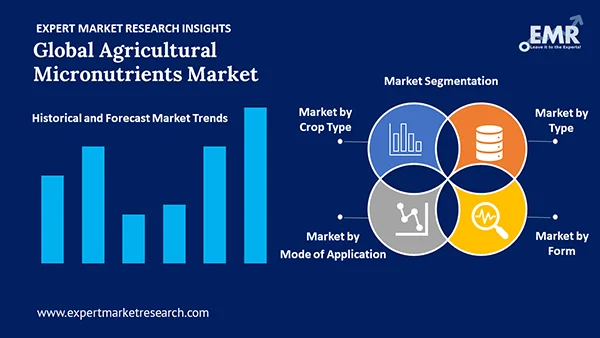
“Agricultural Micronutrients Market Report and Forecast 2026-2035” offers a detailed analysis of the market based on the following segments:
Market Breakup by Type
Market Breakup by Crop Type
Market Breakup by Form
Market Breakup by Application
Market Breakup by Region
Market Insights by Product Type
Micronutrients including zinc, boron, iron, molybdenum, copper, and manganese are all growing in terms of agricultural micronutrients market share, as these are utilized for crop development, disease resistance, and nutrient absorption. Zinc increases crop output and quality, whereas boron helps with fruiting and flowering. Molybdenum and iron help fix nitrogen and facilitate photosynthesis. Manganese and copper help plants withstand environmental stress. In an effort to promote sustainable agriculture and balanced nutrition, farmers are increasingly using these micronutrients to optimize soil fertility and health.
Analysis by Crop Type
Since micronutrients are essential for improving plant health and yield, they are gaining popularity across various crop varieties. Zinc and manganese in grains and cereals enhance growth and disease resistance, thereby boosting further demand in the agricultural micronutrients market. On the other hand, copper and boron promote fruit set and flowering in fruits and vegetables. Micronutrients help pulses and oilseeds fix nitrogen and grow roots more effectively. Specific micronutrient application is becoming a component of sustainable crop management in these important agricultural crops as farmers seek to improve the nutritional value and quality of their crops.
Market Analysis by Form
Chelated micronutrients are increasingly popular as per the agricultural micronutrient market analysis, as they have improved nutrient stability and greater plant absorption, which makes them suitable for various soil types and crops. These micronutrients are being used more in precision agriculture due to their greater efficiency and efficacy. Non-chelated micronutrients, though cheaper, are also used extensively for overall crop use, particularly in areas with less specific nutrient requirements. Both types serve different needs depending on soil type, crop, and agricultural practices, providing targeted nutrient management.
Market Insights by Application
The agricultural micronutrient market is expanding at a faster rate due to soil application, which improves overall soil health and provides essential micronutrients to plant roots for better growth. Due to its rapid nutrient uptake, especially during crucial developmental stages, and immediate benefits to plant health, foliar application is becoming more popular. In addition, fertilization effectively delivers and controls fertilizer quantities, combining irrigation and micronutrient application. This makes it an ideal alternative for bulk farming.

North America Agricultural Micronutrients Market Trends
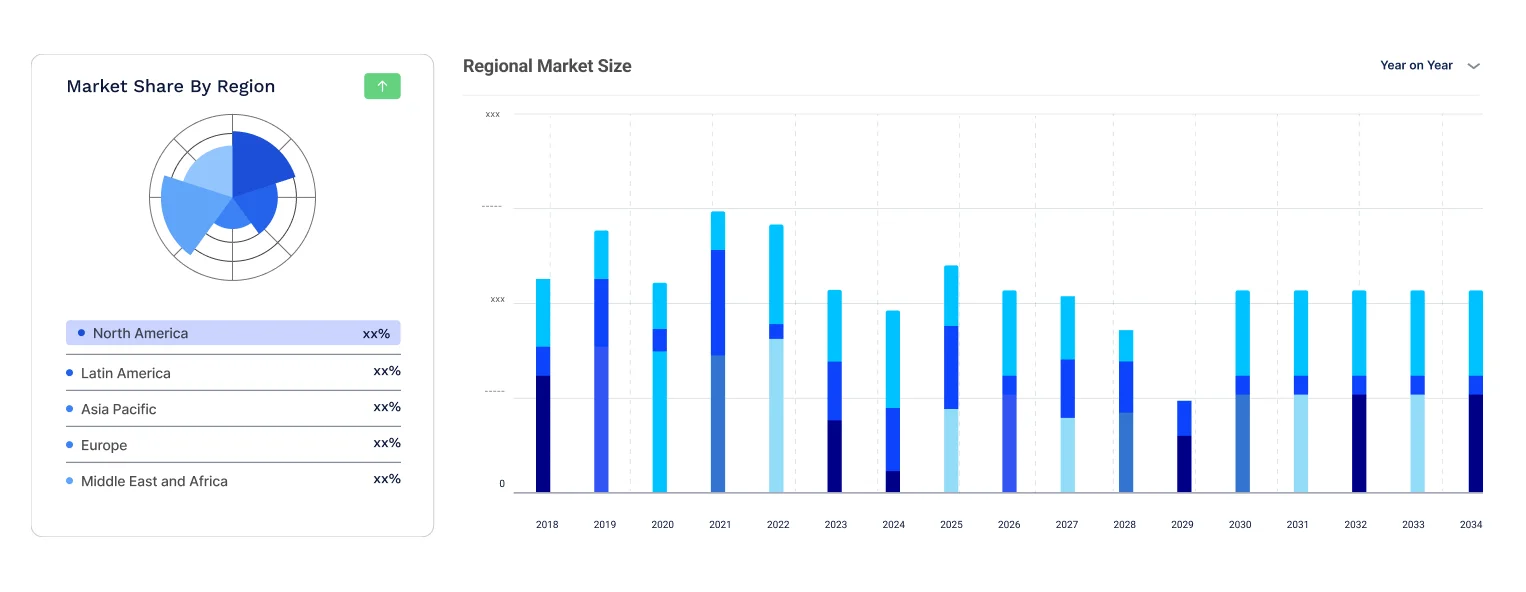
Agricultural micronutrient demand in North America is fueled by sustainability initiatives and advanced farming technologies. Particularly in the United States and Canada, precision agriculture and rising understanding of soil health encourage farmers to use micronutrient solutions to increase crop yields and lessen their environmental impact.
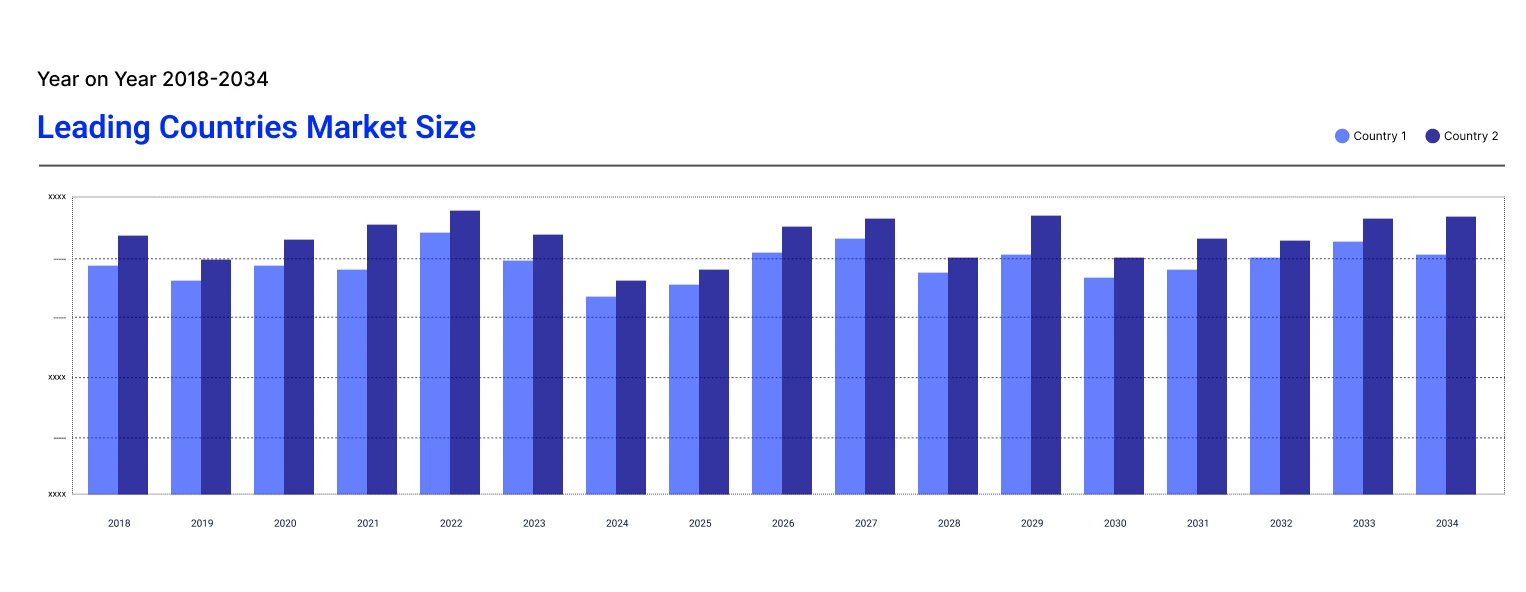
| CAGR 2026-2035 - Market by | Country |
| India | 10.8% |
| China | 9.1% |
| USA | 7.3% |
| France | 6.4% |
| Italy | 5.8% |
| Canada | XX% |
| UK | XX% |
| Germany | XX% |
| Japan | 5.6% |
| Australia | XX% |
| Saudi Arabia | XX% |
| Brazil | XX% |
| Mexico | XX% |
Europe Agricultural Micronutrients Market Insights
The Europe agricultural micronutrients market growth is supported by the increased emphasis on organic farming and sustainable agriculture. Micronutrient solutions are now essential to maintaining rich soil and raising crop yields across Europe, especially in Germany and France, due to strict fertilizer regulations and strong support for environmentally friendly farming practices.
Asia Pacific Agricultural Micronutrients Market Drivers
The Asia Pacific agricultural micronutrients market experiences high demand due to the growing population. Micronutrient solutions are a crucial component of increasing crop yields, soil rejuvenation, and food security in the region. China and India are two nations that are investing in agricultural modernization.
Latin America Agricultural Micronutrients Market Outlook
Crop expansion and the increasing use of modern agricultural techniques are driving the Latin America agricultural micronutrients market growth. In order to increase crop yields for both internal and export use, Brazil and Argentina are incorporating micronutrient solutions into their agricultural operations.
Middle East and Africa Agricultural Micronutrients Market Dynamics
The Middle East and Africa market witnesses rising agricultural micronutrient consumption owing to the dry conditions and nutrient-poor soil. Micronutrient solutions are being used increasingly in South Africa and Egypt to increase agricultural yields and use water more efficiently, particularly in regions where farming and irrigation are used for economic diversification.
Agricultural micronutrients market players are focusing on diversifying their product lines, improving sustainability, and boosting nutrient delivery efficiency. In order to meet the steadily increasing demands for food security, the majority of agricultural micronutrient companies seek to improve crop production, provide tailored solutions for different crop species and soil types, and support precision farming technologies.
Founded in 1865, BASF SE is a global leader in agricultural solutions, offering a range of micronutrient products that improve crop output and health. Their technologies increase soil fertility and productivity while promoting sustainable agriculture globally.
Yara International, a world leader in crop nutrition and micronutrient solutions, was founded in 1905 and has its main office in Oslo, Norway. By encouraging soil health, increasing agricultural output to meet global food demands, and using resource-conserving farming methods, the company is dedicated to sustainability.
Established in 1957, Helena Agri-Enterprises, LLC is a prominent provider of agricultural micronutrients, offering a wide range of crop management solutions. Their micronutrient solutions are designed to improve crop yields, support sustainable agriculture, and improve soil conditions.
Founded in 1966, Haifa Negev Technologies LTD, has expertise in state-of-the-art agricultural micronutrient solutions with products that enable effective nutrient absorption and optimize crop performance. Its breakthroughs in controlled-release fertilizers and specialty nutrient applications meet the varied agricultural requirements of the world.
*Please note that this is only a partial list; the complete list of key players is available in the full report. Additionally, the list of key players can be customized to better suit your needs.*
Other key players considered in the agricultural micronutrients market report include VALAGRO S.P.A, Zuari Agro Chemicals LTD, and Baicor, LLC, among others.


Upto 15% Off
USD
$2499 $2249
$3999 $3599
$4999 $4249
$5999 $5099


*While we strive to always give you current and accurate information, the numbers depicted on the website are indicative and may differ from the actual numbers in the main report. At Expert Market Research, we aim to bring you the latest insights and trends in the market. Using our analyses and forecasts, stakeholders can understand the market dynamics, navigate challenges, and capitalize on opportunities to make data-driven strategic decisions.*
Get in touch with us for a customized solution tailored to your unique requirements and save upto 35%!
The agricultural micronutrients market is assessed to grow at a CAGR of 7.50% between 2026 and 2035.
The major drivers of the market include the growers’ efforts towards overcoming micronutrient deficiency in the soil, rising focus on plant nutrients for successful growth and optimum yields, need to achieve proper balanced nutrition in crops of cereals, pulses, oilseeds, and rise in demand for higher crop yields.
The increase in growers’ awareness of plant nutrition and developments in technologies related to precision agricultural equipment are the key industry trends propelling the market's growth.
The major regions in the industry are North America, Latin America, the Middle East and Africa, Europe, and the Asia Pacific.
By type, the market is segmented into zinc, boron, iron, molybdenum, copper, and manganese, among others.
Based on crop types, the market is divided into cereals and grains, fruits and vegetables, oilseeds and pulses, among others. Cereals and grains are further divided into corn, wheat, and rice, among others while oilseeds and pulses are sub-divided into soybean and canola, among others.
The forms include chelated micronutrients and non-chelated micronutrients. Chelated micronutrients are sub-divided into ethylene diamine-tetra-acetic acid (EDTA), ethlyenediamine Di-2-hydroxyphenyl acetate (EDDHA), diethylene-triamine penta-acetic acid (DTPA), and iminodisuccinic acid (IDHA), among others.
By mode of application, the market is divided into soil, foliar, and fertigation, among others.
The major players in the industry are BASF SE, Yara International ASA, Helena Agri-Enterprises, LLC, Haifa Negev technologies LTD, VALAGRO S.P.A, Zuari Agro Chemicals LTD, and Baicor, LLC, among others.
In 2025, the market reached an approximate value of USD 7.33 Billion.
The market is estimated to witness healthy growth in the forecast period of 2026-2035 to reach a value of around USD 15.11 Billion by 2035.
Explore our key highlights of the report and gain a concise overview of key findings, trends, and actionable insights that will empower your strategic decisions.
| REPORT FEATURES | DETAILS |
| Base Year | 2025 |
| Historical Period | 2019-2025 |
| Forecast Period | 2026-2035 |
| Scope of the Report |
Historical and Forecast Trends, Industry Drivers and Constraints, Historical and Forecast Market Analysis by Segment:
|
| Breakup by Type |
|
| Breakup by Crop Type |
|
| Breakup by Form |
|
| Breakup by Mode of Application |
|
| Breakup by Region |
|
| Market Dynamics |
|
| Competitive Landscape |
|
| Companies Covered |
|
| Report Price and Purchase Option | Explore our purchase options that are best suited to your resources and industry needs. |
| Delivery Format | Delivered as an attached PDF and Excel through email, with an option of receiving an editable PPT, according to the purchase option. |
Datasheet
One User
USD 2,499
USD 2,249
tax inclusive*
Single User License
One User
USD 3,999
USD 3,599
tax inclusive*
Five User License
Five User
USD 4,999
USD 4,249
tax inclusive*
Corporate License
Unlimited Users
USD 5,999
USD 5,099
tax inclusive*
*Please note that the prices mentioned below are starting prices for each bundle type. Kindly contact our team for further details.*
Flash Bundle
Small Business Bundle
Growth Bundle
Enterprise Bundle
*Please note that the prices mentioned below are starting prices for each bundle type. Kindly contact our team for further details.*
Flash Bundle
Number of Reports: 3
20%
tax inclusive*
Small Business Bundle
Number of Reports: 5
25%
tax inclusive*
Growth Bundle
Number of Reports: 8
30%
tax inclusive*
Enterprise Bundle
Number of Reports: 10
35%
tax inclusive*
How To Order

Select License Type
Choose the right license for your needs and access rights.

Click on ‘Buy Now’
Add the report to your cart with one click and proceed to register.

Select Mode of Payment
Choose a payment option for a secure checkout. You will be redirected accordingly.
Gain insights to stay ahead and seize opportunities.

Get insights & trends for a competitive edge.

Track prices with detailed trend reports.

Analyse trade data for supply chain insights.

Leverage cost reports for smart savings

Enhance supply chain with partnerships.

Connect For More Information
Our expert team of analysts will offer full support and resolve any queries regarding the report, before and after the purchase.
Our expert team of analysts will offer full support and resolve any queries regarding the report, before and after the purchase.
We employ meticulous research methods, blending advanced analytics and expert insights to deliver accurate, actionable industry intelligence, staying ahead of competitors.
Our skilled analysts offer unparalleled competitive advantage with detailed insights on current and emerging markets, ensuring your strategic edge.
We offer an in-depth yet simplified presentation of industry insights and analysis to meet your specific requirements effectively.





Share