

Consumer Insights
Uncover trends and behaviors shaping consumer choices today
Procurement Insights
Optimize your sourcing strategy with key market data
Industry Stats
Stay ahead with the latest trends and market analysis.
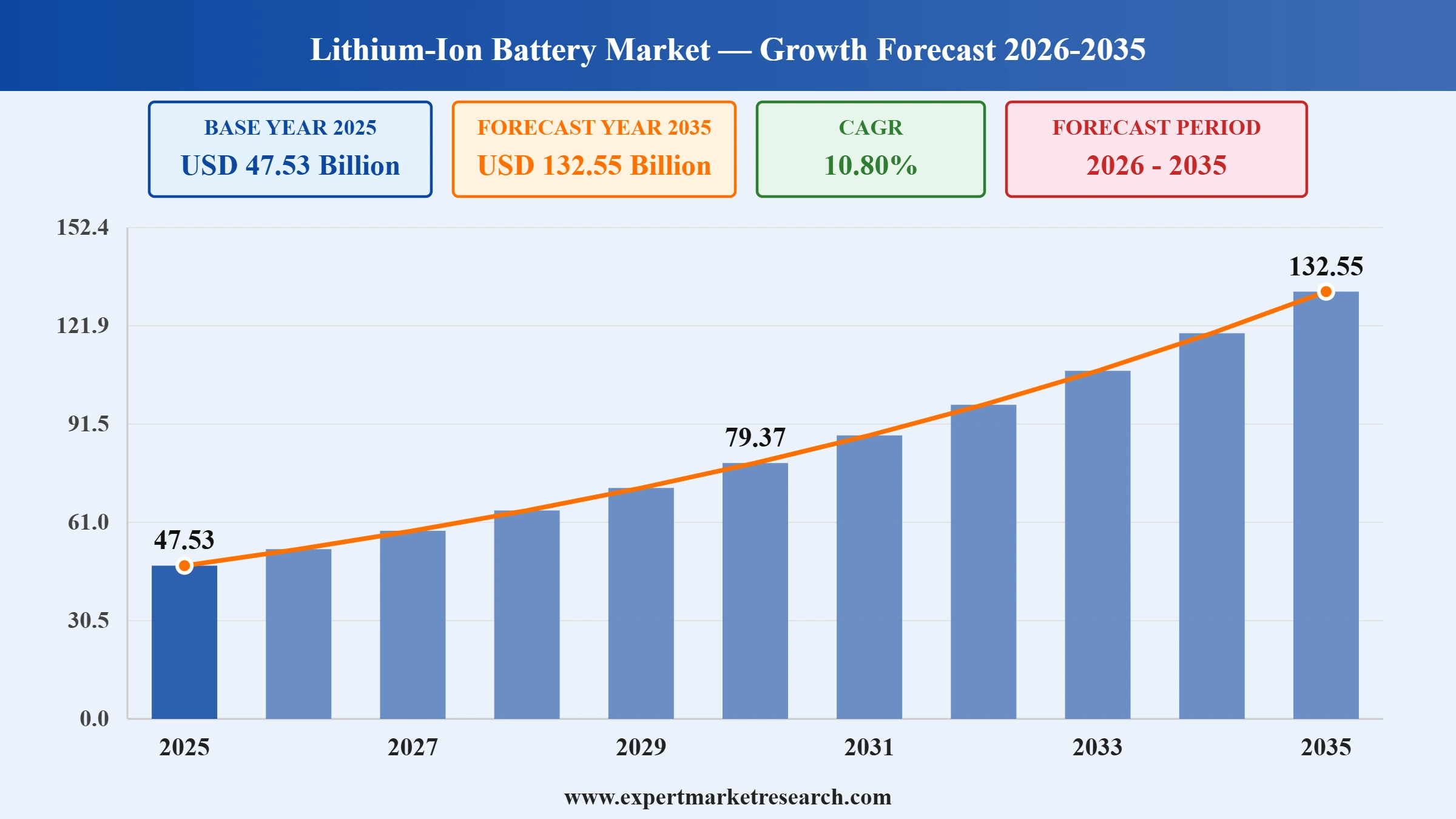
The global lithium-ion battery market attained a value of USD 47.53 Billion in 2025 and is projected to expand at a CAGR of 10.80% through 2035. The market is further expected to achieve USD 132.55 Billion by 2035. Increasing usage of AI data centers and grid energy storage systems based on renewable energy sources is driving the need for lithium-ion batteries that offer greater longevity, safety, and quicker charging options.
According to South China Morning Post, Contemporary Amperex Technology announced a major new lithium-ion battery plant investment to scale production for electric vehicles and grid storage customers. The expansion strengthens its position as the world's largest battery maker. The development reflects intense global competition for cell manufacturing leadership and is expected to influence cell pricing dynamics and customer sourcing strategies across automakers and energy storage developers.
As reported by Reuters, LG Energy Solution expanded its lithium-ion battery production capacity in the United States, supported by strategic joint ventures with major automakers. The investment aligns with Inflation Reduction Act incentives and growing localisation requirements. The development reinforces North America's emergence as a critical battery manufacturing hub and underscores the geopolitical reshaping of global cell supply chains.
There are two major driving factors of growth within the lithium-ion battery market. The continuous expansion by global automobile manufacturers of electric vehicles via long-term battery contracts is anticipated to ensure sustained need for cells with better charging and energy densities. Secondly, battery recycling firms are building commercial plants for recycling batteries to recover high value lithium, nickel, and cobalt to be used in other batteries.
The lithium-ion battery market is undergoing a fast transformation, driven by increased efforts of manufacturers towards launching the next generation of batteries to cater to the rising demands for electric mobility and energy storage. One significant move made by CATL was the launch of its second generation of Shenxing fast charging battery in April 2025, which can offer a driving range of 520 km after charging in just five minutes during optimal conditions. This launch indicates the competition among top manufacturers not just in terms of energy density but through ultra-fast charging capabilities, thermal stability, and greater efficiency in operations. Such developments are altering the procurement strategy of auto manufacturers while encouraging battery providers to adopt innovative cell chemistries and intelligent battery management systems.
In addition to the use of batteries for mobility, the lithium-ion battery market is also becoming increasingly driven by investments in localized manufacturing, battery recycling, and mineral resource partnerships. For example, in July 2026, Chuzhou launched a USD 200 million battery recycling project, adding 18,500-ton annual lithium-ion processing capacity in Anhui. Governments in North America, Europe, and Asia keep encouraging the growth of domestic battery ecosystems through production incentives, and at the same time, the manufacturers keep expanding their market presence by obtaining access to lithium, nickel, and graphite supplies.
Read more about this report - REQUEST FREE SAMPLE COPY IN PDF
| Global Lithium-ion Battery Market Report Summary | Description | Value |
| Base Year | USD Billion | 2025 |
| Historical Period | USD Billion | 2019-2025 |
| Forecast Period | USD Billion | 2026-2035 |
| Market Size 2025 | USD Billion | 47.53 |
| Market Size 2035 | USD Billion | 132.55 |
| CAGR 2019-2025 | Percentage | XX% |
| CAGR 2026-2035 | Percentage | 10.80% |
| CAGR 2026-2035 - Market by Region | Asia Pacific | 12.4% |
| CAGR 2026-2035 - Market by Country | India | 13.1% |
| CAGR 2026-2035 - Market by Country | China | 11.9% |
| CAGR 2026-2035 - Market by Product Type | Lithium Nickel Manganese Cobalt | 12.6% |
| CAGR 2026-2035 - Market by Application | Electric Vehicles | 12.1% |
| Market Share by Country 2025 | Germany | 4.6% |
Naval Group selected Saft’s advanced lithium-ion batteries for Barracuda and Scorpène submarines, resulting in enhanced underwater capability and safety in operation and military energy performance. Firms can design highly reliable battery systems, thermal management solutions, and energy storage products for defense purposes, leveraging such developments in the lithium-ion battery market.
Highstar launched its full chain of battery cells for artificial intelligence data centers. Firms can therefore design custom-made battery cells and battery management systems for artificial intelligence infrastructure, hyperscale data centers, and high-compute servers.
Stryten Energy introduced its M-Series LI610 Lithium-Ion Battery, providing enhanced power and durability, as well as maintenance-free operations for motive power industrial applications. Firms can provide more varieties of modular lithium-ion batteries for material handling, warehouse automation, and fleet industrial electrification, leveraging these developments.
BatX Energies opened a lithium-ion battery recycling plant in Uttar Pradesh, thus enhancing local critical mineral recovery and circular battery supply chains. Companies can invest in battery recycling and critical mineral recovery in order to secure raw materials supply sustainability, following such trends in the lithium-ion battery market.
Domestic production of lithium-ion batteries by governments and manufacturers is on the rise due to increasing focus on supply chain security and less dependency on imported cells. The Inflation Reduction Act in the United States, the Net-Zero Industry Act in the European Union, and the Production Linked Incentive scheme in India are continuously motivating investments in large-scale battery manufacturing plants, boosting the lithium-ion battery market growth. For instance, in July 2026, Exide Industries invested in its Bengaluru lithium-ion cell plant, strengthening domestic battery manufacturing and India's electric mobility ecosystem.
The lithium-ion battery market observes increasing competition among battery manufacturers based on the charging speed of batteries rather than capacity of batteries. Modern electrolytes, silicon anodes, and effective thermal management systems are considerably decreasing the charging time of batteries without compromising their safety. Aligning with this trend, in July 2026, CATL launched its 8C ultra-fast charging battery, enabling commercial EVs to recharge within minutes, boosting fleet productivity.
Battery recycling is emerging as a key strategy for the lithium-ion battery market players as the authorities strive to guarantee reliable sources of critical minerals and minimize reliance on fresh lithium, cobalt, and nickel. The EU Battery Regulation is setting up mandatory recycling target levels and traceability criteria for promoting recycling. Companies such as Redwood Materials, Li-Cycle, and Ascend Elements continue to develop their commercial battery recycling facilities to extract battery-grade material that can be reused in batteries. In April 2026, Rocklink opened a 10,000-ton lithium-ion battery recycling facility, strengthening critical mineral recovery and India's circular battery supply chain.
Rapid expansion of renewable energy is triggering significant investments in battery storage technologies that help ensure the stability of power grids, reshaping the lithium-ion battery market dynamics. Governments are increasingly providing support to battery storage deployment through clean energy financing programs and upgrades in grid technology. In June 2026, NatPower and Tesla partnered on a USD 5 billion battery storage project, accelerating Europe's grid-scale energy storage deployment. Similar investments are being made in Europe and Asia in relation to the integration of battery storage with solar and wind plants.
Manufacturers in the lithium-ion battery market are working on enhancing their direct connection with the mining firms and mineral processors to ensure that they have a sustainable supply of minerals such as lithium, nickel, graphite, and manganese. Grants and financing for the processing of critical minerals in Australia, Canada, and the United States are being provided by governments through resource policies. Demonstrating this shift in the market, in June 2026, Bridge Green launched Tamil Nadu's first critical mineral recovery facility, strengthening lithium-ion battery recycling and domestic material circularity in India.
The EMR’s report titled “Global Lithium-Ion Battery Market Report and Forecast 2026-2035” offers a detailed analysis of the market based on the following segments:
Market Breakup by Product Type
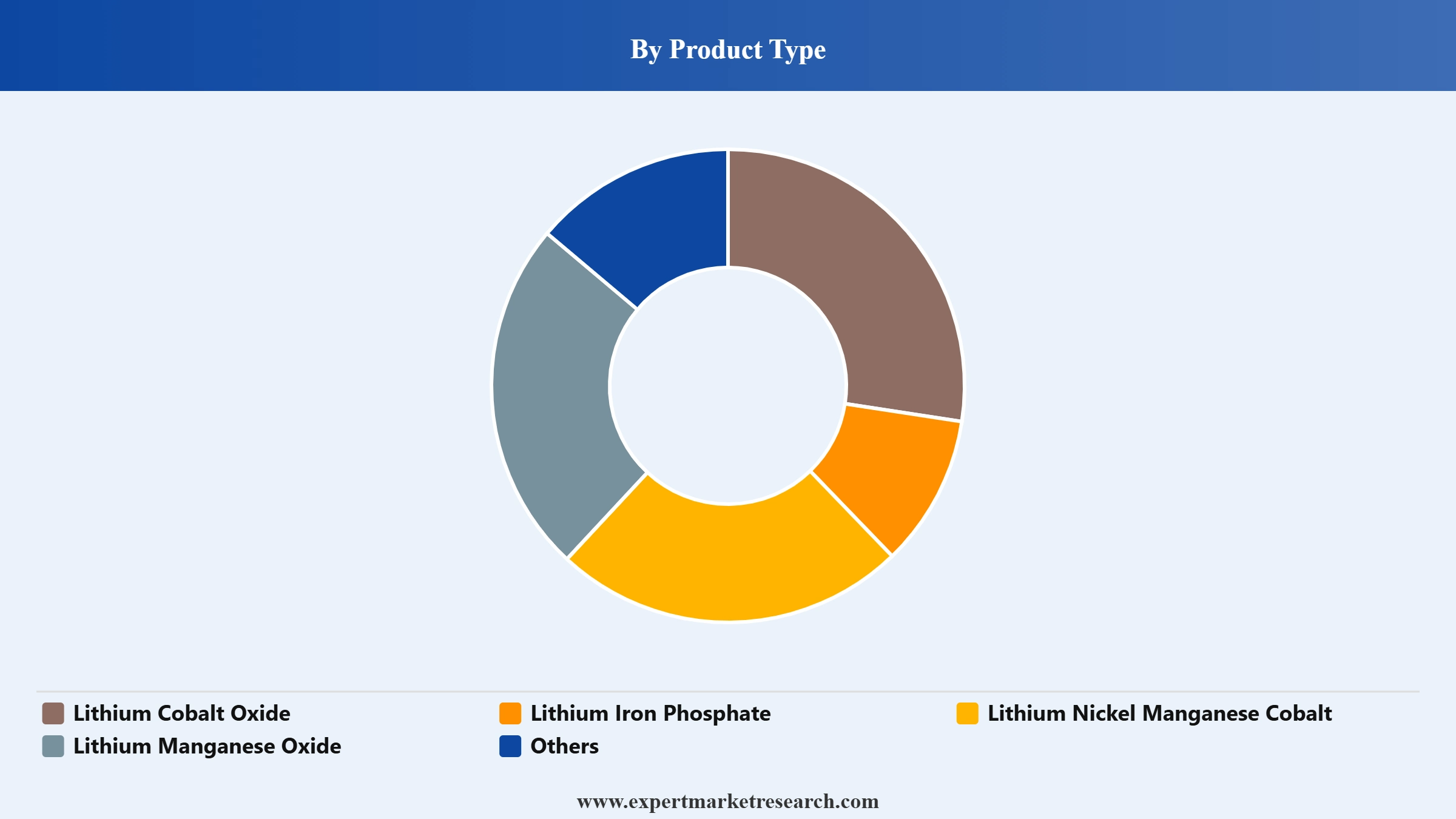
Key Insight: The lithium-ion battery market shows various chemistry preferences according to the performance needs of their end-users. Lithium Iron Phosphate leads through its high safety, affordability, and longevity for use in electric cars and energy storage systems. The Lithium Nickel Manganese Cobalt battery is gaining momentum due to its increased energy density, making it ideal for top-tier mobility devices. Lithium Cobalt Oxide meets the needs of consumer electronics for which portability and lightweight are key characteristics. Lithium Manganese Oxide is used in applications that demand good thermal stability and power supply, especially industrial machinery. In July 2026, Fujian Xinluo broke ground on a manganese-based battery materials project, strengthening lithium-ion cathode material supply chains.
Market Breakup by Power Capacity
Key Insight: Power capacity segmentation as considered in the lithium-ion battery market report caters to different performance requirements based on different industries. Battery power from 0 mAh to 3000 mAh caters to wearable technology and IoT devices that need portable batteries for small-scale applications. Battery power from 3000 mAh to 10000 mAh is becoming more popular since it caters to consumer electronics that require power balance and portability. Battery power from 10000 mAh to 60000 mAh is used for industrial tools, healthcare devices, drones, and commercial electronics that need a large amount of power output. In September 2025, Xiaomi launched its 67W 10,000mAh power bank, enabling fast multi-device charging with integrated cable convenience. Batteries over 60000 mAh are also gaining traction with the demand for utility-scale energy storage, commercial transportation, and heavy industrialization.
Market Breakup by Application
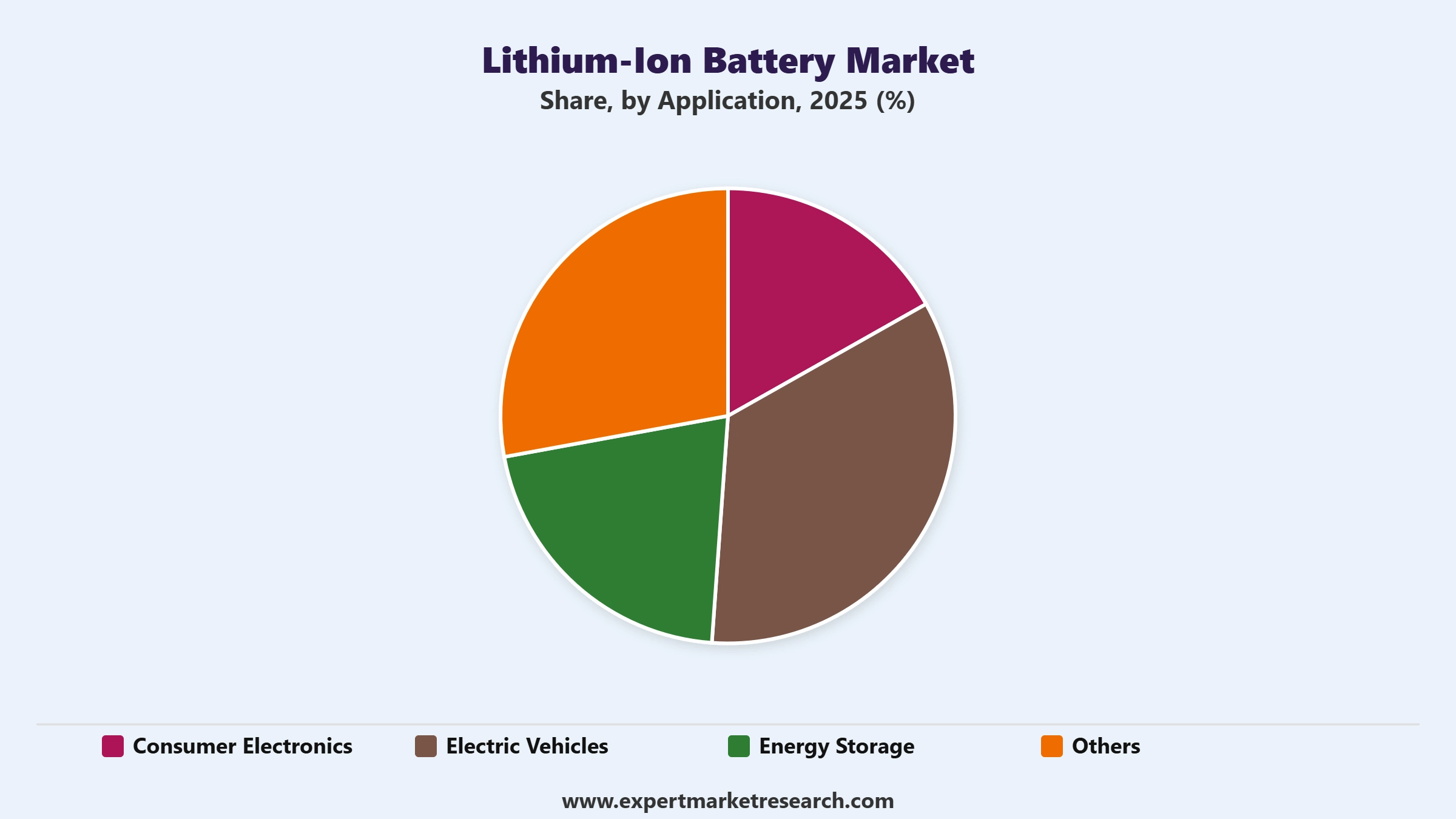
Key Insight: Diversity of the applications is influencing technology advancement within the global industry. Consumer electronics are characterized by a steady growth rate due to the constant demand for compact and light batteries with good performance properties. Electric vehicles dominate the lithium-ion battery market owing to the necessity of mass production of batteries along with constant improvement of their chemistry and manufacturing process. Energy storage represents the fastest growing application since utilities are using batteries in combination with renewable energy for grid stability and energy management.
Market Breakup by Region
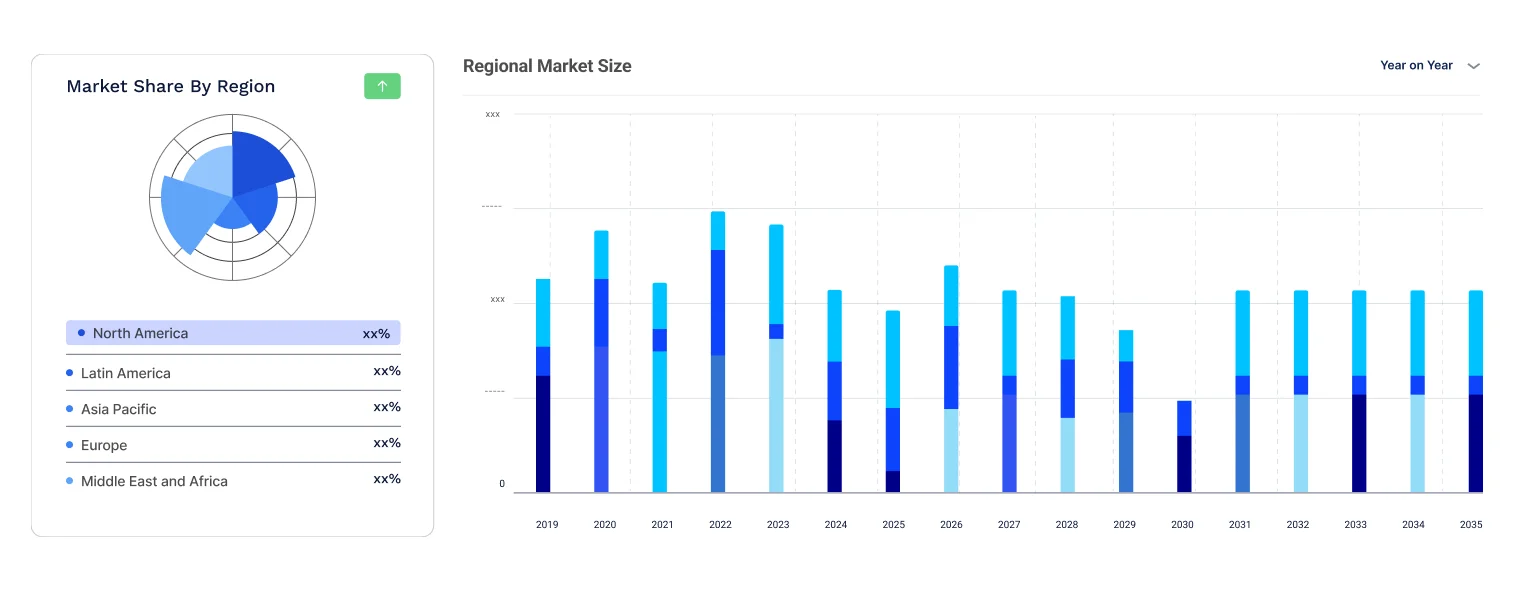
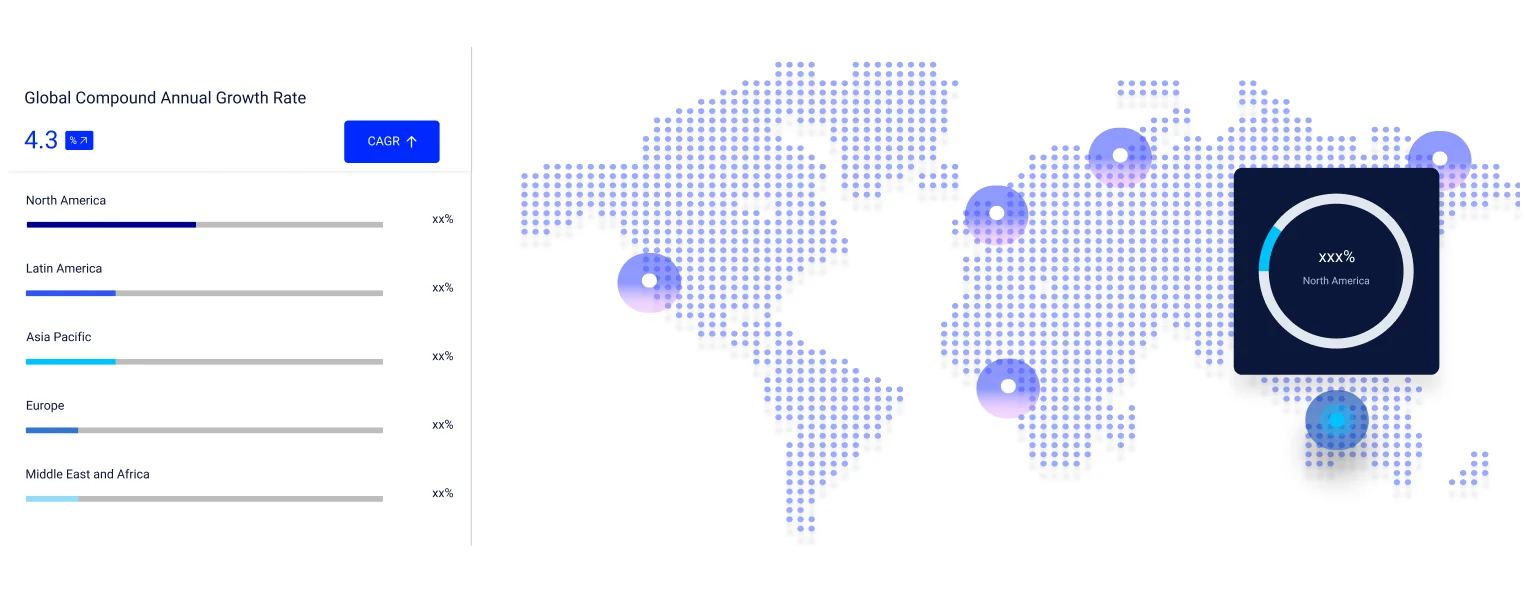
Key Insight: Differences in regional dynamics in the lithium-ion battery market depend on the levels of manufacture and electrification approaches. Asia Pacific leads due to its mature ecosystem for battery manufacturing, mineral processing facilities, and electric vehicles’ manufacture. North America grows rapidly due to governmental support for industry investment, manufacturing, and battery development. Europe focuses on sustainable battery manufacturing and recycling facilities along with environmental regulations to promote regional competition. Latin American markets are gaining traction owing to rich sources of lithium and investments in downstream activities. The Middle East and Africa market is developing through renewables, industrial diversification, electrified transportation, and investments in clean energy facilities.
By product type, the lithium iron phosphate segment leads the market owing to superior safety, longer lifecycle, and expanding EV adoption
The Lithium Iron Phosphate (LFP) batteries are the major contributors to the lithium-ion battery market value as manufacturers of automobiles and energy storage systems are focusing more on the factors of safety, cost-effectiveness, and longevity than the energy density of the batteries. LFP batteries are gaining popularity for use in electric cars, energy storage systems, buses, and commercial trucks. These batteries have less dependency on nickel and cobalt and hence minimize cost fluctuations from raw materials and also facilitate easy scaling up of manufacturing operations. Innovations in the design of cells are increasing energy density while maintaining thermal stability. In March 2026, Ultium Cells LLC announced that it will begin producing lithium-iron phosphate (LFP) batteries for Energy Storage Systems (ESS) enabled by a USD 70 million investment.
Read more about this report - REQUEST FREE SAMPLE COPY IN PDF
The lithium-ion battery market observes fast-growing adoption of Lithium Nickel Manganese Cobalt (NMC) batteries due to increasing demands for high-end electric vehicles that require a higher range of mileage and lighter batteries. Manufacturers are constantly improving their designs of NMC batteries by optimizing their nickel-rich cathodes to increase energy density and reduce the amount of cobalt in the batteries. The NMC batteries are also being adopted in luxury electric vehicles, high-performance commercial vehicles, and advanced mobility applications.
By power capacity, the 3000mAh to 10000mAh category dominates the market owing to widespread adoption across portable consumer electronics
The 3000mAh to 10000mAh segment accounts for the largest share of the lithium-ion battery market, attributed to the wide range of portable electronic devices that require these batteries including smartphones, tablets, laptops, portable medical devices, and industrial electronics. This segment is experiencing constant innovation in terms of higher battery efficiencies due to the introduction of advanced cell technology which enhances battery run-time but does not increase the weight of the portable device. Higher expectations from consumers regarding battery life, faster charging speeds, and smaller electronics are fueling innovations in this category.
The more than 60000mAh segment is experiencing fast rates of growth in the lithium-ion battery market due to the need for large-format batteries in applications such as energy storage, electric buses, heavy commercial vehicles, marine and industrial backup applications. Industry players are now coming up with battery modules that are capable of handling high-energy needs safely. Increased use of renewable energy infrastructure and electrified transportation is leading to the increased use of battery systems capable of handling long operation cycles, improved thermal management, and efficient power distribution in industrial and utility applications. In July 2025, Kalmar launched next-generation lithium-ion battery technology enhancing electric cargo-handling equipment performance, safety, and uptime.
By application, the electric vehicles category dominates the market owing to accelerating global electrification and battery manufacturing investments
The lithium-ion battery market is largely dominated by electric vehicles, given the increased investments made by government, automobile firms, and battery makers. The demand is growing in passenger vehicles, commercial fleets, buses, and two-wheelers owing to increasing production of battery-powered vehicles. Battery makers are intensifying their efforts on producing high-energy cells, fast charging systems, and smart battery management systems that can be used in automobiles. The long-term agreements between automobile makers and battery makers help improve manufacturing processes and drive innovation in battery chemistries and manufacturing. In June 2025, Neuron Energy launched Gen 2 lithium-ion battery packs enhancing safety and performance for electric commercial mobility.
Read more about this report - REQUEST FREE SAMPLE COPY IN PDF
Energy storage applications are becoming the fastest growing one since battery systems have become an important requirement for utilities, industries, and renewable energy developers for maintaining stability of electricity in the grid and backup systems. Large-scale battery systems are useful for managing electricity generated from solar energy and wind and increase the efficiency of power systems, accelerating demand in the lithium-ion battery market. Players are introducing new battery systems with longer duration, enhanced safety measures, modularity, and monitoring capabilities.
Read more about this report - REQUEST FREE SAMPLE COPY IN PDF
Asia Pacific registers a substantial share of the market through integrated battery manufacturing ecosystems and strong electric vehicle production
Asia Pacific continues to lead the lithium-ion battery market growth as a result of its large battery manufacturing capacity, large-scale raw materials processing capability, and significant electric vehicle manufacturing base. China, South Korea, and Japan have the most supportive environments for advanced battery innovation and production due to their vertically integrated value chains encompassing mining, refining, cell manufacturing, and recycling. Manufacturers from the region are continuing to develop gigafactories and conduct research in next-generation batteries. In July 2026, Pace Digitek launched advanced battery R&D center with IISER Pune accelerating indigenous energy storage innovation.
North America observes the fastest expansion in the lithium-ion battery market due to government policies that encourage domestic battery manufacturing through production, critical minerals, and supply chain investments. Automotive manufacturers and battery makers are building gigafactories and entering in long-term deals to secure lithium and nickel supplies. Increased deployment of electric vehicles, energy storage systems, and battery manufacturing technologies is contributing to rapid growth in demand. Companies are also investing significantly in battery recycling and local production of components.
The competition within the market is intensifying as players seek differentiation via chemical innovation, local production, and vertical integration. Major lithium-ion battery companies are concentrating on the development of solid-state batteries, use of silicon-based anode, battery recycling, and AI-powered battery manufacturing in order to enhance cell quality and bring down the overall production cost. Partnerships with automotive original equipment manufacturers, utilities, and mining firms remain crucial in generating revenue over time. The other trend is expansion of gigafactory facilities in North America and Europe so as to increase manufacturing diversity in the two regions besides adhering to sourcing laws.
One area that lithium-ion battery market players are concentrating on is closed-loop recycling for recovery of lithium, nickel, and cobalt which can be used in making more batteries. There are business opportunities in utility-level battery storage, commercial electric vehicles, electrification of aircraft, and AI data centers' battery backups.
Founded in 2011, CATL has its headquarters in Ningde, Fujian, China. This company is the biggest producer of lithium-ion batteries, offering battery solutions for electric vehicles and energy storage all over the world. CATL is mainly involved in fast-charging systems, sodium-ion batteries, battery swapping, and intelligent battery management systems, as well as increasing overseas manufacturing capacities for the needs of international automotive clients.
Founded in 2020 as a spin-off of LG Chem, LG Energy Solution is located in Seoul, South Korea. This firm specializes in developing innovative cylindrical, pouch and prismatic lithium-ion batteries used in electric vehicles, energy storage, and consumer electronics applications. The company keeps expanding the investment in North American gigafactories, high-nickel battery solutions and artificial intelligence manufacturing facilities.
Panasonic Corporation was founded in 1918 and operates from Osaka, Japan. The company produces premium lithium-ion batteries mostly for use in electric vehicles and industrial products. Panasonic keeps developing its innovative 4680 cylindrical batteries technology as well as increasing the energy density, battery capacity, production volume, and manufacturing automation.
BYD Company Ltd. was established in 1995 and is headquartered in Shenzhen, Guangdong, China. BYD produces batteries, electric vehicles, and integrated energy storage systems. It focuses on its unique Blade Battery design which ensures high safety standards, longevity, and structural performance. The company keeps growing vertically from raw material production to vehicle manufacturing.
Other key players in the market include Samsung SDI Co., Ltd., SK Innovation Co., Ltd., CALB Group Co., Ltd., Shenzhen Grepow Battery Co., Ltd., Toshiba Corporation, A123 Systems LLC, Envision AESC Group Ltd., and Tianjin Lishen Battery Joint-Stock Co., Ltd., among others.
*Please note that this is only a partial list; the complete list of key players is available in the full report. Additionally, the list of key players can be customized to better suit your needs.*
Unlock the latest insights with our lithium-ion battery market trends 2026 report. Discover regional growth patterns, consumer preferences, and key industry players. Stay ahead of competition with trusted data and expert analysis. Download your free sample report today and drive informed decisions in the market.
Electric Vehicle Lithium-Ion Battery Market


Upto 15% Off
USD
$2499 $2249
$3999 $3599
$4999 $4249
$5999 $5099


*While we strive to always give you current and accurate information, the numbers depicted on the website are indicative and may differ from the actual numbers in the main report. At Expert Market Research, we aim to bring you the latest insights and trends in the market. Using our analyses and forecasts, stakeholders can understand the market dynamics, navigate challenges, and capitalize on opportunities to make data-driven strategic decisions.*
In 2025, the market reached an approximate value of USD 47.53 Billion.
The market is projected to grow at a CAGR of 10.80% between 2026 and 2035.
The market is estimated to reach a value of about USD 132.55 Billion by 2035.
Expanding localized manufacturing, strengthening recycling partnerships, investing in advanced chemistries, securing long-term mineral sourcing, adopting AI-driven production, and developing customized batteries for emerging industrial applications are creating competitive advantages.
The stringent regulations of various governments for a pollution-free environment and growing internet penetration are expected to be key trends guiding the growth of the market.
North America, Europe, the Asia Pacific, Latin America, and the Middle East and Africa are the leading regions in the market.
Lithium cobalt oxide, lithium iron phosphate, lithium nickel manganese cobalt, and lithium manganese oxide are the types of the product in the market.
The leading power capacities of the lithium-ion battery in the market are 0 to 3000mAh, 3000mAh to 10000mAh, 10000mAh to 60000mAh, and more than 60000mAh.
The consumer electronics, electric vehicles, and energy storage among other are the various application segments in the market.
The key players in the market include Contemporary Amperex Technology Co., Limited (CATL), LG Energy Solution, Panasonic Corporation, BYD Company Ltd., Samsung SDI Co., Ltd., SK Innovation Co., Ltd., CALB Co., Ltd. (CALB), Shenzhen Grepow Battery Co., Ltd., Toshiba Corporation, A123 Systems LLC, Envision AESC Group Ltd., and Tianjin Lishen Battery Joint-Stock Co., Ltd., among others.
Securing critical minerals, managing raw material price volatility, scaling sustainable recycling, meeting evolving safety regulations, reducing manufacturing costs, and balancing higher energy density with longer battery lifespan remain major challenges.
Explore our key highlights of the report and gain a concise overview of key findings, trends, and actionable insights that will empower your strategic decisions.
| REPORT FEATURES | DETAILS |
| Base Year | 2025 |
| Historical Period | 2019-2025 |
| Forecast Period | 2026-2035 |
| Scope of the Report |
Historical and Forecast Trends, Industry Drivers and Constraints, Historical and Forecast Market Analysis by Segment:
|
| Breakup by Product Type |
|
| Breakup by Power Capacity |
|
| Breakup by Application |
|
| Breakup by Region |
|
| Market Dynamics |
|
| Competitive Landscape |
|
| Companies Covered |
|
| Report Price and Purchase Option | Explore our purchase options that are best suited to your resources and industry needs. |
| Delivery Format | Delivered as an attached PDF and Excel through email, with an option of receiving an editable PPT, according to the purchase option. |
Datasheet
One User
USD 2,499
USD 2,249
tax inclusive*
Single User License
One User
USD 3,999
USD 3,599
tax inclusive*
Five User License
Five User
USD 4,999
USD 4,249
tax inclusive*
Corporate License
Unlimited Users
USD 5,999
USD 5,099
tax inclusive*
*Please note that the prices mentioned below are starting prices for each bundle type. Kindly contact our team for further details.*
Flash Bundle
Small Business Bundle
Growth Bundle
Enterprise Bundle
*Please note that the prices mentioned below are starting prices for each bundle type. Kindly contact our team for further details.*
Flash Bundle
Number of Reports: 3
20%
tax inclusive*
Small Business Bundle
Number of Reports: 5
25%
tax inclusive*
Growth Bundle
Number of Reports: 8
30%
tax inclusive*
Enterprise Bundle
Number of Reports: 10
35%
tax inclusive*
How To Order

Select License Type
Choose the right license for your needs and access rights.

Click on ‘Buy Now’
Add the report to your cart with one click and proceed to register.

Select Mode of Payment
Choose a payment option for a secure checkout. You will be redirected accordingly.
Strategic Solutions for Informed Decision-Making
Gain insights to stay ahead and seize opportunities.

Get insights & trends for a competitive edge.

Track prices with detailed trend reports.

Analyse trade data for supply chain insights.

Leverage cost reports for smart savings

Enhance supply chain with partnerships.

Connect For More Information
Our expert team of analysts will offer full support and resolve any queries regarding the report, before and after the purchase.
Our expert team of analysts will offer full support and resolve any queries regarding the report, before and after the purchase.
We employ meticulous research methods, blending advanced analytics and expert insights to deliver accurate, actionable industry intelligence, staying ahead of competitors.
Our skilled analysts offer unparalleled competitive advantage with detailed insights on current and emerging markets, ensuring your strategic edge.
We offer an in-depth yet simplified presentation of industry insights and analysis to meet your specific requirements effectively.




