


Consumer Insights
Uncover trends and behaviors shaping consumer choices today
Procurement Insights
Optimize your sourcing strategy with key market data
Industry Stats
Stay ahead with the latest trends and market analysis.
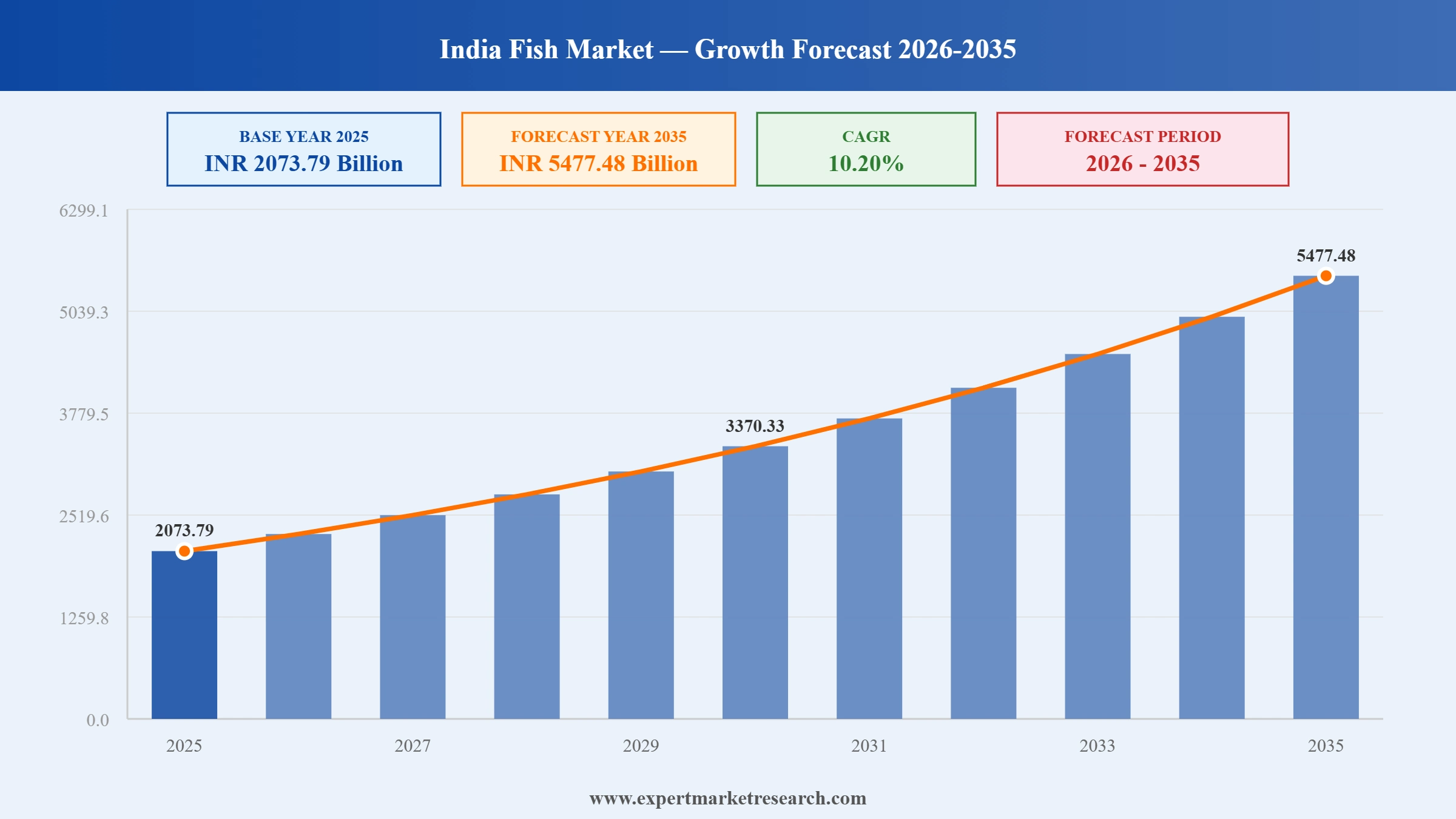
The India fish market attained a value of INR 2073.79 Billion in 2025 and is projected to expand at a CAGR of 10.20% through 2035. The market is further expected to achieve INR 5477.48 Billion by 2035. Increasing investments in precision aquaculture, export-oriented seafood processing, and efficient cold chain infrastructure development are promoting the production of premium fish while allowing firms to enhance competitiveness and profitability in international markets.
The first driving factor of the India fish market growth relates to increasing implementation of fisheries modernization policies that promote the adoption of digital aquaculture management systems, disease monitoring, and sustainable practices which increase the efficiency of aquafarms and comply with export requirements. The second growth driving factor is related to increased capacity for value-added processing of seafood using advanced freezing and packaging technologies, which allows seafood companies to provide services to premium retailers, QSRs, and institutional customers.
The market is experiencing strategic investments due to the emergence of technology-driven product innovations among seafood processors and aquaculture firms. According to the India fish market analysis, shrimp stocks rallied up to 15% as of December 2025 as improving export demand and favorable global market sentiment boosts investor confidence. Companies like Apex Frozen Foods are diversifying their line of value-added shrimp by employing innovative processing methods to increase the consistency of their product offerings to satisfy the needs of premium retailers and food service establishments across the United States, Europe, and Japan.
The India fish market is further experiencing significant changes in terms of its structure due to the increase in commercial aquaculture operations, expansion of branded seafood products lines, and deployment of precision farming techniques. Companies in the market are making investments in automated feeding, AI-powered ponds, bio-security hatching facilities, and innovative freezing technology to enhance their yields and maintain their international certifications. In March 2026, Odisha announced plans to pilot AI-enabled pond monitoring across 400 fish farms, improving water quality, reducing mortality, and boosting aquaculture productivity.
Read more about this report - REQUEST FREE SAMPLE COPY IN PDF
Scientists found a new species of freshwater fish in the Western Ghats of Kerala state that would solve an evolutionary riddle and boost conservation and fisheries research. The discovery might inspire businesses to invest in native fish breeding, conservation of biodiversity, sustainable aquaculture, and fisheries research based on ecosystems in order to expand the India fish market.
India improved the growth of its trout fish by implementing scientific farming techniques, increasing hatcheries, farmer training, and building more infrastructure. These activities might provide scope for businesses in trout hatcheries, cold chain logistics, trout fish feed manufacturing, and trout fish processing units.
The first-ever marine fish farming project was initiated in India, which aims at developing offshore aquaculture, marine finfish farming, advanced technology-based farming, and sustainable seafood production in the country. Such projects allow companies in the India fish market to engage in offshore cage culture, production of marine fish seeds, aquaculture technology, and seafood processing for export.
SmartGreen Aquaculture started a commercial trout RAS farm in India, which aims at producing premium quality seafood, expansion of exports, and development of future salmon farming. Such projects motivate companies to take up recirculating aquaculture system, premium quality fish farming technology, export-oriented processing, and climate resilient inland aquaculture farming.
The India fish market observes a steady trend towards value-added fish products as processors are moving from frozen whole fish to ready-to-cook, marinated, and breaded forms of fish. Processing companies are making investment in automation technology such as filleting, glazing and packaging to extend shelf life and meet the needs of premium retailers. In June 2026, MPEDA trained 5,000 participants in value-added seafood processing and organized a regional skill olympiad, strengthening India's skilled seafood workforce.
Technology-driven aquaculture is becoming an emerging trend in the India fish market wherein farmers are using artificial intelligence, Internet of Things sensors, automated feeders, and water quality sensors to boost their productivity. Technology will help farmers minimize feed losses, outbreaks, and harvesting times. Equipment suppliers of aquaculture are cooperating with commercial fish farms in India to boost precision farming techniques in the country. The Pradhan Mantri Matsya Sampada Yojana (PMMSY) of the Government of India continues promoting the adoption of technology for the development of modern sustainable aquaculture infrastructure and biosecurity in the country. In August 2025, India launched a pilot project reviving diversified fish farming through integrated aquaculture, cage farming, biofloc, and farmer training.
Innovations in cold chain infrastructure are enhancing seafood preservation, logistics efficiency, and exportability in the India fish market. Processors are building refrigerated storage facilities, blast freezing units, and cold chains in order to minimize post-harvest losses and achieve uniform quality standards. Key exporters are also installing temperature monitoring devices in their cold chains. The Ministry of Food Processing Industries is promoting the development of cold chains in the seafood industry through the Pradhan Mantri Kisan SAMPADA Yojana. This initiative facilitates investments in integrated processing and logistics infrastructure for seafood exports. On the other hand, in June 2026, Kerala launched Operation Sagar Rani, strengthening fish quality inspections, food safety enforcement, and consumer confidence statewide.
The increasing international sustainability standards are prompting the India fish market players to adopt sustainable aquaculture and internationally recognized certifications. Producers are investing in bio-secure farming practices, responsible feed use, wastewater treatment, and traceability systems to meet the procurement criteria of retailers operating in Europe, North America, and Japan. Exporters are acquiring certifications such as the Best Aquaculture Practices (BAP), Aquaculture Stewardship Council (ASC), and Hazard Analysis and Critical Control Points (HACCP). The government uses MPEDA to promote quality assurance, residue monitoring, and export certifications for the Indian seafood industry. In August 2025, ICAR-CIFA announced plans to lead a five-country AquaLivelihood project, strengthening sustainable aquaculture, rural livelihoods, and nutrition security across South Asia.
Aquaculture firms in India are moving away from their usual practice of growing shrimps to focus on producing tilapia, pangasius, seabass, mud crab, and ornamental fish commercially. This is being executed with the help of setting up modern hatcheries, developing good genetics in broodstock, and producing disease-free seeds. Through the scheme known as Pradhan Mantri Matsya Sampada Yojana, the Indian government is now supporting the development of modern hatcheries, brood banks, and facilities to produce fish seed in many states. This helps firms develop their local production capabilities, minimize dependency on imports of seed, while expanding opportunities in the India fish market. In January 2026, the government promoted indigenous fish species through PMMSY, strengthening sustainable aquaculture, biodiversity conservation, and domestic fish production.
The Expert Market Research’s report titled “India Fish Market Report and Forecast 2026-2035” offers a detailed analysis of the market based on the following segments:
Market Breakup by Product
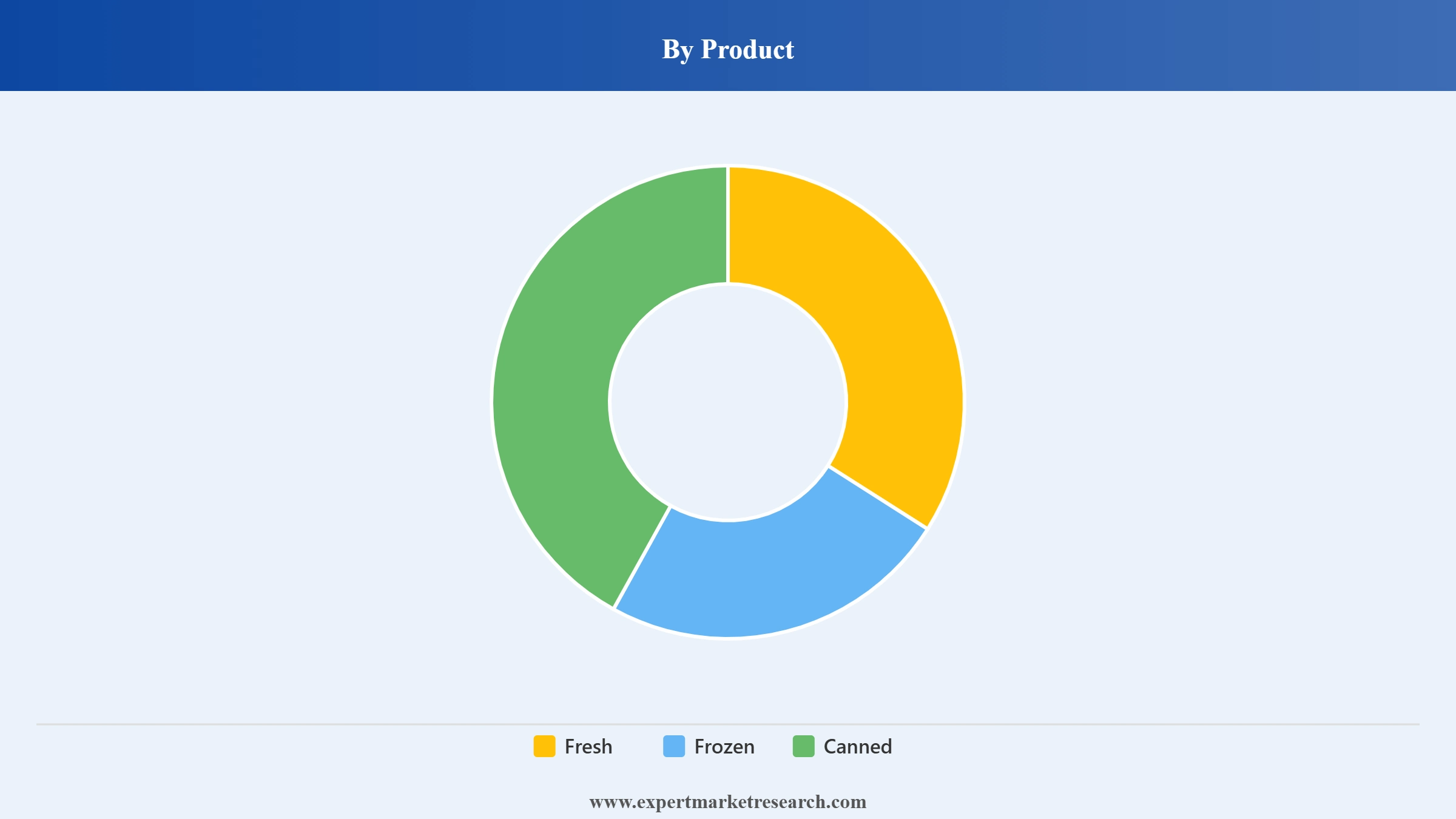
Key Insight: The India fish market showcases varied demands for different kinds of fish products such as fresh, frozen, canned and other processed fish products. Fresh fish holds the largest share of the market owing to traditional fish consumption practices, regional availability, and wide availability through retailers. Demand for frozen fish products is on the rise owing to their growing popularity through exports, convenience and better cold chain management. Canned fish products cater to the demands of consumers looking for increased shelf life and ease of storage. In January 2026, Mizoram Cooperative launched Northeast's first canned fish processing unit, boosting value-added fisheries, farmer incomes, and market access.
Market Breakup by Fish Type
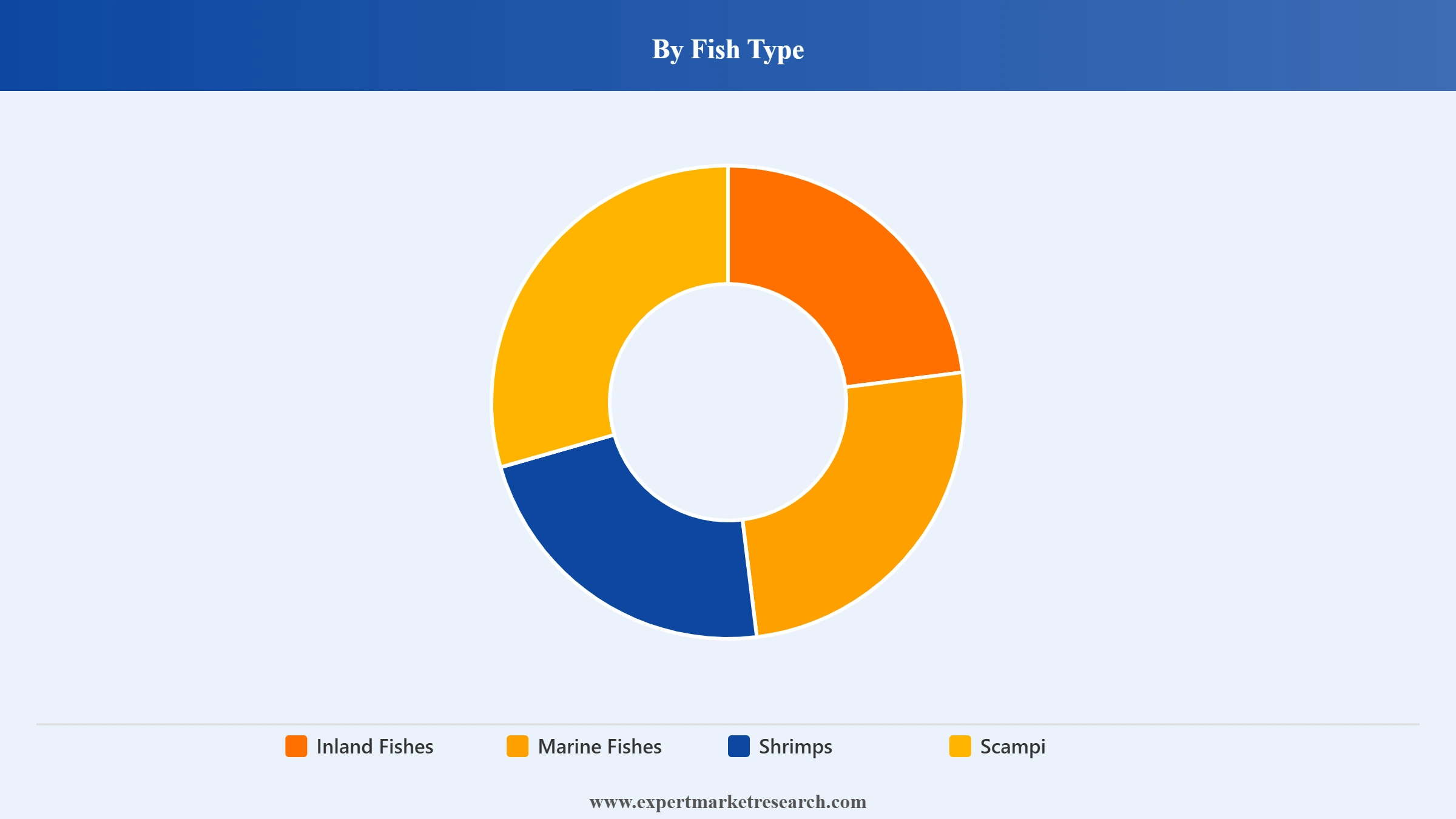
Key Insight: Fish segment classification arises due to different production systems and customer demands in India. The marine segment is largely contributing to the India fish market value due to commercial fishing activities and export processing along with wide availability in coastal regions. The inland segment sustains a high level of consumption due to domestic aquaculture and consumption preference. Shrimp emerges to be the fastest growing segment due to its export-oriented cultivation, technology use, and premium product positioning. Scampi remains significant in terms of serving niche domestic and export consumers through aquaculture activities.
Market Breakup by Distribution Channel
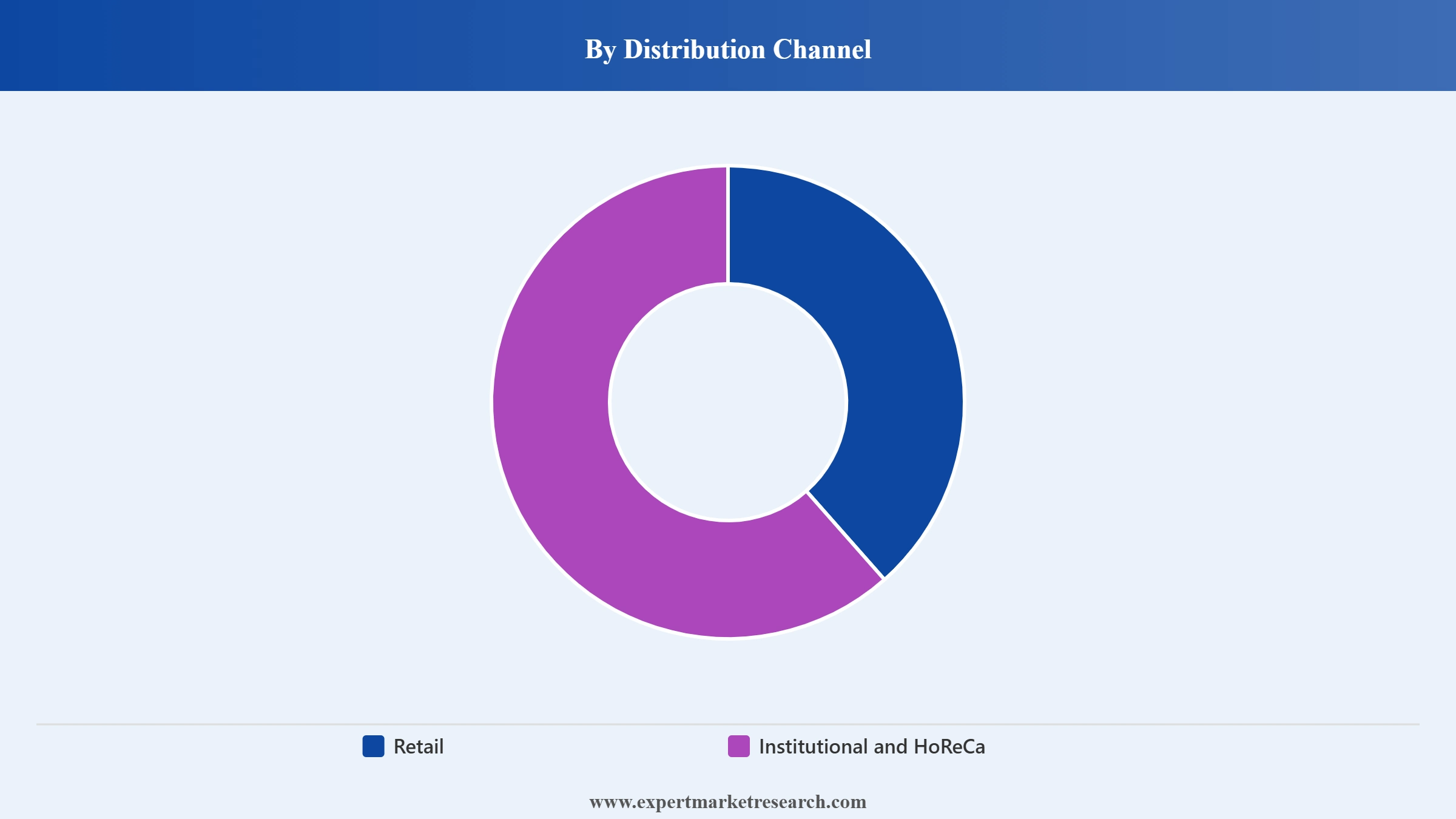
Key Insight: The distribution channels considered in the India fish market are evolving together with the shift in buying behavior in the country. Retailing still remains at the forefront due to the wide customer base, availability of products, and increasing adoption of organized seafood retail channels. Institutional/HoReCa channels are witnessing strong growth due to the increased demand for high-quality seafood products that can be obtained through standardized supply chains in commercial kitchens. The combination of traditional retail channels, supermarkets, online grocery portals, restaurants, hotels, and institutions allows for better product exposure and higher value-added seafood products.
Market Breakup by Sector
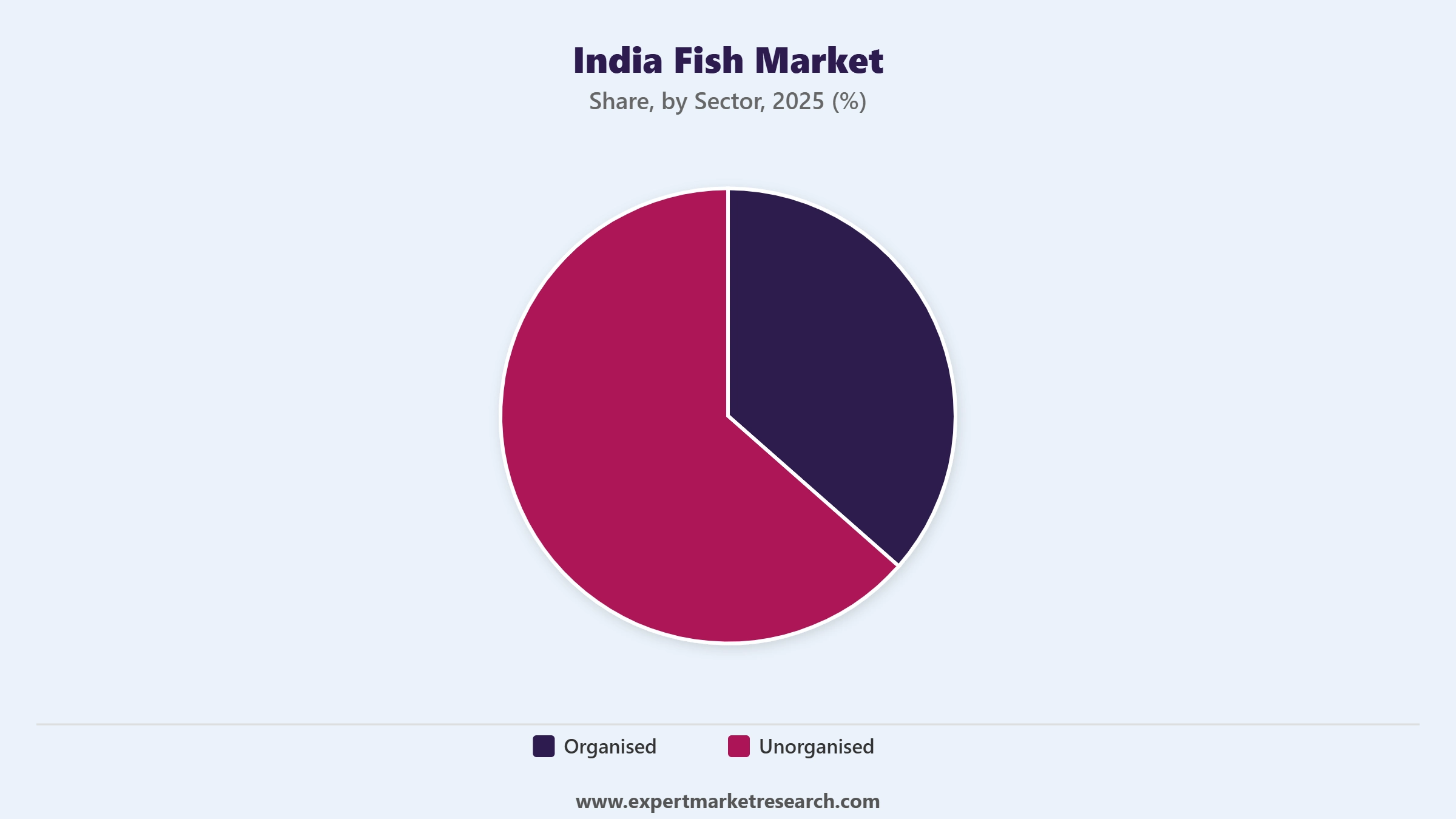
Key Insight: The India fish market revenue generation is supported by both organized and unorganized sectors that re catering to different needs of their customers. The unorganized sector retains its market leadership with local supply, conventional fish markets, and direct engagement with consumers. On the other hand, the organized sector is growing at a fast pace through the provision of branded fish products, better processing techniques, increased traceability, and quality assurance. With these two sectors working together, an industry setup emerges where conventional systems cater to everyday consumption needs whereas organized companies innovate, focus on premium-quality export products and invest in cold chain infrastructure.
Market Breakup by Region
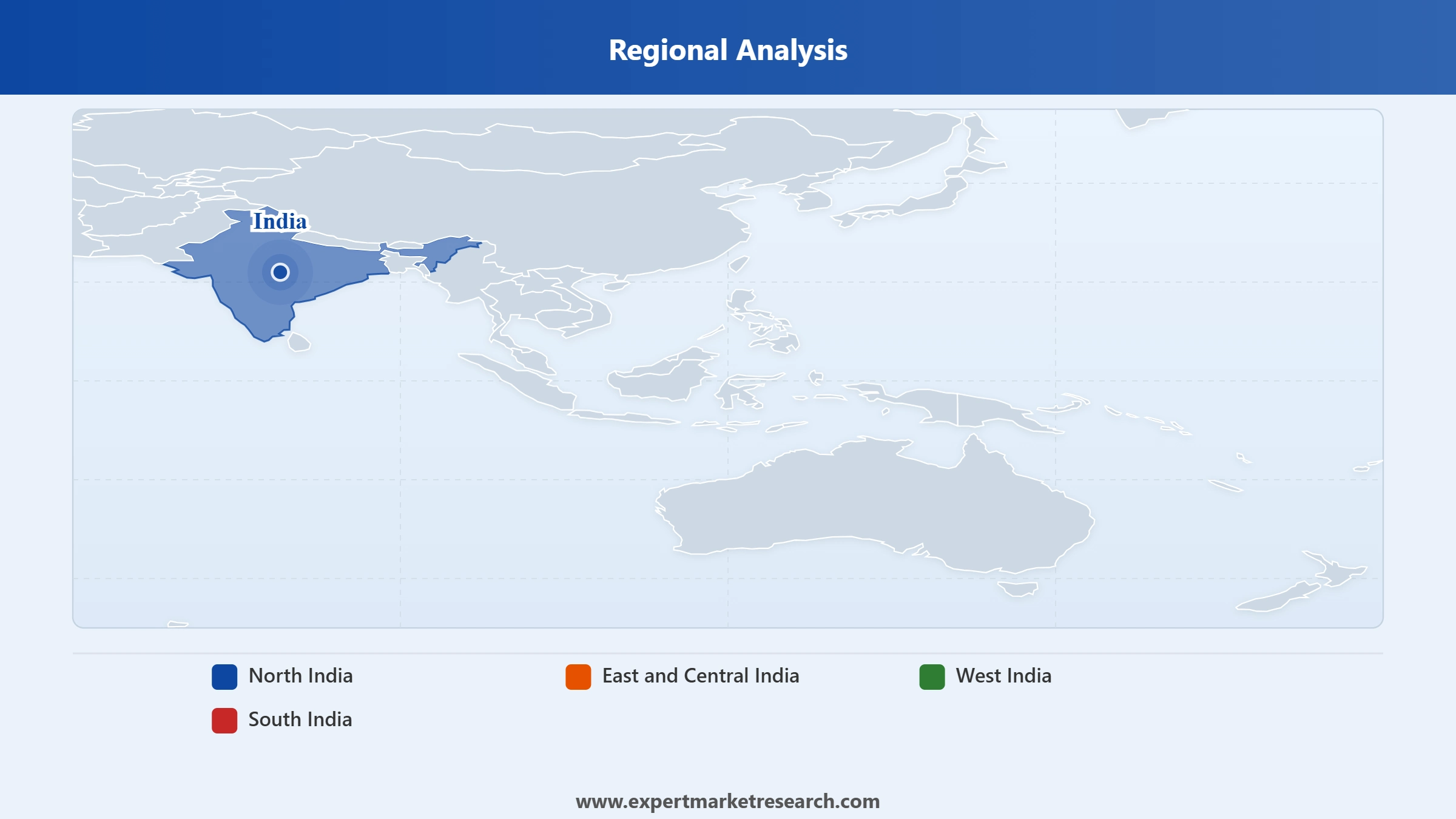
Key Insight: The South India fish market dominates because of marine fisheries, shrimp culture, export-based processing, and seafood distribution network. East and Central India are developing fast due to freshwater aquaculture and growing fish farming activities for commercial purposes. West India contributes to the growth of the seafood economy with coastal fisheries and seafood processing, while North India is a major consumer region facilitated by fish farming in inland waters, organized retail sector, and cold chain connectivity.
Read more about this report - REQUEST FREE SAMPLE COPY IN PDF
By product, fresh fish dominates the market due to widespread domestic consumption preferences
Fresh fish occupies the largest share in the India fish market because of the high consumer preference and accessibility through wet markets and local shops. Fresh fishes are considered tastier and nutritious compared to frozen products, resulting in consistent daily demands. Companies are improving cold storage and local logistics to keep them fresh while minimizing losses. There are various varieties of freshwater and marine fish which ensure their all-year round supply. In June 2026, Zappfresh partnered to develop a 100-acre Assam aquaculture hub targeting 300-ton annual freshwater fish production.
Read more about this report - REQUEST FREE SAMPLE COPY IN PDF
Frozen fish represents the fastest growing segment that is largely contributing to the India fish market revenue because of increased exports, organized retail, and increasing demand for processed proteins. Companies are upgrading technologies like blast freezing and IQF freezing to ensure that they retain their quality during transportation. Retail companies are also including more frozen seafoods in response to changes in consumers' purchasing habits. Increased demand for frozen seafood in foreign markets is making manufacturers develop advanced freezing technologies.
By fish type, the marine fish segment leads the market growth through extensive commercial fishing and export demand
The marine fish segment dominates the India fish market due to the country's extensive coastline, well-established marine fishing industry, and strong seafood export network. Many firms process a wide range of marine species for sale in the local markets, food service sector, and foreign markets looking for quality seafood products. Regular investments in fishing ships, preserving equipment, and processing plants on the coastlines improve the supply chain of marine fish. In January 2026, Dr. Jitendra Singh launched India's first open-sea marine fish farming project, advancing offshore aquaculture and sustainable seafood production.
Read more about this report - REQUEST FREE SAMPLE COPY IN PDF
Shrimp products are experiencing the highest rates of growth in the India fish market because of increased global demand, good export revenue, and fast growth in commercial aquaculture operations. Farmers are continuously investing in breeding disease-resistant strains of shrimps, feeding systems, and biosecurity farm practices to enhance the production levels. Seafood processors are rapidly expanding the range of premium shrimp products to satisfy their customers all over the world. In February 2023, Skretting India inaugurated a state-of-the-art shrimp and fish feed facility in Surat, strengthening aquaculture productivity and feed innovation.
Retail distribution channels dominate the market through extensive consumer reach and expanding organized seafood availability
Traditional retail continues to dominate the India fish market as the primary distribution channel for buying seafood products. Such retailing channels include supermarkets and specialty seafood stores, including online grocery delivery services. Retail organizations are developing their range of chilled and frozen seafood products owing to efficient cold chain logistics and packaging of branded goods. Traceable products of high-quality standards are being launched in order to make people feel more comfortable about buying seafood products.
Read more about this report - REQUEST FREE SAMPLE COPY IN PDF
Increasing the range of seafood products in hotel and restaurant industry, the HoReCa sector experiences fast growth in the India fish market as hotels, restaurants, catering services and quick service restaurants are adding new seafood products to satisfy growing demands of customers. Seafood companies are producing specialized products like processed and value-added seafood goods which are required for easier cooking and maintaining quality standards of their products. In August 2025, AquaChile launched Coho Salmon in India, promoting premium seafood consumption and expanding opportunities across hospitality and retail channels.
The unorganized sector dominates the market through widespread local fishing and traditional seafood retail networks
The share of the unorganized sector is high since many independent fishermen, wholesalers, and local fish vendors keep on selling fresh seafood directly to consumers. Traditional wet markets act as the major purchase locations in many urban and rural centers. The strength of the sector results from the flexible pricing, localized sources, and the presence of customer ties. In addition, small-scale fisheries play a significant role in ensuring regional accessibility of seafood while catering to different consumer tastes using localized distribution channels. In February 2024, Cabinet approved PM-MKSSY, strengthening fisheries MSMEs through formalization, digitalization, institutional finance, and value chain development.
Read more about this report - REQUEST FREE SAMPLE COPY IN PDF
The organized sector is experiencing rapid expansion in the India fish market since branded seafood manufacturers are increasing their production capacity, traceability, and national distribution network. The improvement of consumer confidence levels is resulting from the investments made in the processing facilities, cold storage, premium packaging, and food safety certifications. Moreover, the organized sector is working together with the aquaculture farms to ensure that the raw materials are supplied continuously while maintaining quality standards.
South India accounts for the largest share of the market through extensive coastline, aquaculture production, and seafood exports
Being the largest regional fish market in terms of geographical area, South India boasts a highly developed aquaculture sector and a sophisticated seafood processing network with its extensive coastline. The states that make the most significant contribution into fish production and shrimps' farming as well as the export of seafood products are Andhra Pradesh, Tamil Nadu, Kerala, and Karnataka. There are many processing units, hatcheries, and exporting companies that operate in this region, ensuring permanent commercial operation. The availability of marine resources and integrated seafood supply chains keep reinforcing the superiority of South India in both national and foreign seafood markets. In June 2025, Dam Good Fish partnered with Hyperpure, expanding traceable seafood distribution across India's restaurant and foodservice ecosystem.
Read more about this report - REQUEST FREE SAMPLE COPY IN PDF
The East and Central India fish market is growing rapidly due to the development of the sector of freshwater aquaculture, enhancement of the fisheries infrastructure, and growth in commercial fish farming. These regions include the states of West Bengal, Odisha, Chhattisgarh, and Bihar that are increasing their investments into pond construction, hatcheries and fish seed production. Companies are collaborating with regional producers to improve procurement processes and enhance processing efficiency.
Leading India fish market players are increasingly adopting strategies such as adding value to their processing, digitization of traceability, precise aquaculture, and sustainable sourcing to build up their domestic and export businesses. The leading firms in the market are upgrading their processing operations through automated sorting, intelligent freezing process, and advanced packaging processes to prolong the shelf life of their products as well as cut down on processing expenses.
India fish companies are also working in collaboration with the aqua farming industries to obtain quality materials for production. Opportunities exist in the ready to cook seafood products, quality frozen items, sustainable fishing operations, and artificial intelligence farm management. They are further investing in direct retail distribution, cold chain operation, and manufacturing geared towards exports to cater to changing needs of buyers in the United States, Europe, Japan, and the Middle East markets.
Founded in 1994 and based out of Gujrat, India, Silver Sea Food is a company that specializes in the processing and exporting of high-quality frozen seafood products. The company's areas of expertise include advanced freezing technology, stringent quality assurance, and export quality packaging to cater to international retail as well as foodservice markets.
Founded in 1931 and located in Kochi, Kerala, India, Abad Fisheries Private Limited is one of India's leading seafood exporters. The company exports a range of frozen fish, shrimp, squid, cuttlefish, and other processed seafood products.
Founded in 1952 and headquartered in Kochi, Kerala, India, Seasaga Group runs a comprehensive seafood processing and exporting business catering to retail and institutional clients around the world. The company's strengths include hygienic processing, personalized seafood solutions, and sophisticated cold-chain logistics. Investment in product diversification and operational efficiency ensures its sustained competitiveness in the premium seafood business.
Founded in 1970 and headquartered in Kerala, India, Geo Seafood is a producer of frozen seafood products that serves clients in Asia, Europe, and North America. The company is known for responsible sourcing, state-of-the-art processing facilities, and personalized product development. Improvement in quality management systems and export compliances enable a strong footprint in the international seafood business.
Other key players in the market include Apex Frozen Foods Ltd, Kirti Foods, Munnujii Foods International Pvt. Ltd, Oceans Secret, Prakash Foods, and Golden Prize India, among others.
*Please note that this is only a partial list; the complete list of key players is available in the full report. Additionally, the list of key players can be customized to better suit your needs.*
Unlock the latest insights with our India fish market trends 2026 report. Discover regional growth patterns, consumer preferences, and key industry players. Stay ahead of competition with trusted data and expert analysis. Download your free sample report today and drive informed decisions in the market.
United States Frozen Fish and Seafood Market
Australia Frozen Fish and Seafood Market
United States Ornamental Fish Market
Mexico Fish and Seafood Market
Fish Collagen Peptides Market
South Korea Tuna Fish Market
Fish and Seafood Market
India Basa Fish Market
Europe Fish Market
Mexico Fish Market
India Seafood Processing Industry Growth
India Aquaculture Inputs Market Growth


Upto 15% Off
USD
$2499 $2249
$3999 $3599
$4999 $4249
$5999 $5099


*While we strive to always give you current and accurate information, the numbers depicted on the website are indicative and may differ from the actual numbers in the main report. At Expert Market Research, we aim to bring you the latest insights and trends in the market. Using our analyses and forecasts, stakeholders can understand the market dynamics, navigate challenges, and capitalize on opportunities to make data-driven strategic decisions.*
In 2025, the India fish market attained a value of nearly INR 2073.79 Billion.
The market is projected to grow at a CAGR of 10.20% between 2026 and 2035.
The market is estimated to witness a healthy growth in the forecast period of 2026-2035 to reach about INR 5477.48 Billion by 2035.
The major drivers of the market are rising disposable incomes, increasing population, rise in the consumption of protein-rich foods, and growing domestic demand for fish-based food products.
The key trends guiding the growth of the market is the ease in the accessibility of processed fish products, including canned and frozen, due to the growth of the organised food retail sector and rising health awareness.
The major regions in the market are West Bengal, Andhra Pradesh, Karnataka, Kerala, Gujarat, Tamil Nadu, and Maharashtra, among others.
Inland fishes, marine fishes, shrimps, and scampi are the various fish types available in the market.
The major product types in the market are fresh, frozen, and canned, among others.
The significant distribution channels of fish are retail, institutional and HoReCa.
The organised and unorganised segments are the major sectors in the market.
The major players in the market are Silver Sea Food, Abad Fisheries Private Limited, Seasaga Group, Geo Seafood, Apex Frozen Foods Ltd, Kirti Foods, Munnujii Foods International Pvt. Ltd, Oceans Secret, Prakash Foods, and Golden Prize India, among others.
West Bengal is India’s one of the biggest fish market.
Explore our key highlights of the report and gain a concise overview of key findings, trends, and actionable insights that will empower your strategic decisions.
| REPORT FEATURES | DETAILS |
| Base Year | 2025 |
| Historical Period | 2019-2025 |
| Forecast Period | 2026-2035 |
| Scope of the Report |
Historical and Forecast Trends, Industry Drivers and Constraints, Historical and Forecast Market Analysis by Segment:
|
| Breakup by Product |
|
| Breakup by Fish Type |
|
| Breakup by Distribution Channel |
|
| Breakup by Sector |
|
| Breakup by Region |
|
| Market Dynamics |
|
| Trade Data Analysis |
|
| Competitive Landscape |
|
| Companies Covered |
|
Datasheet
One User
USD 2,499
USD 2,249
tax inclusive*
Single User License
One User
USD 3,999
USD 3,599
tax inclusive*
Five User License
Five User
USD 4,999
USD 4,249
tax inclusive*
Corporate License
Unlimited Users
USD 5,999
USD 5,099
tax inclusive*
*Please note that the prices mentioned below are starting prices for each bundle type. Kindly contact our team for further details.*
Flash Bundle
Small Business Bundle
Growth Bundle
Enterprise Bundle
*Please note that the prices mentioned below are starting prices for each bundle type. Kindly contact our team for further details.*
Flash Bundle
Number of Reports: 3
20%
tax inclusive*
Small Business Bundle
Number of Reports: 5
25%
tax inclusive*
Growth Bundle
Number of Reports: 8
30%
tax inclusive*
Enterprise Bundle
Number of Reports: 10
35%
tax inclusive*
How To Order

Select License Type
Choose the right license for your needs and access rights.

Click on ‘Buy Now’
Add the report to your cart with one click and proceed to register.

Select Mode of Payment
Choose a payment option for a secure checkout. You will be redirected accordingly.
Strategic Solutions for Informed Decision-Making
Gain insights to stay ahead and seize opportunities.

Get insights & trends for a competitive edge.

Track prices with detailed trend reports.

Analyse trade data for supply chain insights.

Leverage cost reports for smart savings

Enhance supply chain with partnerships.

Connect For More Information
Our expert team of analysts will offer full support and resolve any queries regarding the report, before and after the purchase.
Our expert team of analysts will offer full support and resolve any queries regarding the report, before and after the purchase.
We employ meticulous research methods, blending advanced analytics and expert insights to deliver accurate, actionable industry intelligence, staying ahead of competitors.
Our skilled analysts offer unparalleled competitive advantage with detailed insights on current and emerging markets, ensuring your strategic edge.
We offer an in-depth yet simplified presentation of industry insights and analysis to meet your specific requirements effectively.




