

Consumer Insights
Uncover trends and behaviors shaping consumer choices today
Procurement Insights
Optimize your sourcing strategy with key market data
Industry Stats
Stay ahead with the latest trends and market analysis.
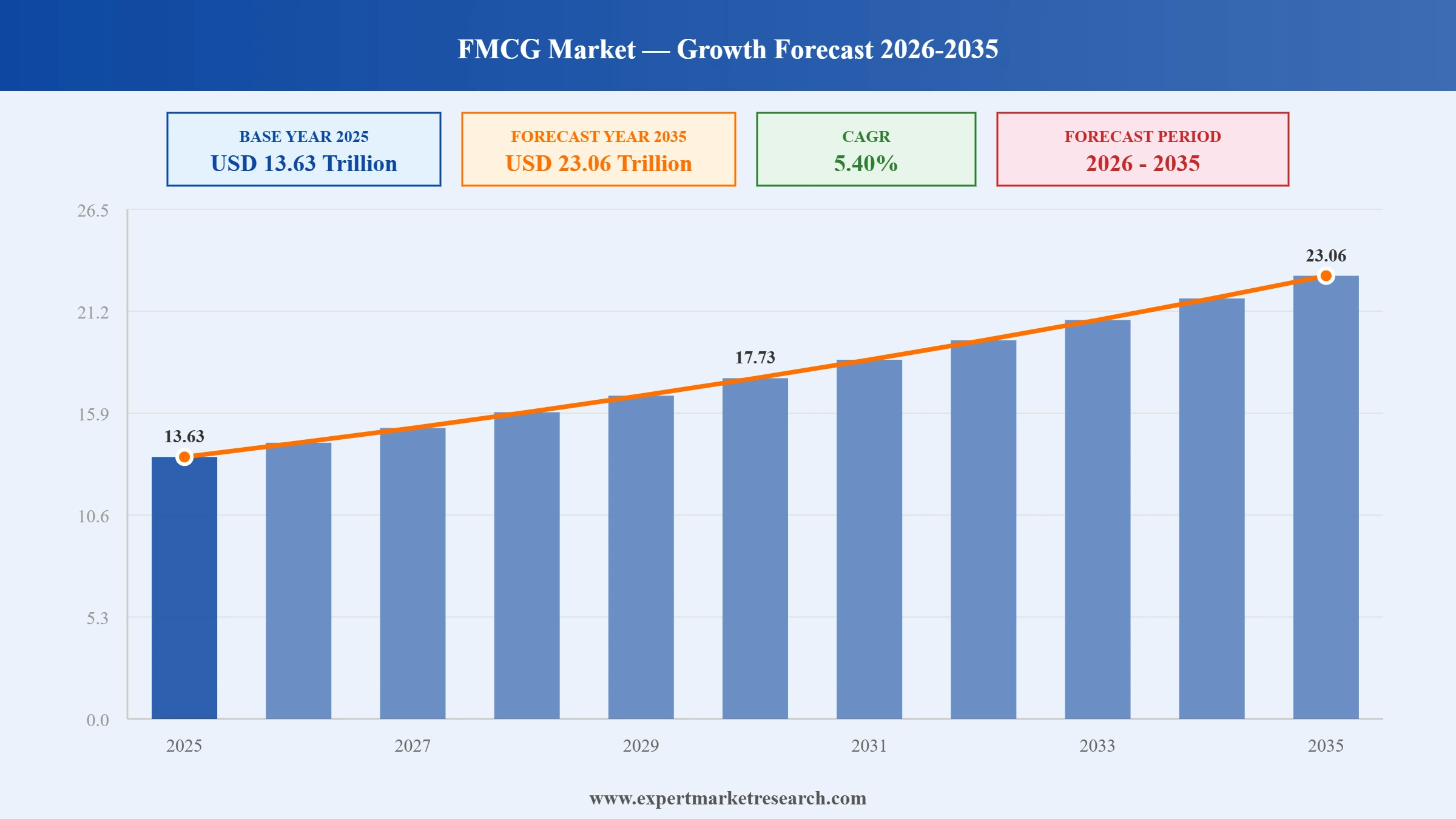
The global FMCG market attained a value of USD 13.63 Trillion in 2025 and is projected to expand at a CAGR of 5.40% through 2035. The market is further expected to achieve USD 23.06 Trillion by 2035. Investments in technologies such as AI-powered manufacturing, functional nutritional products, smart logistics, and sustainable packaging solutions are helping product differentiation and operational efficiency.
Increasing customer preferences for healthy and convenient products are encouraging firms to increase the presence of functional food items, plant-based drinks, and luxury personal care lines through innovation. At the same time, the growing scope of e-commerce and AI-powered retail analytics is allowing firms to refine their inventory strategies, marketing campaigns, distributor relations, and forecast the demand more accurately.
The FMCG market is witnessing further developments as the major international brands are speeding up their innovations in terms of health-conscious, sustainable and digitally connected product lines. An example of such an innovative product line was the launch of the digital product development platform, powered by artificial intelligence by Unilever, in June 2024 to accelerate the formulation process and predict the demand in the realms of beauty, personal care and nutrition sectors. This innovation helps in accelerating the commercialization process and optimizing the manufacturing process.
In addition, FMCG market players are allocating more investment funds for premiumization, functional ingredients, sustainable packaging and manufacturing based on artificial intelligence in order to build unique portfolios amid the highly competitive retail marketplaces. For instance, Procter & Gamble, Nestlé, PepsiCo, Mondelez International and The Coca-Cola Company are increasing their localized manufacturing processes and developing products that cater to local tastes and sustainability objectives. Similarly, in July 2026, Dabur accelerated premiumization, digital expansion, quick commerce growth, and strategic acquisitions to strengthen long-term consumer market leadership.
Read more about this report - REQUEST FREE SAMPLE COPY IN PDF
|
FMCG Market Report Summary |
Description |
Value |
|
Base Year |
USD Trillion |
2025 |
|
Historical Period |
USD Trillion |
2019-2025 |
|
Forecast Period |
USD Trillion |
2026-2035 |
|
Market Size 2025 |
USD Trillion |
13.63 |
|
Market Size 2035 |
USD Trillion |
23.06 |
|
CAGR 2019-2025 |
Percentage |
XX% |
|
CAGR 2026-2035 |
Percentage |
5.40% |
|
CAGR 2026-2035- Market by Region |
Asia Pacific |
6.0% |
|
CAGR 2026-2035 - Market by Country |
India |
6.1% |
|
CAGR 2026-2035 - Market by Country |
China |
6.0% |
|
CAGR 2026-2035 - Market by Product |
Food and Beverage |
6.2% |
|
CAGR 2026-2035 - Market by Distribution Channel |
Supermarkets and Hypermarkets |
6.2% |
|
Market Share by Country 2025 |
USA |
XX% |
Fast-Moving Consumer Goods (FMCG) refer to products that are sold quickly, consumed regularly, and replenished frequently by households and individuals. These are typically low-cost, high-volume items that move rapidly off retail shelves due to their essential and repetitive nature. Unlike durable goods such as electronics or furniture, FMCG products have short shelf lives, either because they are perishable (like dairy and fresh produce) or because they are consumed and repurchased on a regular cycle (like toothpaste, soap, or packaged snacks).
The FMCG sector forms the backbone of everyday consumer spending, encompassing categories such as food and beverages, personal care and cosmetics, health care products, home care items, and footwear, among others. Because these goods address basic, recurring needs, demand for them tends to remain relatively stable even during broader economic slowdowns, making FMCG one of the most resilient and consistently growing sectors within the global consumer economy.
Samuh unveiled plans for developing an FMCG business worth INR 1,000 crores, using fast-growing portfolio, omnichannel marketing, and scalability of consumer brands. Companies can use brand development and omnichannel marketing to quickly broaden emerging consumer product portfolios, leveraging such trends in the FMCG market.
Tata Consumer Products released their first-ever corporate brand film to strengthen their brand identity and long-term trust of customers in different product categories. Companies can launch such corporate branding campaigns for building customer loyalty and brand recognition and for positioning their products in the premium range.
The Magnum Ice Cream Company launched its research and development center in Bengaluru, facilitating innovation of products, localized production, and FMCG research. FMCG companies can set up innovation centers that cater to the needs of the specific regions by developing specific brands and cutting down on development time.
Kothari Industrial Corporation launched four new FMCG brands, increasing their retail diversification with different types of consumer offerings and market coverage. Companies can have diversified product offerings with multiple brands, capitalizing on such FMCG market developments.
AI is revolutionizing the overall FMCG market development through its ability to help companies formulate products, understand customer behavior, and optimize the choice of ingredients. It allows producers to develop products more quickly and save on development expenses. For example, Unilever is enhancing its capability for AI-based product development in order to enhance the effectiveness of formulations and innovate faster across beauty and nutrition portfolios. In February 2026, Unilever partnered with Google Cloud to deploy AI, data platforms, and agentic commerce, accelerating digital transformation across global consumer goods operations. At the same time, AI adoption among manufacturers remains one of the priorities under the European Commission's Digital Europe Programme, aimed at encouraging digital transformation in the consumer goods industry.
Innovative packaging is becoming a key driving for growth in the FMCG market as companies are actively investing in recyclable, refillable, and lightweight packaging options. They are redesigning their packaging formats to consume less virgin plastic while meeting changing environmental requirements. For instance, Procter & Gamble is continuously growing the range of its recyclable packaging options within several household brands, while Nestlé continues growing the usage of mono-material packaging, allowing better recycling results. Similarly, in June 2025, UFlex launched a single-pellet recycled PET solution, enabling food-grade packaging with higher recycled content, seamless processing, and sustainability compliance. The EU's Packaging and Packaging Waste Regulation encourages further circular economy investments from manufacturers in member countries.
Awareness about health is compelling FMCG market firms to create products which include functional ingredients, probiotics, plant protein and lower sugar variants. Companies are fostering research collaborations to cater to changing eating habits and premium customers. While Nestlé is introducing its science-based products in nutrition which support aging and metabolic health, PepsiCo, on the other hand, is focusing on the development of healthier snacks with a better nutrient profile. In February 2026, Nestlé launched Vital nutritional drinks supporting healthy aging with science-backed formulations, targeting energy, strength, sleep, and cognitive wellness. FDA of the United States is advocating for transparency in food labeling and nutrition.
Digital manufacturing technologies are becoming pivotal in the success of FMCG companies with the introduction of automation, predictive analysis, robotics, and digital twins in their production facilities. For instance, Coca-Cola is now leveraging artificial intelligence in its supply chain planning and predictive maintenance systems at some of its manufacturing units. The German Industry 4.0 strategy is aiding intelligent manufacturing through advanced industrial digitalization, accelerating the FMCG market expansion. Similarly, in June 2026, Unilever and Accenture expanded AI-enabled digital twins across global manufacturing, enhancing factory efficiency, quality, predictive maintenance, and operational decision-making.
As a result of the dynamic changes occurring in the realm of digital commerce, FMCG companies are being encouraged to venture into different directions away from traditional channels and adopt direct to consumer platforms and an omnichannel distribution approach. Companies such as Mondelez International are engaging in more investments in digital commerce in collaboration with technology providers in the retail sector while adopting various digital commerce strategies. The government of Singapore is supporting businesses in their digitalization efforts via the Smart Nation initiative. Aligning with this trend in the FMCG market, in July 2026, Zigly expanded omnichannel pet care through new centers, teleconsultation, diagnostics, grooming, and digital healthcare services across India's growing markets.
The EMR’s report titled “Global FMCG Market Report and Forecast 2026-2035” offers a detailed analysis of the market based on the following segments:
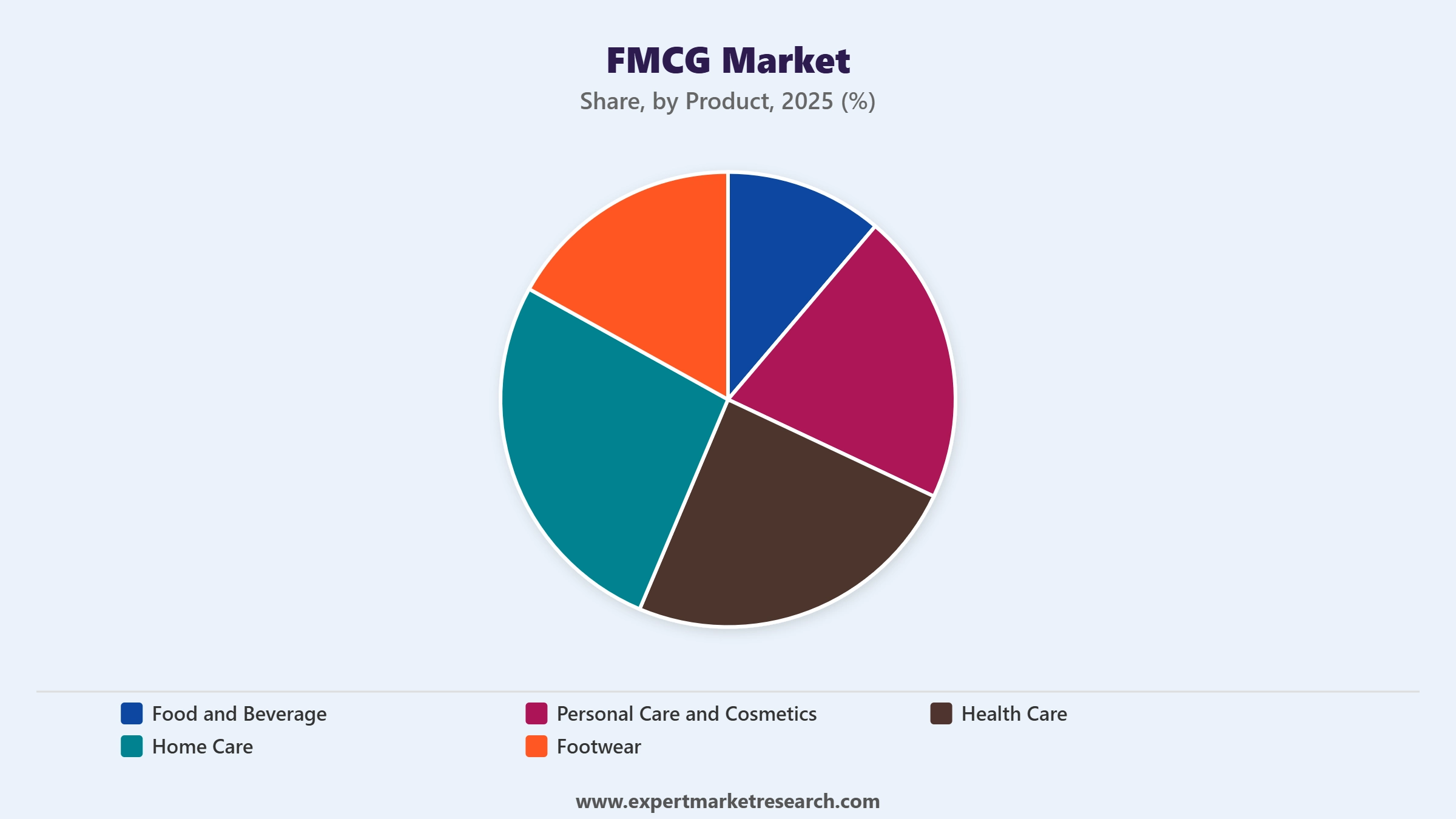
Market Breakup by Product
Key Insight: The food & beverage category dominates the FMCG market due to higher purchase rates and product diversification. Personal care & cosmetics sectors enjoy the quickest growth rate as consumers are increasingly seeking quality, wellness-related, and personalized products. Healthcare is witnessing growth through preventive health care products, supplements, and hygiene products. The home care sector’s growth is motivated by the need for effective and eco-friendly cleansing products and concentrated products. Footwear is helping the market grow through budget-friendly lifestyles and athleisure footwear that are sold through mass retail stores. In July 2026, BUILT launched natural movement performance footwear, combining biomechanical design, barefoot technology, and Indian manufacturing to enhance athletic performance.
Market Breakup by Production Type
Key Insight: Manufacturing techniques keep on developing due to the efforts of firms trying to strike a balance between efficiency and business agility. In-house manufacturing is still a favored mode of manufacturing for international firms that want to have more control over quality, innovation, and logistics. On the other hand, outsourcing manufacturing is growing in popularity due to its flexibility, efficiency, and rapid opportunity for commercialization in the FMCG market. Firms are now combining both types of manufacturing to ensure resilience of the manufacturing process and facilitate regional growth plans.
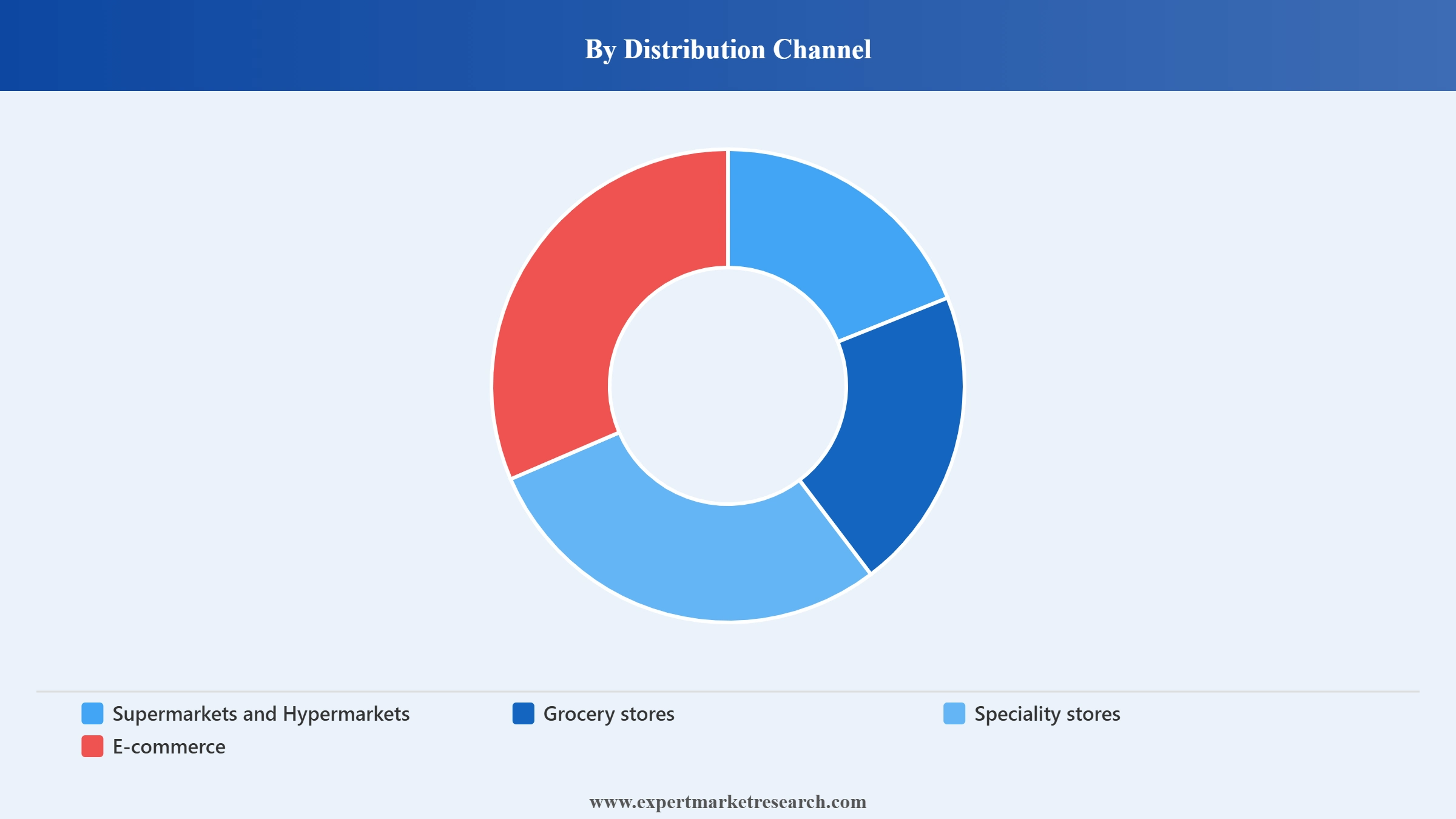
Market Breakup by Distribution Channel
Key Insight: Supermarkets and hypermarkets lead the FMCG market growth using a wide range of products, a well-structured retailing approach, and promotions. The grocery shops play a significant role in making the products easily accessible and convenient. Specialty shops help organizations position themselves as high-end business entities. E-commerce records significant growth due to convenience and ability to directly engage customers.
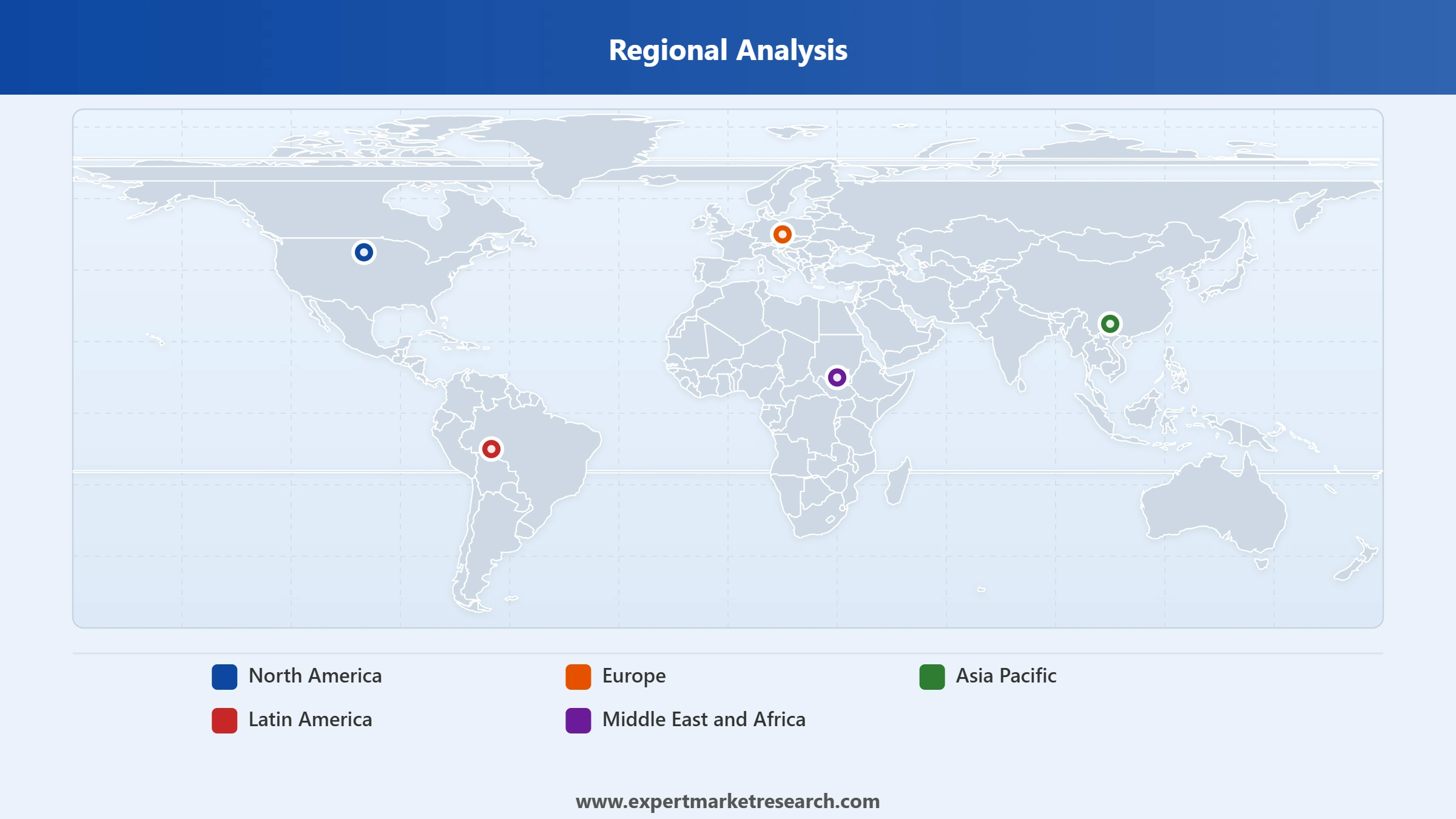
Market Breakup by Region
Key Insight: Regional dynamics in the FMCG market continue to influence competitive strategies of companies. Asia Pacific leads the market in terms of manufacturing capabilities, urbanization, and demand by consumers. North America fosters innovation via premium products, developed retail facilities, and online shopping. Europe focuses on sustainability and consumer goods that are environment-friendly. Latin America gets an advantage of increased retail reach and growing demand for premium but low-cost products. The Middle East and Africa region is witnessing accelerated growth due to retail improvements, population growth, and increased spending ability.
Read more about this report - REQUEST FREE SAMPLE COPY IN PDF
By product, the food and beverage category dominates the market due to continuous innovation and everyday consumption demand
The food and beverage segment holds the largest share in the FMCG market owing to the frequent purchase cycle of the segment, wide retail coverage, and continuous innovation in products. The manufacturers are launching beverages, clean label products, protein-rich food items, and ready-to-eat products in order to cater to evolving consumer tastes. Companies are focusing on premium ingredients, localization of flavor and sustainable packaging in order to build up brand loyalty. Personalized and digital merchandizing is enhancing consumer engagement for such categories, thereby becoming the key revenue driving factor in both mature and developing consumer markets. In July 2026, Rasna expanded Jumpin with one-liter family packs, strengthening premium ready-to-drink beverages through wider distribution and vitamin-fortified fruit formulations.
Read more about this report - REQUEST FREE SAMPLE COPY IN PDF
The personal care and cosmetics category is gaining popularity owing to the rising focus of consumers on skincare, wellness, hygiene, and beauty solutions, boosting the FMCG market value. Dermatologically tested products, skin microbiome care products, refillable makeup, and personalized beauty solutions are being launched by manufacturers using artificial intelligence to gather consumer insights. Premiumization, influencer marketing, and direct-to-consumer marketing channels are helping this category grow. Natural ingredients, cruelty-free certifications, and sustainable packaging are also gaining prominence among the manufacturers in the category. In March 2026, Hindustan Foods acquired Ultra Beauty Care's manufacturing facility, expanding beauty, herbal, and cosmetic contract manufacturing capabilities for FMCG brands.
By production type, inhouse production leads the market through stronger quality control and innovation capabilities
Inhouse production is dominant in the FMCG market as top manufacturers prefer to have full control over operations, consistency in product quality, protect intellectual property, and flexibility in manufacturing. Inhouse production gives companies the ability to innovate, have strict quality control measures in place, better schedule production, and react promptly to changes in consumer preferences. Top multinational brands keep on building more automated manufacturing plants that incorporate digital technologies, helping them to minimize risks and release premium products into several regional markets. In June 2026, Elitecon International announced a INR 700 crore FMCG expansion, strengthening manufacturing, distribution, multi-brand portfolios, and global consumer market presence.
The fastest growing trend in FMCG market is contract manufacturing, as top brands look for opportunities for scaling production without investing in infrastructure and capital expenses. With contract manufacturing, brands are able to speed up their market entry, manufacture regionally and handle seasonality issues. Specialized manufacturers have expertise in formulations, flexible manufacturing capacity, and are able to operate under regulatory requirements and can quickly launch commercial production of new products. In July 2026, PepsiCo India inaugurated a INR 1,266 crore Ujjain flavor manufacturing facility, expanding beverage production, sustainability, and domestic supply capabilities.
By distribution channel, supermarkets and hypermarkets account for the largest share of the market through extensive product availability and organized retail expansion
Supermarkets and hypermarkets dominate the distribution channels is that they feature a wide variety of products at affordable prices in one place. The FMCG producers choose to work in these formats for introducing premium products and developing promotional activities as well as expanding the categories of their products. High shelf presence, effective merchandising practices, and loyalty programs make customers repurchase products. Moreover, through their cooperation with retailers, companies in the FMCG market can gain consumer insights and streamline inventory management. In July 2026, SPAR expanded its TASTE OF ASIA private label range to 100 products, meeting growing demand for convenient global cuisine.
Read more about this report - REQUEST FREE SAMPLE COPY IN PDF
E-commerce is becoming the most rapidly growing distribution channel that is accelerating growth in the FMCG market revenue since digital shopping, mobile apps, and quick commerce are changing consumers' behavior. Companies focus on their investments in building direct-to-customer platforms, AI-powered recommendations, subscription services, and personalized promotions. In addition to the valuable consumer purchasing insights, digital distribution channels allow for fast product introduction and marketing activities. The performance of online retail is continuously improved by enhanced logistics, delivery, and payment services.
Asia Pacific registers the largest share of the market through expanding consumer population and manufacturing ecosystem development
Asia Pacific leads in the FMCG market due to its large consumer base, growing number of middle classes, fast urbanization, and advanced manufacturing. Companies are making further investments in localization, premium portfolio, and digitized retail partnerships in order to enhance their competitive edge in the region. Growing disposable income levels, rising demand for convenience products, and development of organized retail markets drive multinationals and regional players to innovate in terms of consumer goods and logistics.
Middle East & Africa is the most rapidly developing regional FMCG market powered by organized retail, digitalization, and urbanization trends that are driving growth in the demand for consumer goods. Manufacturers are introducing affordable premium goods, developing regional manufacturing facilities, and building distribution partnerships to increase accessibility. Youthful demographic composition, growing household incomes, and modern retail infrastructure investments create a favorable environment for FMCG firms to grow and localize their product portfolio. In February 2025, Reliance Consumer Products launched Campa in the UAE, expanding internationally through strategic partnerships, affordable beverages, and heritage brand revival.
Read more about this report - REQUEST FREE SAMPLE COPY IN PDF
The global industry is becoming innovation oriented as major FMCG companies engage in competition by leveraging product development with AI, sustainable packaging, online business, and high-quality products. Manufacturers are enhancing automation in their operations, sourcing sustainable materials, and growing their capabilities in direct-to-consumer services to enhance customer engagement. Partnerships with technology companies are allowing businesses to leverage demand forecasting, minimize production waste, and enhance product commercialization.
Major FMCG market players are focusing on functional nutrition, beauty products tailored to individual needs, and localized product innovation. The opportunities are growing in areas such as smart manufacturing, clean-label food products, refillable packaging, online retailing, and advanced supply chain analytics. The manufacturers that have managed to integrate innovations in their product development together with efficient processes and regional manufacturing are expected to boast a competitive advantage over the coming years.
Founded in 1837 and located in Cincinnati, Ohio, United States, Procter & Gamble supports the FMCG industry by offering AI-manufactured products, high-quality household items, and sustainable packaging innovations. The organization keeps introducing new refillable packaging products, digital customer engagement platforms, and intelligent manufacturing systems while innovating in the sectors of personal care, home care, and healthcare worldwide.
Founded in 1930 and headquartered in London, United Kingdom, Unilever is concentrating on digital product development, nutrition sciences, and environmental-friendly consumer products. The company uses AI in order to speed up the formulation development process and expand its portfolio of recyclable packaging, functional foods, and premium beauty products.
Founded in 1892 and based in Atlanta, Georgia, United States, The Coca-Cola Company aids in advancing the FMCG market through supply chain technologies, sustainable packaging, and diversified products. It keeps developing beverages with lower sugar content, smarter production methods, and retail collaboration through data science while improving customer interaction using digital marketing and better distribution.
Founded in 1965 and based in New York, United States, PepsiCo advances the FMCG sector through better health snacks, beverages with added functionalities, and precision agriculture practices. It is investing in AI-based demand forecasts, regenerative agriculture, sustainable packaging, and premium nutrition products. Constant investment in digital commerce ensures product availability and better consumer experience.
Other key players in the market include KCWW, Patanjali Ayurved Limited, Dr Pepper Snapple Group, Inc., Revlon Consumer Products LLC, Johnson & Johnson Services, Inc., and Nestlé S.A., among others.
*Please note that this is only a partial list; the complete list of key players is available in the full report. Additionally, the list of key players can be customized to better suit your needs.*
Unlock the latest insights with our FMCG market trends 2026 report. Discover regional growth patterns, consumer preferences, and key industry players. Stay ahead of competition with trusted data and expert analysis. Download your free sample report today and drive informed decisions in the market.


Upto 15% Off
USD
$2499 $2249
$3999 $3599
$4999 $4249
$5999 $5099


*While we strive to always give you current and accurate information, the numbers depicted on the website are indicative and may differ from the actual numbers in the main report. At Expert Market Research, we aim to bring you the latest insights and trends in the market. Using our analyses and forecasts, stakeholders can understand the market dynamics, navigate challenges, and capitalize on opportunities to make data-driven strategic decisions.*
In 2025, the market reached an approximate value of USD 13.63 Trillion.
The market is projected to grow at a CAGR of 5.40% between 2026 and 2035.
Investing in AI-driven product development, expanding sustainable packaging, strengthening digital commerce, improving localized manufacturing, adopting predictive analytics, enhancing supply chain resilience, and developing premium consumer-focused product portfolios.
Supermarkets and hypermarkets remain the key distribution channel due to their ability to offer bundled promotions, wide assortments, and immediate product access.
The key players in the market include Procter & Gamble, Unilever, The Coca-Cola Company, PepsiCo, KCWW, Patanjali Ayurved Limited, Dr Pepper Snapple Group, Inc., Revlon Consumer Products LLC, Johnson & Johnson Services, Inc., and Nestlé S.A., among others.
Companies face volatile raw material costs, evolving sustainability regulations, supply chain disruptions, intense private-label competition, rapidly changing consumer preferences, and increasing pressure to accelerate innovation while maintaining profitability and operational resilience.
Explore our key highlights of the report and gain a concise overview of key findings, trends, and actionable insights that will empower your strategic decisions.
| REPORT FEATURES | DETAILS |
| Base Year | 2025 |
| Historical Period | 2019-2025 |
| Forecast Period | 2026-2035 |
| Scope of the Report |
Historical and Forecast Trends, Industry Drivers and Constraints, Historical and Forecast Market Analysis by Segment:
|
| Breakup by Product |
|
| Breakup by Production Type |
|
| Breakup by Distribution Channel |
|
| Breakup by Region |
|
| Market Dynamics |
|
| Competitive Landscape |
|
| Companies Covered |
|
Datasheet
One User
USD 2,499
USD 2,249
tax inclusive*
Single User License
One User
USD 3,999
USD 3,599
tax inclusive*
Five User License
Five User
USD 4,999
USD 4,249
tax inclusive*
Corporate License
Unlimited Users
USD 5,999
USD 5,099
tax inclusive*
*Please note that the prices mentioned below are starting prices for each bundle type. Kindly contact our team for further details.*
Flash Bundle
Small Business Bundle
Growth Bundle
Enterprise Bundle
*Please note that the prices mentioned below are starting prices for each bundle type. Kindly contact our team for further details.*
Flash Bundle
Number of Reports: 3
20%
tax inclusive*
Small Business Bundle
Number of Reports: 5
25%
tax inclusive*
Growth Bundle
Number of Reports: 8
30%
tax inclusive*
Enterprise Bundle
Number of Reports: 10
35%
tax inclusive*
How To Order

Select License Type
Choose the right license for your needs and access rights.

Click on ‘Buy Now’
Add the report to your cart with one click and proceed to register.

Select Mode of Payment
Choose a payment option for a secure checkout. You will be redirected accordingly.
Strategic Solutions for Informed Decision-Making
Gain insights to stay ahead and seize opportunities.

Get insights & trends for a competitive edge.

Track prices with detailed trend reports.

Analyse trade data for supply chain insights.

Leverage cost reports for smart savings

Enhance supply chain with partnerships.

Connect For More Information
Our expert team of analysts will offer full support and resolve any queries regarding the report, before and after the purchase.
Our expert team of analysts will offer full support and resolve any queries regarding the report, before and after the purchase.
We employ meticulous research methods, blending advanced analytics and expert insights to deliver accurate, actionable industry intelligence, staying ahead of competitors.
Our skilled analysts offer unparalleled competitive advantage with detailed insights on current and emerging markets, ensuring your strategic edge.
We offer an in-depth yet simplified presentation of industry insights and analysis to meet your specific requirements effectively.




